
Reliable pellet heat for Carbon County's long, snowy winters.
From Jim Thorpe up through the Lehigh Gorge to Lehighton, Palmerton, and Weatherly, Carbon County's Pocono Mountain winters call for heat that doesn't quit. Find the right pellet stove or insert, and connect with a trusted local dealer who can size and install it correctly.
Every Project Starts From One of These Five Situations
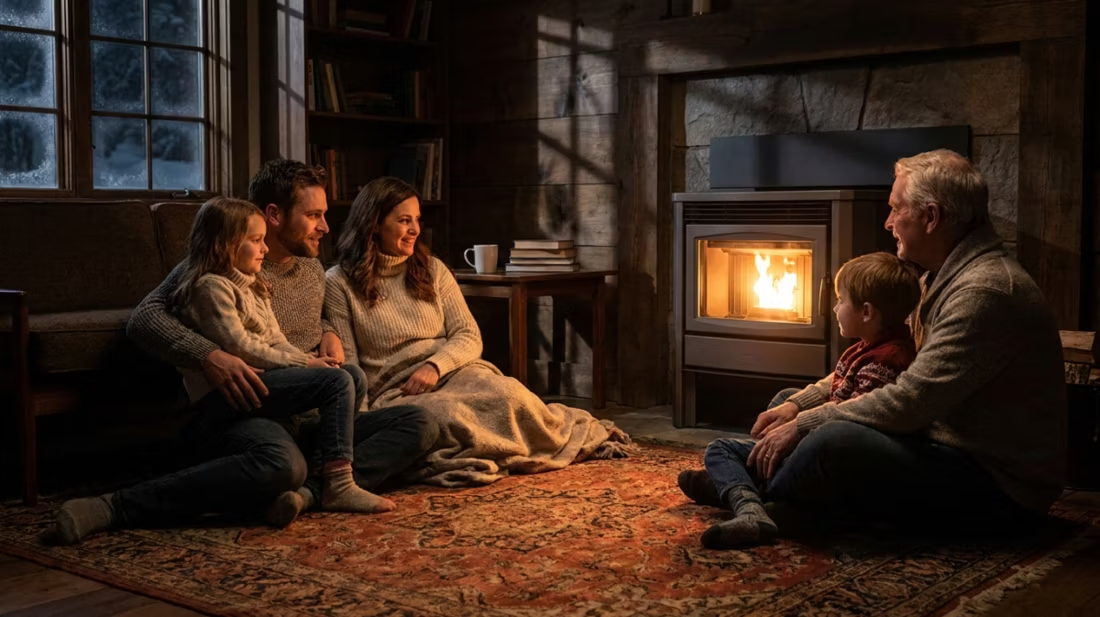
Steady warmth without the wood pile.
Carbon County sits in the Pocono foothills, where ridgelines around Jim Thorpe and the Lehigh Gorge push elevations well above the valley floor and winters run cold and long—average lows near 19°F and a heating season nearly as demanding as Burlington, Vermont, a load closer to Burlington, Vermont than to most of the mid-Atlantic. Plenty of county homes still burn cordwood—oak, hickory, maple, and cherry are all common in local woodlots—but a growing number of homeowners in Lehighton, Palmerton, Nesquehoning, and the rural townships between them are switching to pellet stoves for the same radiant heat without the splitting, stacking, and daily tending that cordwood demands.
Pellet supply here is a real advantage. Hamer Pellet Fuel and Greene Team Pellet Fuel are both Pennsylvania producers, which means shorter supply chains and more reliable availability during the cold stretches when demand spikes across the Northeast; Energex, a widely distributed premium softwood pellet, rounds out what local dealers typically stock. One tradeoff worth planning for: pellet stoves need electricity to run the auger and combustion blower, and Carbon County's ridge-top ice storms occasionally knock out power in PPL Electric Utilities' service territory. A battery backup unit—sold alongside most stoves—keeps the hopper feeding and the blower running through a multi-hour outage.
Three steps. No salesperson until you're ready.
Tell us about your project
Your zip code, your situation, and the fuel you're leaning toward—or let the answers point you to one.
See what's actually available
The brands dealers within 100 miles genuinely carry—real options, never a catalog mirage.
Get your dealer & Project Guide
A trusted local dealer, plus the free Project Guide & Parts List that names every component of the job.
Frequently Asked Questions
How much does a pellet stove installation cost in Carbon County?
Most pellet stove installations in Carbon County run in the neighborhood of $3,000 to $6,000, with the biggest cost swing coming from the venting path. A pellet stove vented straight through an exterior wall—common in ranch-style homes around Lehighton and Palmerton—sits on the lower end. Installations that require routing vent pipe up through a roof, or building a new hearth pad for code clearance, push toward the higher end. Homes converting an existing wood-burning fireplace to a pellet insert usually fall in a similar range once the liner and surround are factored in. A local dealer will give you a firm number after seeing the space.
What size pellet stove do I need for my home?
Sizing depends on square footage, insulation, and how many rooms you're trying to heat—but Carbon County's cold-climate profile (19°F average winter lows, a long, demanding heating season most of the year) means most homes should size toward the upper end of a manufacturer's range rather than the lower end. A small stove works for a single room or a well-insulated cabin; most main living areas in the county call for a mid-size unit; larger or older farmhouses—common in the rural townships outside Jim Thorpe—often need a bigger hopper and higher BTU output to keep up on the coldest nights along the ridgelines. A local dealer can size your specific home with an in-person walkthrough.
Where can I buy pellet fuel in Carbon County?
Local hearth dealers typically stock Pennsylvania-made brands like Hamer Pellet Fuel and Greene Team Pellet Fuel, along with Energex, a widely available premium softwood pellet. Buying from a Pennsylvania producer means fewer supply disruptions during the cold snaps when regional demand jumps, compared to pellets shipped in from farther away. Pellet prices fluctuate seasonally, so it's worth asking your dealer about locking in a ton or two before the first hard freeze rather than shopping mid-winter when supply tightens.
What's the difference between a pellet stove and a pellet insert?
A pellet stove is a freestanding unit that sits on a hearth pad and vents through an exterior wall or roof—it can go almost anywhere in a home with the right clearances. A pellet insert is built to slide into an existing masonry fireplace opening, which is a common upgrade for the older farmhouses and rowhomes found throughout Lehighton, Palmerton, and Jim Thorpe. If you already have a wood-burning fireplace you rarely use, an insert converts it into an efficient, thermostat-controlled heat source without altering the exterior of the house. Homes without an existing fireplace are better suited to a freestanding stove.
Do I need a permit to install a pellet stove in Carbon County?
Most municipalities in Carbon County require a building permit for a new solid-fuel or biomass appliance installation, though the exact process depends on whether you're inside Jim Thorpe Borough, Lehighton Borough, Palmerton Borough, or one of the county's unincorporated townships—each administers its own code enforcement. Most local dealers handle the permit application as part of the installation, so you typically don't have to navigate it yourself. It's worth confirming with your specific municipality before work begins, since requirements can differ slightly from one borough to the next.
What's the best pellet stove for Carbon County's climate?
Look for a stove with a large hopper capacity and a BTU output rated for your square footage at the high end of the manufacturer's range—Carbon County's cold, long winters don't leave much margin for an undersized unit. Harman, manufactured just up the road in Halifax, Pennsylvania, is a common choice among local dealers and known for hopper capacity and reliable auger systems in cold-climate use. Whatever brand you choose, ask specifically about battery backup compatibility—with PPL Electric Utilities' service occasionally interrupted by ice on the ridgelines above Jim Thorpe and the Lehigh Gorge, a stove that keeps running through a power blip is worth the extra cost.
How often does a pellet stove need to be cleaned and serviced?
Plan on emptying the ash pan every few days during regular use and a full burn-pot and glass cleaning weekly. Beyond that, an annual professional service—checking the auger motor, exhaust blower, gaskets, and venting—is recommended before the start of each heating season, ideally in September before Carbon County's first cold snap hits. Homes running the stove as a primary heat source through a full Pocono winter should expect to burn through more pellets and clean more frequently than a home using it for occasional supplemental heat.
Will my pellet stove work during a power outage?
Not without a backup power source. Unlike a wood stove, a pellet stove depends on electricity to run the auger that feeds pellets and the blower that distributes heat—so a standard unit shuts down the moment the power does. This matters in Carbon County, where ice storms on the ridges around Jim Thorpe and the Lehigh Gorge occasionally interrupt PPL Electric Utilities service for hours at a time. Most manufacturers sell a dedicated battery backup unit (some run 8-12+ hours on a charge) that plugs into the stove and keeps it running through a typical outage. If backup heat during storms is a priority, ask your local dealer about battery backup compatibility before you buy.
Pellet stove vs. wood stove—which is right for my Carbon County home?
Wood stoves burn cordwood—oak, hickory, maple, and cherry are all common species cut locally—run without electricity, and offer the lowest fuel cost if you're cutting and splitting your own wood. That makes them a genuine backup heat source during winter storms. Pellet stoves trade that self-sufficiency for convenience: load the hopper, set the thermostat, and get consistent, even heat with far less ash and none of the splitting or stacking—but they need electricity to run, so they're not a fallback during an outage unless you add a battery backup. For Carbon County homes with reliable power and a preference for low-maintenance daily heat, pellet is usually the better fit. For rural properties where storm-related outages are a real concern and firewood is easy to source, wood often wins.
How often does a pellet stove need cleaning?
A clean pellet stove is a happy pellet stove. Plan on cleaning the burn pot about once a week when you're burning regularly—ash and clinkers gum up the air holes just like a pellet barbecue. Most pellet stove problems trace back to skipped cleaning that nobody explained up front. Some designs make it easy with a trapdoor burn pot: pull a lever and the gunk drops into the ash pan.
Why is my open fireplace making my house colder?
Open fireplaces suck—literally. As the fire burns, it consumes air your furnace already paid to heat and pulls it out through the chimney, so the house is actually colder after the fire goes out than before you lit it. An insert fixes this: it seals the chimney, puts fixed glass across the front, and turns that hole in your house into a real heat source.
Can I install a fireplace myself?
If you're putting a fire in your house on purpose, it's best to work with an expert. Unless you're genuinely experienced in framing, gas line, vent pipe, and the national code on clearances to combustibles, have a professional do it—and ideally the same company that sells you the fireplace, so warranty, service, and liability all live under one roof.
Should the dealer who sells my fireplace also install it?
Ideally, yes. A fireplace project involves vent pipe, gas line, electrical, and often tile or stone. Hire three or four separate trades and you own the liability and the game of telephone between them. One company selling and installing means one accountable party, start to finish—ask about factory training, on-time completion records, and what happens if an inspection fails.
Stove and Fireplace Dealers in Carbon County
Pellet Brands Stocked Around Carbon County
Manufacturers will point you to the nearest stocking dealer.
Find your pellet stove in Carbon County.
Tell us about your home and heating goals, and we'll match you with the right pellet stove or insert—plus a free Project Guide & Parts List—and connect you with a trusted local dealer in Carbon County.
Find Your Fireplace →