
Real-looking flame, zero venting, for Carbon County homes.
From the row homes of Lehighton to the mountain cabins around Jim Thorpe and the Lehigh Gorge, electric heat gives Carbon County homeowners a no-hassle way to add fire ambiance and supplemental warmth. Find the right unit and connect with a trusted local dealer.
Every Project Starts From One of These Five Situations
Supplemental warmth without the chimney, the gas line, or the wood pile.
Carbon County sits in climate zone 5A with roughly 6,027 heating degree days a year and winter lows that average around 19°F—a real Pennsylvania winter, comparable in bite to what Madison, WI residents deal with, though shorter in duration. Between the Poconos foothills, the Lehigh Gorge, and boroughs like Jim Thorpe, Lehighton, and Palmerton, plenty of homes here rely on wood, oil, or propane as primary heat. Electric fireplaces fill a different role: zone heat for a converted basement, a sunroom addition, a rental unit, or a condo where a wood or gas chimney simply isn't in the cards.
Electric units plug into a standard 120V outlet (or in some cases a dedicated 240V circuit for higher-output models) and need no chimney, no gas line, and no combustion permitting—which makes them a common choice in older Carbon County housing stock where running new venting through a historic Jim Thorpe row home or a stone farmhouse near Lehighton would be disruptive or cost-prohibitive. They won't replace a wood stove as your primary defense against a January cold snap, but for supplemental warmth and year-round ambiance, they're the simplest install on the list.
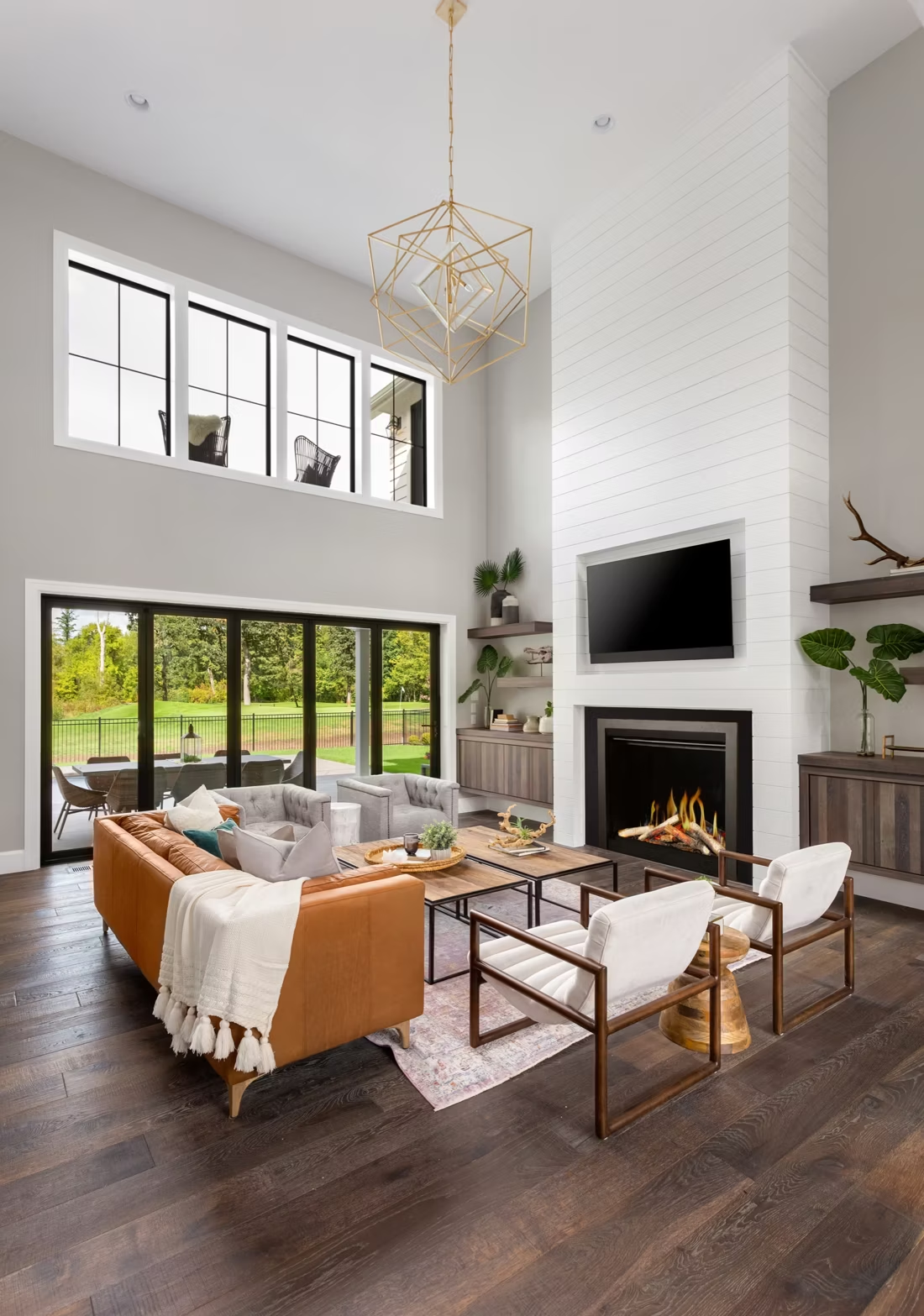
Three steps. No salesperson until you're ready.
Tell us about your project
Your zip code, your situation, and the fuel you're leaning toward—or let the answers point you to one.
See what's actually available
The brands dealers within 100 miles genuinely carry—real options, never a catalog mirage.
Get your dealer & Project Guide
A trusted local dealer, plus the free Project Guide & Parts List that names every component of the job.
Frequently Asked Questions
How much does an electric fireplace installation cost in Carbon County?
Electric fireplace installation in Carbon County typically runs $400 to $1,200. On the low end, that covers a plug-in insert or freestanding unit that drops into an existing space with no electrical work. On the higher end, it covers a built-in wall unit that requires a dedicated 240V circuit, some minor framing, and an electrician's time to run new wiring—common in Lehighton and Palmerton homes where the panel is older and needs a dedicated breaker added. Local dealers can tell you within a few minutes of looking at your space and panel which end of that range you'll land on.
Will an electric fireplace actually heat my house in a Carbon County winter?
Most electric fireplaces are built for zone heating, not whole-house heating—they'll comfortably warm a single room (typically up to 400-1,000 sq ft depending on the model) but won't replace a furnace when temperatures drop into the teens, which happens regularly here. For a converted basement in Lehighton, a sunroom, or a bedroom addition where you want supplemental heat plus ambiance without extending ductwork, electric is a strong fit. If you're trying to heat an entire drafty farmhouse near the Lehigh Gorge through a Carbon County winter, you'll want a wood or gas unit sized for the whole space instead.
Do I need a permit to install an electric fireplace in Carbon County?
In most cases, no—a plug-in electric insert or freestanding unit doesn't require a building permit since there's no venting, gas line, or structural change involved. If your installation requires new electrical wiring or a dedicated 240V circuit, the electrical work itself may need a permit and inspection depending on your municipality (Jim Thorpe, Lehighton, and Palmerton each handle permitting separately, along with the townships covered by the Carbon County codes office for unincorporated areas). A local dealer or licensed electrician can tell you quickly whether your specific install triggers a permit requirement.
What's the difference between an electric fireplace, insert, and mantel unit?
An electric insert is built to slot into an existing fireplace opening—a common upgrade for Carbon County homes with an old, drafty wood-burning fireplace that a family wants to convert to something maintenance-free. A built-in electric fireplace is designed to be framed into a wall, similar to how a gas fireplace would be installed, for a cleaner, seamless look in new construction or a remodel. A mantel or freestanding electric unit is furniture-style—it plugs in, sits against a wall, and can be moved if you relocate, which makes it a popular choice for renters in Lehighton and Weatherly.
How does an electric fireplace compare to a wood stove for a Carbon County home?
Wood stoves burning local oak, hickory, maple, or cherry produce real, sustained heat output and keep working during a power outage—a meaningful advantage here given how ice storms can knock out lines across the county's hillier terrain. Electric fireplaces need power to run, so they go dark exactly when a wood stove would matter most. What electric offers instead is simplicity: no chimney, no ash, no cutting or stacking wood, and installation in an afternoon rather than a full day of venting work. Many Carbon County homeowners run both—wood or gas as backup and primary heat, electric for a bedroom, den, or basement where convenience matters more than raw BTUs.
Can an electric fireplace go in an apartment or rental in Carbon County?
Yes, and it's one of the more common uses of electric units in the county's boroughs. A plug-in insert or freestanding unit requires no permanent alteration, no venting, and no landlord sign-off in most cases beyond confirming the outlet can handle the draw. This makes electric the practical choice for rental units in Lehighton, Palmerton, and Jim Thorpe where a tenant wants supplemental heat and fireplace ambiance without any construction. Wall-mounted or built-in units are a different story since they typically require landlord approval and possibly electrical work.
How much does it cost to run an electric fireplace in Carbon County?
Most electric fireplaces draw around 1,500 watts on the heat setting, which works out to roughly 15 cents per hour of use at typical PPL Electric Utilities residential rates—so running one for 6 hours a day through a cold stretch adds somewhere in the range of $25 to $30 a month to your bill. Running the flame effect alone without heat costs pennies, since that draws only a small fraction of the wattage. It's a modest add to a utility bill compared to running supplemental space heaters or electric baseboard in the same room.
Are electric fireplaces safe for older Carbon County homes?
Yes—in fact, that's often the appeal. Many homes in Jim Thorpe's historic district and older housing stock throughout Lehighton and Palmerton have masonry chimneys that are no longer rated for safe use, or knob-and-tube wiring that complicates gas line work. An electric insert dropped into an existing fireplace opening sidesteps both problems: no combustion, no chimney liner needed, and if the outlet is already up to code, no rewiring required. It's a common solution for preserving the look of an old fireplace without the liability of an unsafe chimney.
Electric vs. gas—which is right for my Carbon County home?
Gas delivers real, sustained heat output and can be sized to actually warm a room during a Carbon County cold snap, but it requires a gas line or propane tank, venting in most configurations, and a more involved (and more expensive) install. Electric skips all of that—plug it in and you're done—but tops out at zone heating and depends on grid power staying up. If you're renovating a space with existing gas service and want real heat, gas usually wins. If you want fast, low-cost ambiance and modest supplemental warmth in a space where running gas or venting isn't practical—an upstairs bedroom, a finished basement, a rental unit—electric is the better fit.
Can I put a TV above my fireplace?
Yes—with an asterisk. Fireplaces are hot and TVs don't like heat. Either put a mantel between them to deflect rising warmth, or choose a fireplace with heat-management technology that creates a cool zone on the wall above—the wall stays around 125 degrees, barely warm, while the room still gets full heat. If you like clean lines and don't want a mantel, heat management is the answer.
Does an electric fireplace need a vent or chimney?
No—that's its superpower. An electric fireplace needs a wall and an outlet, period. No vent pipe, no gas line, no clearances to design around, which is why it works in bedrooms, offices, apartments, and walls where venting a gas or wood unit would be impractical or impossible. Installation is typically the simplest and least expensive of any fireplace type.
What is an in-home preview and do I need one?
It's a visit where a hearth professional measures your space, confirms the model you picked actually works in your home, and walks the specs—framing, gas line, venting, finish work—before anything is ordered. Some details you just can't know until you see the house. Never make a down payment without one; it's the single most-skipped step that burns buyers.
Can a fireplace actually lower my heating bill?
Yes—by creating a comfort zone. A furnace heats every square foot of the house just to warm the one room you're in; a gas fireplace on low burns roughly a sixth of the gas a typical furnace does. Set the furnace around 55–60 degrees as a baseline, then heat the rooms your family actually uses. Families who heat this way commonly save $20–$60 a month.
Stove and Fireplace Dealers in Carbon County
Find your electric fireplace in Carbon County.
Tell us a bit about your space and we'll match you with the right electric fireplace or insert, plus a free Project Guide & Parts List—the exact parts and a trusted local Carbon County dealer to install them.
Find Your Fireplace →