
Keep Your Family Warm and Safe—No Matter What
From the hardwood ridges around the Yellow Breeches to the spring-fed heart of the village, Boiling Springs homes have burned oak and hickory for generations. Find the right stove or insert, and connect with a trusted local dealer.
Every Project Starts From One of These Five Situations
Hardwood country, right in your backyard.
Boiling Springs sits in South Middleton Township at about 520 feet in the Cumberland Valley, where winter lows average around 20°F and the region logs roughly 5,559 heating degree days a season. That's a real winter—not as brutal as Burlington, VT, but cold enough that a wood stove earns its keep from late October through March, especially on the nights when a nor'easter or ice storm rolls through the valley and the power flickers.
South-central Pennsylvania is oak and hickory country, with maple and cherry mixed in on the ridgelines toward Michaux State Forest—all dense, high-BTU hardwoods that season well and burn long. Unlike parts of the West with winter inversion or wildfire-smoke restrictions, Cumberland County has no air-quality non-attainment designation, so burning here isn't complicated by curtailment days. A well-sized wood stove or insert gives Boiling Springs homeowners dependable heat during outages, a hedge against Met-Ed's residential electric rate of roughly 15.45 cents per kWh, and the kind of dry radiant warmth that suits an old stone farmhouse or a cabin near the trail.
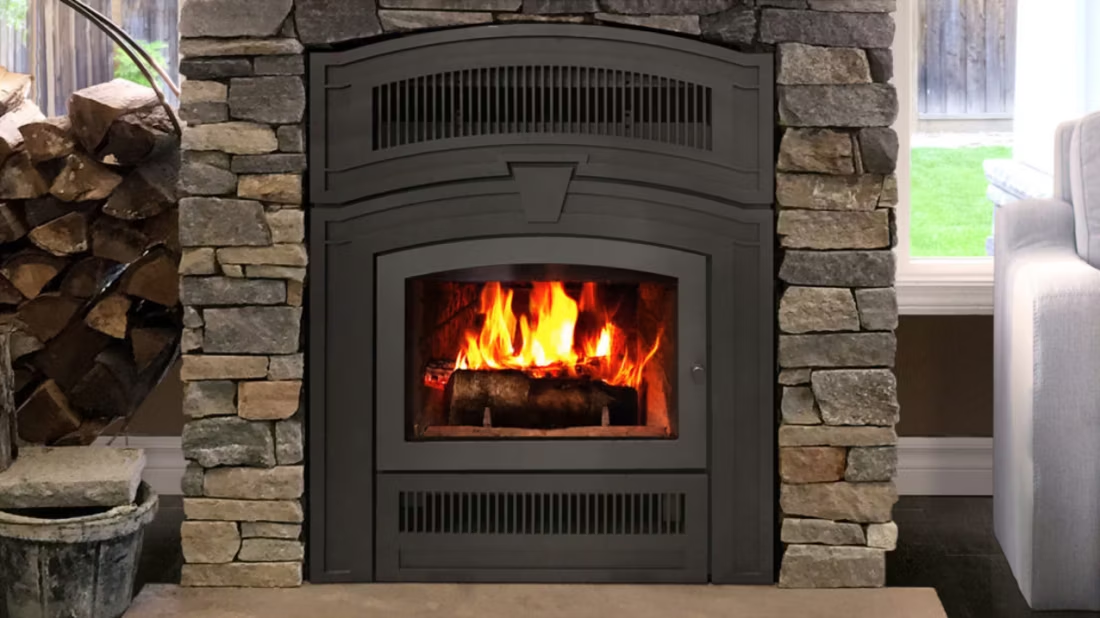
Three steps. No salesperson until you're ready.
Tell us about your project
Your zip code, your situation, and the fuel you're leaning toward—or let the answers point you to one.
See what's actually available
The brands dealers within 100 miles genuinely carry—real options, never a catalog mirage.
Get your dealer & Project Guide
A trusted local dealer, plus the free Project Guide & Parts List that names every component of the job.
Frequently Asked Questions
How much does a wood stove installation cost in Boiling Springs?
Most wood stove installations in the Boiling Springs area run between $3,500 and $8,500, depending on the stove, whether a masonry chimney needs relining with stainless steel, and whether a new hearth pad is required for clearance-to-combustible code. Homes with an existing, sound chimney are usually on the lower end; homes needing a full Class A chimney system run through a wall or roof land closer to the top. South Middleton Township requires a building permit for new solid-fuel appliances, and most local hearth dealers fold that paperwork into the installation quote.
What size wood stove do I need for a Boiling Springs home?
It depends on square footage, ceiling height, and how drafty the house is—a lot of the older stone and frame homes in and around the village lose heat faster than newer construction. As a rough guide for this climate: a small stove suits a cabin or single large room, a medium stove handles a typical 1,500-2,200 sq ft home, and a large stove is appropriate for bigger, open-plan or poorly insulated houses. Given the dense hardwood most people burn here—oak and hickory run hot—it's easy to oversize a stove and end up damping it down constantly, which builds creosote. A local dealer can size your space correctly during an in-home visit, which is worth doing before you buy.
Where can I find a certified wood stove installer near Boiling Springs?
Look for NFI (National Fireplace Institute) certified technicians or CSIA-certified sweeps—both credentials mean formal training in solid-fuel venting and clearances. In the Cumberland Valley, most hearth shops that sell wood stoves also install them, which keeps warranty coverage and code compliance under one roof. Avoid having a general contractor install a wood-burning appliance without hearth-specific training; improper chimney liner sizing or clearance mistakes are the most common cause of house fires with solid-fuel units.
Should I get a wood stove or a wood insert for my Boiling Springs home?
If you already have a working masonry fireplace—common in the older homes around the village and along the Yellow Breeches—a wood insert is usually the better upgrade. It slides into the existing firebox, uses a stainless liner run up your current chimney, and turns a fireplace that loses most of its heat up the flue into an efficient, closed-combustion heat source. If you don't have an existing fireplace, or you're heating a detached space like a garage or cabin, a freestanding stove on a hearth pad gives you more placement flexibility.
Do I need a permit to install a wood stove in Boiling Springs?
Yes. New wood stove and insert installations require a building permit through South Middleton Township, which follows the Pennsylvania Uniform Construction Code, and the appliance itself needs to meet current EPA emissions standards. Most hearth dealers pull the permit as part of the install so you're not handling that paperwork yourself. Cumberland County has no wood-smoke non-attainment designation or seasonal burning curtailment like some Western states, so once the stove is installed and inspected, day-to-day burning isn't restricted.
What's the best wood stove for this part of Pennsylvania?
Given the dense local hardwoods—oak, hickory, maple, and cherry—a mid-size non-catalytic stove from a brand like Pacific Energy, Lopi, or Jotul handles most Cumberland Valley homes well, with long secondary-burn times on a load of well-seasoned oak. For a primary-heat setup in an older, larger farmhouse, a catalytic stove such as a Blaze King can stretch a burn well past 12 hours overnight, which matters on the coldest January nights when lows dip toward the single digits. A local dealer can match the stove to your square footage and how you plan to use it.
How often should my chimney be inspected in Boiling Springs?
Once a year, per CSIA guidelines—ideally in late summer or early fall before burning season starts, so any repairs are done before cold weather hits. Homes burning oak and hickory as a primary heat source, especially if the wood wasn't fully seasoned, can build creosote faster and may need a mid-season check. A full sweep and Level 1 inspection is the standard annual service most local chimney sweeps offer, and it's the single easiest way to avoid a chimney fire.
Where can I get firewood near Boiling Springs?
Local firewood suppliers around Cumberland County sell seasoned oak, hickory, maple, and cherry by the cord, typically in the $200-$300 range depending on species mix and whether it's delivered and stacked. For self-cut wood, the Pennsylvania Bureau of Forestry issues firewood permits for Michaux State Forest, a short drive south toward the Michaux Range—a good option if you want to cut and season your own hardwood ahead of next winter rather than buying it already dry.
Wood stove vs. pellet stove—which makes more sense here?
Wood stoves burn the oak and hickory that's abundant locally, work without electricity (a real advantage when an ice storm takes down power lines in the valley), and give the most authentic fire experience. Pellet stoves—using bagged fuel from regional brands like Energex, Hamer, or Greene Team—are easier to load and run cleaner, but they need continuous electricity for the auger and blower, so they go dark in an outage unless you add battery backup. For a Boiling Springs home where storm-related outages are a real concern and hardwood is easy to source, wood is often the more resilient choice; for homeowners who want convenience and don't mind relying on Met-Ed's grid, pellet is a solid alternative.
What's the difference between an insert and a zero-clearance fireplace?
An insert is a fireplace that slides into a pre-existing wood-burning fireplace—if you don't have one, there's nothing to insert it into. A zero-clearance fireplace is built into a framed wall, which makes it the answer for remodels and new construction. Simple test: existing masonry fireplace means insert; blank or framed wall means zero-clearance.
Why is a fireplace insert so efficient?
An insert does two things: it seals the chimney completely, so you stop losing air you already paid to heat, and it radiates warmth into the room through the firebox and glass. Most add a heat-exchange fan that pulls cool room air underneath, wraps it around the hot firebox, and pushes it back out warm. Your home is more efficient before you've even lit the first fire.
Does a fireplace add value to my home?
On average, a fireplace adds back to the home about the same amount you spent installing it. Add the monthly savings from heating the rooms you actually use instead of the whole house—often hundreds of dollars a year—and the value case is strong before you even count what a fire does for how your family uses the room.
How much should I budget for a fireplace?
For an average home—covering the fireplace, the vent pipe, and basic installation—a budget between $3,900 and $5,500 gives you a lot of options across wood, gas, and pellet. By the time you add finish work, gas line, and electrical, the average complete installation lands between $5,000 and $12,000 all-in. In a remodel or new build, a good rule is to put about 2.5% of the total project cost toward the fireplace.
Nearby Dealers
Hearth shops serving Boiling Springs and the surrounding area. Every listing shows whether it is a WhyFire partner, a dealer we have verified as authorized for the brands we recommend, or a local business carrying hearth products. No manufacturer pays for placement. How we verify dealers →
Todays Home And Leisure
Aes Hearth & Patio - Newville
Aes Hearthplace, Inc.
Aes Hearthplace, Inc.
Aes Hearth & Patio - Camp Hill
Blain Supply
Country Comfort Inc.
Find your wood fireplace in Boiling Springs.
Tell us about your home and we'll put together a free Project Guide & Parts List—the right stove or insert, the exact venting parts for your chimney setup, and a trusted local dealer near Boiling Springs who can install it.
Find Your Fireplace →