
Add Heat and Ambiance Without Touching Your Chimney.
No flue, no gas line, no exterior alteration—just plug in and go. Find the right electric unit for your Boiling Springs home and connect with a trusted local dealer.
Every Project Starts From One of These Five Situations
An easy upgrade for Boiling Springs' historic homes.
Boiling Springs is a small Cumberland County village built around its namesake spring-fed lake, with a historic district full of 19th-century stone and brick homes along the Appalachian Trail corridor. Many of those properties carry exterior-alteration restrictions that make adding a new chimney or gas line a real headache—and with winter lows averaging around 20°F and a long, cold Zone 5A heating season, homeowners still want dependable supplemental heat in the rooms they actually live in.
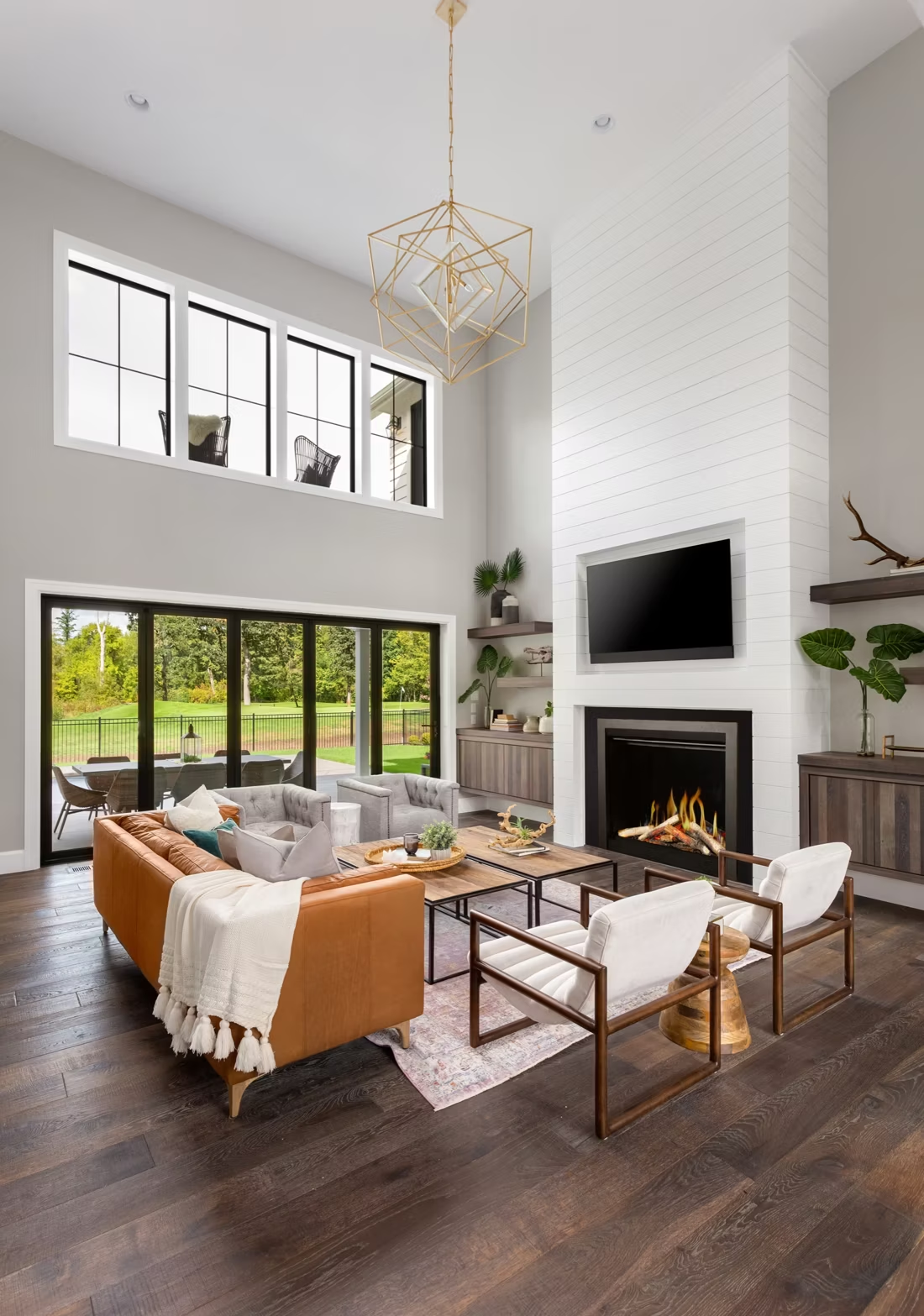
Electric fireplaces sidestep the venting problem entirely. An insert can drop into an existing masonry firebox—common in older South Middleton Township homes—without a liner, flue, or gas hookup, and a freestanding or wall-mounted unit needs nothing more than a standard outlet or a dedicated circuit. Running one is inexpensive at Metropolitan Edison's residential rate of about 15.45 cents per kWh, and it delivers instant, adjustable zone heat for a den, sunroom, or bedroom—a practical complement to a wood-burning primary heat source in a climate this cold, rather than a replacement for one.
Three steps. No salesperson until you're ready.
Tell us about your project
Your zip code, your situation, and the fuel you're leaning toward—or let the answers point you to one.
See what's actually available
The brands dealers within 100 miles genuinely carry—real options, never a catalog mirage.
Get your dealer & Project Guide
A trusted local dealer, plus the free Project Guide & Parts List that names every component of the job.
Frequently Asked Questions
How much does an electric fireplace installation cost in Boiling Springs?
A plug-in electric insert or freestanding unit typically runs $300 to $1,200 installed, since most models only need a standard 120V outlet and minimal carpentry to fit an existing firebox opening. A built-in wall unit or one requiring a dedicated 20-amp circuit adds electrician labor, usually $150 to $400, pushing the total toward $1,500 to $2,500. Because there's no chimney or gas line involved, electric installs are consistently the least expensive hearth option available to Boiling Springs homeowners, including those in the historic district where exterior work is restricted.
Will an electric fireplace still work if the power goes out?
No—and this matters in Cumberland County, where ice storms and heavy snow can knock out Met-Ed service for hours or longer during the coldest stretches of the season. An electric fireplace has no standalone heat source once the power drops. Homes that want heat during outages typically pair an electric unit for everyday convenience with a wood stove or fireplace for backup—oak, hickory, maple, and cherry are all common regional firewood species that burn well and are easy to source locally.
Do I need a permit to install an electric fireplace in a Boiling Springs historic home?
In most cases, no special permit is required beyond standard electrical code compliance, and that's exactly why electric is such a common choice for homes inside the Boiling Springs historic district. Because there's no flue, vent, or exterior penetration involved, you avoid the zoning or historic commission review that a new chimney or gas vent-through-wall installation would typically trigger. If your project involves adding a new dedicated circuit, an electrician will pull a standard electrical permit through South Middleton Township, but the fireplace itself doesn't require separate hearth-specific approval.
How much space can an electric fireplace actually heat?
Most residential electric fireplaces top out around 1,500 watts (roughly 5,000 BTU), which comfortably heats a single room of 400 to 600 square feet, less if ceilings are high or the room is drafty. Given Boiling Springs' Zone 5A winters and a long, cold heating season, an electric unit is best understood as strong supplemental or zone heat—great for a den, sunroom, or the room you spend evenings in—rather than a way to heat an entire older farmhouse through a Pennsylvania winter.
Can I put an electric insert into my existing masonry fireplace?
Yes, and it's one of the most popular projects for the stone and brick fireplaces common in Boiling Springs' older homes. An electric insert slides into the existing firebox opening, uses no chimney liner or venting, and typically just needs an outlet nearby or a short electrical run. It's a good option for homeowners who want the look of a working fireplace back without the wood handling, ash cleanup, or masonry chimney repairs that older fireboxes often need.
What does it cost to run an electric fireplace on Met-Ed power?
At Metropolitan Edison's residential rate of about 15.45 cents per kWh, a typical 1,500-watt electric fireplace costs roughly 23 cents per hour to run on full heat. Used for about five or six hours an evening through a cold snap, that works out to around $35 to $45 a month—considerably cheaper than running baseboard electric heat or a space heater across a whole floor, since most units let you run the flame effect alone with the heater off for pure ambiance.
Electric vs. wood vs. gas—which makes sense for my Boiling Springs home?
Wood is well suited here given how common oak, hickory, maple, and cherry are regionally, and it keeps working when the power doesn't—a real consideration with Met-Ed outages during winter storms. Gas offers instant, consistent heat but depends on either a natural gas hookup, which isn't uniformly available across this part of South Middleton Township, or a propane tank. Electric is the simplest and least invasive of the three: no venting, no fuel storage, and no restrictions in the historic district, but it needs grid power and works best as supplemental zone heat rather than a primary source through a Pennsylvania winter. Many local homeowners end up running wood as their backbone heat with electric for convenience in a secondary room.
How much maintenance does an electric fireplace need?
Very little compared to wood or gas. There's no chimney to sweep, no gas line to inspect, and no combustion byproducts to manage. Periodically dust the unit, wipe down the glass front, and check that the heating element and fan are running freely. Most electric fireplaces are rated for 10,000+ hours of use before the heating element needs replacing, and that's typically a straightforward part swap rather than a service call.
What electric fireplace brands are available through local dealers?
Dealers serving Cumberland County commonly carry established electric hearth brands like Dimplex, Napoleon, and Touchstone, which range from basic plug-in inserts to higher-end units with realistic flame technology and heat outputs suited to a single room. The right choice depends on your firebox dimensions, whether you want a recessed or freestanding unit, and how much of the historic mantel or surround you want to keep visible—a local dealer can walk through those specifics during an in-home look at your fireplace opening.
Can I put a TV above my fireplace?
Yes—with an asterisk. Fireplaces are hot and TVs don't like heat. Either put a mantel between them to deflect rising warmth, or choose a fireplace with heat-management technology that creates a cool zone on the wall above—the wall stays around 125 degrees, barely warm, while the room still gets full heat. If you like clean lines and don't want a mantel, heat management is the answer.
What fireplace styles should I know before shopping?
Four cover most of the market: screen-front traditional (mesh front, open feel, fits craftsman homes), traditional door set (the classic look you grew up with), modern linear (wide, low, the statement piece for entertaining), and clean face contemporary (no trim—your tile or stone runs right to the fire's edge). Walk in knowing those four terms and you're ahead of most buyers.
Can I install a fireplace myself?
If you're putting a fire in your house on purpose, it's best to work with an expert. Unless you're genuinely experienced in framing, gas line, vent pipe, and the national code on clearances to combustibles, have a professional do it—and ideally the same company that sells you the fireplace, so warranty, service, and liability all live under one roof.
How much should I budget for a fireplace?
For an average home—covering the fireplace, the vent pipe, and basic installation—a budget between $3,900 and $5,500 gives you a lot of options across wood, gas, and pellet. By the time you add finish work, gas line, and electrical, the average complete installation lands between $5,000 and $12,000 all-in. In a remodel or new build, a good rule is to put about 2.5% of the total project cost toward the fireplace.
Nearby Dealers
Hearth shops serving Boiling Springs and the surrounding area. Every listing shows whether it is a WhyFire partner, a dealer we have verified as authorized for the brands we recommend, or a local business carrying hearth products. No manufacturer pays for placement. How we verify dealers →
Todays Home And Leisure
Aes Hearth & Patio - Newville
Aes Hearthplace, Inc.
Aes Hearthplace, Inc.
Aes Hearth & Patio - Camp Hill
Blain Supply
Country Comfort Inc.
Electric Service in Boiling Springs
An electric fireplace's heater draws about 1,500 watts—pennies per hour at local rates.
Metropolitan Edison Co
Find your electric fireplace in Boiling Springs.
Tell us about your home and firebox, and we'll match you with a trusted local dealer plus a free Project Guide & Parts List for your Boiling Springs electric fireplace project.
Find Your Fireplace →