
Steady, hands-off heat for Armstrong County winters.
From Kittanning to Ford City, Freeport, and Leechburg, Armstrong County sees a heating season on par with Buffalo, NY, and winter lows near 17°F most years. A pellet stove or insert delivers thermostat-like convenience without the splitting, stacking, or hauling of cordwood. Find the right unit and connect with a vetted local dealer.
Every Project Starts From One of These Five Situations
Real warmth, without the woodpile.
Armstrong County sits along the Allegheny River in western Pennsylvania, with Kittanning as the county seat and smaller communities like Ford City, Freeport, Leechburg, and Apollo spread along the river valley and surrounding ridges. The county falls in climate zone 5A, with an average winter low around 17°F and a heating season on par with Buffalo, NY, just a few hours north. That's a long, cold stretch where a supplemental heat source in the living room or den earns its keep from October through April.
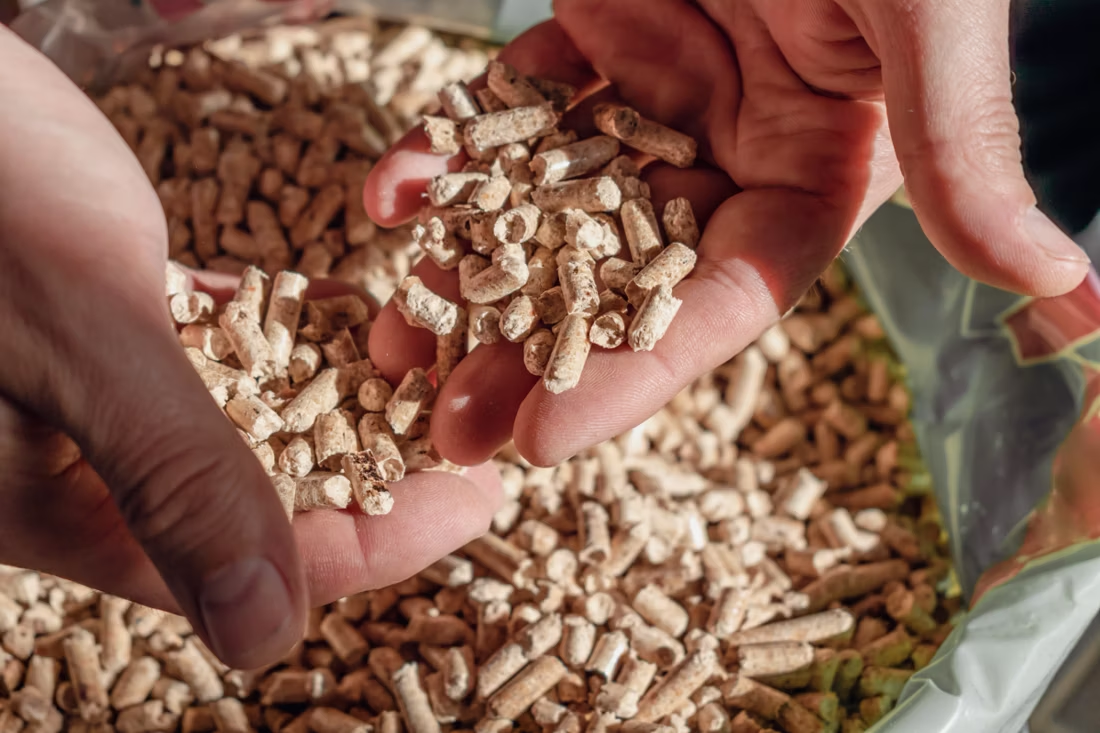
Armstrong County's woodlots are full of oak, hickory, maple, and cherry, and plenty of residents still cut their own firewood—a cutting permit through the Allegheny National Forest runs about $20 per cord during the May-to-October season. But not everyone wants to split, stack, and haul wood every winter. A pellet stove gives you the same radiant, dry heat with a hopper you fill every day or two instead of a woodshed you tend all season. Pennsylvania pellet producers including Energex, Hamer Pellet Fuel, and Greene Team Pellet Fuel supply the region, and with no air quality non-attainment issues or winter burn curtailments in Armstrong County, a pellet stove can run whenever you need it.
Three steps. No salesperson until you're ready.
Tell us about your project
Your zip code, your situation, and the fuel you're leaning toward—or let the answers point you to one.
See what's actually available
The brands dealers within 100 miles genuinely carry—real options, never a catalog mirage.
Get your dealer & Project Guide
A trusted local dealer, plus the free Project Guide & Parts List that names every component of the job.
Frequently Asked Questions
How much does a pellet stove installation cost in Armstrong County?
Most pellet stove and insert installations in Armstrong County run in the $3,000 to $6,500 range, depending on the unit, whether you're venting through an existing masonry chimney or running new PL venting through a wall, and whether an electrical outlet needs to be added near the stove (pellet units require power to run the auger and blower). Inserts that reuse an existing fireplace and chimney liner tend to land on the lower end; freestanding stoves in a new location with fresh wall venting and a dedicated circuit run higher. A local dealer will give you a firm number after seeing your home.
What's the difference between a pellet stove and a pellet insert?
A pellet stove is a freestanding unit that sits on its own hearth pad and vents out through a wall or existing chimney—it can go almost anywhere with the right clearances. A pellet insert is built to slide into an existing masonry fireplace opening, turning a drafty open hearth into a sealed, efficient heat source that still uses your existing chimney (typically with a stainless liner run inside it). For Armstrong County homes with an older fireplace in Kittanning, Ford City, or one of the county's river-valley boroughs, an insert is usually the more cost-effective route. Homes without an existing fireplace are better suited to a freestanding stove.
Where can I buy pellets in Armstrong County?
Regional producers like Energex, Hamer Pellet Fuel, and Greene Team Pellet Fuel supply hardware stores, farm supply retailers, and hearth dealers throughout western Pennsylvania, and most are sold by the ton or by the individual 40-pound bag. Buying by the ton ahead of the winter—rather than bag by bag as you run low—is generally the better value and guarantees you have supply on hand once cold weather sets in. Your local hearth dealer can usually point you to the nearest pellet supplier or arrange delivery directly.
Will my pellet stove still work if the power goes out?
Not without a backup. Pellet stoves rely on electricity to run the auger that feeds fuel and the blower that circulates heat, so a standard unit will shut down in a power outage—something worth planning for in a county that sees its share of winter ice storms and downed lines. Some homeowners pair a pellet stove with a small battery backup unit or a generator sized to run it; if reliable off-grid heat during outages is a priority, a wood stove that needs no electricity may be worth considering alongside or instead of pellet.
What size pellet stove do I need for my home?
Sizing depends on square footage, ceiling height, insulation, and whether the stove is your primary heat source or supplemental. As a general guide for Armstrong County's climate zone 5A winters: smaller units (around 1,000-1,500 sq ft) suit a single large room or a cabin, while larger units (2,000+ sq ft) can carry a whole floor of a well-insulated home. Older farmhouses and homes near the river in Freeport or Leechburg with less insulation often need to size up compared to a newer, tighter-built home of the same square footage. A local dealer will size your space for free during an in-home visit.
Do I need a permit to install a pellet stove in Armstrong County?
In most cases, yes—Armstrong County's boroughs and townships each handle building permits locally rather than through one central county office, so the process depends on where you live. Kittanning, Ford City, Freeport, and the surrounding townships each have their own permitting contact, and your installer can usually tell you exactly who to call or handle the paperwork directly. The permit typically covers the venting path and clearances, not the fuel itself—pellet appliances aren't subject to the kind of seasonal burn curtailments that affect some wood stoves elsewhere, since Armstrong County has no air quality non-attainment designation.
How much maintenance does a pellet stove need?
Less than a wood stove, but it's not zero. Plan on emptying the ash pan every few days during regular use, a deeper cleaning of the burn pot and heat exchanger tubes every few weeks, and a full professional service once a year—typically before the heating season starts in the fall. Annual service checks the auger motor, gaskets, exhaust fan, and hopper for wear. Skipping the yearly service is the most common reason pellet stoves start running poorly or shutting off mid-burn.
Pellet vs. wood—which is right for my Armstrong County home?
Wood offers the lowest ongoing fuel cost if you're willing to cut your own—Allegheny National Forest permits run about $20 per cord in the May-to-October season, and the county's oak, hickory, maple, and cherry all burn well. Wood also keeps working without electricity, which matters if ice storms knock out power. Pellet stoves trade that self-sufficiency for convenience: no splitting or stacking, more consistent heat output, and a cleaner burn with less ash and creosote to manage. For homes where reliable grid power is a given and convenience matters more than fuel cost, pellet is usually the easier fit. For rural properties with wood access and a priority on power-outage backup, wood often wins.
Pellet vs. gas—which should I choose?
Gas fireplaces and inserts offer instant on-off operation at the flip of a switch or remote, with no fuel to load or ash to clean, and many units run on natural gas or propane depending on what's available at your address. Pellet stoves require more hands-on operation—filling the hopper, emptying ash—but burn a renewable, often less expensive fuel and give you the visual and radiant feel of a real fire. If your Armstrong County home already has gas service and you want minimal upkeep, gas is the simpler choice. If you like the ritual of tending a fire and want a lower-cost renewable fuel, pellet is worth a closer look. A local dealer can walk you through both options for your specific home.
What's the difference between an insert and a zero-clearance fireplace?
An insert is a fireplace that slides into a pre-existing wood-burning fireplace—if you don't have one, there's nothing to insert it into. A zero-clearance fireplace is built into a framed wall, which makes it the answer for remodels and new construction. Simple test: existing masonry fireplace means insert; blank or framed wall means zero-clearance.
Why is my open fireplace making my house colder?
Open fireplaces suck—literally. As the fire burns, it consumes air your furnace already paid to heat and pulls it out through the chimney, so the house is actually colder after the fire goes out than before you lit it. An insert fixes this: it seals the chimney, puts fixed glass across the front, and turns that hole in your house into a real heat source.
How much should I budget for a fireplace?
For an average home—covering the fireplace, the vent pipe, and basic installation—a budget between $3,900 and $5,500 gives you a lot of options across wood, gas, and pellet. By the time you add finish work, gas line, and electrical, the average complete installation lands between $5,000 and $12,000 all-in. In a remodel or new build, a good rule is to put about 2.5% of the total project cost toward the fireplace.
Can a fireplace actually lower my heating bill?
Yes—by creating a comfort zone. A furnace heats every square foot of the house just to warm the one room you're in; a gas fireplace on low burns roughly a sixth of the gas a typical furnace does. Set the furnace around 55–60 degrees as a baseline, then heat the rooms your family actually uses. Families who heat this way commonly save $20–$60 a month.
Pellet Brands Stocked Around Armstrong County
Manufacturers will point you to the nearest stocking dealer.
Find your pellet stove in Armstrong County.
Tell us about your home and heating goals, and we'll match you with a trusted local Armstrong County dealer and send over a free Project Guide & Parts List—the parts, venting, and stove or insert recommendation for your specific project.
Find Your Fireplace →