
Find your electric fireplace in Armstrong County.
No chimney, no gas line, no permit headaches—just clean supplemental heat and ambiance for homes across Kittanning, Ford City, Freeport, and the rest of Armstrong County. Find the right unit and connect with a trusted local dealer.
Every Project Starts From One of These Five Situations
Heat that plugs in and works anywhere in the house.
Armstrong County sits along the Allegheny River in western Pennsylvania, a mix of small boroughs like Kittanning and Ford City and long stretches of rural township land toward Dayton and Worthington. Climate zone 5A here means real winters—6,194 heating degree days and average lows around 17°F, roughly in the same range as Buffalo, NY. That's cold enough that most homes lean on a furnace or a wood stove for primary heat, with oak, hickory, maple, and cherry all common in local woodlots and available through Allegheny National Forest cutting permits (about $20 per cord, May through October).
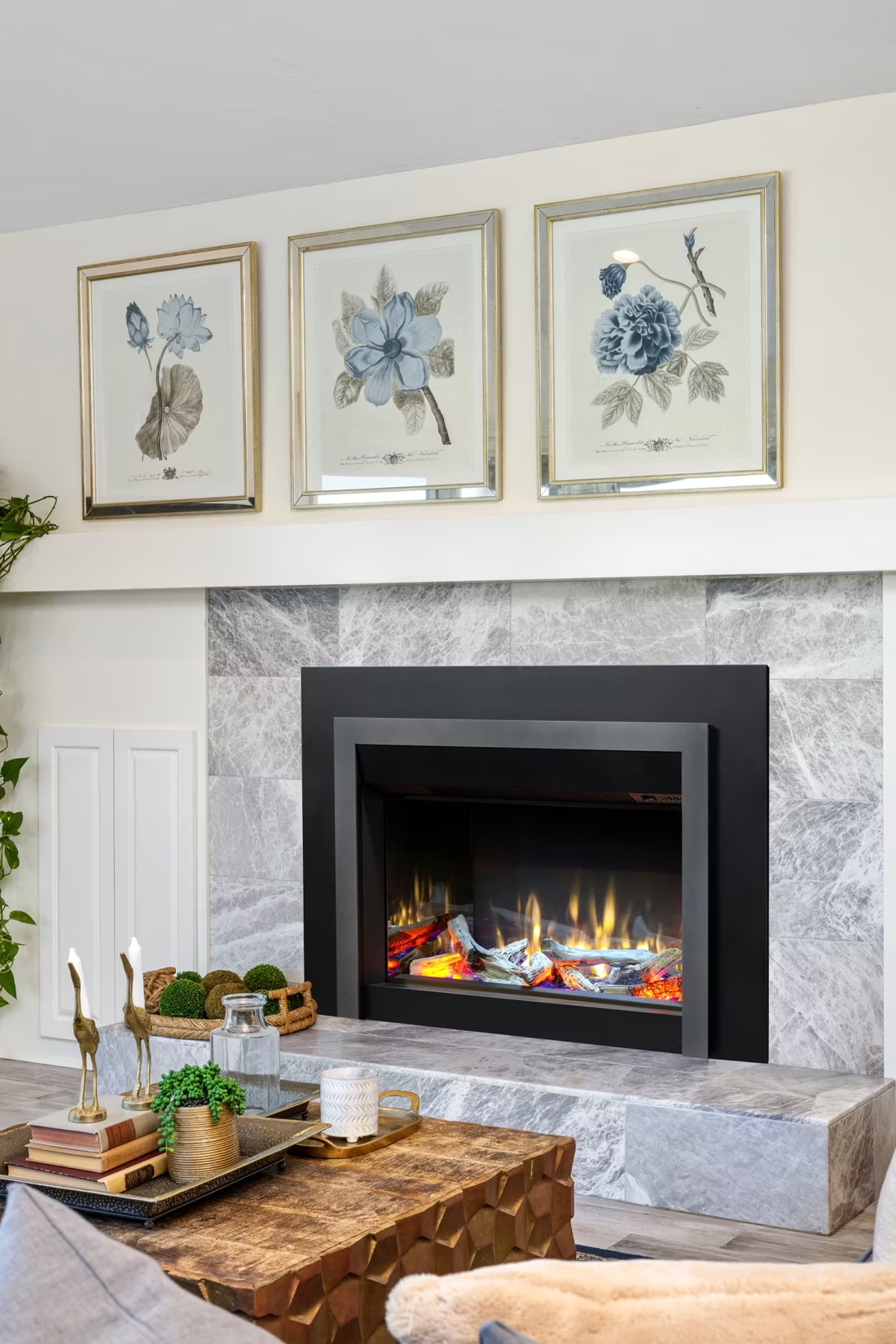
Electric fireplaces fill a different role here. They're the practical answer for a finished basement in Ford City with no existing flue, a second-floor bedroom addition, a rental property in Kittanning where a wood or gas unit isn't feasible, or an older farmhouse where running new venting would mean tearing into plaster and old wiring. There's no combustion, no clearance-to-combustibles chimney work, and in most cases no building permit at all—just a unit, an outlet or a licensed electrician for a hardwired install, and a wall. It won't replace a furnace on the coldest nights, but as zone heat or ambiance in a specific room, it's often the simplest project on this list.
Three steps. No salesperson until you're ready.
Tell us about your project
Your zip code, your situation, and the fuel you're leaning toward—or let the answers point you to one.
See what's actually available
The brands dealers within 100 miles genuinely carry—real options, never a catalog mirage.
Get your dealer & Project Guide
A trusted local dealer, plus the free Project Guide & Parts List that names every component of the job.
Frequently Asked Questions
How much does an electric fireplace installation cost in Armstrong County?
Plug-in electric inserts and freestanding stoves are the cheapest project on this site—many units run a few hundred dollars and need nothing more than a standard 120-volt outlet, so there's effectively no 'installation' beyond mounting the unit. Built-in wall units and larger linear fireplaces that require a dedicated 240-volt circuit are a different story: budget for an electrician to run a new circuit, plus framing or trim work if it's going into a wall or existing masonry opening. A local dealer can tell you within minutes which category your chosen unit falls into during an in-home or phone consultation.
Will an electric fireplace actually heat a room in an Armstrong County winter?
It can hold its own in a single room, but don't expect it to replace your furnace when temperatures drop to the winter average low of 17°F. Most electric units are rated around 4,600–5,000 BTU, which is enough to noticeably warm a bedroom, den, or finished basement room, especially as supplemental heat alongside central HVAC. In a county with 6,194 heating degree days, electric fireplaces are best understood as zone heaters for a specific space rather than a whole-house solution—which is exactly how most Armstrong County homeowners use them.
Do I need a permit or an electrician to install an electric fireplace?
Most plug-in electric fireplaces need neither—they're treated like any other appliance you plug into an existing outlet. If you're installing a larger built-in unit that requires a dedicated 240-volt circuit, that electrical work should be done by a licensed electrician, and depending on your municipality within Armstrong County, an electrical permit may be required for the new circuit itself. This is worth confirming with your local building office before work starts, though most hearth dealers who sell hardwired units can point you to an electrician who already knows the local requirements.
Electric insert, electric stove, or wall-mount—which is right for my home?
An electric insert is built to slide into an existing masonry fireplace opening, which makes it a strong option for older Armstrong County homes around Kittanning and Freeport that have a fireplace but want to retire the wood-burning maintenance. A freestanding electric stove works well in a room with no existing fireplace, since it just needs floor space and an outlet. A wall-mount or linear unit is the choice for new construction, additions, or basement finishing where you're building the space around the fireplace rather than fitting it into an existing opening. All three are widely available; the right one depends on what's already in the wall or hearth.
What does an electric fireplace cost to run compared to my furnace?
Electric fireplaces are inexpensive to operate for the heat they produce in a single room, running on standard residential electric rates through West Penn Power, the utility serving most of Armstrong County. Because they're 100% efficient at the point of use—every watt becomes heat in that room—they can actually reduce your overall heating bill if you use one to keep a frequently occupied room warm and turn the thermostat down elsewhere. They're not a substitute for whole-house heating, though; running one continuously to heat a large, poorly insulated space will cost more than running your furnace efficiently.
Will my electric fireplace work if the power goes out?
No—this is the one honest tradeoff worth knowing before you buy. Electric fireplaces require power to run the heater and, in most models, the flame-effect display, so they go dark the moment the power does. In rural parts of Armstrong County where winter storms can knock out lines for hours, a wood stove burning local oak or hickory is the more reliable backup heat source. Many households here end up with both: wood or a wood insert for outage resilience, electric for everyday convenience in a room where running a chimney isn't practical.
Can I add an electric fireplace to an older Armstrong County farmhouse without rewiring the whole house?
In most cases, yes. Plug-in units simply use an existing outlet, so age of wiring generally isn't a factor. If you're set on a hardwired built-in unit, an electrician will need to confirm your panel has capacity for a new dedicated circuit—older farmhouses around Dayton, Worthington, or Rural Valley sometimes have limited panel space or older knob-and-tube wiring in parts of the house, which can add a modest electrical upgrade to the project. A local dealer or electrician can assess this in one visit before you commit to a specific unit.
Electric vs. wood—which is right for my Armstrong County home?
Wood offers real heat output, works during power outages, and taps into an abundant local resource—oak, hickory, maple, and cherry are common species, and Allegheny National Forest cutting permits run about $20 per cord from May through October. It requires a chimney, regular chimney sweeping, and ongoing wood handling. Electric requires none of that: no venting, no permits in most cases, and heat on demand at the flip of a switch, but no backup value if the power fails and no primary-heat capability in a 6,194 HDD climate. Many Armstrong County homes use wood or a wood insert in the main living area and electric in a bedroom, basement, or bonus room where a chimney isn't an option.
Electric vs. pellet stove—which makes more sense here?
Pellet stoves, using bagged fuel from regional brands like Energex, Hamer Pellet Fuel, or Greene Team, produce real, substantial heat and can serve as a primary or near-primary heat source in a cold Armstrong County winter—but they need venting, a hopper to load, and electricity to run the auger and blower, so they're not an outage backup either. Electric fireplaces produce far less heat, but need no venting, no fuel deliveries, and effectively no maintenance. If you want meaningful heat output for a main living space, pellet is the stronger option. If you want simple supplemental warmth and ambiance in a specific room with the easiest possible install, electric wins.
Can I put a TV above my fireplace?
Yes—with an asterisk. Fireplaces are hot and TVs don't like heat. Either put a mantel between them to deflect rising warmth, or choose a fireplace with heat-management technology that creates a cool zone on the wall above—the wall stays around 125 degrees, barely warm, while the room still gets full heat. If you like clean lines and don't want a mantel, heat management is the answer.
What fireplace styles should I know before shopping?
Four cover most of the market: screen-front traditional (mesh front, open feel, fits craftsman homes), traditional door set (the classic look you grew up with), modern linear (wide, low, the statement piece for entertaining), and clean face contemporary (no trim—your tile or stone runs right to the fire's edge). Walk in knowing those four terms and you're ahead of most buyers.
Can I install a fireplace myself?
If you're putting a fire in your house on purpose, it's best to work with an expert. Unless you're genuinely experienced in framing, gas line, vent pipe, and the national code on clearances to combustibles, have a professional do it—and ideally the same company that sells you the fireplace, so warranty, service, and liability all live under one roof.
What is an in-home preview and do I need one?
It's a visit where a hearth professional measures your space, confirms the model you picked actually works in your home, and walks the specs—framing, gas line, venting, finish work—before anything is ordered. Some details you just can't know until you see the house. Never make a down payment without one; it's the single most-skipped step that burns buyers.
Find your electric fireplace in Armstrong County.
Tell us a bit about your home and where you want the heat, and we'll send you a free Project Guide & Parts List—the right unit, the exact parts including any wiring needs, and a trusted local Armstrong County dealer to install it.
Find Your Fireplace →