
Keep Your Family Warm and Safe—No Matter What
With 4,212 heating degree days and winter lows that average 28°F, Ardmore rarely needs wood as primary heat. But for the Main Line homeowners who want it anyway—for ambiance, backup power, or an original masonry fireplace—we'll connect you with a dealer who knows how to do it right.
Every Project Starts From One of These Five Situations
Wood heat is the exception, not the rule, on the Main Line.
Ardmore sits in Lower Merion Township at just 313 feet of elevation, with a climate zone 4A rating and 4,212 heating degree days a year—a fraction of what you'd see in genuinely wood-dependent regions like Burlington, Vermont or Duluth, Minnesota, where HDD counts run 7,000 to 9,000-plus. Winters here average a mild 28°F low, and most homes on tight Main Line lots already run efficient natural gas or electric heat. That combination is exactly why wood stoves and fireplaces are uncommon here: the fuel isn't practical as a primary heat source, and township setback and clearance rules on densely built lots make new installs harder to site than in a rural or mountain town.
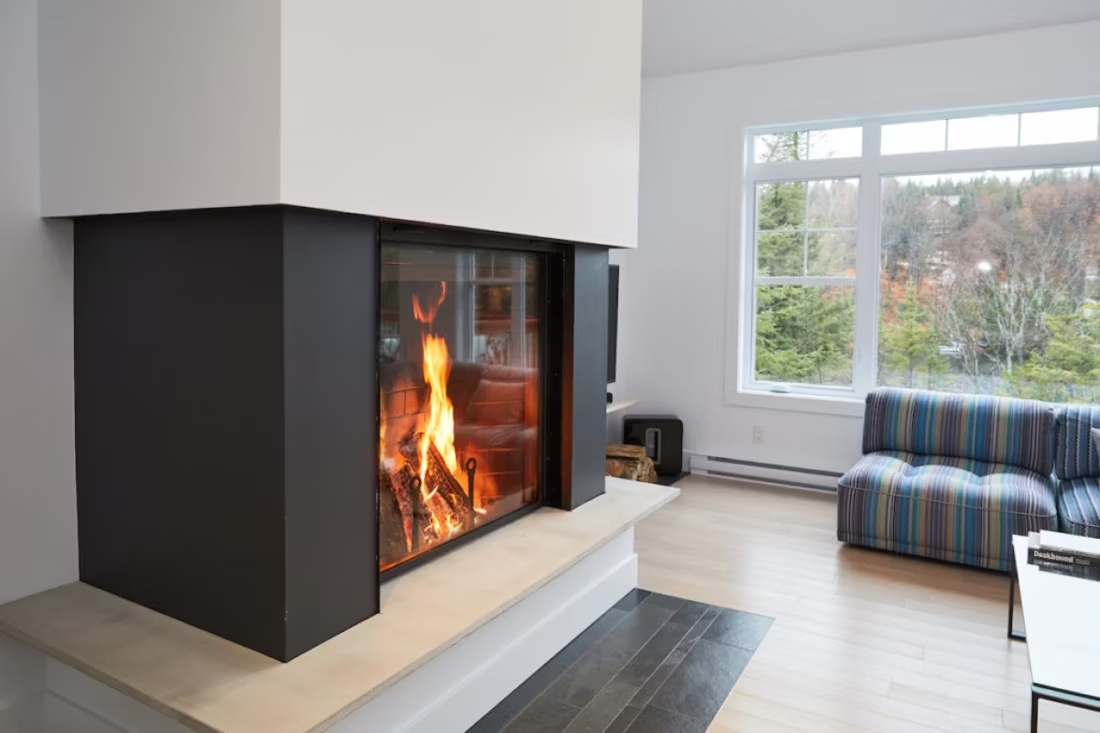
That said, wood hasn't disappeared from Ardmore. Many of the borough's Tudor and Colonial homes, several built in the early 1900s, still have their original masonry fireplaces, and a small number of owners install wood inserts into those existing chimneys for ambiance or as backup heat during the ice storms that occasionally knock out PECO service. Local hardwoods—oak, hickory, maple, and cherry—are all readily available from regional Montgomery County firewood suppliers, so fuel isn't the obstacle. If you're one of the Ardmore homeowners who still wants a wood option, the project is worth doing with a local pro who understands both the older housing stock and the township permitting process, rather than a big-box install.
Three steps. No salesperson until you're ready.
Tell us about your project
Your zip code, your situation, and the fuel you're leaning toward—or let the answers point you to one.
See what's actually available
The brands dealers within 100 miles genuinely carry—real options, never a catalog mirage.
Get your dealer & Project Guide
A trusted local dealer, plus the free Project Guide & Parts List that names every component of the job.
Frequently Asked Questions
Does it actually make sense to install a wood stove in Ardmore?
For most Ardmore homes, no—not as a primary heat source. With only 4,212 heating degree days and winter lows averaging 28°F, this is a mild mid-Atlantic climate compared to genuinely wood-reliant regions like Burlington, Vermont. Most Ardmore households already have efficient gas or electric heat through PECO. Where wood still makes sense is as a secondary source: ambiance in an existing masonry fireplace, or backup heat for the handful of winter storms that knock out grid power. If that's your use case, it's a reasonable project—just go in knowing it's supplemental, not primary.
Can I even get a permit for a wood stove in Lower Merion Township?
Yes, but it's a more involved process than in a rural county. Ardmore falls under Lower Merion Township's Building & Planning Department, and new wood-burning installations need a building permit along with proof the unit meets current EPA emissions standards. On Ardmore's typically tight lots, chimney placement and required clearances to property lines and structures are often the limiting factor rather than the appliance itself—which is one reason a local installer who's worked in the township before is worth using instead of a national chain crew unfamiliar with the local code.
What does a wood stove or insert installation cost in Ardmore?
Because wood installs are uncommon here, pricing is less standardized than for gas work, but homeowners typically see $4,000 to $8,000 for a wood insert into an existing masonry fireplace, and more—often $7,000 to $12,000—for a freestanding stove that requires new Class A chimney construction on an older home without one. Ardmore's older housing stock sometimes adds cost if existing masonry chimneys need relining or repair before a liner can be run. Get a firm number from a local installer after they've seen your chimney in person.
I have an original masonry fireplace—insert or full stove?
For most of Ardmore's older Tudor and Colonial homes, an insert is the better fit. It slides into the fireplace opening you already have, uses the existing chimney (relined with a stainless liner), and turns a decorative, heat-losing fireplace into something that can genuinely warm a room. A freestanding stove only makes sense if you don't have an existing masonry fireplace and are willing to build a new chimney chase—a bigger and more expensive project on a Main Line lot where siting and clearances are tighter than in a rural setting.
Where does firewood come from for Ardmore homes that burn wood?
There's no public land or Forest Service cutting nearby, since this is a built-out Philadelphia suburb, so all firewood is purchased rather than self-cut. Regional Montgomery County and Chester County suppliers deliver seasoned oak, hickory, maple, and cherry—all common species in this part of southeastern Pennsylvania and all good stove wood. Because demand is low, supply isn't an issue; it's more a matter of ordering a cord or two ahead of the season and giving it time to season if it isn't already kiln- or air-dried.
Are there air quality restrictions on wood burning in Ardmore?
No—Ardmore and Montgomery County don't have the winter inversion or non-attainment issues that trigger burn bans in some western cities. There are no local air quality curtailment periods to plan around here. The practical restriction on wood heat in Ardmore isn't air quality, it's the density of the lots and the mild climate that makes wood a secondary rather than primary heat choice for most homeowners.
Is a wood stove worth it just for power-outage backup?
It's one of the more legitimate reasons Ardmore homeowners still install one. PECO service on the Main Line is generally reliable, but ice storms every few winters can knock out power for a day or more, and a wood stove or insert is one of the only heat sources that keeps working with no electricity at all. If backup heat during outages is your main driver, prioritize a simple, non-electronic stove—no blower dependency—so it truly works when the grid doesn't.
Would gas make more sense than wood for my Ardmore home?
For most homes here, yes. Gas fireplaces and inserts are the standard choice on the Main Line—PECO serves gas as well as electric in this area, installation is more straightforward on tight suburban lots, and you get instant, thermostatically controlled heat without sourcing firewood or maintaining a chimney. Wood still has a place for homeowners who specifically want the ambiance of a real fire, self-sufficiency during outages, or a use for an existing masonry fireplace—but if you're choosing a heat source from scratch, gas is the more practical fit for Ardmore.
What about an electric fireplace instead of wood?
Electric is a legitimate option in Ardmore and, unlike wood, it's genuinely mainstream here—PECO's residential rate runs about 14.7 cents per kWh, and electric inserts or built-ins need no venting, no chimney, and no permitting beyond a standard electrical hookup. You lose the radiant heat output and real-flame authenticity of wood, and electric won't help during a power outage, but for ambiance in a room without an existing chimney, or as a low-cost, low-maintenance supplement, it's worth comparing against a wood insert before you commit to chimney work.
Why is a fireplace insert so efficient?
An insert does two things: it seals the chimney completely, so you stop losing air you already paid to heat, and it radiates warmth into the room through the firebox and glass. Most add a heat-exchange fan that pulls cool room air underneath, wraps it around the hot firebox, and pushes it back out warm. Your home is more efficient before you've even lit the first fire.
Why is my open fireplace making my house colder?
Open fireplaces suck—literally. As the fire burns, it consumes air your furnace already paid to heat and pulls it out through the chimney, so the house is actually colder after the fire goes out than before you lit it. An insert fixes this: it seals the chimney, puts fixed glass across the front, and turns that hole in your house into a real heat source.
Does a fireplace add value to my home?
On average, a fireplace adds back to the home about the same amount you spent installing it. Add the monthly savings from heating the rooms you actually use instead of the whole house—often hundreds of dollars a year—and the value case is strong before you even count what a fire does for how your family uses the room.
Can a fireplace actually lower my heating bill?
Yes—by creating a comfort zone. A furnace heats every square foot of the house just to warm the one room you're in; a gas fireplace on low burns roughly a sixth of the gas a typical furnace does. Set the furnace around 55–60 degrees as a baseline, then heat the rooms your family actually uses. Families who heat this way commonly save $20–$60 a month.
Nearby Dealers
Hearth shops serving Ardmore and the surrounding area. Every listing shows whether it is a WhyFire partner, a dealer we have verified as authorized for the brands we recommend, or a local business carrying hearth products. No manufacturer pays for placement. How we verify dealers →
Norristown Chimney
Ambler Fireplace And Patio
Maple Glen Mechanical
Kester Fireplace
Halligan's Hearth And Home
Comfort Home & Hearth
Halco Grills And Fireplaces
Ambler Fireplace & Patio - Chalfont
Find your wood fireplace in Ardmore.
Wood heat is a niche choice in Ardmore, so it pays to work with someone who's actually installed it on Main Line lots before. Tell us about your home and we'll match you with a trusted local dealer and send over a free Project Guide & Parts List—the exact parts, including the vent kit, for your specific project.
Find Your Fireplace →