
Ambiance and Warmth, No Chimney Required in West Linn.
West Linn's mild Willamette Valley winters make electric an easy, no-venting way to add real fireplace warmth to almost any room. Get matched with a local dealer who can size and install it right.
Every Project Starts From One of These Five Situations
Mild winters, modern homes, and an easy retrofit.
West Linn sits along the Willamette River at just 678 feet in elevation, in climate zone 4C with a winter low average around 37°F and roughly 4,015 heating degree days a year—a small fraction of what a place like Duluth, MN racks up each winter. That mild profile is exactly why electric fireplaces have caught on across West Linn's newer subdivisions, riverfront condos, and remodeled homes: most rooms here don't need the raw BTU output of a wood stove or gas furnace, just supplemental warmth and the look of a fire on the handful of genuinely cold nights.
Portland General Electric serves West Linn at a residential rate around $0.1819 per kWh, a bit above the national average, so most homeowners treat electric fireplaces as a low-cost ambiance and zone-heating add-on rather than a whole-home heat source. Because electric units need no chimney, no gas line, and often no venting at all, they're also one of the few fireplace options that can go into a condo, a finished basement, or an interior wall where wood or gas simply isn't permitted. And on the wildfire-smoke days that occasionally roll through the Willamette Valley in late summer and fall, electric adds zero particulate to the air—a real plus in a region that pays close attention to outdoor smoke advisories.
Three steps. No salesperson until you're ready.
Tell us about your project
Your zip code, your situation, and the fuel you're leaning toward—or let the answers point you to one.
See what's actually available
The brands dealers within 100 miles genuinely carry—real options, never a catalog mirage.
Get your dealer & Project Guide
A trusted local dealer, plus the free Project Guide & Parts List that names every component of the job.
Frequently Asked Questions
How much does it cost to install an electric fireplace in West Linn?
Most electric fireplace installs in West Linn run $400 to $2,500. A plug-in insert or wall-mounted unit that uses an existing standard outlet sits at the low end and can often be installed in an afternoon. Built-in electric fireplaces or larger linear units that need a dedicated 240V circuit run higher, since an electrician has to run new wiring—expect $1,200 to $2,500 for that scope. Local hearth dealers will quote a firm number once they know the model and whether new electrical work is needed.
How much does it cost to run an electric fireplace with PGE rates?
With Portland General Electric's residential rate around $0.1819 per kWh, a typical 1,500-watt electric fireplace running on high costs roughly 27 cents an hour for heat, and just a fraction of a cent an hour if you run the flame effect alone with the heater off. For a West Linn household using an electric fireplace a few hours a night as supplemental heat in the living room, that's a modest add to the power bill—nothing like the cost of heating the whole house with electric resistance heat. Running the flame-only ambiance mode overnight costs almost nothing, which is part of why so many buyers here use theirs daily even outside the coldest months.
Do I need a permit to install an electric fireplace in West Linn?
A plug-in electric insert or a freestanding unit on a standard 120V outlet typically doesn't require a permit—it's treated like any other appliance. If your project involves a built-in unit that needs a new 240V circuit, a dedicated line, or any wall modification, that electrical work needs to go through the City of West Linn's building and permitting process, and it must be pulled by a licensed electrician. Most local hearth dealers coordinate with an electrician as part of the install, so you're not left tracking down the permit yourself.
Is electric or gas better for a West Linn home?
Gas delivers real heat output and can serve as a primary or backup heat source, which matters more in colder Oregon towns than it does here—West Linn's mild 37°F average winter low and roughly 4,015 heating degree days mean most homes don't need that much BTU capacity from a fireplace. Electric skips the gas line, the venting, and the combustion byproducts entirely, and installs into rooms where gas can't go, like an interior condo wall or a finished basement without a flue path. For a primary living room where you want both ambiance and genuine backup heat, gas is often the better fit; for a bedroom, den, or secondary space where looks and easy install matter most, electric usually wins.
What's the best electric fireplace for a West Linn home?
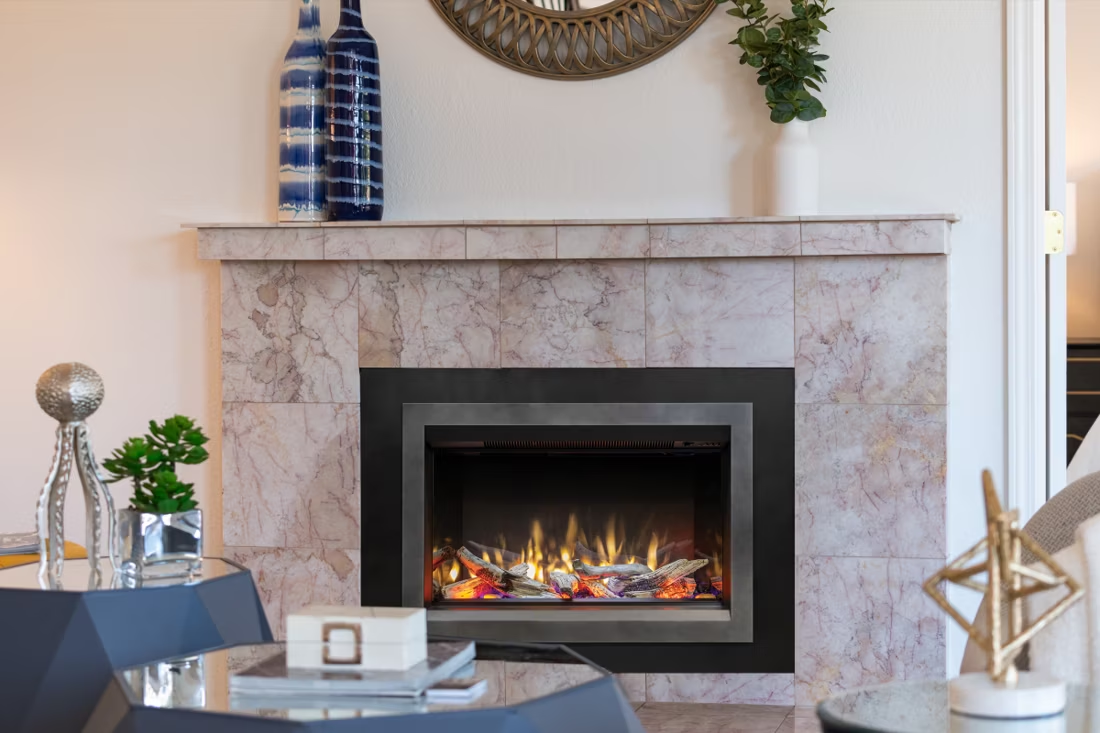
For most West Linn living rooms, a mid-size linear electric insert or wall-mounted unit from brands like Dimplex, Napoleon, or Amantii gives realistic flame detail and enough supplemental heat for a single room. If you're retrofitting an old masonry fireplace, an electric insert sized to your existing firebox opening is usually the cleanest option—no chimney liner, no venting, and it plugs right into an existing outlet in many cases. A local dealer can match flame realism, heater wattage, and dimensions to your specific opening or wall space.
Can an electric fireplace help during wildfire smoke season?
Yes. West Linn, like much of the Willamette Valley, sees occasional wildfire smoke advisories in late summer and early fall, and on those days burning wood adds more particulate to already poor air. An electric fireplace produces zero combustion byproducts, so it's a reasonable way to keep the ambiance of a fire going—or add a bit of supplemental warmth on a cool smoky evening—without contributing to outdoor or indoor air quality problems. It's one more reason electric has become a common secondary unit even in homes that already have a wood or gas fireplace.
What size electric fireplace do I need for my room?
Electric fireplace heaters are typically rated for 400 to 1,000 square feet, which covers most West Linn living rooms and family rooms as supplemental heat. Given the mild local climate—winter lows averaging around 37°F rather than the single-digit nights you'd see in a place like Bozeman, MT—you're generally sizing for comfort and ambiance rather than raw BTU survival heat. A local dealer will look at your room's square footage, ceiling height, and window exposure to recommend a wattage and unit width that actually fills the space visually as well as functionally.
Does an electric fireplace need special wiring?
It depends on the unit. Smaller inserts and freestanding electric fireplaces plug into a standard 120V, 15-amp household outlet—no electrician required. Larger built-in or linear models, especially wide units with high-wattage heaters, often call for a dedicated 240V circuit or at minimum a dedicated 120V line to avoid tripping breakers when other appliances share the circuit. A West Linn electrician can confirm what your panel supports, and most local hearth dealers will flag this during the initial consultation so there are no surprises on install day.
Electric vs. wood—which makes more sense in West Linn?
Wood, using local species like Douglas fir, ponderosa pine, or lodgepole pine, delivers far more heat output and works without power during an outage, plus you can pull a low-cost Forest Service cutting permit ($5 to $20 per cord) from nearby Mt. Hood or Gifford Pinchot National Forest. But it also means chimney maintenance, ash cleanup, and combustion smoke—a real consideration on wildfire-smoke days. Electric skips all of that, installs almost anywhere, and costs far less upfront, but it depends entirely on the grid and won't heat your home if PGE service goes down. Given West Linn's mild winters, most homeowners we talk to treat electric as the easy, everyday-ambiance choice and keep wood or gas reserved for homes that want a genuine backup heat source.
Can I put a TV above my fireplace?
Yes—with an asterisk. Fireplaces are hot and TVs don't like heat. Either put a mantel between them to deflect rising warmth, or choose a fireplace with heat-management technology that creates a cool zone on the wall above—the wall stays around 125 degrees, barely warm, while the room still gets full heat. If you like clean lines and don't want a mantel, heat management is the answer.
Does an electric fireplace need a vent or chimney?
No—that's its superpower. An electric fireplace needs a wall and an outlet, period. No vent pipe, no gas line, no clearances to design around, which is why it works in bedrooms, offices, apartments, and walls where venting a gas or wood unit would be impractical or impossible. Installation is typically the simplest and least expensive of any fireplace type.
Can I install a fireplace myself?
If you're putting a fire in your house on purpose, it's best to work with an expert. Unless you're genuinely experienced in framing, gas line, vent pipe, and the national code on clearances to combustibles, have a professional do it—and ideally the same company that sells you the fireplace, so warranty, service, and liability all live under one roof.
Does a fireplace add value to my home?
On average, a fireplace adds back to the home about the same amount you spent installing it. Add the monthly savings from heating the rooms you actually use instead of the whole house—often hundreds of dollars a year—and the value case is strong before you even count what a fire does for how your family uses the room.
Nearby Dealers
Hearth shops serving West Linn and the surrounding area.
Electric Service in West Linn
An electric fireplace's heater draws about 1,500 watts—pennies per hour at local rates.
Portland General Electric Co
Find your electric fireplace in West Linn.
Tell us about your room and we'll match you with a trusted local dealer and send over a free Project Guide & Parts List—the right unit, the wiring you'll need, and what it actually costs to install in West Linn.
Find Your Fireplace →