
Consistent heat for the coldest nights in the Wallowas.
With winters on par with Bozeman, Montana and winter lows averaging 19°F, Wallowa County—from Enterprise to Joseph to Lostine—needs heat that doesn't depend on chainsaw work every fall. Find the right pellet stove or insert, and connect with a trusted local dealer.
Every Project Starts From One of These Five Situations
Convenient heat when firewood isn't the whole answer.
Wallowa County sits tucked against the Wallowa Mountains in Oregon's far northeast corner—roughly 3,150 square miles and just 4,421 people spread across Enterprise, Joseph, Wallowa, Lostine, and Flora. Valley floor elevations run around 3,700 to 4,000 feet, with Sacajawea Peak topping 9,800 feet nearby. Zone 5B and winters on par with Bozeman, Montana make for long, cold, and often snowbound conditions from November through April.
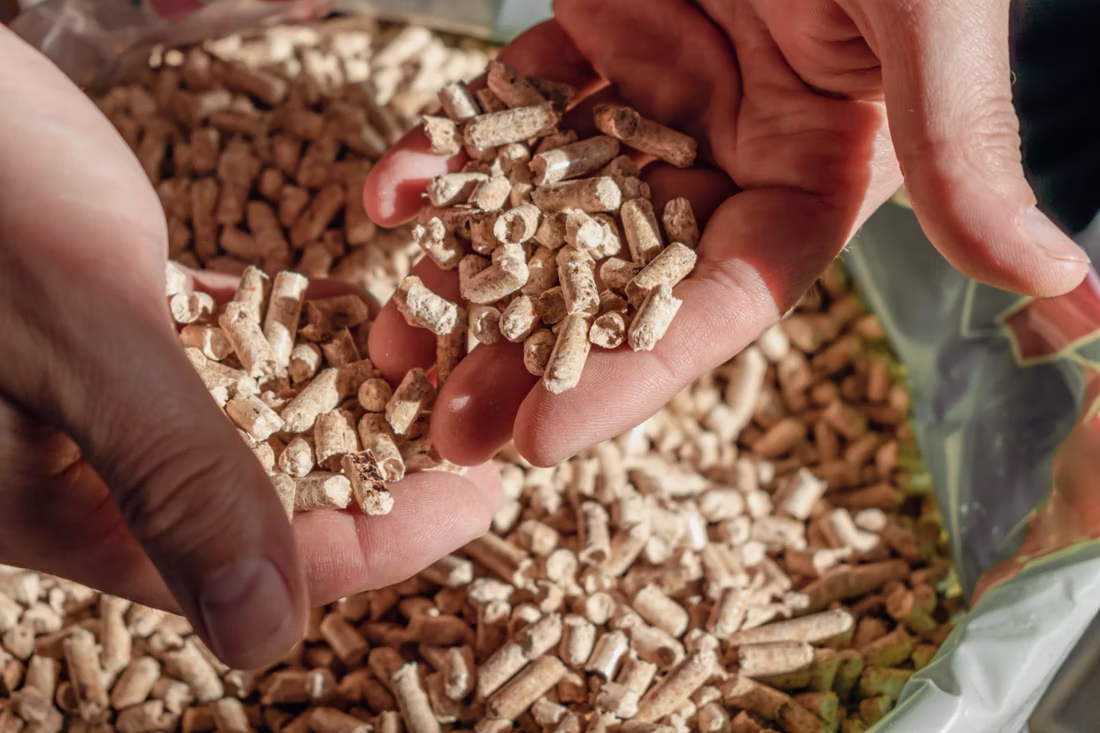
Ponderosa pine, lodgepole pine, and juniper cover the surrounding national forest land, and cutting permits through the Wallowa-Whitman and Payette National Forests ($20 per 4 cords, or $5-$20 per cord, May through October) keep firewood cheap for those with the time and equipment to cut, split, haul, and stack it. Pellet stoves solve for the households that don't—full-time residents juggling ranch or work schedules, second-home owners near Wallowa Lake who want heat without maintaining a woodpile, and anyone who'd rather load a hopper than run a chainsaw. Regional pellet brands including Bear Mountain, Lignetics, and Pacific Pellet supply dealers throughout eastern Oregon, and pellet appliances burn clean enough that they're a non-issue during the wildfire-smoke season that occasionally brings air quality concerns to the county in late summer.
Three steps. No salesperson until you're ready.
Tell us about your project
Your zip code, your situation, and the fuel you're leaning toward—or let the answers point you to one.
See what's actually available
The brands dealers within 100 miles genuinely carry—real options, never a catalog mirage.
Get your dealer & Project Guide
A trusted local dealer, plus the free Project Guide & Parts List that names every component of the job.
Frequently Asked Questions
How much does a pellet stove installation cost in Wallowa County?
Installed pellet stove and insert projects in rural eastern Oregon markets like Wallowa County typically run $3,000 to $6,500, depending on the unit, whether you're venting through an existing chimney or need new through-wall venting, and whether electrical work is needed to power the hopper auger and blower. Homes converting an old masonry fireplace to a pellet insert are usually toward the lower end since the chimney chase is already in place. Because dealer coverage is thin across a county this size, expect a modest travel charge if you're in Flora, Lostine, or other outlying communities well outside Enterprise or Joseph.
What size pellet stove do I need for a Wallowa County home?
With winters on par with Bozeman, Montana, Wallowa County runs colder and longer than most of Oregon—closer to a Rocky Mountain winter than a typical Willamette Valley one. Small pellet stoves (rated for roughly 1,000-1,500 sq ft) suit a cabin or supplemental setup; medium units (1,500-2,200 sq ft) cover most valley-floor homes; larger hopper-capacity models make sense for older, less-insulated farmhouses or homes at higher elevation toward the mountains. Because pellet stoves run on a fixed burn cycle rather than an open damper, undersizing shows up fast on the coldest nights—a local dealer can size to your square footage and insulation during an in-home visit.
Where can I find pellet stove dealers near me in Wallowa County?
Dealer coverage is limited given the county's population of roughly 4,400 spread across Enterprise, Joseph, Wallowa, and Lostine, so most installers travel a circuit rather than keeping a storefront in every town. Look for NFI (National Fireplace Institute) certified installers, since pellet appliances involve both venting and electrical hookups that matter for warranty coverage and safety. Expect a travel charge for installs in Flora or other outlying areas well off Highway 82—worth confirming up front when you get a quote.
What's the difference between a pellet stove and a pellet insert?
A pellet stove is a freestanding unit that sits on a hearth pad and vents through a wall or existing chimney chase—it can go almost anywhere with proper clearance. A pellet insert slides into an existing masonry fireplace opening, using the chimney you already have while sealing off the old open-hearth heat loss. For Wallowa County homes with an older wood fireplace that never threw much usable heat, an insert is usually the more efficient upgrade. Homes without an existing fireplace opening are better suited to a freestanding stove.
Do I need a permit to install a pellet stove in Wallowa County?
Yes—new pellet stove and insert installations require a building permit through the Wallowa County Planning & Building Department, and the unit itself must meet current EPA emissions certification, which nearly every pellet appliance sold today already does. Most local dealers handle the permit paperwork as part of the install. There's no permit or curtailment restriction to actually operate a certified pellet stove day-to-day, and pellet appliances are typically exempt from any burn restrictions that come up during wildfire-smoke season in late summer.
What's the best pellet stove for Wallowa County's climate?
Look for a stove with a large hopper capacity—40-60 lbs—so it can run overnight without a refill during the county's long cold stretches, plus a decent ash pan capacity if you plan to run it as a primary heat source through the winter. One honest tradeoff worth knowing: pellet stoves need electricity to run the auger and combustion blower, and rural power lines in and around the Wallowa Mountains can go down during winter storms. If you're relying on a pellet stove as anything more than supplemental heat, ask your dealer about battery backup options or pair it with a small generator so you're not without heat during an outage.
How often should a pellet stove be cleaned and serviced?
Plan on a full cleaning and inspection once a year, ideally in late summer before heating season starts, plus a quick ash pan empty and glass wipe every few days during heavy winter use. The burn pot and venting need periodic attention too—a clogged burn pot is the most common cause of a pellet stove shutting down mid-winter. For a household running the stove as primary heat through a Wallowa County winter, a mid-season service isn't unusual if you're burning through several tons of pellets.
Where can I buy pellets in Wallowa County?
Regional brands including Bear Mountain, Lignetics, and Pacific Pellet supply dealers across eastern Oregon, though retail options thin out fast once you're outside Enterprise or Joseph. Given the county's remote location and limited storefronts, most residents buy pellets by the ton and stock up in fall before mountain passes and rural roads get harder to travel in winter storms—running low mid-January isn't a quick errand here the way it might be in a bigger town. Your local dealer can usually point you to the nearest supplier or arrange a bulk delivery.
Pellet stove vs. wood stove—which is right for my Wallowa County home?
Wood stoves work without electricity, which matters given how often winter storms can knock out rural power in the Wallowas, and cutting permits through the Wallowa-Whitman and Payette National Forests ($20 per 4 cords) keep fuel cheap if you have the time and equipment to cut, split, and haul it. Pellet stoves trade that self-sufficiency for convenience—load the hopper, set the thermostat, and skip the woodpile entirely—but they depend on grid power to run. For full-time residents who want a hands-off, consistent heat source, pellet often wins. For anyone who wants backup heat that survives an outage, or who already has access to forest permits and equipment, wood is worth keeping in the mix alongside pellet.
How often does a pellet stove need cleaning?
A clean pellet stove is a happy pellet stove. Plan on cleaning the burn pot about once a week when you're burning regularly—ash and clinkers gum up the air holes just like a pellet barbecue. Most pellet stove problems trace back to skipped cleaning that nobody explained up front. Some designs make it easy with a trapdoor burn pot: pull a lever and the gunk drops into the ash pan.
Why is a fireplace insert so efficient?
An insert does two things: it seals the chimney completely, so you stop losing air you already paid to heat, and it radiates warmth into the room through the firebox and glass. Most add a heat-exchange fan that pulls cool room air underneath, wraps it around the hot firebox, and pushes it back out warm. Your home is more efficient before you've even lit the first fire.
Can a fireplace actually lower my heating bill?
Yes—by creating a comfort zone. A furnace heats every square foot of the house just to warm the one room you're in; a gas fireplace on low burns roughly a sixth of the gas a typical furnace does. Set the furnace around 55–60 degrees as a baseline, then heat the rooms your family actually uses. Families who heat this way commonly save $20–$60 a month.
What is an in-home preview and do I need one?
It's a visit where a hearth professional measures your space, confirms the model you picked actually works in your home, and walks the specs—framing, gas line, venting, finish work—before anything is ordered. Some details you just can't know until you see the house. Never make a down payment without one; it's the single most-skipped step that burns buyers.
Stove and Fireplace Dealers in Wallowa County
Pellet Brands Stocked Around Wallowa County
Manufacturers will point you to the nearest stocking dealer.
Find your pellet stove in Wallowa County.
Tell us about your home and heating goals, and we'll match you with a trusted local dealer and put together a free Project Guide & Parts List—the exact stove or insert, venting, and installation plan for your Wallowa County home.
Find Your Fireplace →