
Find the right fireplace for a Wallowa County winter.
Wood, gas, pellet, and electric fireplace resources for every town and rural corner of Wallowa County—from Enterprise and Joseph to Lostine and Flora. Get matched with a trusted local hearth retailer who knows this valley.
Every Project Starts From One of These Five Situations
Deep-cold heating in Oregon's northeast corner.
Wallowa County sits tucked against the Eagle Cap Wilderness and the Wallowa Mountains, and its heating season reflects that geography—7,748 heating degree days puts it well past Klamath Falls and closer in severity to Bozeman, Montana. Average winter lows hover around 19°F, but valley cold pockets and mountain-adjacent properties routinely see colder overnight stretches. With a population under 4,500 spread across a wide, rural landscape, most homes here rely on wood heat sourced from ponderosa pine, lodgepole pine, and juniper—much of it self-cut under Wallowa-Whitman National Forest and Payette National Forest permits, a tradition that's kept this county warm for generations.
What you'll find on this hub: hearth retailers, service technicians, and fuel suppliers serving every community in the county—Enterprise, Joseph, Wallowa, Lostine, and the smaller unincorporated places scattered along the Wallowa and Grande Ronde valleys. Pick your fuel below to see local dealers, typical installation costs, and the units that make sense for this climate. Whether you're heating a ranch house outside Wallowa or a cabin near Wallowa Lake, this is the place to start.
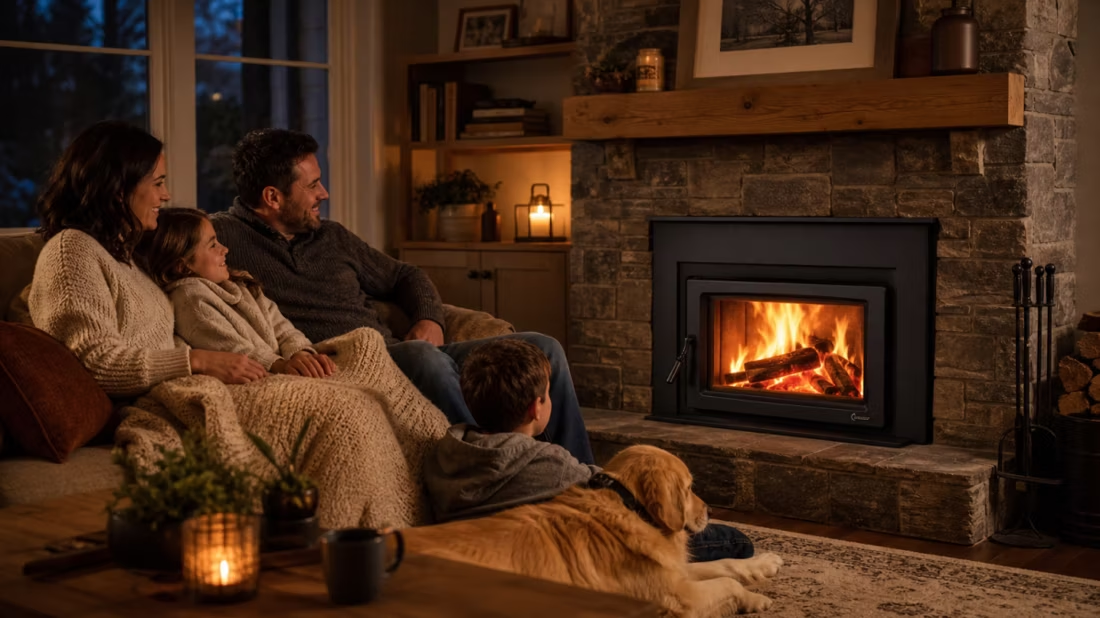
Four fuels. One honest answer for Wallowa County.
Three steps. No salesperson until you're ready.
Tell us about your project
Your zip code, your situation, and the fuel you're leaning toward—or let the answers point you to one.
See what's actually available
The brands dealers within 100 miles genuinely carry—real options, never a catalog mirage.
Get your dealer & Project Guide
A trusted local dealer, plus the free Project Guide & Parts List that names every component of the job.
Frequently Asked Questions
Which fuel works best in Wallowa County?
With 7,748 heating degree days, this is a genuinely cold-climate county, and the fuel choice reflects that. Wood remains the dominant heating fuel in rural Wallowa County—ponderosa pine, lodgepole pine, and juniper are cut locally under Wallowa-Whitman National Forest and Payette National Forest permits, and a good catalytic stove can hold a long, steady burn through a sub-zero night without a lot of babysitting. Gas is the convenience option for homes with propane service (natural gas isn't widely available in this rural county), offering instant heat without wood handling. Pellet is a strong middle ground here—Bear Mountain and Lignetics pellets are regionally available, and pellet stoves handle the wildfire-smoke-heavy late-summer months without adding to local air quality concerns. Electric fireplaces are mostly supplemental—good for a bedroom or a cabin's ambiance, but not enough on their own for a county this cold. Many Wallowa County homes run wood or pellet as primary heat with a propane or electric unit as backup or secondary comfort heat.
Do I need a permit to install a fireplace in Wallowa County?
Yes, in most cases. New wood stoves, wood inserts, gas fireplaces, gas inserts, gas stoves, and pellet stoves generally require a building permit through Wallowa County, and wood-burning appliances need to meet current EPA emissions standards. Gas installations also need a separate gas line permit and a licensed installer for the propane connection, since natural gas service isn't common in the county. Electric fireplaces usually skip the permit process unless you're doing a hardwired built-in that involves new electrical circuits. Most local hearth retailers in Enterprise and Joseph handle the permitting on your behalf as part of the installation, so you're generally not filing paperwork yourself.
Are there wood-burning restrictions in Wallowa County?
Wallowa County doesn't have the winter inversion issues that affect basin communities like Klamath Falls, but wildfire smoke is the relevant air quality concern here, particularly in late summer and early fall when regional fires can blanket the Wallowa Valley for days or weeks. This affects outdoor burning and can prompt temporary advisories, but it doesn't typically restrict indoor wood stove use the way winter inversion advisories do elsewhere. New wood stove installations still need to meet current EPA emissions certification, which matters both for air quality and for burn efficiency in a county that depends heavily on wood heat.
Can one local hearth retailer handle all four fuel types in a county this rural?
It varies. In a county with under 4,500 residents, most hearth retailers concentrate on wood, gas (propane), and pellet—the three fuels that actually see meaningful demand here—with electric available but treated as a smaller add-on line rather than a core offering. Retailers based in Enterprise or Joseph typically serve the whole county, including Wallowa, Lostine, and the more remote ranch properties toward Imnaha or Flora. If you're comparing fuels, ask a local dealer to walk through working displays; in a rural market like this, the same retailer who sells your stove is often the one who'll be servicing it for the next decade.
How does fireplace service work in a rural county like Wallowa?
Most technicians serving Wallowa County are based in Enterprise or Joseph and travel out to Wallowa, Lostine, Flora, and the ranch and cabin properties spread through the valley and up toward Wallowa Lake. Expect a modest travel fee for the more remote calls, and expect to book ahead—pre-season appointments (August through October) are far easier to land than a mid-January emergency call when every wood stove in the county is running flat out. Given the isolation of some properties here, it's worth keeping basic backup supplies on hand—spare batteries for gas ignition systems, dry firewood staged under cover, and a plan for what happens if a storm closes the road for a few days.
What's the typical cost range for fireplace installation across fuel types in Wallowa County?
Costs run close to what you'd see in other rural high-desert Oregon counties, sometimes slightly higher due to travel distances for installers. Wood stove or insert installation typically runs $4,500-$9,500, with full chimney work on new construction pushing higher. Gas fireplace, insert, or stove installations run roughly $4,500-$11,000, with propane tank and line work factoring into the higher end since natural gas service is limited here. Pellet stove or insert installs typically fall in the $4,500-$8,000 range. Electric fireplaces run $200-$3,000 for the unit itself, plus $400-$1,200 in labor for anything beyond a plug-and-play setup. See the county + fuel pages above for dealer-specific pricing detail.
Wood, gas, pellet, or electric—how do I choose?
Match the fuel to your life, not the other way around. Wood: lowest fuel cost and total power-outage independence, but you're hauling and stacking. Gas: press a button, set a thermostat, no maintenance to speak of. Pellet: wood economics with automatic feeding, in exchange for weekly cleaning and a need for electricity. Electric: plugs in anywhere with honest supplemental heat. Nobody regrets the fuel that fits how they actually live.
Can I install a fireplace myself?
If you're putting a fire in your house on purpose, it's best to work with an expert. Unless you're genuinely experienced in framing, gas line, vent pipe, and the national code on clearances to combustibles, have a professional do it—and ideally the same company that sells you the fireplace, so warranty, service, and liability all live under one roof.
Does a fireplace add value to my home?
On average, a fireplace adds back to the home about the same amount you spent installing it. Add the monthly savings from heating the rooms you actually use instead of the whole house—often hundreds of dollars a year—and the value case is strong before you even count what a fire does for how your family uses the room.
How much should I budget for a fireplace?
For an average home—covering the fireplace, the vent pipe, and basic installation—a budget between $3,900 and $5,500 gives you a lot of options across wood, gas, and pellet. By the time you add finish work, gas line, and electrical, the average complete installation lands between $5,000 and $12,000 all-in. In a remodel or new build, a good rule is to put about 2.5% of the total project cost toward the fireplace.
Stove and Fireplace Dealers in Wallowa County
Listings include WhyFire partner dealers, dealers we have verified as authorized for the brands we recommend, and established local businesses that carry hearth products. Every listing shows which one it is. The ones marked Preferred run on WhyFire's software, so they can show you real pricing and book your appointment right here. No manufacturer pays for placement. How we verify dealers →
Find your fireplace in Wallowa County.
Pick your fuel below and I'll match you with a trusted local Wallowa County dealer, plus a free Project Guide & Parts List—the exact parts, vent kit included, and the dealer I'd recommend for your home.
Find Your Fireplace →