
Keep Your Family Warm and Safe—No Matter What
From Bay City to Manzanita, Pacific windstorms knock out power along the Tillamook County coast more often than most homeowners would like. A wood stove or insert keeps a home warm regardless—find the right one and connect with a trusted local dealer.
Every Project Starts From One of These Five Situations
Backup heat for a coastline built on storms.
Tillamook County sits between the Pacific Ocean and the Coast Range, with dairy pastures and river bottomland at sea level rising to over 3,000 feet near Mount Hebo. Winters here are mild by Oregon standards—the average winter low is 37°F and heating degree days run around 5,124, nowhere near the extremes of the Cascades or high desert. But mild temperatures don't mean reliable power. Coastal towns like Garibaldi, Rockaway Beach, Nehalem, and Pacific City routinely lose electricity for a day or more during winter windstorms, and wood heat is one of the only heating sources that keeps working when the lines go down.
Douglas fir dominates the Coast Range forests here, with ponderosa pine and lodgepole pine more common further inland toward the county's eastern edge. The Siuslaw National Forest's Hebo Ranger District issues cutting permits for $5 to $20 per cord during the May-to-October season, and self-cut firewood remains a normal part of life for a lot of rural Tillamook County households. The one wrinkle is the climate itself: the same marine air that keeps winters mild also keeps wood damp longer than it would season in a drier climate, so covered, well-ventilated storage matters more here than it does east of the mountains.
Firewood Cutting Permits Near Tillamook County
Three steps. No salesperson until you're ready.
Tell us about your project
Your zip code, your situation, and the fuel you're leaning toward—or let the answers point you to one.
See what's actually available
The brands dealers within 100 miles genuinely carry—real options, never a catalog mirage.
Get your dealer & Project Guide
A trusted local dealer, plus the free Project Guide & Parts List that names every component of the job.
Frequently Asked Questions
How much does a wood stove installation cost in Tillamook County?
Local installers typically quote in the $4,000 to $8,500 range for a wood stove or insert, depending on the unit, whether new chimney work is needed, and whether the hearth pad needs upgrading for clearance-to-combustibles compliance. Coastal installs near Garibaldi, Rockaway Beach, or Manzanita sometimes run a bit higher because salt air accelerates corrosion on exposed metal chimney components, so installers often spec heavier stainless steel liners and caps than they would for an inland home. New construction or homes without an existing chimney will land toward the higher end once full Class A pipe and roof penetration are factored in.
What size wood stove do I need for my Tillamook County home?
Because Tillamook County's winters are relatively mild—heating degree days here run well below places like Bozeman, MT or Duluth, MN—most homes don't need the largest stoves on the market. A small to medium stove (rated for 1,000 to 1,800 square feet) is plenty for most single-family homes here, especially since wood heat in this county is often supplemental or backup rather than the sole heat source. Older farmhouses along the Nestucca or Trask River bottoms with poor insulation are the exception; those homes often do better with a mid-size stove even at modest square footage. A local retailer can size your space correctly during an in-home visit—oversizing leads to smoldering, low-temperature burns that build creosote faster, which matters even more in a damp climate like this one.
Where can I find certified wood stove installers near me?
Look for NFI-certified (National Fireplace Institute) or CSIA-certified (Chimney Safety Institute of America) installers, which indicates real training in venting, clearances, and code compliance for wood-burning appliances. Most hearth retailers serving Tillamook County are based in or near the city of Tillamook and cover the coastal towns and the Highway 6 corridor toward the valley. Homes in more remote spots—Neskowin, Netarts, or up the Nehalem River—may see a modest travel charge added to the install quote. It's worth avoiding a general handyman for wood stove work; improper venting is the most common cause of chimney fires, and that risk is compounded here by the extra corrosion salt air puts on metal components.
What's the difference between a wood stove and a wood insert?
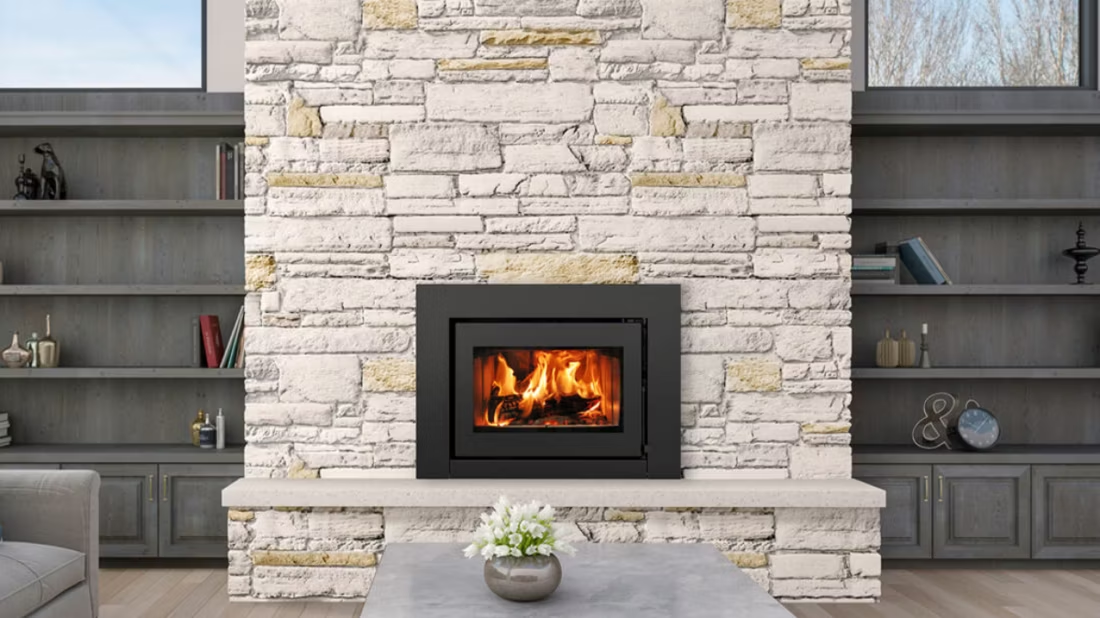
A wood stove is a freestanding unit on a hearth pad that vents through its own chimney and can go almost anywhere with the right clearances. A wood insert slides into an existing masonry fireplace and uses the chimney that's already there, turning a drafty open hearth into a real heat source. Tillamook County has a fair number of older coastal cottages and farmhouses built with a traditional open fireplace meant more for ambiance than heat—those are strong insert candidates, since converting them dramatically improves both efficiency and actual heat output. Newer homes without an existing masonry fireplace are usually better served by a freestanding stove or a zero-clearance wood-burning fireplace.
Do I need a permit to install a wood stove in Tillamook County?
Yes—new wood stove and insert installations require a building permit, issued through the Tillamook County Community Development building permit office for unincorporated areas, or through the relevant city office if you're inside Tillamook, Bay City, Garibaldi, or another incorporated town. Any new stove needs to meet current EPA 2020 NSPS emissions standards. Most local installers handle the permit paperwork as part of the job. Unlike some inland Oregon counties, Tillamook doesn't deal with winter inversion smoke buildup—the main local air quality concern here is wildfire smoke drifting in during late summer, which is a wood-supply and outdoor-air issue rather than a burning restriction on your stove.
What's the best wood stove for Tillamook County's climate?
Given the mild winter lows here—averaging 37°F rather than the sub-zero nights you'd see in a place like Fargo, ND—most Tillamook County homes don't need a maximum-output catalytic stove built for 20-hour overnight burns in extreme cold. Mid-size non-catalytic models from brands like Pacific Energy or Lopi, both well distributed through Pacific Northwest hearth retailers, are a common and practical fit. What matters more locally is corrosion resistance: ask your installer about stainless steel chimney components and a quality rain cap, since the salt-laden coastal air near Rockaway Beach, Garibaldi, and Pacific City is harder on chimney hardware than it would be further inland.
How often should my chimney be inspected and cleaned in Tillamook County?
The CSIA recommends an annual inspection for any wood-burning appliance, and that holds true here—typically done in late summer before burning season, since damp wood on the coast can smolder and build creosote faster than well-seasoned wood would in a drier climate. Homes closer to the ocean in Garibaldi, Rockaway Beach, or Manzanita should also have their chimney cap and flashing checked for salt-air corrosion during that same visit, since exposed metal degrades faster in a marine environment than it does even a few miles inland.
Where can I get firewood or a cutting permit in Tillamook County?
The Siuslaw National Forest, through its Hebo Ranger District, issues personal-use firewood cutting permits for $5 to $20 per cord during the May-to-October season, and Douglas fir is the dominant species available in the Coast Range portions of the forest. Ponderosa pine and lodgepole pine are less common locally and are more often trucked in from east of the Coast Range by commercial firewood sellers. Whatever the source, plan on longer seasoning time than you'd need in a drier climate—the marine air here keeps freshly split wood wetter longer, so stacking it covered, off the ground, and with good airflow for a full season before burning makes a real difference in how clean and efficient your stove runs.
Wood stove vs. pellet stove—which is right for me in Tillamook County?
Wood stoves burn cordwood, work without electricity, and pair naturally with the self-cut firewood available through Siuslaw National Forest permits—all of which matters in a county where Pacific windstorms cause multi-day power outages most winters. Pellet stoves, using regional brands like Bear Mountain, Lignetics, or Pacific Pellet, are more convenient day to day (load the hopper, set the thermostat) and burn cleaner, but they need electricity to run the auger and blower, so they go dark in the same outages a wood stove would ride out. For a coastal Tillamook County home where storm-related outages are a real seasonal risk, wood stoves have a genuine practical edge as backup heat; for a home focused purely on convenience and daily-use heating, pellet is worth a look too.
Why is my open fireplace making my house colder?
Open fireplaces suck—literally. As the fire burns, it consumes air your furnace already paid to heat and pulls it out through the chimney, so the house is actually colder after the fire goes out than before you lit it. An insert fixes this: it seals the chimney, puts fixed glass across the front, and turns that hole in your house into a real heat source.
Why is a fireplace insert so efficient?
An insert does two things: it seals the chimney completely, so you stop losing air you already paid to heat, and it radiates warmth into the room through the firebox and glass. Most add a heat-exchange fan that pulls cool room air underneath, wraps it around the hot firebox, and pushes it back out warm. Your home is more efficient before you've even lit the first fire.
Does a fireplace add value to my home?
On average, a fireplace adds back to the home about the same amount you spent installing it. Add the monthly savings from heating the rooms you actually use instead of the whole house—often hundreds of dollars a year—and the value case is strong before you even count what a fire does for how your family uses the room.
Can I install a fireplace myself?
If you're putting a fire in your house on purpose, it's best to work with an expert. Unless you're genuinely experienced in framing, gas line, vent pipe, and the national code on clearances to combustibles, have a professional do it—and ideally the same company that sells you the fireplace, so warranty, service, and liability all live under one roof.
Stove and Fireplace Dealers in Tillamook County
Find your wood stove in Tillamook County.
Tell us a bit about your home and we'll match you with the right wood stove or insert for the Oregon coast—plus a free Project Guide & Parts List and a trusted local dealer to install it.
Find Your Fireplace →