
Heat that holds up against Tillamook County's rain.
Wood, gas, pellet, and electric fireplace resources for every city and unincorporated community in Tillamook County—from the county seat to the beach towns along Highway 101. Find the right unit for a damp marine climate and connect with a trusted local hearth retailer.
Every Project Starts From One of These Five Situations
Marine climate heating along the Oregon coast.
Tillamook County stretches along roughly 60 miles of Oregon coastline, wedged between the Pacific and the Coast Range forests that supply the area's dominant building material—Douglas fir, alongside ponderosa pine and lodgepole pine further inland. The climate here is Zone 4C marine: winters average a mild 37°F low, nothing like the sub-zero snaps you'd see in Duluth, MN, but the heating season is long and relentlessly damp, adding up to 5,124 heating degree days a year. Homes here need consistent, efficient heat more than they need brute BTU output. Firewood cut under Siuslaw National Forest or Gifford Pinchot National Forest permits needs extra seasoning time in this humidity—Douglas fir holds moisture far longer here than it would inland, and unseasoned rounds are a common cause of poor stove performance and creosote buildup. Wildfire smoke drifting in from Coast Range and Cascade fires in dry summers has also put air quality on more homeowners' radar, even though it's mostly a summer concern rather than a winter heating-season issue.
This hub rolls up hearth retailers, service technicians, and fuel suppliers across every community in the county—from the county seat of Tillamook, out to the fishing town of Garibaldi and beach communities like Rockaway Beach, Manzanita, and Wheeler, down to unincorporated Nehalem, Netarts, and Pacific City. Pick your fuel below to see local dealers, typical installation costs, and the units that make sense on the coast. Whether you're heating a dairy farmhouse off Highway 101 or a vacation rental near Oceanside, this is the starting point.
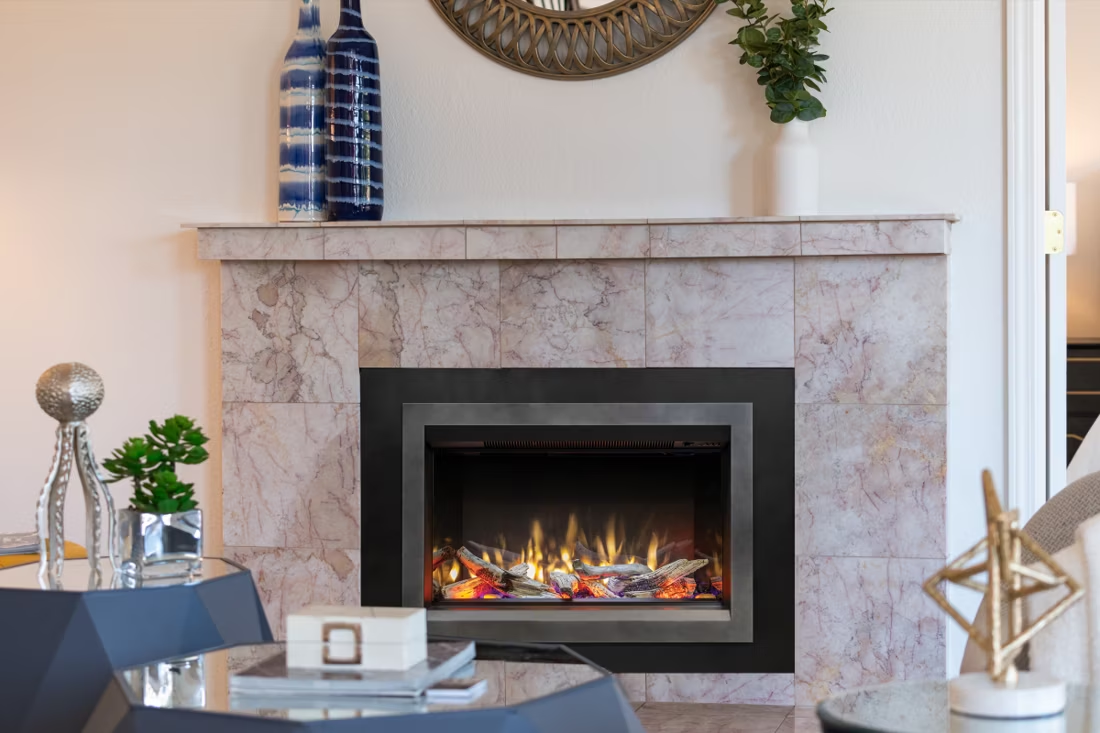
Four fuels. One honest answer for Tillamook County.
Three steps. No salesperson until you're ready.
Tell us about your project
Your zip code, your situation, and the fuel you're leaning toward—or let the answers point you to one.
See what's actually available
The brands dealers within 100 miles genuinely carry—real options, never a catalog mirage.
Get your dealer & Project Guide
A trusted local dealer, plus the free Project Guide & Parts List that names every component of the job.
Frequently Asked Questions
Which fuel works best in Tillamook County?
It depends on the home and how it's used. Wood remains a strong choice inland and on larger properties—Douglas fir and ponderosa pine cut under Siuslaw National Forest permits keep fuel costs down, and a modern EPA-certified stove handles the damp 37°F winter lows without trouble. Gas is the practical choice along the coast, since most of the county runs on propane rather than piped natural gas—propane fireplaces and inserts give instant heat without the wood-seasoning headaches that coastal humidity creates. Pellet stoves do well too, especially with regional supply from Bear Mountain and Pacific Pellet close by, and they sidestep the moisture problems that plague stored firewood in a marine climate. Electric fireplaces are common in the vacation rentals and second homes that make up a large share of the coastal housing stock—Manzanita and Rockaway Beach in particular have a lot of electric units installed for ambiance and supplemental heat in properties that sit empty much of the week.
Do I need a permit to install a fireplace in Tillamook County?
In most cases, yes. New wood stoves, wood inserts, gas fireplaces, gas inserts, and pellet stoves all require a building permit through Tillamook County Community Development, or through the city if you're inside Tillamook, Bay City, Garibaldi, Rockaway Beach, Manzanita, or Wheeler city limits. Wood-burning appliances must meet current EPA 2020 NSPS emissions standards. Because most of the county runs on propane rather than natural gas, gas installations typically also require a propane tank placement permit and a licensed gas fitter for the connection work. Electric fireplaces generally don't need a permit unless it's a built-in unit requiring new wiring or a dedicated circuit. Most local hearth retailers handle the permitting paperwork as part of the installation quote.
Does wildfire smoke or air quality affect wood burning here?
Not in the way it does in inland basins, but it's worth knowing about. Tillamook County's marine air generally disperses wood smoke well, and the county doesn't see the winter temperature-inversion events that trigger burn advisories in places like the Klamath Basin. The bigger concern is summer wildfire smoke drifting in from Coast Range and Cascade fires during dry years, which affects overall regional air quality even though it has little to do with residential wood stoves. New wood stove installations still need to meet EPA 2020 NSPS certification, and Oregon DEQ occasionally runs rebate programs to help replace older, uncertified stoves—worth checking before buying a used unit.
Can one local hearth retailer handle all four fuel types?
Many coastal hearth retailers carry three or four fuel types, since the customer base is mixed—full-time residents burning wood, vacation-home owners wanting gas or electric, and everyone dealing with propane rather than piped natural gas. A dealer like Tillamook Stove & Hearth typically stocks wood, gas, and pellet units along with propane conversion kits, while a shop like Nehalem Bay Fireplace Shop leans toward gas and electric for the second-home market in Manzanita and Wheeler. If you're not sure which fuel fits your situation, a multi-fuel dealer can walk you through working displays and the trade-offs specific to coastal humidity and propane logistics.
How does service work in the more remote parts of the county?
Most chimney sweeps and gas technicians are based in or near the city of Tillamook and travel out along Highway 101 to Garibaldi, Rockaway Beach, Manzanita, and Wheeler, as well as inland to Beaver and Hebo. Expect a modest travel fee for the farther stops. Salt air and near-constant humidity accelerate corrosion on venting and hardware here faster than in drier climates, so annual service checks matter even for units that look fine—a chimney cap or flue liner that lasts a decade inland may need replacing in half that time on the immediate coast. Scheduling service in late summer or early fall, before the wet season sets in, is easier than trying to book a mid-winter emergency call.
What's the typical cost range for fireplace installation across fuel types in Tillamook County?
Wood stove or insert: roughly $4,000–$8,500 for a standard install, more if new chimney work is needed. Gas fireplace, insert, or stove: $4,500–$10,000, with propane tank placement and line work often adding to the lower-end estimates since piped natural gas isn't widely available here. Pellet stove or insert: $4,000–$7,000 for a typical install. Electric fireplace: $200–$3,000 for the unit itself, plus $400–$1,000 in labor for anything beyond a plug-in unit—common for the built-ins installed in coastal vacation rentals. Exact pricing depends on your specific home and dealer—see the county + fuel pages above for more detail.
Does a fireplace add value to my home?
On average, a fireplace adds back to the home about the same amount you spent installing it. Add the monthly savings from heating the rooms you actually use instead of the whole house—often hundreds of dollars a year—and the value case is strong before you even count what a fire does for how your family uses the room.
What is an in-home preview and do I need one?
It's a visit where a hearth professional measures your space, confirms the model you picked actually works in your home, and walks the specs—framing, gas line, venting, finish work—before anything is ordered. Some details you just can't know until you see the house. Never make a down payment without one; it's the single most-skipped step that burns buyers.
How much should I budget for a fireplace?
For an average home—covering the fireplace, the vent pipe, and basic installation—a budget between $3,900 and $5,500 gives you a lot of options across wood, gas, and pellet. By the time you add finish work, gas line, and electrical, the average complete installation lands between $5,000 and $12,000 all-in. In a remodel or new build, a good rule is to put about 2.5% of the total project cost toward the fireplace.
Should the dealer who sells my fireplace also install it?
Ideally, yes. A fireplace project involves vent pipe, gas line, electrical, and often tile or stone. Hire three or four separate trades and you own the liability and the game of telephone between them. One company selling and installing means one accountable party, start to finish—ask about factory training, on-time completion records, and what happens if an inspection fails.
Stove and Fireplace Dealers in Tillamook County
Listings include WhyFire partner dealers, dealers we have verified as authorized for the brands we recommend, and established local businesses that carry hearth products. Every listing shows which one it is. The ones marked Preferred run on WhyFire's software, so they can show you real pricing and book your appointment right here. No manufacturer pays for placement. How we verify dealers →
Crown Hill Farm Enterprises
Diamond Heating
Coast Heating & Cooling
White's Heating & Sheet Metal
Get matched with a hearth dealer in Tillamook County.
Tell us your fuel and your town, and we'll match you with a trusted local dealer and send a free Project Guide & Parts List—the exact parts, including the vent kit, for your project in Tillamook County.
Find Your Fireplace →