
Keep Your Family Warm and Safe—No Matter What
Mild by high-desert standards but still cold enough to matter—find the right wood stove or insert for your Rogue River home, and connect with a trusted local dealer.
Every Project Starts From One of These Five Situations
Wood heat runs through the Rogue Valley's roots.
Rogue River sits at just over 1,000 feet elevation along the river that gives the town its name, in the heart of Jackson County's timber country. At climate zone 4C, winters here are considerably milder than the high desert—average lows hover around 35°F rather than the single digits you'd see in Bismarck, ND or International Falls, MN—and the area sees a moderate, steady heating season that runs several months of the year. That's real heating season, just a gentler one, and it's exactly the kind of climate where a mid-size wood stove or insert does most of its work without needing to run flat-out all winter.
This is timber country, and it shows in how people heat their homes. Douglas fir, ponderosa pine, and lodgepole pine are all cut locally, and residents can pull permits to gather their own firewood from the Rogue River-Siskiyou National Forest, the BLM Medford District, or the Klamath National Forest, with cutting seasons running spring through October and permit costs as low as $5 to $20 per cord. The tradeoff is the valley's winter inversions, which can trap wood smoke close to the ground on the coldest, stillest nights, and the wildfire smoke that settles into the Rogue Valley most summers—both are reasons to burn a clean, EPA-certified stove rather than an old smoke dragon.
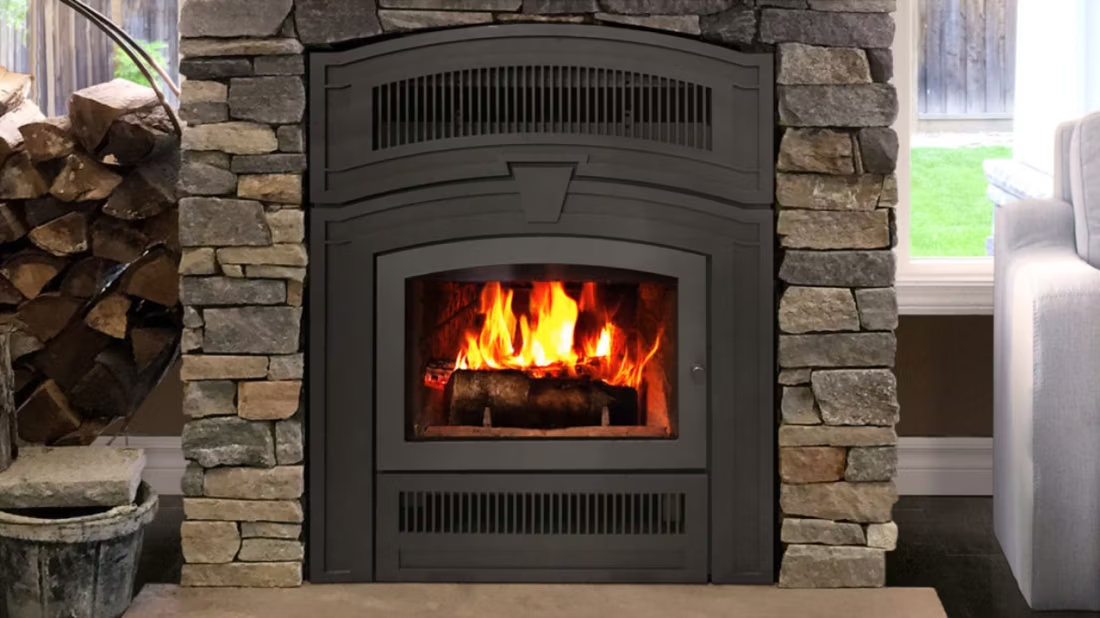
Firewood Cutting Permits Near Rogue River
Three steps. No salesperson until you're ready.
Tell us about your project
Your zip code, your situation, and the fuel you're leaning toward—or let the answers point you to one.
See what's actually available
The brands dealers within 100 miles genuinely carry—real options, never a catalog mirage.
Get your dealer & Project Guide
A trusted local dealer, plus the free Project Guide & Parts List that names every component of the job.
Frequently Asked Questions
How much does a wood stove installation cost in Rogue River?
Most wood stove installations in Rogue River run $4,000 to $8,500, depending on the unit, whether new Class A chimney pipe is needed, and whether the hearth pad needs to be upgraded for clearance. Homes with an existing masonry fireplace and a chimney in decent shape tend to land on the lower end; a new freestanding stove in a home with no existing flue—common in some of the older riverside cottages here—pushes toward the higher end once full chimney venting is added. A local Rogue Valley dealer serving Rogue River will give you a firm number after seeing your space.
What size wood stove do I need for a Rogue River home?
Because winters here are milder than the high-desert side of Southern Oregon—average lows around 35°F rather than well below freezing—many Rogue River homes do fine with a small to mid-size stove rated for 1,000 to 1,800 square feet, even as a primary heat source. Older, less-insulated farmhouses along the river or homes on larger footprints may need a stove built for 2,000-plus square feet. Oversizing is a real risk in this climate: a stove sized for a colder zone often gets run low and smolders, building creosote faster than it should. A local dealer can size your stove properly based on your square footage and how drafty the home actually is.
Where can I find a certified wood stove installer near Rogue River?
Rogue River is a small town of under 2,000 people, so most homeowners here work with hearth dealers based in nearby Grants Pass or Medford who service the whole Rogue Valley, including Rogue River, Gold Hill, and the surrounding county. Look for NFI (National Fireplace Institute) or CSIA-certified installers—both credentials mean the installer has been trained specifically in wood-burning appliance clearances and venting, not just general contracting. The dealer who sells you the stove typically handles the install and the permit, which keeps warranty coverage and code sign-off simple.
What's the difference between a wood stove and a wood insert?
A wood stove is freestanding and sits on its own hearth pad, which makes it a good fit for newer manufactured and site-built homes around Rogue River that don't already have a masonry fireplace. A wood insert slides into an existing masonry fireplace and uses that chimney—typically relined with stainless steel—to vent, a natural fit for the town's older homes near the river that already have a working fireplace but want real heat output instead of a decorative fire. Both burn the same douglas fir and pine cordwood that's cut locally; the choice mostly comes down to what's already built into your house.
Do I need a permit to install a wood stove in Rogue River?
Yes. New wood stove installations require a building permit, either through the City of Rogue River Building Department if you're inside city limits or Jackson County Development Services if you're in the surrounding unincorporated area. Any new stove also has to meet Oregon's woodstove certification law—one of the oldest in the country—which requires EPA/DEQ-certified units for new installs. Most hearth dealers pull the permit as part of the installation, so it's rarely something homeowners have to manage themselves. Burning itself doesn't require a permit, but keep an eye on Jackson County air quality advisories during winter inversions, when smoke can settle in low along the river.
What's the best wood stove for Rogue River's climate?
Because winter lows here average around 35°F rather than the deep cold of the Cascades' east side, most Rogue River homes don't need the 20-plus-hour catalytic burn times built for sub-zero nights. Mid-size non-catalytic stoves from brands like Pacific Energy or Lopi are a strong fit for day-to-day heating and hold plenty of margin for the occasional hard freeze. For households that want wood heat mainly as backup during the winter storms that can knock out power along the river corridor, a smaller stove that's easy to keep loaded and running is often more practical than an oversized unit built for extreme cold.
How often should my chimney be inspected in Rogue River?
The Chimney Safety Institute of America recommends an annual inspection for any wood-burning appliance, and that holds true here regardless of how mild the winter was. Plan on a sweep and inspection in late summer or early fall, before the first fires of the season and ahead of the burn-ban advisories that sometimes accompany winter inversions in the valley. Homes burning wood as a primary heat source through a full Rogue Valley winter may need a second look partway through the season if creosote builds up faster than expected.
Where can I get firewood or a cutting permit near Rogue River?
Rogue River sits within reach of three permitting agencies: the Rogue River-Siskiyou National Forest, the BLM Medford District, and the Klamath National Forest. Cutting seasons run roughly April through October depending on the agency, and permit costs are low—typically $5 to $20 per cord, with the BLM Medford District often around $10 per cord flat. Douglas fir, ponderosa pine, and lodgepole pine are the species you'll find most often on local permits. For those who'd rather not cut their own, several firewood suppliers in the Grants Pass and Medford area deliver into Rogue River by the cord.
Wood vs. pellet stove—which is right for my Rogue River home?
Wood stoves run on cordwood you can cut yourself with a low-cost Forest Service or BLM permit, and they keep working through the power outages that sometimes come with winter storms along the Rogue River—a real advantage in a rural area served by PacifiCorp, where outages can take a while to resolve. Pellet stoves, stocked locally in brands like Bear Mountain, Lignetics, and Pacific Pellet, are more convenient to load and burn more consistently, but they need electricity to run the auger and blower, so they go dark in an outage unless paired with a battery backup. For most Rogue River homes with forest access and an interest in self-sufficiency, wood tends to win; households that prioritize convenience over emergency backup often lean pellet.
Why won't my new wood stove get going like my old one?
New wood stoves are 70%+ efficient, so far less heat goes up the flue—which also means less draft to get a fire established. The rule: build a genuinely hot fire for about 45 minutes before you choke it down. Skip that and you get smoke in the room, creosote in the chimney, and a fire that never takes off. Most performance complaints trace straight back to this.
Why is my open fireplace making my house colder?
Open fireplaces suck—literally. As the fire burns, it consumes air your furnace already paid to heat and pulls it out through the chimney, so the house is actually colder after the fire goes out than before you lit it. An insert fixes this: it seals the chimney, puts fixed glass across the front, and turns that hole in your house into a real heat source.
Can a fireplace actually lower my heating bill?
Yes—by creating a comfort zone. A furnace heats every square foot of the house just to warm the one room you're in; a gas fireplace on low burns roughly a sixth of the gas a typical furnace does. Set the furnace around 55–60 degrees as a baseline, then heat the rooms your family actually uses. Families who heat this way commonly save $20–$60 a month.
What is an in-home preview and do I need one?
It's a visit where a hearth professional measures your space, confirms the model you picked actually works in your home, and walks the specs—framing, gas line, venting, finish work—before anything is ordered. Some details you just can't know until you see the house. Never make a down payment without one; it's the single most-skipped step that burns buyers.
Nearby Dealers
Hearth shops serving Rogue River and the surrounding area. Every listing shows whether it is a WhyFire partner, a dealer we have verified as authorized for the brands we recommend, or a local business carrying hearth products. No manufacturer pays for placement. How we verify dealers →
Keller Kitchen & Bath Showcase
Alaska Masonry Heat
Find your wood fireplace in Rogue River.
Tell us about your home and heating goals, and we'll match you with a trusted local dealer plus a free Project Guide & Parts List—the exact stove or insert, vent kit, and parts list for your Rogue River project.
Find Your Fireplace →