
Bring reliable gas heat to your Rogue River home.
Clean, on-demand heat for the Rogue Valley's damp winters—matched with a trusted local dealer who knows propane systems and permits in Jackson County.
Every Project Starts From One of These Five Situations
Propane-powered comfort for the Rogue Valley.
Rogue River sits along its namesake river in Jackson County at just over 1,000 feet, and the climate here is mild by Oregon standards—an average winter low around 35°F and a winter heating season that's moderate by Oregon standards, nowhere near the bitter cold of places like Bozeman or Duluth. But mild doesn't mean warm: damp winter mornings settle into the valley, inversions trap wood smoke and lingering wildfire haze, and a lot of homes here still rely on space heaters or aging wall furnaces that struggle to keep up. A gas fireplace or insert gives instant, even heat without adding to that smoke problem.
With a population under 2,000, Rogue River doesn't have the municipal natural gas infrastructure you'd find in nearby Medford—there's no mainline serving most homes here. Propane fills that role, and it's the standard "gas" fuel choice for local installations, whether that means a new tank set behind the house or an existing tank already serving a range or water heater. PacifiCorp provides the electric backbone, but for many Rogue River households looking to upgrade a drafty wood fireplace or add heat to a room the furnace doesn't reach, propane is the practical path.
Three steps. No salesperson until you're ready.
Tell us about your project
Your zip code, your situation, and the fuel you're leaning toward—or let the answers point you to one.
See what's actually available
The brands dealers within 100 miles genuinely carry—real options, never a catalog mirage.
Get your dealer & Project Guide
A trusted local dealer, plus the free Project Guide & Parts List that names every component of the job.
Frequently Asked Questions
How much does a gas fireplace installation cost in Rogue River?
A propane fireplace or insert installation in and around Rogue River typically runs $4,200 to $9,500, depending on the unit, whether you're converting an existing masonry fireplace, and whether a new propane tank needs to be set. Homes with an existing propane tank and gas lines already run to the house land on the lower end. New construction, or installations that require running gas line to a fireplace location for the first time plus a tank installation, push toward the higher end. A local dealer will give you a firm number after walking your home.
Can I convert my existing wood fireplace to gas?
Yes, and it's a common project for older Rogue River homes with an original masonry fireplace. A propane insert slides into the existing firebox, using a stainless liner run up the chimney for venting, so you keep the look of the fireplace while gaining real heat output and losing the ash and creosote. Expect $4,500 to $8,500 for the conversion itself, plus tank costs if your home isn't already set up for propane. Homes with an existing tank and a propane range or water heater are the easiest and least expensive conversions.
Do I need natural gas, or does propane work fine here?
Propane is the standard choice in Rogue River—there's no natural gas mainline serving most of the city, unlike larger nearby markets like Medford. Nearly every gas fireplace, insert, and stove on the market can be configured to run on propane instead of natural gas; your installer sets the correct orifice and regulator for the fuel you're using. If you don't already have a propane tank, your local dealer typically coordinates with a regional propane supplier to get one set as part of the install, sized to handle the fireplace along with any other propane appliances in the home.
Will my gas fireplace still work if the power goes out?
Most propane fireplaces with intermittent pilot ignition (IPI) run on battery backup, so they'll light and operate normally during a power outage as long as the batteries are fresh—worth checking each fall before storm season. Valor units take a different approach: the pilot's thermocouple generates the small amount of electricity the unit needs, so there's no battery to remember at all. For Rogue River, where winter storms along I-5 can knock out power for a stretch, that's a genuine advantage worth asking your local dealer about.
What's the difference between a gas fireplace, gas insert, and gas stove?
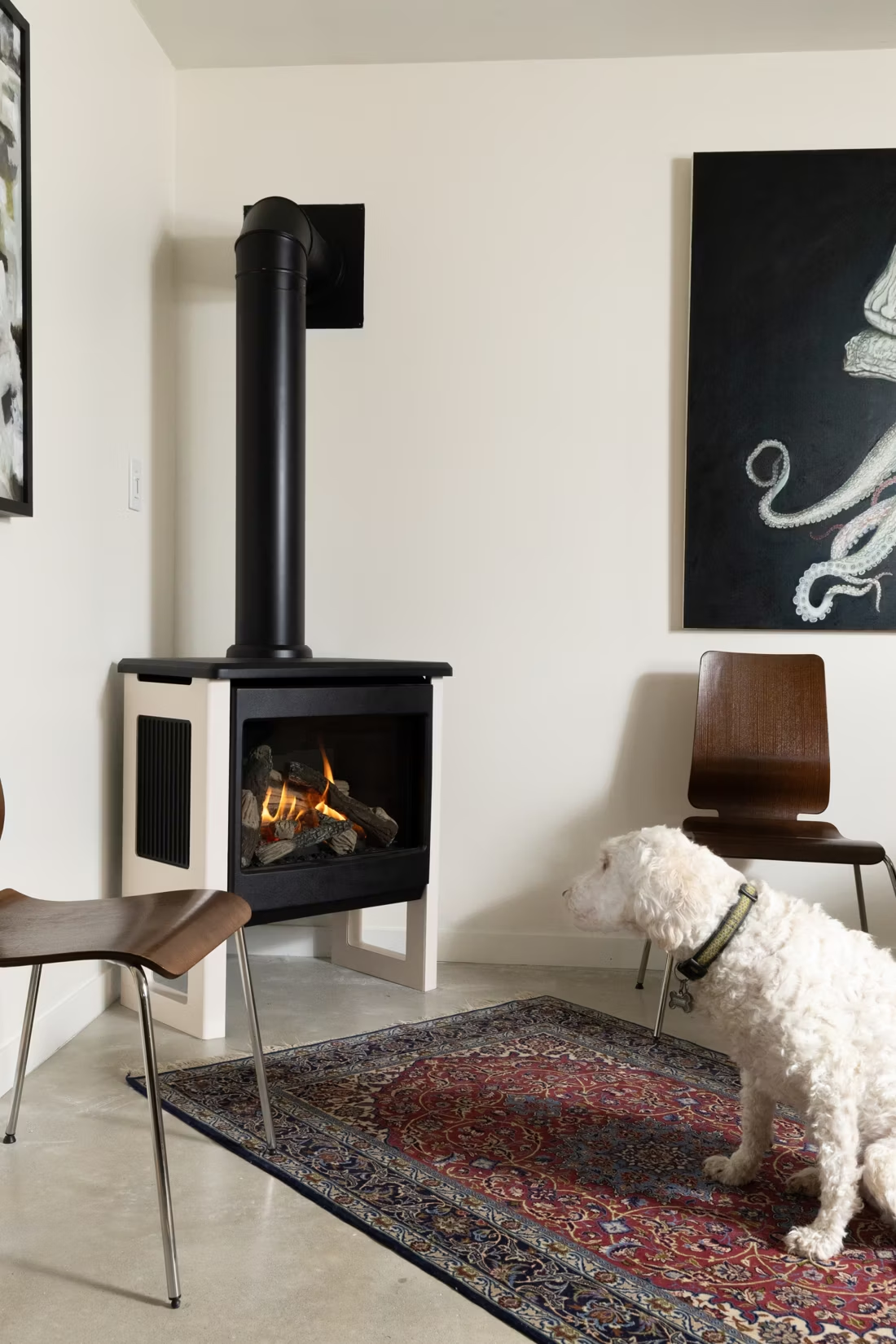
A gas fireplace is a fully framed-in unit built for new construction or a remodel where no fireplace exists yet. A gas insert is built to drop into an existing masonry firebox, turning an old wood-burning fireplace into a sealed, efficient heat source using the existing chimney as the vent path. A gas stove is a freestanding cabinet-style unit that doesn't require an existing fireplace at all—just floor space and a vent run. For the older homes common around Rogue River, an insert is usually the straightforward upgrade; newer builds or additions often call for a built-in fireplace instead.
Do I need a permit to install a gas fireplace in Rogue River?
Yes. Installations fall under Jackson County Development Services for building permits, and any propane line work needs to be done by a licensed gas fitter, which typically means a separate mechanical or gas permit. Most hearth dealers who work in the Rogue Valley handle this paperwork as part of the installation, coordinating the tank set, gas line run, and inspection so you're not managing multiple contractors yourself.
Should I get a vented or vent-free gas fireplace?
Vented (direct-vent) units draw combustion air from outside and exhaust it back outside through a sealed pipe—they're the safer, code-friendly default and the option most local dealers install. Vent-free units burn directly into the room and are legal in Oregon within strict size and ventilation limits, but they add moisture and combustion byproducts to indoor air. Given that Rogue River already deals with winter inversions and wildfire smoke settling into the valley, most homeowners here are better served sticking with a direct-vent unit that doesn't add anything extra to the air inside the house.
How often does a propane fireplace need to be serviced?
Plan on an annual inspection, ideally before the wet season sets in. A technician checks the burner, pilot assembly, gas connections, and venting, and cleans the glass and interior—usually $150 to $225 for a standard service call in the Rogue Valley. This is quick compared to wood chimney sweeping, but skipping it is how small issues like a dirty pilot or a failing thermocouple turn into a fireplace that won't light on the first cold night.
Gas vs. wood—which makes more sense for a Rogue River home?
Wood still has a strong following here, with douglas fir, ponderosa pine, and lodgepole pine available through cutting permits from the Rogue River-Siskiyou National Forest and BLM Medford District for as little as $5 to $20 a cord. It runs without electricity and costs little if you cut your own. Gas trades that self-sufficiency for convenience—flip a switch, get instant heat, no ash or smoke stacking up during the winter inversions that already settle into this valley. For a primary living space or a home where nobody wants to deal with cutting and stacking wood, propane usually wins; for backup heat during outages or homes near the forest boundary, plenty of Rogue River residents keep both.
Why is my open fireplace making my house colder?
Open fireplaces suck—literally. As the fire burns, it consumes air your furnace already paid to heat and pulls it out through the chimney, so the house is actually colder after the fire goes out than before you lit it. An insert fixes this: it seals the chimney, puts fixed glass across the front, and turns that hole in your house into a real heat source.
What does it take to replace an existing fireplace?
Fireplaces are like icebergs—bigger behind the wall than in front of it. Replacement means removing the surrounding tile or stone (the finish material laps onto the fireplace face), pulling the old unit, setting the new one in the same enclosure, and re-finishing the wall. A hearth professional can determine what's behind your wall without demolition during an in-home preview.
Does a fireplace add value to my home?
On average, a fireplace adds back to the home about the same amount you spent installing it. Add the monthly savings from heating the rooms you actually use instead of the whole house—often hundreds of dollars a year—and the value case is strong before you even count what a fire does for how your family uses the room.
Should the dealer who sells my fireplace also install it?
Ideally, yes. A fireplace project involves vent pipe, gas line, electrical, and often tile or stone. Hire three or four separate trades and you own the liability and the game of telephone between them. One company selling and installing means one accountable party, start to finish—ask about factory training, on-time completion records, and what happens if an inspection fails.
Nearby Dealers
Hearth shops serving Rogue River and the surrounding area. Every listing shows whether it is a WhyFire partner, a dealer we have verified as authorized for the brands we recommend, or a local business carrying hearth products. No manufacturer pays for placement. How we verify dealers →
Keller Kitchen & Bath Showcase
Alaska Masonry Heat
Find your gas fireplace in Rogue River.
Tell us about your home and your project, and we'll match you with a trusted local dealer plus a free Project Guide & Parts List—the exact parts, vent kit, and installer recommendation for your Rogue River gas project.
Find Your Fireplace →