
Steady, low-maintenance heat for Morrow County's long dry winters.
From Heppner's canyon country to the Boardman flats along the Columbia, pellet stoves give Morrow County homes clean, thermostat-controlled heat without the wood splitting. Find the right unit and get matched with a trusted local dealer.
Every Project Starts From One of These Five Situations
A practical fit for a small, spread-out county.
Morrow County stretches from the Columbia River bottomlands near Boardman up into the pine-covered foothills around Heppner, with roughly 4,850 heating degree days and average winter lows near 29°F—meaningfully milder than places like Bozeman or Fargo, but still cold enough for a real heating season most of the year. With a population under 8,000 spread across a large, rural footprint, many homeowners here want a heat source that doesn't demand a woodlot, a chainsaw, and hours of stacking—which is exactly where pellet stoves earn their keep.
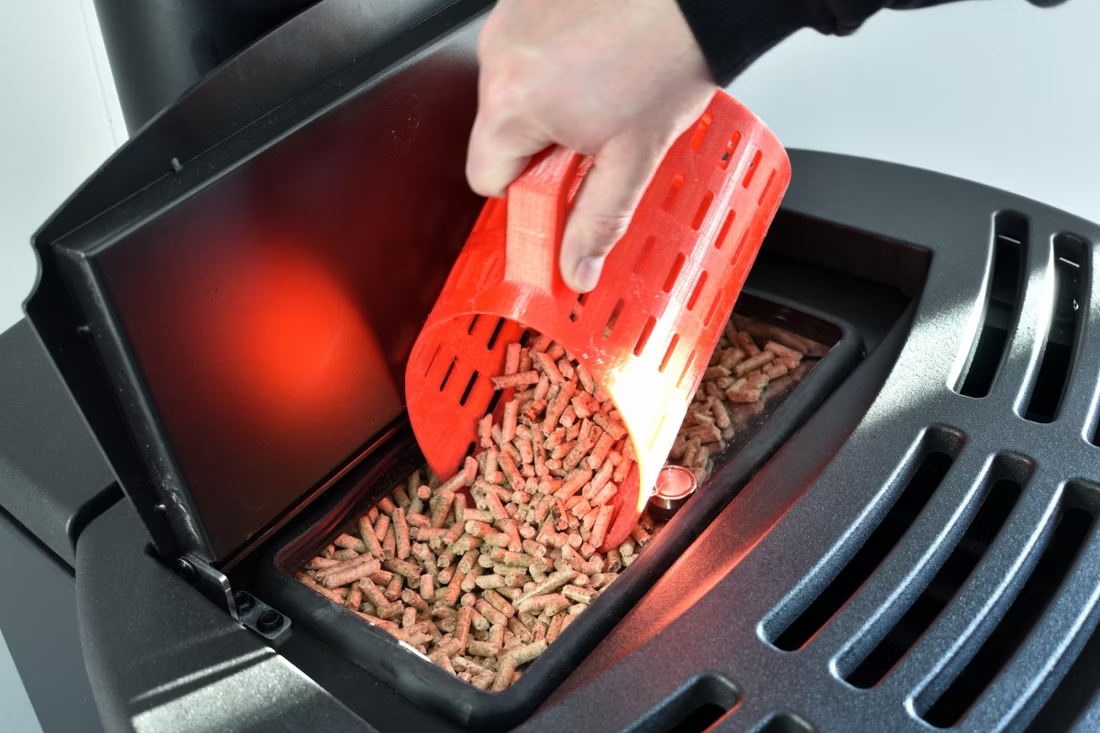
Regional pellet brands like Bear Mountain, Lignetics, and Pacific Pellet are stocked at farm and feed stores and hardware retailers throughout the Columbia Basin and Blue Mountain foothills, so fuel supply isn't the issue it can be in more isolated parts of Oregon. A pellet stove loads from a bag instead of a cord, burns cleaner than an open wood fire—a real plus given the wildfire smoke that settles into the region some summers and falls—and holds a steady, programmable temperature that suits ranch homes and in-town properties around Heppner, Ione, and Lexington alike.
Three steps. No salesperson until you're ready.
Tell us about your project
Your zip code, your situation, and the fuel you're leaning toward—or let the answers point you to one.
See what's actually available
The brands dealers within 100 miles genuinely carry—real options, never a catalog mirage.
Get your dealer & Project Guide
A trusted local dealer, plus the free Project Guide & Parts List that names every component of the job.
Frequently Asked Questions
How much does a pellet stove installation cost in Morrow County?
Pellet stove installations in Morrow County typically run $4,500 to $7,500, depending on the unit, whether it's a freestanding stove or an insert going into an existing masonry fireplace, and how far the venting run needs to travel. Because pellet stoves vent through a smaller-diameter pipe than wood stoves and don't require a full masonry chimney, installations are often simpler and less expensive than a comparable wood stove project—a meaningful consideration for older farmhouses around Heppner and Lexington that weren't built with a chimney in the first place.
Will a pellet stove work if the power goes out?
This is the one real tradeoff with pellet heat. Pellet stoves use an electric auger to feed fuel and a blower to circulate heat, so they stop working when the power drops—unlike a wood stove, which keeps burning with no electricity at all. For rural stretches of Morrow County where outages can run longer during winter storms, some homeowners pair a pellet stove with a small battery backup or generator to keep it running, while others keep a wood stove as backup heat. Ask your local dealer about battery-backup options if outage risk is a concern for your property.
Where can I buy pellets locally in Morrow County?
Bear Mountain, Lignetics, and Pacific Pellet are the regional brands most commonly stocked at farm supply and hardware stores throughout the Columbia Basin and Blue Mountain foothills, including outlets serving Heppner, Boardman, and Ione. Pellets are sold by the 40-pound bag or by the ton, and buying a season's supply—usually 2 to 3 tons for a primary-heat home in this climate—ahead of the winter rush is the easiest way to avoid scrambling when cold weather hits. Your local dealer can point you toward the closest reliable pellet source when you're sizing your stove.
What size pellet stove do I need for my home?
Sizing depends on square footage, ceiling height, and insulation, but as a starting point for Morrow County's climate: small units (under 1,000 sq ft) suit a single room or a modest cabin, medium units (1,000–1,800 sq ft) cover most main living areas, and larger units (1,800+ sq ft) can serve as primary heat for an open-concept ranch home. Older, less-insulated farmhouses around Lexington and Ione may need to size up compared to newer construction with the same footprint. A local dealer will size your space correctly during an in-home visit—oversizing wastes fuel and undersizing leaves you cold on the coldest nights of the year.
Do I need a permit to install a pellet stove in Morrow County?
Most new pellet stove installations require a building permit, and most local installers handle that paperwork as part of the install so you don't have to track it down yourself. Pellet stoves are also exempt from wood-burning curtailment restrictions that sometimes apply during air quality advisories, since they burn far cleaner than an open wood fire—worth knowing given the wildfire smoke that can settle into the Columbia Basin and Blue Mountain foothills during fire season.
Is a pellet stove or wood stove better for a Morrow County home?
Wood stoves burn ponderosa pine, lodgepole pine, or juniper cut locally—often through low-cost Forest Service permits from the Umatilla National Forest, which run about $20 per four cords during the May-to-October cutting season—and they keep working with zero electricity, which matters during winter outages. Pellet stoves trade that off-grid resilience for convenience: load a bag, set the thermostat, and get consistent heat with far less ash and a cleaner burn. For in-town homes around Heppner with reliable power and no interest in cutting or stacking wood, pellet is often the easier fit. For rural properties where self-sufficiency and outage resilience matter more, wood still has a strong case.
How often does a pellet stove need to be cleaned or serviced?
Pellet stoves need more frequent light maintenance than wood stoves but far less heavy cleaning. Plan on emptying the ash pan every few days to weekly during regular use, and a deeper cleaning of the burn pot, exhaust fan, and venting once a season—typically before the heating season ramps up in the fall. An annual professional service check is a good idea to inspect the auger motor, gaskets, and venting, especially for stoves run as primary heat through Morrow County's full winter.
What's the difference between a pellet stove and a pellet insert?
A pellet stove is a freestanding unit that sits on its own hearth pad and can go almost anywhere with the right clearances and a vent path to the outside. A pellet insert is built to slide into an existing masonry fireplace opening, converting an old open hearth into an efficient, thermostat-controlled heat source while reusing the existing chimney chase for venting. For Morrow County homes with an existing but rarely-used fireplace, an insert is often the more cost-effective upgrade; homes without an existing fireplace usually go with a freestanding stove instead.
Pellet vs. gas—which makes more sense for my home?
Gas fireplaces offer instant on-off convenience and no fuel handling at all, but require either a natural gas hookup or a propane tank and ongoing delivery. Pellet stoves need you to load fuel and manage an ash pan, but the pellets themselves are widely stocked locally through Bear Mountain, Lignetics, and Pacific Pellet, and many homeowners find the radiant, stove-front heat more satisfying than a sealed gas unit. For Morrow County properties without convenient gas or propane service, pellet is often the more practical choice; for homes already set up with gas lines or an existing propane tank, gas may be simpler day to day. A local dealer can walk through both options against your specific home and budget.
Why is a fireplace insert so efficient?
An insert does two things: it seals the chimney completely, so you stop losing air you already paid to heat, and it radiates warmth into the room through the firebox and glass. Most add a heat-exchange fan that pulls cool room air underneath, wraps it around the hot firebox, and pushes it back out warm. Your home is more efficient before you've even lit the first fire.
What's the difference between an insert and a zero-clearance fireplace?
An insert is a fireplace that slides into a pre-existing wood-burning fireplace—if you don't have one, there's nothing to insert it into. A zero-clearance fireplace is built into a framed wall, which makes it the answer for remodels and new construction. Simple test: existing masonry fireplace means insert; blank or framed wall means zero-clearance.
Can a fireplace actually lower my heating bill?
Yes—by creating a comfort zone. A furnace heats every square foot of the house just to warm the one room you're in; a gas fireplace on low burns roughly a sixth of the gas a typical furnace does. Set the furnace around 55–60 degrees as a baseline, then heat the rooms your family actually uses. Families who heat this way commonly save $20–$60 a month.
How much should I budget for a fireplace?
For an average home—covering the fireplace, the vent pipe, and basic installation—a budget between $3,900 and $5,500 gives you a lot of options across wood, gas, and pellet. By the time you add finish work, gas line, and electrical, the average complete installation lands between $5,000 and $12,000 all-in. In a remodel or new build, a good rule is to put about 2.5% of the total project cost toward the fireplace.
Pellet Brands Stocked Around Morrow County
Manufacturers will point you to the nearest stocking dealer.
Find your pellet stove in Morrow County.
Tell us a bit about your home and we'll match you with a trusted local dealer and a free Project Guide & Parts List—the right pellet stove or insert, sized correctly, with the vent kit and parts you'll need for your Morrow County home.
Find Your Fireplace →