
Find the right heat source for Morrow County winters.
Wood, gas, pellet, and electric fireplace resources for every town in Morrow County—from the wheat country around Lexington and Ione to the Columbia River communities of Boardman and Irrigon. Find the right unit and connect with a trusted local hearth retailer.
Every Project Starts From One of These Five Situations
Heating a county split between river plain and dryland wheat country.
Morrow County stretches from the Columbia River at Boardman and Irrigon, at around 300 feet elevation, up into the wheat and cattle country around Heppner and Lexington at closer to 2,000 feet. That elevation gap matters for heating: the river towns see milder, foggier winters, while Heppner's higher, more exposed terrain runs colder and windier. With a winter heating load well below Fargo ND or Bismarck ND, and a 29°F average winter low, Morrow County isn't Fargo ND or Bismarck ND territory, but it's a genuine heating-season county—most homes need a working primary heat source from October through April, and ponderosa pine, lodgepole pine, and juniper from the surrounding Umatilla National Forest still fuel a lot of woodstoves here.
What you'll find on this hub: hearth retailers, service technicians, and fuel suppliers serving every community in the county—Heppner and Lexington in the hills, Ione along the highway, and Boardman and Irrigon down on the Columbia. Pick your fuel below to drill into local dealers, installation costs, and the units that make sense for your home. Whether you're heating a farmhouse outside Lexington or a river-view home in Irrigon, this is the starting point.
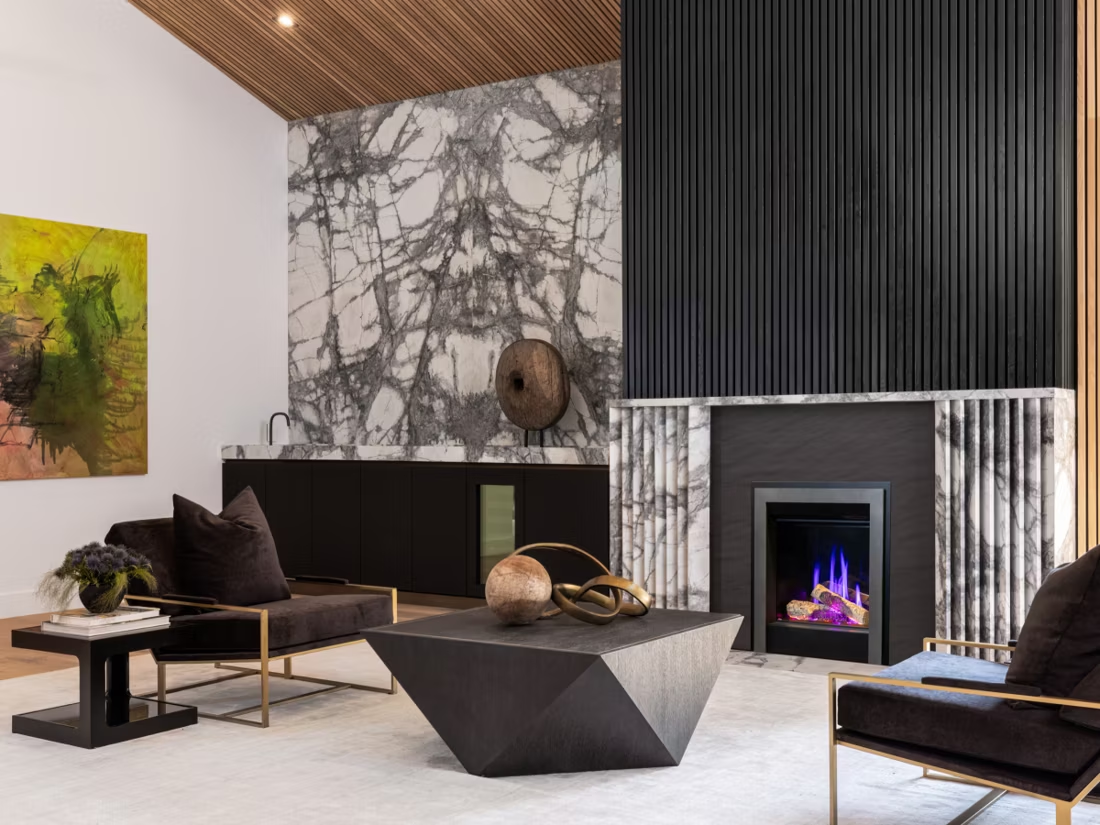
Four fuels. One honest answer for Morrow County.
Three steps. No salesperson until you're ready.
Tell us about your project
Your zip code, your situation, and the fuel you're leaning toward—or let the answers point you to one.
See what's actually available
The brands dealers within 100 miles genuinely carry—real options, never a catalog mirage.
Get your dealer & Project Guide
A trusted local dealer, plus the free Project Guide & Parts List that names every component of the job.
Frequently Asked Questions
Which fuel works best in Morrow County?
It depends on where in the county you are and what you're heating. Wood remains a practical primary or supplemental fuel in Heppner and Lexington, where ponderosa pine and juniper are readily available near the Umatilla National Forest and a good stove keeps a farmhouse warm through wind-driven cold spells. Gas is the low-maintenance option—mostly propane out here, since natural gas service is limited across the county, and it's popular in Boardman and Irrigon where homes are newer and buyers want instant heat without stacking wood. Pellet stoves are a solid middle path, especially with Bear Mountain and Pacific Pellet both producing pellets in the Pacific Northwest supply chain, giving reliable local availability. Electric fireplaces work well as supplemental heat in bedrooms or additions but shouldn't be the only heat source once temperatures drop into the 20s, which happens regularly here in winter.
Do I need a permit to install a fireplace in Morrow County?
In most cases, yes. New wood stoves, wood inserts, gas fireplaces, gas inserts, gas stoves, and pellet stoves generally require a building permit, and any gas hookup needs a licensed gas-fitter and its own gas line permit. Wood-burning appliances need to meet current EPA emissions standards to be installed. Electric fireplaces usually skip the permit process unless you're doing a built-in installation that involves new wiring or a dedicated circuit. Permitting in unincorporated parts of the county and inside towns like Heppner, Ione, Lexington, Boardman, and Irrigon can route through different offices depending on jurisdiction, so it's worth confirming with your installer—most local hearth retailers handle this paperwork as part of the installation.
Does wildfire smoke affect wood burning decisions in Morrow County?
It's a growing consideration. Morrow County sits in dry, wildfire-prone terrain, and summer and early-fall wildfire smoke has become a more regular feature of the calendar in recent years—sometimes lingering into the start of heating season. That's a separate issue from winter wood-stove smoke, but it does mean local air quality can already be compromised before you start your first fire of the year. Choosing a newer, EPA-certified stove burns cleaner and produces less particulate than an old pre-2020 unit, which matters both for your own air quality and for neighbors nearby, especially in denser parts of Heppner or Ione. If you're replacing an old stove, ask your dealer about current-generation catalytic or hybrid models.
Can one local hearth retailer handle all four fuel types?
Most retailers who regularly serve Morrow County—typically dealers based out of Hermiston or Pendleton—carry at least three of the four fuel types, with wood, gas, and pellet as the core lineup and electric as a smaller add-on category. Because Morrow County itself is thinly populated, there isn't a dense local retailer base the way you'd find in a larger county seat, so most homeowners end up working with a regional dealer who travels to Heppner, Boardman, or Irrigon for consultations and installs. If you're comparing fuel types side by side, ask upfront whether the dealer has working showroom displays of each—not every regional retailer stocks a full lineup in every fuel.
How does fireplace service work if I live outside of Heppner or Boardman?
Most technicians serving Morrow County are based in Hermiston or Pendleton and travel out for both installations and annual service, so expect a modest travel fee for rural addresses—this is common practice for spread-out counties like Morrow. Scheduling early in the fall, before the first cold snap, gets you on the calendar more easily than trying to book a mid-winter emergency chimney sweep or gas inspection. If you're in an outlying area near Lexington or Ione, it's worth asking your technician if they can batch your appointment with other calls in the area to reduce the travel charge.
What's the typical cost range for fireplace installation across all fuel types in Morrow County?
Costs mirror what you'd see across rural eastern Oregon, sometimes with a bit of added travel cost baked in since most installers are traveling from Hermiston or Pendleton. Wood stove or insert installation: roughly $4,000–$8,500 for a typical retrofit, more if new chimney or hearth work is involved. Gas fireplace, insert, or stove: about $4,000–$10,000, with propane tank setup or line work adding to the cost on the higher end. Pellet stove or insert: generally $4,000–$7,000. Electric fireplace: $200–$3,000 for the unit itself, plus $400–$1,200 in labor for anything beyond a simple plug-in install. The county + fuel pages above break these down further with local retailer specifics.
How much should I budget for a fireplace?
For an average home—covering the fireplace, the vent pipe, and basic installation—a budget between $3,900 and $5,500 gives you a lot of options across wood, gas, and pellet. By the time you add finish work, gas line, and electrical, the average complete installation lands between $5,000 and $12,000 all-in. In a remodel or new build, a good rule is to put about 2.5% of the total project cost toward the fireplace.
What is an in-home preview and do I need one?
It's a visit where a hearth professional measures your space, confirms the model you picked actually works in your home, and walks the specs—framing, gas line, venting, finish work—before anything is ordered. Some details you just can't know until you see the house. Never make a down payment without one; it's the single most-skipped step that burns buyers.
Can I install a fireplace myself?
If you're putting a fire in your house on purpose, it's best to work with an expert. Unless you're genuinely experienced in framing, gas line, vent pipe, and the national code on clearances to combustibles, have a professional do it—and ideally the same company that sells you the fireplace, so warranty, service, and liability all live under one roof.
Wood, gas, pellet, or electric—how do I choose?
Match the fuel to your life, not the other way around. Wood: lowest fuel cost and total power-outage independence, but you're hauling and stacking. Gas: press a button, set a thermostat, no maintenance to speak of. Pellet: wood economics with automatic feeding, in exchange for weekly cleaning and a need for electricity. Electric: plugs in anywhere with honest supplemental heat. Nobody regrets the fuel that fits how they actually live.
Stove and Fireplace Dealers in Morrow County
Listings include WhyFire partner dealers, dealers we have verified as authorized for the brands we recommend, and established local businesses that carry hearth products. Every listing shows which one it is. The ones marked Preferred run on WhyFire's software, so they can show you real pricing and book your appointment right here. No manufacturer pays for placement. How we verify dealers →
Bruce Heating & Air
Bruce Heating & Ac
Legacy Pool & Spa LLC
Apollo Heating & Air Conditioning
Dayco Heating
Fire & Water
Campbell & Company, Inc.
Total Energy Mgmnt
Find your fireplace in Morrow County.
Pick your fuel below to see local dealers, installation costs, and get matched with a trusted retailer who can build you a free Project Guide & Parts List for your home.
Find Your Fireplace →