
Steady, clean heat for Rogue Valley winters.
From Grants Pass to Cave Junction and the Illinois Valley, pellet stoves deliver consistent, thermostat-controlled warmth without the smoke concerns that hang over the Rogue Valley during wildfire season. Find the right unit and get matched with a trusted local dealer.
Every Project Starts From One of These Five Situations
A clean alternative built for Josephine County's mild-but-smoky climate.
Josephine County sits in the Rogue Valley and Siskiyou foothills at a modest elevation, with a climate zone 4C profile that's mild by Oregon standards—winter lows average around 35°F and the county has a moderate winter heating season, closer to the coastal-influenced side of the state than the high desert. That's not a climate that demands a 20-hour overnight burn the way Bend or Klamath Falls does. But Josephine County has its own complication: summer and early-fall wildfire smoke from the surrounding Rogue River-Siskiyou and Umpqua forests routinely triggers air quality advisories, and that's made a lot of homeowners here more conscious of what their own chimney is putting into the air.
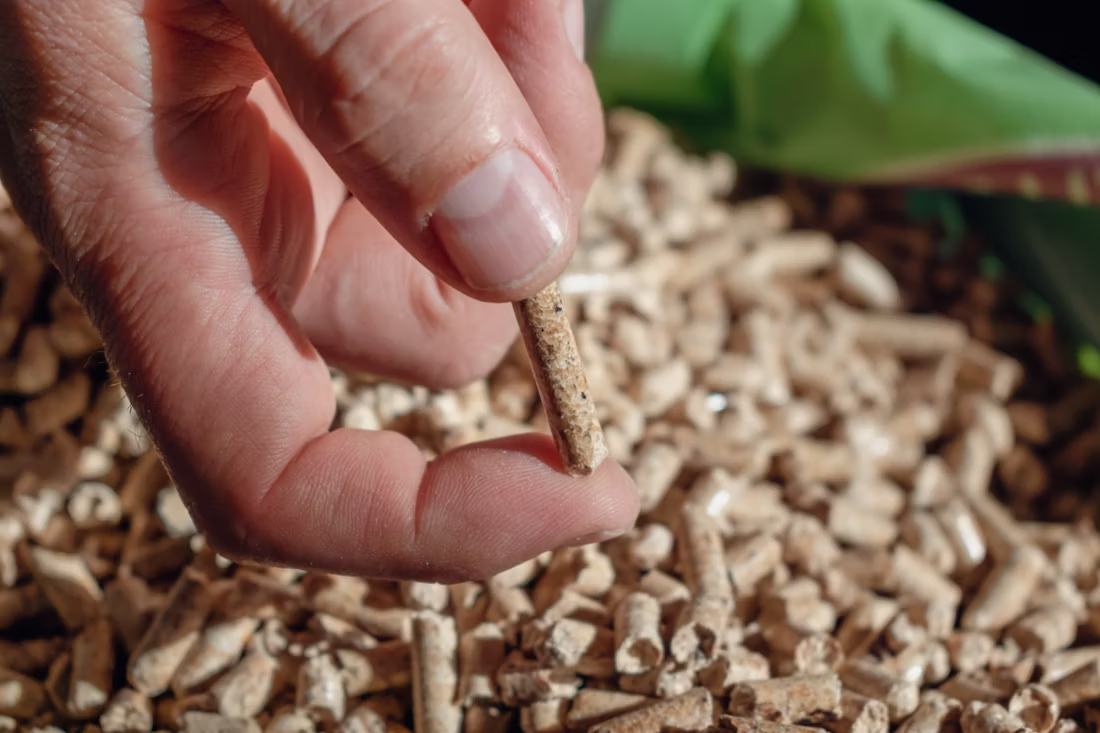
Pellet stoves fit that reality well. They burn cleaner and more completely than cordwood, which matters to residents who already deal with smoke-choked skies from June through September and don't want to add to it come winter. The county also sits close to the supply chain—Bear Mountain, Lignetics, and Pacific Pellet all produce pellets from Pacific Northwest sawmill byproducts, much of it Douglas fir and ponderosa pine sourced from the same Rogue Valley and Umpqua Basin timberland that supplies local firewood cutters. A pellet stove or insert, sized and installed by a local pro, gives Grants Pass, Cave Junction, and Illinois Valley homes thermostat-level heat control with none of the ash mess or creosote buildup of a wood stove.
Three steps. No salesperson until you're ready.
Tell us about your project
Your zip code, your situation, and the fuel you're leaning toward—or let the answers point you to one.
See what's actually available
The brands dealers within 100 miles genuinely carry—real options, never a catalog mirage.
Get your dealer & Project Guide
A trusted local dealer, plus the free Project Guide & Parts List that names every component of the job.
Frequently Asked Questions
How much does a pellet stove installation cost in Josephine County?
A freestanding pellet stove installation in Josephine County typically runs $3,000 to $6,000, depending on the unit, whether you need a new electrical outlet near the hearth, and the venting path through an exterior wall. A pellet insert going into an existing masonry fireplace usually costs somewhat more, since it often requires running a dedicated circuit for the auger and blower motor as well as venting through the existing chimney. Homes in more remote parts of the county—out toward Selma, Wilderville, or the Illinois Valley—may see a modest travel charge added to the installer's quote.
What size pellet stove do I need for my home?
Given Josephine County's relatively mild winters—average lows near 35°F and a moderate winter heating season—most homes here don't need the largest stove on the showroom floor. A small pellet stove (rated for 1,000-1,300 sq ft) is plenty for a single living area or a Cave Junction cabin used seasonally. Medium units (1,300-2,000 sq ft) cover most Grants Pass-area homes. Larger models make sense mainly for drafty older farmhouses out in the Illinois Valley or homes at higher elevation in the Siskiyou foothills, where nighttime temperatures drop more than on the valley floor. A local dealer will size this properly during an in-home visit—oversizing wastes pellets and undersizing means the stove runs at full output constantly, which shortens its lifespan.
Where can I find certified pellet stove installers near me?
Look for installers with NFI (National Fireplace Institute) pellet-specific certification, which covers the electrical and venting requirements unique to pellet appliances. Local hearth retailers serving the Grants Pass and Cave Junction area typically employ certified techs and handle the full job—unit, venting, and the dedicated electrical circuit the auger and blower require. Because pellet stoves depend on electricity to run, a poorly wired install is a common source of nuisance shutoffs, so it's worth confirming your installer is comfortable with the appliance's control board, not just its venting.
What's the difference between a pellet stove and a pellet insert?
A pellet stove is a freestanding unit that sits on its own hearth pad and vents through a wall or existing chimney—it can go almost anywhere in the house with access to an outlet. A pellet insert is built to slide into an existing masonry fireplace opening, which is a common retrofit for older Grants Pass-area homes with a fireplace that's rarely used because it's inefficient. Either way, both require power, so placement near an outlet (or the budget to add one) matters more with pellet appliances than with wood stoves.
Do I need a permit to install a pellet stove in Josephine County?
Yes—a building permit is generally required for a new pellet stove or insert installation through Josephine County's building department, and most installers include permitting and inspection as part of the project. Because pellet appliances also need a dedicated electrical circuit, some installations require an electrical permit in addition to the mechanical one. There's no cutting permit involved, unlike wood heat—pellets are purchased by the bag or ton from a retailer, not harvested from Rogue River-Siskiyou or Umpqua National Forest land.
What's the best pellet stove for Josephine County's climate?
Because Josephine County's winters are moderate compared to the rest of Oregon, most homeowners don't need a stove built for extreme cold—the priority here is usually efficiency, quiet operation, and low ash output rather than maximum BTU. Mid-size units sold by regional Rogue Valley dealers handle the county's average winter lows comfortably. If you're in a higher-elevation home in the Siskiyou foothills or an older, leakier farmhouse in the Illinois Valley, size up slightly and ask about models with a larger hopper capacity so you're not refilling constantly during a cold snap.
How often does a pellet stove need cleaning and service?
Pellet stoves need more frequent attention than gas but less than wood. Plan on cleaning the burn pot and ash pan every few days during regular use, a deeper cleaning of the exhaust fan and venting monthly, and a full professional service once a year—typically before the fall burning season starts, given how quickly wildfire smoke advisories can shift into cooler weather here. Skipping the annual service is the most common cause of auger jams and igniter failures.
Where can I buy pellets in Josephine County?
Regional brands including Bear Mountain, Lignetics, and Pacific Pellet are widely available through hardware stores and hearth retailers serving Grants Pass and the surrounding area, with bagged pellets typically running in the $5-$7 per 40-lb bag range, or somewhat less by the ton when bought in bulk before the season starts. All three brands manufacture from Pacific Northwest mill byproducts—largely Douglas fir and ponderosa pine—so supply has stayed reliable even during years when wildfire activity has disrupted other regional wood product supply chains. Buying early, before the first cold snap in October or November, is the best way to avoid the shortages that can hit popular brands mid-winter.
Pellet stove vs. wood stove—which is right for me?
Wood stoves work without electricity, which matters if you're in a rural stretch of the Illinois Valley or out toward Wolf Creek where power outages during winter storms can run long, and self-cut firewood is available through low-cost permits from the Rogue River-Siskiyou National Forest or BLM Medford District—often $5 to $20 per cord. Pellet stoves need electricity to run the auger and blower, so they're not a storm-outage backup unless paired with a battery system, but they burn more cleanly, need less frequent attention, and don't require splitting or stacking cordwood. Given how often the Rogue Valley deals with summer wildfire smoke, some homeowners here also like that a pellet stove doesn't add another combustion source with visible smoke, since neighbors already living downwind of fire season can be sensitive to it. For a primary residence in town, pellet is often the easier day-to-day choice; for a place that needs to function completely off-grid, wood still has the edge.
What's the difference between an insert and a zero-clearance fireplace?
An insert is a fireplace that slides into a pre-existing wood-burning fireplace—if you don't have one, there's nothing to insert it into. A zero-clearance fireplace is built into a framed wall, which makes it the answer for remodels and new construction. Simple test: existing masonry fireplace means insert; blank or framed wall means zero-clearance.
How often does a pellet stove need cleaning?
A clean pellet stove is a happy pellet stove. Plan on cleaning the burn pot about once a week when you're burning regularly—ash and clinkers gum up the air holes just like a pellet barbecue. Most pellet stove problems trace back to skipped cleaning that nobody explained up front. Some designs make it easy with a trapdoor burn pot: pull a lever and the gunk drops into the ash pan.
Can I install a fireplace myself?
If you're putting a fire in your house on purpose, it's best to work with an expert. Unless you're genuinely experienced in framing, gas line, vent pipe, and the national code on clearances to combustibles, have a professional do it—and ideally the same company that sells you the fireplace, so warranty, service, and liability all live under one roof.
Does a fireplace add value to my home?
On average, a fireplace adds back to the home about the same amount you spent installing it. Add the monthly savings from heating the rooms you actually use instead of the whole house—often hundreds of dollars a year—and the value case is strong before you even count what a fire does for how your family uses the room.
Stove and Fireplace Dealers in Josephine County
Pellet Brands Stocked Around Josephine County
Manufacturers will point you to the nearest stocking dealer.
Find your pellet stove in Josephine County.
Tell us about your home and we'll match you with the right pellet stove or insert, plus a free Project Guide & Parts List—including the vent kit—and a recommended local dealer to install it.
Find Your Fireplace →