
Find your electric fireplace in Josephine County.
No chimney, no gas line, no venting—just clean, flexible heat for the Rogue and Illinois Valleys, from Grants Pass to Cave Junction. Find the right unit and connect with a trusted local dealer.
Every Project Starts From One of These Five Situations
Clean, flexible heat for a mild Rogue Valley climate.
Josephine County sits in the Rogue and Illinois Valleys of southwest Oregon—Grants Pass along the Rogue River, Cave Junction in the Illinois Valley, and smaller communities like Wolf Creek and Merlin to the north. At climate zone 4C with roughly 4,176 heating degree days and a winter low average of 35°F, this is a far milder climate than the high desert side of the Cascades or the eastern half of the state. Wood heat is still common here—douglas fir, ponderosa pine, and lodgepole pine are cut locally through Rogue River-Siskiyou and Umpqua National Forest permits—but summer and fall wildfire smoke is a real regional concern, and it's pushed a growing number of homeowners toward electric fireplaces for at least part of their heating plan.
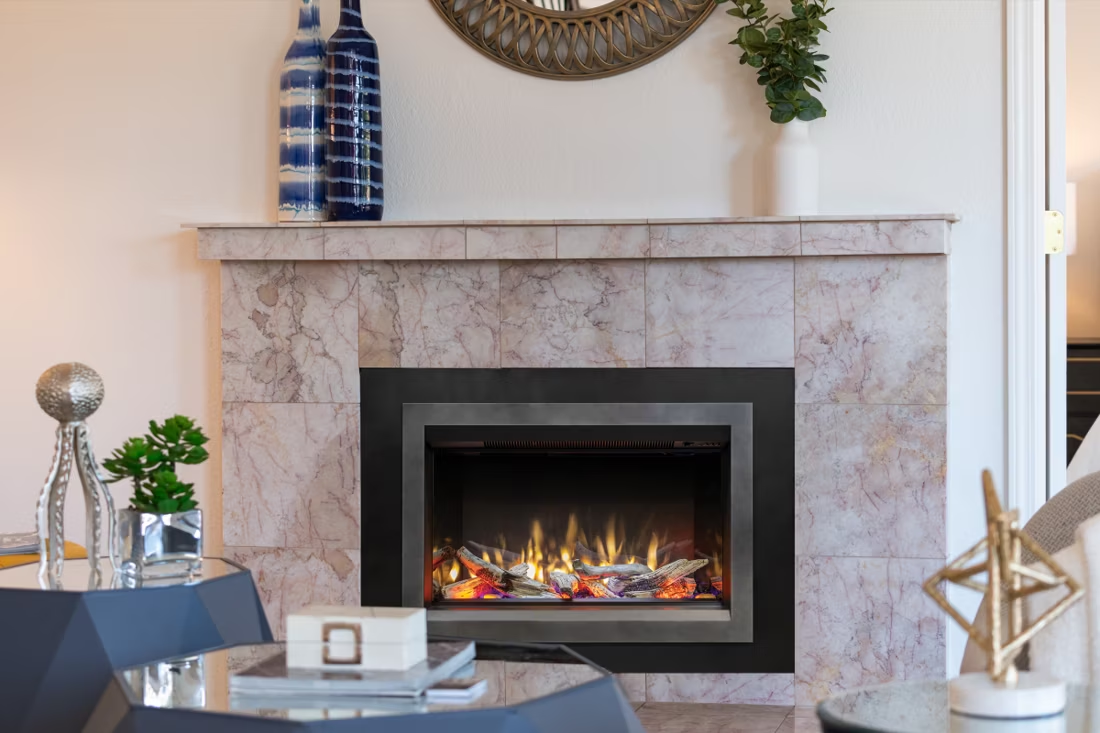
An electric fireplace plugs into a standard outlet or, for larger built-ins, a dedicated circuit wired by a licensed electrician—no chimney, no gas line, no annual sweep. Pacific Power serves most of the county, and because Josephine County's winters are mild relative to much of Oregon, electric units work well as either the sole heat source for a bedroom or den, or as zone heat that takes pressure off central HVAC in the main living space. They're also the cleanest option during smoke season: no particulates added to the air, indoors or out, when outdoor air quality in the Rogue and Illinois Valleys is already compromised by wildfire smoke.
Three steps. No salesperson until you're ready.
Tell us about your project
Your zip code, your situation, and the fuel you're leaning toward—or let the answers point you to one.
See what's actually available
The brands dealers within 100 miles genuinely carry—real options, never a catalog mirage.
Get your dealer & Project Guide
A trusted local dealer, plus the free Project Guide & Parts List that names every component of the job.
Frequently Asked Questions
How much does an electric fireplace installation cost in Josephine County?
Plug-in inserts and freestanding electric fireplaces typically run $200 to $1,000 for the unit itself, with no professional installation required beyond finding an outlet. Built-in wall units and larger inserts that need a dedicated 120V or 240V circuit generally run $800 to $2,500 once you factor in a licensed electrician for the wiring and a local dealer for the unit and trim kit. Either way, electric installs cost a fraction of a wood or gas project in Josephine County since there's no chimney, venting, or gas line work involved.
Do electric fireplaces actually produce real heat, or are they just for looks?
Most models include a fan-forced heater rated around 1,500 watts, which puts out roughly 5,000 BTU—enough to noticeably warm a room up to 400 to 1,000 square feet depending on insulation and ceiling height. Many units also let you run the flame effect without the heater, which is useful in Josephine County's warmer months when you still want the ambiance but not the added heat. Given the county's relatively low heating demand at 4,176 HDD, an electric unit is often sufficient as the primary heat source for a single room, not just a supplemental one.
What's the best electric fireplace for Josephine County's climate?
Because winter lows average around 35°F here, well short of the deep cold seen east of the Cascades, many Josephine County homeowners run electric fireplaces as the sole heat source in secondary rooms—guest bedrooms, dens, converted garages. Look for units with a multi-stage thermostat and adjustable heat output from brands like Dimplex or Napoleon so you can dial in low heat on shoulder-season days and full output on the occasional cold snap. Larger, older farmhouses around Wolf Creek or Merlin with less insulation may do better with a higher-wattage insert paired with existing central heat rather than relying on electric alone.
Do I need a permit for an electric fireplace in Josephine County?
A simple plug-in electric fireplace or stove doesn't require a permit—it's treated like any other appliance. If you're installing a built-in unit that requires new wiring or a dedicated circuit, that electrical work typically needs a permit through the county building department, and it should be pulled by a licensed electrician. Unlike wood stoves or gas fireplaces, there's no fire-code review of the appliance itself, since electric units don't produce combustion byproducts or require venting.
Will an electric fireplace help during wildfire smoke season?
Yes—this is one of the clearer advantages of electric in Josephine County. Wildfire smoke is a recurring regional concern in the Rogue and Illinois Valleys, and during heavy smoke events many households close up the house and avoid adding to indoor particulates from a wood-burning appliance. An electric fireplace lets you keep the ambiance and supplemental warmth going with the windows shut and filtration running, without contributing any smoke or particulates of its own—something a wood stove simply can't offer during those weeks.
Electric vs. wood or gas—which fits my Josephine County home?
Wood is plentiful and cheap here—douglas fir, ponderosa pine, and lodgepole pine cut through Rogue River-Siskiyou National Forest or BLM Medford District permits for as little as $5 to $20 per cord—and it keeps working when the power goes out. Gas offers instant, thermostat-controlled heat but requires a gas line or propane tank. Electric is the least expensive to install and the cleanest during smoke season, but it costs more to run per BTU on Pacific Power rates and stops working entirely during an outage. For most Josephine County homes, electric makes the most sense as a low-cost secondary heat source in a room where running gas or wood infrastructure doesn't make sense—not as the whole-house solution.
Will my electric fireplace work during a power outage?
No—electric fireplaces need grid power to run, so they go dark along with everything else during an outage. Josephine County does see occasional winter storm outages, and restoration can take longer in rural stretches around Wolf Creek and Merlin than it does in town. If backup heat during an outage matters to you, plan on pairing an electric fireplace with a wood stove or gas unit elsewhere in the house rather than relying on electric as your only heat source.
What's the difference between an electric insert, a built-in, and a freestanding electric fireplace?
An electric insert is sized to slide into an existing masonry fireplace opening—a common upgrade for older Grants Pass homes that want to retire a drafty wood-burning fireplace without losing the look of it. A built-in electric fireplace is designed to be framed into a wall during new construction or a remodel, giving it a more custom, flush appearance. A freestanding unit looks like a stove or cabinet, plugs into a standard outlet, and can be moved from room to room without any wiring changes—the simplest option if you're not ready to commit to a permanent install.
Where can I get an electric fireplace installed in Josephine County?
Local hearth retailers can help size and select a unit for your room and answer questions about wattage and heat output for Josephine County's mild climate. If you're going with a built-in that needs new wiring, a licensed electrician should handle the circuit work and pull the electrical permit. Plug-in inserts and freestanding units don't require a professional installer at all, though a local dealer can still help you choose a model that fits your fireplace opening or room dimensions correctly.
Does an electric fireplace need a vent or chimney?
No—that's its superpower. An electric fireplace needs a wall and an outlet, period. No vent pipe, no gas line, no clearances to design around, which is why it works in bedrooms, offices, apartments, and walls where venting a gas or wood unit would be impractical or impossible. Installation is typically the simplest and least expensive of any fireplace type.
Can I put a TV above my fireplace?
Yes—with an asterisk. Fireplaces are hot and TVs don't like heat. Either put a mantel between them to deflect rising warmth, or choose a fireplace with heat-management technology that creates a cool zone on the wall above—the wall stays around 125 degrees, barely warm, while the room still gets full heat. If you like clean lines and don't want a mantel, heat management is the answer.
What is an in-home preview and do I need one?
It's a visit where a hearth professional measures your space, confirms the model you picked actually works in your home, and walks the specs—framing, gas line, venting, finish work—before anything is ordered. Some details you just can't know until you see the house. Never make a down payment without one; it's the single most-skipped step that burns buyers.
How much should I budget for a fireplace?
For an average home—covering the fireplace, the vent pipe, and basic installation—a budget between $3,900 and $5,500 gives you a lot of options across wood, gas, and pellet. By the time you add finish work, gas line, and electrical, the average complete installation lands between $5,000 and $12,000 all-in. In a remodel or new build, a good rule is to put about 2.5% of the total project cost toward the fireplace.
Stove and Fireplace Dealers in Josephine County
Find your electric fireplace in Josephine County.
Tell us a bit about your home and we'll put together a free Project Guide & Parts List for your electric fireplace project—the right unit, the wiring it needs, and a trusted local dealer in Josephine County to install it.
Find Your Fireplace →