
Mild Winters, Instant Warmth.
Four Corners winters rarely dip far below the mid-30s, but a gas fireplace still delivers real, on-demand heat without hauling or stacking firewood. Find the right unit and connect with a trusted local dealer.
Every Project Starts From One of These Five Situations
Convenient heat for a mild-winter valley.
Four Corners is an unincorporated community in Marion County sitting at just 222 feet on the floor of the Willamette Valley, wedged between Salem, Turner, and Aumsville. Winters here average a low around 36°F and stay cool enough, day after day, to add up to a long heating season—mild compared to the Cascades an hour east, but wet, gray, and long enough that a supplemental heat source gets real use from November through March. The bigger air quality issue locally isn't winter inversion, it's summer and early-fall wildfire smoke, which is one reason many valley households lean toward a clean, on-demand gas option instead of a wood stove that has to sit idle during smoke advisories.
Natural gas access in Four Corners depends on exactly where you are—some streets close to Salem's city limits have piped gas, while others in the unincorporated county rely on propane delivered and stored on-site. Either way, a direct-vent gas fireplace or insert gives you instant heat at the flip of a switch, works as efficient zone heating alongside a central heat pump, and, with the right ignition hardware, keeps running through a Portland General Electric outage during a winter windstorm. For a lot of Four Corners homes, gas ends up being the practical choice for the main living space, with wood (if it's kept at all) reserved for a den, shop, or backup use.
Three steps. No salesperson until you're ready.
Tell us about your project
Your zip code, your situation, and the fuel you're leaning toward—or let the answers point you to one.
See what's actually available
The brands dealers within 100 miles genuinely carry—real options, never a catalog mirage.
Get your dealer & Project Guide
A trusted local dealer, plus the free Project Guide & Parts List that names every component of the job.
Frequently Asked Questions
How much does a gas fireplace installation cost in Four Corners?
Pricing in this part of Marion County generally tracks with broader Willamette Valley rates: a direct-vent gas insert dropped into an existing masonry fireplace typically runs $3,500 to $7,000, while a new built-in gas fireplace requiring framing and fresh venting in a remodel or addition runs higher, often $6,000 to $11,000—more if a new gas line or a propane tank setup is needed. Homes already tied into natural gas near the Salem city line tend to land on the lower end; propane households should budget for tank and delivery setup on top of the unit and labor. A local dealer will give you a firm number after seeing your fireplace or framing in person.
Can I convert my existing wood fireplace to gas?
Yes, and it's a common request from Marion County homeowners tired of hauling Douglas fir or ponderosa pine rounds and cleaning ash and creosote every winter. In most cases a gas insert slides into your existing masonry firebox, with a stainless liner run up through your current chimney to handle venting. Expect roughly $4,000 to $8,000 depending on the insert, whether you're on natural gas or propane, and whether new gas line work is required. The conversion keeps your existing hearth and mantel intact while swapping out the labor of a wood fire for the flip of a switch.
Is natural gas available in Four Corners, or do I need propane?
It depends on your exact address. Four Corners sits between Salem, Turner, and Aumsville, and piped natural gas access thins out the farther you get from Salem's existing mains—some streets have it, others don't. If natural gas isn't run to your home, propane is the standard fallback: a local propane supplier sets an above-ground or buried tank, and your installer connects it to the same fireplace hardware you'd use with natural gas. Most gas fireplace and insert models are dual-fuel capable—the installer just fits the correct orifice and regulator for whichever fuel you're on.
Will my gas fireplace still work during a power outage?
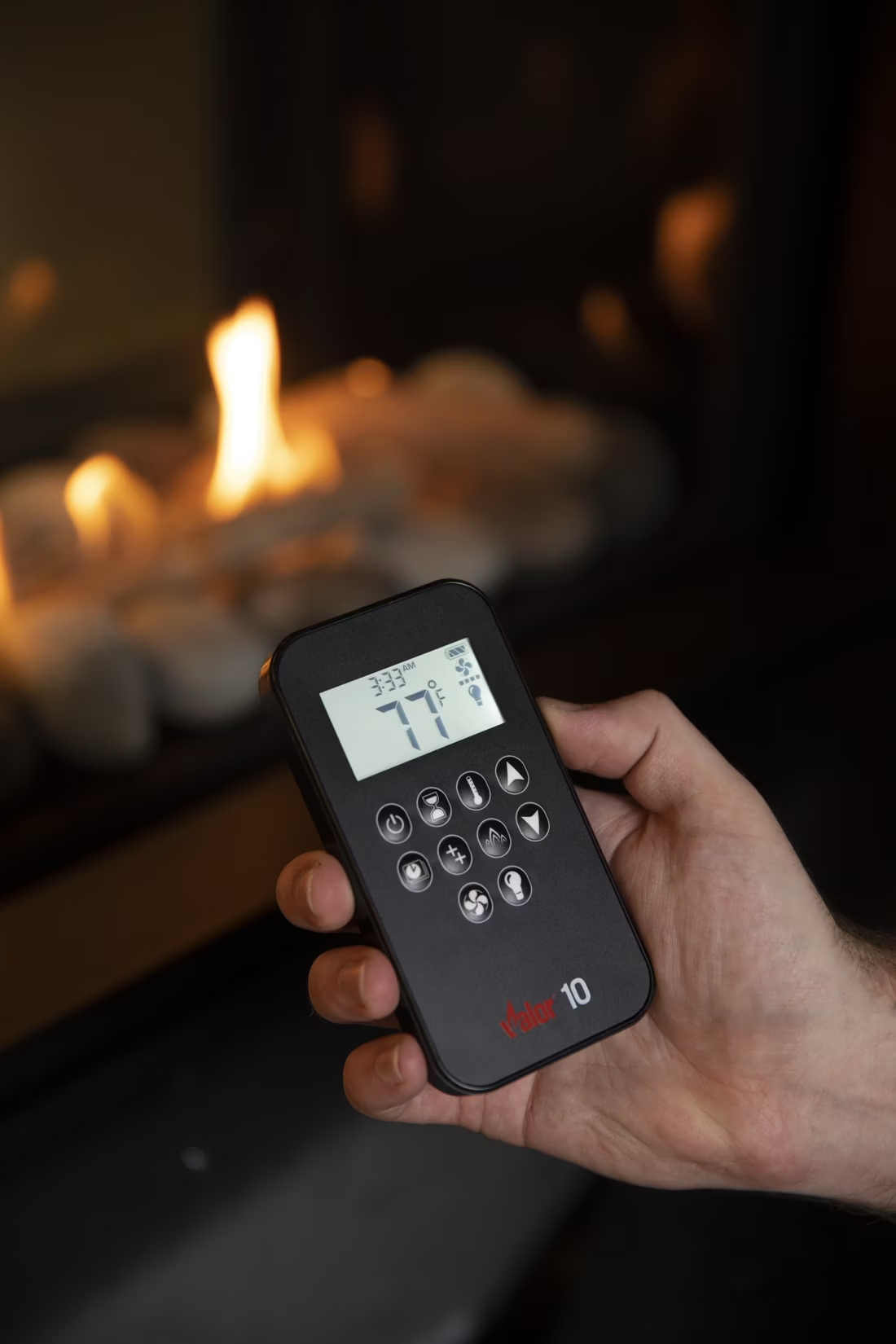
For most units, yes. Willamette Valley ice storms occasionally knock out Portland General Electric service for a day or more, and gas fireplaces with intermittent pilot ignition (IPI) include a battery backup—typically AA batteries in the control module—that keeps the unit lighting and running when the grid goes down. Valor fireplaces go a step further: their pilot assembly generates its own millivolt current through the thermocouple, so the fireplace works even if you forgot to check the batteries. If storm-driven outages are a concern for your Four Corners home, ask your local dealer specifically about the ignition system on any unit you're considering.
What's the difference between a gas fireplace, gas insert, and gas stove?
A gas fireplace is a fully built-in unit set into a wall or framed enclosure, typically chosen for new construction or a full remodel. A gas insert is sized to slide into an existing masonry fireplace opening, sealing it up and using the existing chimney as a chase for direct-vent piping—a natural fit for the many Four Corners homes built with a traditional wood-burning masonry fireplace in the living room. A gas stove is a freestanding unit that sits on the floor like a wood stove but runs on gas, useful in rooms with no existing fireplace at all. Local retailers can walk your specific room and tell you which format actually fits.
Do I need a permit to install a gas fireplace in Four Corners?
Yes. Because Four Corners is unincorporated, permitting runs through Marion County's Building Codes Division rather than a city building office—you'll need a building permit for the appliance and venting, plus a mechanical or gas permit for the line work, which has to be pulled by a licensed gas-fitter. Hearth retailers who regularly work the Salem-Keizer-Four Corners area typically fold this paperwork into the installation quote and coordinate the gas line, venting, and county inspection as one process rather than leaving you to juggle separate trades.
What's the difference between vented and vent-free gas fireplaces?
Vented (direct-vent) gas fireplaces pull combustion air from outside and exhaust combustion byproducts back outside through sealed pipe—they're the standard, code-friendly choice everywhere, including Oregon. Vent-free units burn gas directly into the room with no outside venting; they're legal in Oregon but come with strict room-size minimums, an oxygen depletion sensor, and ventilation requirements, and some states restrict them outright. For a mild, damp climate like Four Corners where indoor humidity and air quality already need managing, direct-vent units are what most local installers recommend by default—they still put out real heat and a clean look without any indoor air trade-offs. Ask your dealer to walk through both if you're weighing the choice.
How often does a gas fireplace need to be serviced?
Plan on an annual inspection, ideally before the wet season sets in each fall. A certified technician checks the burner, pilot assembly, venting, and gas connections, and cleans the glass and interior—a much quicker job than a wood-stove chimney sweep, but just as important for safety and warranty coverage. Gas appliance service providers working the Salem and Four Corners area typically charge in the $150 to $250 range for a standard annual visit.
Gas vs. wood—which fits a Four Corners home?
Wood has real local advantages: Douglas fir, ponderosa pine, and lodgepole pine are all commonly available in the mid-valley, and cutting permits through nearby national forests like Siuslaw, Mt. Hood, and Gifford Pinchot run just $5 to $20 per cord during the May-through-October season. The catch is timing—summer and early-fall wildfire smoke is the region's main air quality issue, and burn advisories during heavy smoke events can sideline a wood stove for stretches that have nothing to do with when you'd actually want a fire going. Gas sidesteps that entirely: it lights on demand, doesn't require seasoned firewood on hand, and keeps burning clean regardless of what's in the air outside. Most Four Corners homeowners choosing gas for a main living space are prioritizing that reliability, while some keep a wood stove elsewhere in the house for backup heat or the atmosphere of a real fire.
Why is a fireplace insert so efficient?
An insert does two things: it seals the chimney completely, so you stop losing air you already paid to heat, and it radiates warmth into the room through the firebox and glass. Most add a heat-exchange fan that pulls cool room air underneath, wraps it around the hot firebox, and pushes it back out warm. Your home is more efficient before you've even lit the first fire.
What's the difference between an insert and a zero-clearance fireplace?
An insert is a fireplace that slides into a pre-existing wood-burning fireplace—if you don't have one, there's nothing to insert it into. A zero-clearance fireplace is built into a framed wall, which makes it the answer for remodels and new construction. Simple test: existing masonry fireplace means insert; blank or framed wall means zero-clearance.
What is an in-home preview and do I need one?
It's a visit where a hearth professional measures your space, confirms the model you picked actually works in your home, and walks the specs—framing, gas line, venting, finish work—before anything is ordered. Some details you just can't know until you see the house. Never make a down payment without one; it's the single most-skipped step that burns buyers.
Can a fireplace actually lower my heating bill?
Yes—by creating a comfort zone. A furnace heats every square foot of the house just to warm the one room you're in; a gas fireplace on low burns roughly a sixth of the gas a typical furnace does. Set the furnace around 55–60 degrees as a baseline, then heat the rooms your family actually uses. Families who heat this way commonly save $20–$60 a month.
Nearby Dealers
Hearth shops serving Four Corners and the surrounding area. Every listing shows whether it is a WhyFire partner, a dealer we have verified as authorized for the brands we recommend, or a local business carrying hearth products. No manufacturer pays for placement. How we verify dealers →
Haven Spa Pool & Hearth - Salem
Murphy’s Fireplace & Stoves
Philco & Associates
Melton's Fireplace Shop
Silver Creek Chimney Sweep
Stayton Builders Mart
Cascade Chimney Care Nw
Home Comfort
Find your gas fireplace in Four Corners.
Tell us about your home and heating goals and we'll match you with a trusted local gas hearth dealer serving Four Corners and Marion County—plus a free Project Guide & Parts List spelling out the exact parts, venting, and installer recommendation for your project.
Find Your Fireplace →