
Find the right gas fireplace for your Marion County home.
Instant, clean heat for Willamette Valley winters—from Salem and Keizer out to Silverton, Stayton, and the rural farm country between. Get matched with a trusted local dealer who knows what's actually installable at your address.
Every Project Starts From One of These Five Situations
Reliable warmth without the wood-hauling.
Marion County sits in the mild, wet middle of the Willamette Valley—Climate Zone 4C, an average winter low around 36°F, and a fairly light overall heating season. That's a far gentler heating season than places like Bozeman or Duluth, but valley winters still bring long stretches of damp cold from November through March, and plenty of Salem, Keizer, and Woodburn homeowners want heat that comes on instantly without babysitting a fire or hauling in douglas fir and ponderosa pine rounds.
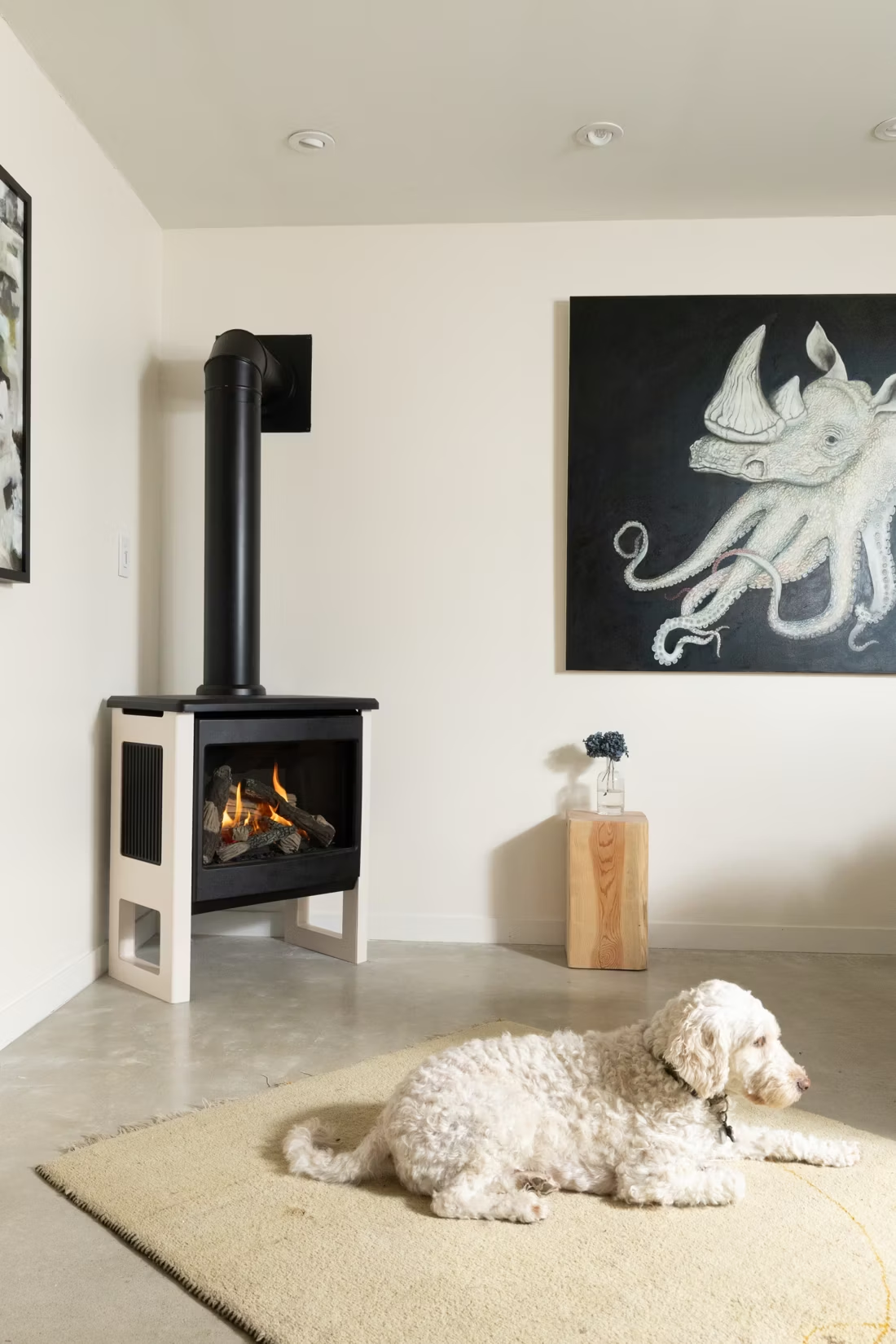
A gas fireplace or insert gives you that: flip a switch, get real heat, no ash, no chimney smell drifting into the neighbor's yard during a summer wildfire-smoke advisory. Whether you're converting a drafty older masonry fireplace in a historic Salem neighborhood or adding a built-in unit to a new build out toward Stayton or Aumsville, a trusted local dealer will size the unit to your room, sort out the venting path, and pull the right permits—so you're not guessing your way through a big-box install.
Three steps. No salesperson until you're ready.
Tell us about your project
Your zip code, your situation, and the fuel you're leaning toward—or let the answers point you to one.
See what's actually available
The brands dealers within 100 miles genuinely carry—real options, never a catalog mirage.
Get your dealer & Project Guide
A trusted local dealer, plus the free Project Guide & Parts List that names every component of the job.
Frequently Asked Questions
How much does a gas fireplace installation cost in Marion County?
Most gas fireplace and insert installations across Marion County run in the $4,500 to $10,000 range, depending on the unit, whether you're converting an existing masonry fireplace or building new, and how much gas line and venting work is involved. A direct-vent insert into an existing chimney with a nearby gas line tends to land on the lower end. New construction in Salem's newer subdivisions or a remodel in an older Silverton or Stayton home that needs a fresh gas line run will push toward the higher end. A local dealer will give you a firm number after walking your home.
Can I convert my existing wood fireplace to gas?
Yes, and it's a common upgrade in Marion County's older housing stock—plenty of homes in Salem's historic districts and the smaller towns like Silverton and Mount Angel still have original masonry fireplaces built decades before gas inserts were standard. A gas insert slides into that existing firebox, uses a stainless liner run through your current chimney for venting, and typically runs $4,500 to $8,500 installed. If the home already has natural gas service to the property, the job is simpler and cheaper than starting from propane or running new gas line.
Do I need natural gas, or can I run a gas fireplace on propane?
Either works, and the right answer depends on where in Marion County you live. Homes within Salem, Keizer, and the more built-up parts of Woodburn generally have natural gas service already run to the street, which makes a fireplace hookup straightforward. Out in the more rural stretches of the county—toward Gates, Mehama, or the farmland outside Woodburn—natural gas lines don't always reach, and propane with a tank on the property is the standard fallback. Most fireplace models can be set up for either fuel; your dealer configures the orifice and regulator to match.
Will my gas fireplace still work if the power goes out?
Most will, which matters in a county that sees ice storms and windstorms knock out power for days at a time, especially in the more wooded, rural parts of Marion County outside Salem. Units with intermittent pilot ignition (IPI) run on a battery backup that kicks in automatically when the grid drops, so the fireplace still lights on demand. Valor units go a step further—the pilot's thermocouple generates its own electricity, so there's no battery to remember or replace at all. If backup heat during an outage matters to you, ask your local dealer which ignition system a given model uses before you buy.
What's the difference between a gas fireplace, insert, and stove?
A gas fireplace is a built-in unit framed into a wall, typically chosen for new construction or a full remodel—common in the newer Keizer and south Salem subdivisions. A gas insert drops into an existing masonry firebox and uses the current chimney to vent, which makes it the natural fit for older homes around Silverton, Stayton, or downtown Salem that already have a fireplace opening. A gas stove is a freestanding cabinet-style unit that sits on the floor like a wood stove but burns gas, and works well in a room without an existing chimney or fireplace footprint at all.
Do I need a permit to install a gas fireplace in Marion County?
Yes. Marion County requires a building permit and a separate gas permit for new gas fireplace installations, and if you're inside Salem, Keizer, or Woodburn city limits, the permit is typically pulled through that city's building department rather than the county. The gas line portion has to be done by a licensed gas-fitter. Most established local dealers handle all of this permitting as part of the installation quote, which is one of the real advantages of going through a trusted installer instead of a handyman install.
What's the difference between vented and vent-free gas fireplaces?
Vented (direct-vent) units draw combustion air from outside and exhaust the byproducts back outdoors through sealed venting—they're the standard, code-friendly choice and what most Marion County dealers install. Vent-free units burn directly into the room air without any outside venting; they're legal in Oregon under specific room-size and ventilation rules, but they release some moisture and combustion byproducts indoors. For most homes in Salem, Keizer, and the surrounding towns, direct-vent is the recommended path—it delivers real heat without any indoor air quality tradeoffs. A local dealer can walk you through both if you want to weigh the difference for your specific room.
How often does a gas fireplace need to be serviced?
Plan on an annual inspection, ideally before the wet season sets in around October. A technician checks the burner, pilot assembly, venting, and gas connections, and cleans the glass and interior—a much lighter lift than a wood chimney sweep, but still important. Marion County's damp valley climate means moisture can accumulate in venting components over the off-season, so it's worth having a certified technician confirm everything is sealed and drawing properly before you fire it up for winter. Expect to pay somewhere in the $150 to $250 range for a standard annual service call.
Gas vs. wood—which makes more sense for a Marion County home?
Wood still has a place in Marion County—Douglas fir, ponderosa pine, and lodgepole pine are all available locally, and cutting permits through the Siuslaw, Mt. Hood, and Gifford Pinchot National Forests run just $5 to $20 per cord during the May-through-October season, which makes self-cut firewood genuinely cheap. Wood also keeps working during a power outage without a battery. Gas wins on convenience: no hauling, no ash, no worrying about wildfire-smoke advisories affecting your indoor air the way an open wood fire can. Given Marion County's mild 4C climate and fairly light overall heating season, plenty of homeowners here choose gas for daily use in the main living space and keep wood, if they have it, as a backup or secondary heat source elsewhere in the house.
What's the difference between an insert and a zero-clearance fireplace?
An insert is a fireplace that slides into a pre-existing wood-burning fireplace—if you don't have one, there's nothing to insert it into. A zero-clearance fireplace is built into a framed wall, which makes it the answer for remodels and new construction. Simple test: existing masonry fireplace means insert; blank or framed wall means zero-clearance.
Is my gas fireplace wasting gas?
If it was installed more than 15 years ago, probably. Older gas fireplaces keep a standing pilot light burning all the time, and that little flame can cost a couple hundred dollars a year. Newer models use pilot-on-demand ignition—the pilot lights only when you use the fireplace and goes out when you turn it off.
Does a fireplace add value to my home?
On average, a fireplace adds back to the home about the same amount you spent installing it. Add the monthly savings from heating the rooms you actually use instead of the whole house—often hundreds of dollars a year—and the value case is strong before you even count what a fire does for how your family uses the room.
How much should I budget for a fireplace?
For an average home—covering the fireplace, the vent pipe, and basic installation—a budget between $3,900 and $5,500 gives you a lot of options across wood, gas, and pellet. By the time you add finish work, gas line, and electrical, the average complete installation lands between $5,000 and $12,000 all-in. In a remodel or new build, a good rule is to put about 2.5% of the total project cost toward the fireplace.
Stove and Fireplace Dealers in Marion County
Listings include WhyFire partner dealers, dealers we have verified as authorized for the brands we recommend, and established local businesses that carry hearth products. Every listing shows which one it is. The ones marked Preferred run on WhyFire's software, so they can show you real pricing and book your appointment right here. No manufacturer pays for placement. How we verify dealers →
Haven Spa Pool & Hearth - Salem
Philco & Associates
Melton's Fireplace Shop
Silver Creek Chimney Sweep
Murphy’s Fireplace & Stoves
Stayton Builders Mart
Cascade Chimney Care Nw
Home Comfort
Get your free Marion County gas fireplace Project Guide & Parts List.
Tell us about your home and we'll match you with a trusted local dealer serving Marion County, then send over a free Project Guide & Parts List—the exact parts, including the vent kit, and a dealer recommendation for your specific project.
Find Your Fireplace →