
Built for a mild Willamette Valley winter, not a brutal one.
With winter lows averaging 36°F and a winter heating season that's comparatively mild, Four Corners doesn't need a cold-climate heating workhorse—it needs clean, instant ambiance that doesn't add smoke to a valley already dealing with wildfire haze most summers. I'll match you with a trusted local dealer who knows what's actually installable on your circuit.
Every Project Starts From One of These Five Situations
A climate too mild to justify a chimney.
Four Corners sits at just 222 feet in the Willamette Valley outside Salem, and the climate numbers show it: a 36°F average winter low and a winter heating season that's noticeably milder put it in a different category entirely from places like Fargo or Duluth, where a backup heat source is a safety requirement. Here, a fireplace is doing real work on the handful of nights that dip into the 20s, but for most of the season it's supplemental warmth and ambiance in a living room or primary bedroom—exactly the job an electric unit is built for, with none of the venting, chimney, or gas line considerations that come with other fuels.
Portland General Electric serves the area at a residential rate around 18.2 cents per kWh, a bit above the state average, which is worth factoring into whether you run the unit as a daily supplement or mostly for occasional evenings. Wood is still common regionally—Douglas fir, ponderosa pine, and lodgepole pine are the standard splits, with cutting permits running $5-$20 a cord through Siuslaw, Mt. Hood, and Gifford Pinchot National Forest—but wildfire smoke concerns in late summer and the simple fact that most Four Corners homes don't need primary wood heat push a lot of households toward electric or gas for the main living space instead.
Three steps. No salesperson until you're ready.
Tell us about your project
Your zip code, your situation, and the fuel you're leaning toward—or let the answers point you to one.
See what's actually available
The brands dealers within 100 miles genuinely carry—real options, never a catalog mirage.
Get your dealer & Project Guide
A trusted local dealer, plus the free Project Guide & Parts List that names every component of the job.
Frequently Asked Questions
How much does an electric fireplace installation cost in Four Corners?
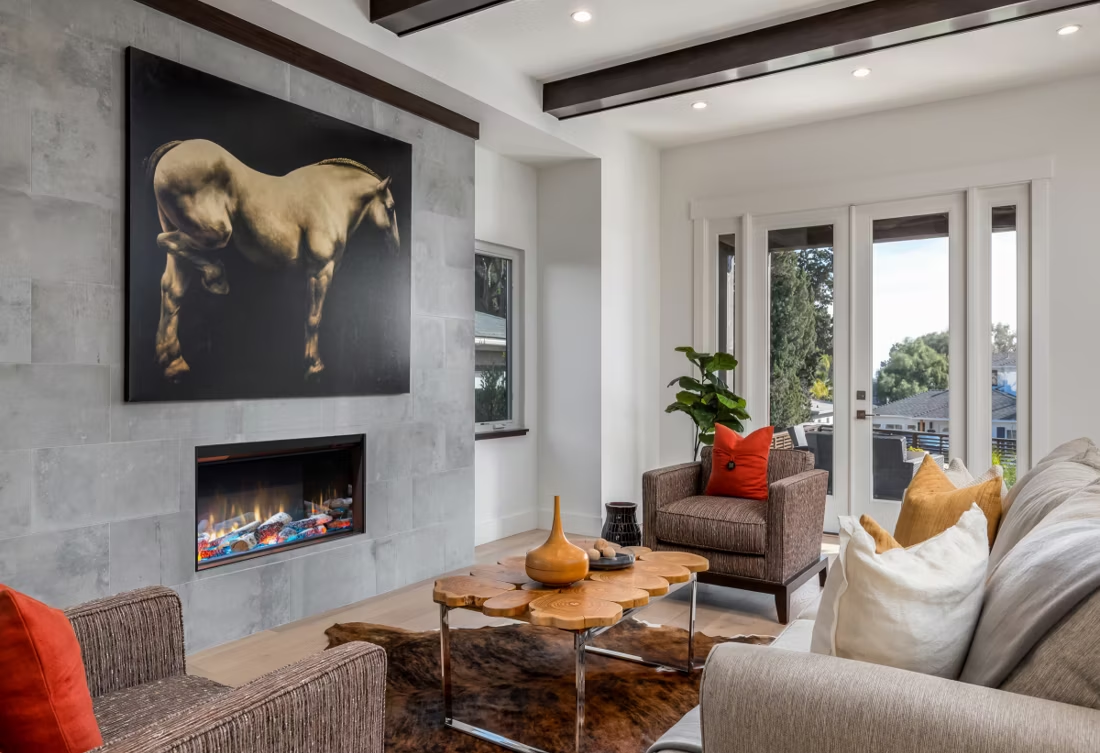
It depends heavily on the unit type. A plug-in electric insert that drops into an existing masonry firebox or a wall-mount unit on a standard 120V outlet can run as little as $300-$800 installed, since there's no venting or gas line to deal with. A larger built-in electric fireplace that needs a dedicated 240V circuit run by a licensed electrician—common when homeowners want a full-wall linear unit in a remodel—typically lands closer to $1,200-$2,000 once wiring and finish carpentry are included. Your local dealer can tell you which category your project falls into once they see the space and your panel capacity.
Do I need a permit for an electric fireplace in Four Corners?
A simple plug-in insert or freestanding unit generally doesn't need a permit since it's not altering your home's electrical service. If your installer is running a new dedicated circuit for a larger built-in unit, that electrical work does require a permit through Marion County's Building Inspection Division, since Four Corners is unincorporated and falls under county jurisdiction rather than the City of Salem. Most licensed electricians who do fireplace installs in the area pull that permit as a standard part of the job.
What size electric fireplace do I need for a Four Corners home?
Given the mild winter lows here, sizing is driven more by room aesthetics and supplemental comfort than by raw BTU output—unlike a mountain or high-desert climate where undersizing leaves a room cold. A 1,500-watt unit (roughly 5,000 BTU) comfortably takes the chill off a bedroom or den in the 200-400 square foot range, which covers most rooms in the older ranch homes common around the Four Corners area. Larger great rooms in newer construction near the Cascade Gateway area may do better with a larger linear unit, but almost no Four Corners home needs electric heat sized for a whole-house primary load.
Electric vs. gas fireplace—which makes more sense here?
Gas gives you a real flame and higher heat output, which matters more in homes without existing gas service, since adding a line adds cost. Electric skips that question entirely—it runs off any outlet or a simple dedicated circuit, with no venting, no gas permit, and no combustion byproducts, which also means zero contribution to indoor air quality concerns during the wildfire smoke season that already keeps a lot of valley residents indoors in August and September. For a secondary fireplace in a bedroom, office, or basement, electric is usually the simpler and cheaper install in Four Corners; for a primary living room focal point with serious heat output, homes already on gas service tend to go that route instead.
How much does it cost to run an electric fireplace with PGE rates?
At Portland General Electric's residential rate of about 18.2 cents per kWh, a typical 1,500-watt electric fireplace running on high for 4 hours a day costs roughly 45 cents daily, or around $13-$14 a month if used every evening through the winter. Most owners don't run it continuously—the heater function usually only kicks on to maintain a set temperature, and plenty of households use the flame effect without heat for ambiance most of the year, which costs only a few cents an hour. It's a modest add to a PGE bill compared to running a furnace zone for the same room.
Why would I choose electric over wood in a mild climate like this?
Wood still has fans in Four Corners—Douglas fir and ponderosa pine are easy to source, and national forest cutting permits through Siuslaw or Mt. Hood run as little as $5 a cord—but with winter lows only averaging 36°F, most households don't need wood's high heat output for daily survival the way a colder climate would. Electric also sidesteps the wildfire smoke issue entirely: during late-summer smoke advisories when outdoor air quality is already poor, an electric fireplace adds zero particulates indoors, while a wood stove or fireplace adds more smoke load to a house that may already have windows sealed against haze.
What's the difference between an electric insert, a built-in, and a wall-mount unit?
An electric insert is sized to slide into an existing masonry or built-in wood-burning firebox, which is a common retrofit in older Four Corners homes that have a fireplace but no interest in cutting and stacking wood anymore. A built-in is framed into a wall during a remodel or new construction and usually wired to a dedicated circuit for a larger linear unit. A wall-mount model hangs like a flat-screen TV and plugs into a standard outlet—the simplest option if you're adding a fireplace to a room that never had one, like a primary bedroom in a 1970s ranch house.
How much maintenance does an electric fireplace need?
Very little compared to wood or gas—there's no chimney to sweep, no gas line to inspect, and no combustion byproducts to vent. Most maintenance is just periodic dusting of the heating element and vents, and replacing the LED light panel every several years on units with flame-effect displays. It's one of the reasons electric sees steady demand in Four Corners among owners who want fireplace ambiance without committing to the annual service schedule a gas or wood unit requires.
Are there rebates for installing an energy-efficient electric fireplace in Four Corners?
Portland General Electric periodically runs efficiency incentive programs, though they're typically aimed at larger heat pump and insulation upgrades rather than electric fireplaces specifically, since most fireplace units are a minor load compared to whole-home heating. It's still worth asking your installer or checking PGE's current program list before you buy, since efficiency rebate offerings shift year to year and some heat pump bundles have included secondary electric heating equipment in the past.
Can I put a TV above my fireplace?
Yes—with an asterisk. Fireplaces are hot and TVs don't like heat. Either put a mantel between them to deflect rising warmth, or choose a fireplace with heat-management technology that creates a cool zone on the wall above—the wall stays around 125 degrees, barely warm, while the room still gets full heat. If you like clean lines and don't want a mantel, heat management is the answer.
Do electric fireplaces actually produce heat?
Yes—most put out around 4,800–5,000 BTUs from a standard outlet, which comfortably warms a bedroom, office, or den as a comfort-zone heater. What they won't do is carry a whole house the way wood, gas, or pellet can. Think of electric as ambiance-first with honest supplemental heat: flames on with no heat in July, flames plus warmth in January.
Can I install a fireplace myself?
If you're putting a fire in your house on purpose, it's best to work with an expert. Unless you're genuinely experienced in framing, gas line, vent pipe, and the national code on clearances to combustibles, have a professional do it—and ideally the same company that sells you the fireplace, so warranty, service, and liability all live under one roof.
How much should I budget for a fireplace?
For an average home—covering the fireplace, the vent pipe, and basic installation—a budget between $3,900 and $5,500 gives you a lot of options across wood, gas, and pellet. By the time you add finish work, gas line, and electrical, the average complete installation lands between $5,000 and $12,000 all-in. In a remodel or new build, a good rule is to put about 2.5% of the total project cost toward the fireplace.
Nearby Dealers
Hearth shops serving Four Corners and the surrounding area. Every listing shows whether it is a WhyFire partner, a dealer we have verified as authorized for the brands we recommend, or a local business carrying hearth products. No manufacturer pays for placement. How we verify dealers →
Haven Spa Pool & Hearth - Salem
Murphy’s Fireplace & Stoves
Philco & Associates
Melton's Fireplace Shop
Silver Creek Chimney Sweep
Stayton Builders Mart
Cascade Chimney Care Nw
Home Comfort
Electric Service in Four Corners
An electric fireplace's heater draws about 1,500 watts—pennies per hour at local rates.
Portland General Electric Co
Get your free Project Guide & Parts List for a Four Corners electric fireplace.
Tell me about your room, your panel, and whether you want a plug-in insert or a wired built-in, and I'll match you with a trusted local dealer and send a free Project Guide & Parts List with the exact parts your project needs.
Find Your Fireplace →