
Find pellet heat that fits Stephens County's mild winters.
From Duncan to Marlow, Comanche, and Velma, pellet stoves give south-central Oklahoma homes clean, thermostat-simple heat without a woodpile out back. Find the right unit and get matched with a trusted local dealer.
Every Project Starts From One of These Five Situations
Steady warmth without the woodpile.
Stephens County sits in climate zone 3A, with an average winter low around 28°F and roughly 3,200 heating degree days a year—a heating season that's short and mild compared to places like International Falls, Minnesota, where HDD counts run three times higher. That said, Duncan and the surrounding towns still see hard freezes and the occasional ice storm, and plenty of local homes lean on supplemental heat to take the edge off a cold front without running the central furnace around the clock. Duncan itself, founded on the oil and gas economy and home to Halliburton since 1919, has no shortage of homeowners looking for a practical, low-maintenance way to heat a den or living room.
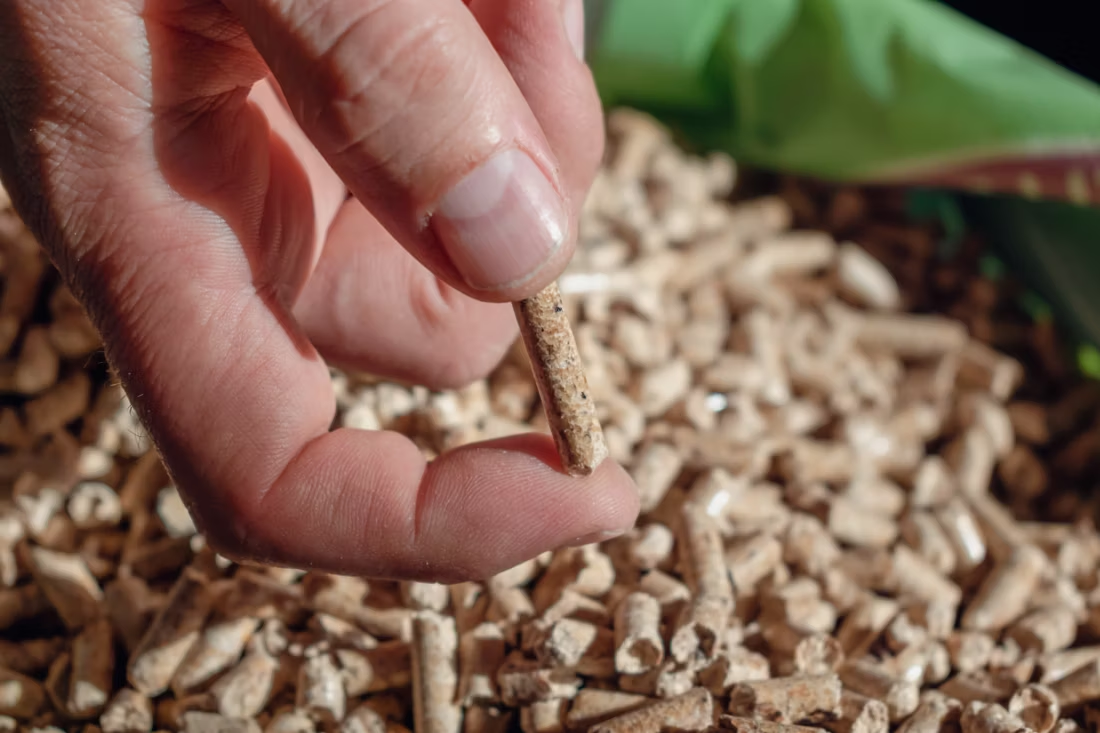
Oak, hickory, and mesquite grow throughout Stephens County, and plenty of residents still burn cordwood, but pellet stoves offer a different trade-off: no splitting, no stacking, and a hopper that feeds itself for 12 to 24 hours on a single load. Regional pellet supply comes through brands like Lignetics and Indeck Energy Services, available through farm supply stores and hearth dealers across the county. There are no air quality non-attainment issues or burn restrictions here, so pellet stoves run on convenience and cleanliness rather than compliance—an easy sell for homeowners who want real heat without wood smoke, ash tracked across the floor, or a chimney to maintain.
Three steps. No salesperson until you're ready.
Tell us about your project
Your zip code, your situation, and the fuel you're leaning toward—or let the answers point you to one.
See what's actually available
The brands dealers within 100 miles genuinely carry—real options, never a catalog mirage.
Get your dealer & Project Guide
A trusted local dealer, plus the free Project Guide & Parts List that names every component of the job.
Frequently Asked Questions
How much does a pellet stove installation cost in Stephens County?
A typical pellet stove or insert installation in Stephens County runs between $3,500 and $7,000, depending on the unit, whether it's a freestanding stove or an insert going into an existing masonry fireplace, and how much venting work is involved. Pellet venting is simpler and cheaper than a full masonry chimney, since most units use a small-diameter PL vent pipe through an exterior wall rather than a full Class A chimney system. Homes without an existing fireplace or exterior wall access for venting will land toward the higher end. Local dealers will give you a firm number after seeing the room and the wall you're venting through.
Pellet stove vs. wood stove—which makes more sense in Stephens County?
With oak, hickory, and mesquite growing throughout the county, plenty of homeowners already have access to cordwood, and a wood stove works fine here and doesn't need electricity to run. A pellet stove trades that off for convenience: no splitting or stacking, a thermostat you can set and walk away from, and a cleaner burn with far less ash. Given Stephens County's relatively mild winters—average lows around 28°F and a short heating season—many homeowners use a pellet stove as a supplemental heat source for a den or living room rather than a whole-home primary system, which plays to the pellet stove's strengths: convenience over raw output.
Where do I buy pellets in Stephens County, and what do they cost?
Bagged pellets from brands like Lignetics and Indeck Energy Services are typically available through farm and ranch supply stores and hearth dealers serving Duncan, Marlow, and Comanche. Expect to pay somewhere in the $250 to $350 per ton range, usually sold in 40-pound bags—about 50 bags to a ton. Since Stephens County's heating season is shorter than northern climates, a lot of homeowners here get through a mild winter on a ton or two rather than the four-plus tons a colder-climate home might burn. Buying early in the fall, before demand picks up, generally gets you the best price.
Do I need a permit to install a pellet stove in Stephens County?
Most jurisdictions in Stephens County—whether you're inside Duncan city limits, in Marlow or Comanche, or in unincorporated parts of the county—require a building permit for a new pellet stove installation, since it involves running venting through an exterior wall. Your local building department will want to confirm the unit is listed and installed per manufacturer clearances. Most hearth dealers who sell and install pellet stoves handle the permit application as part of the job, so you're not stuck navigating it yourself. It's worth confirming with whichever office covers your address before work starts.
Will my pellet stove work if the power goes out?
No—this is the one honest limitation worth knowing up front. Pellet stoves rely on an electric auger to feed fuel and a blower to distribute heat and exhaust combustion air, so they shut down without power. That matters in Stephens County, where ice storms occasionally knock out electricity for a day or more. Some homeowners pair a pellet stove with a small battery backup or generator specifically to keep it running through an outage; others treat it purely as everyday supplemental heat and keep a different backup plan for storm season. Worth discussing with your dealer if outage resilience matters to you.
What size pellet stove do I need for my home?
Sizing depends on the square footage you're heating and how open the floor plan is. As a general guide for Stephens County's mild-climate homes: smaller units (under 1,000 sq ft) suit a single room or den, mid-size units (1,000–1,800 sq ft) cover a great room or open living area, and larger units can supplement heat across a modest whole-home footprint in an older, less-insulated house. Because winters here are shorter and milder than in northern climates, most Stephens County installs skew toward smaller and mid-size units used for zone heating rather than the largest units built for sub-zero, all-day burns. A local dealer will size it based on an in-home look at your space.
How much maintenance does a pellet stove need?
Pellet stoves need regular but simple upkeep: emptying the ash pan every few days during heavy use, cleaning the burn pot and glass weekly, and a full professional cleaning and inspection of the venting and exhaust components once a year, ideally before the start of the season. Because pellet fuel burns cleaner than cordwood, there's no creosote buildup to worry about the way there is with wood stoves, but the auger, blower, and igniter are mechanical parts that benefit from an annual once-over. Local hearth dealers who sell pellet stoves in Stephens County typically offer this service directly.
What's the best pellet stove for Stephens County's climate?
Given Stephens County's mild winters—average lows around 28°F and a relatively short heating season—most homeowners don't need the largest, longest-burning units built for northern climates. A mid-size, EPA-certified pellet stove or insert from a mainstream brand handles a den, living room, or open-concept main floor comfortably, with enough hopper capacity to run overnight without a refill. If you're using it as your only supplemental heat during an ice storm cold snap, prioritize a model with a reliable auto-ignition and a hopper large enough to reduce how often you're feeding it. A local dealer can match a specific model to your square footage and layout.
Pellet stove vs. gas fireplace—which is right for my home?
Gas offers instant on-off operation with the flip of a switch or a remote, no fuel storage, and no moving parts to maintain—a good fit if you already have natural gas or propane service to the house. Pellet stoves need you to keep fuel on hand (bagged pellets from suppliers carrying Lignetics or Indeck Energy Services) and feed the hopper periodically, but they deliver a more substantial, visible flame and real radiant heat output, often at a lower cost per BTU than propane in rural parts of the county. For a primary living space where convenience matters most, gas usually wins. For homeowners who want a heartier heat source and don't mind refilling a hopper, pellet is a strong option.
Why is a fireplace insert so efficient?
An insert does two things: it seals the chimney completely, so you stop losing air you already paid to heat, and it radiates warmth into the room through the firebox and glass. Most add a heat-exchange fan that pulls cool room air underneath, wraps it around the hot firebox, and pushes it back out warm. Your home is more efficient before you've even lit the first fire.
How often does a pellet stove need cleaning?
A clean pellet stove is a happy pellet stove. Plan on cleaning the burn pot about once a week when you're burning regularly—ash and clinkers gum up the air holes just like a pellet barbecue. Most pellet stove problems trace back to skipped cleaning that nobody explained up front. Some designs make it easy with a trapdoor burn pot: pull a lever and the gunk drops into the ash pan.
Can I install a fireplace myself?
If you're putting a fire in your house on purpose, it's best to work with an expert. Unless you're genuinely experienced in framing, gas line, vent pipe, and the national code on clearances to combustibles, have a professional do it—and ideally the same company that sells you the fireplace, so warranty, service, and liability all live under one roof.
Does a fireplace add value to my home?
On average, a fireplace adds back to the home about the same amount you spent installing it. Add the monthly savings from heating the rooms you actually use instead of the whole house—often hundreds of dollars a year—and the value case is strong before you even count what a fire does for how your family uses the room.
Pellet Brands Stocked Around Stephens County
Manufacturers will point you to the nearest stocking dealer.
Find your pellet stove in Stephens County.
Tell us about your home and we'll match you with the right pellet stove or insert, plus a free Project Guide & Parts List—including the vent kit—and a trusted local dealer to install it.
Find Your Fireplace →