
Add electric fireplace warmth to your Stephens County home.
No chimney, no gas line, no venting to plan around—just clean, on-demand heat for Duncan, Comanche, Marlow, and everywhere in between. Find the right unit and get matched with a trusted local dealer.
Every Project Starts From One of These Five Situations
A mild winter climate built for zone heating.
Stephens County sits in the rolling Cross Timbers country of south-central Oklahoma, where winter lows average around 28°F and the county has a mild, short heating season—a fraction of what a place like Bismarck, ND sees in a typical winter. That's not a climate that demands a wood stove burning around the clock or a furnace running nonstop from October to April. It's a climate where a room gets cold on a January night, the wind picks up out of the north, and you want heat now in the den or the sunroom without firing up the whole HVAC system.
That's exactly the gap an electric fireplace fills. Whether you're in a Duncan neighborhood served by Duncan Public Utilities or out toward Comanche or Marlow on Cimarron Electric Cooperative or OG&E lines, plugging in an electric unit is simple: no gas permit, no masonry chimney, no cutting and hauling oak or hickory. You get supplemental warmth for the rooms you actually live in, plus the ambiance of a fire—real advantages for a county where heating season is short but the cold snaps that do arrive can bite hard.
Three steps. No salesperson until you're ready.
Tell us about your project
Your zip code, your situation, and the fuel you're leaning toward—or let the answers point you to one.
See what's actually available
The brands dealers within 100 miles genuinely carry—real options, never a catalog mirage.
Get your dealer & Project Guide
A trusted local dealer, plus the free Project Guide & Parts List that names every component of the job.
Frequently Asked Questions
How much does an electric fireplace installation cost in Stephens County?
Electric fireplace installs run far cheaper than wood, gas, or pellet options because there's no venting or gas line to install. A plug-in freestanding unit or a basic electric insert into an existing fireplace opening typically runs $300 to $1,200 including the unit itself. Built-in wall units or larger linear electric fireplaces that require a dedicated 240V circuit and some carpentry—common in newer Duncan-area homes wanting a focal-point installation—run higher, often $1,500 to $3,500 once an electrician runs a new circuit. A local dealer can give you a firm number after seeing your existing outlet setup and wall configuration.
Do I need a permit to install an electric fireplace in Stephens County?
In most cases, no separate fireplace permit is required the way it is for wood or gas units—there's no combustion appliance to inspect. The exception is if your installer needs to add a new dedicated circuit or outlet to handle a larger electric fireplace's draw; that electrical work typically requires a permit through your local building department, whether that's the City of Duncan or the county for unincorporated areas. A licensed electrician handling the circuit work will usually pull that permit as part of the job.
What size electric fireplace do I need for my Stephens County home?
Most electric fireplaces are rated for supplemental zone heating rather than whole-home heat, and sizing comes down to the room, not the whole house. A small 26-30 inch insert or wall-mount unit comfortably heats a bedroom or den in the 150-300 square foot range. Larger 50-60 inch linear units can take the edge off a great room or open-concept living space, though in Stephens County's mild 3A climate you're rarely asking the unit to fully replace central heat—it's there for the cold mornings and the nights the wind is out of the north. A local dealer can walk your space and match wattage to the room rather than guessing off a box label.
What's the difference between an electric fireplace, insert, and stove?
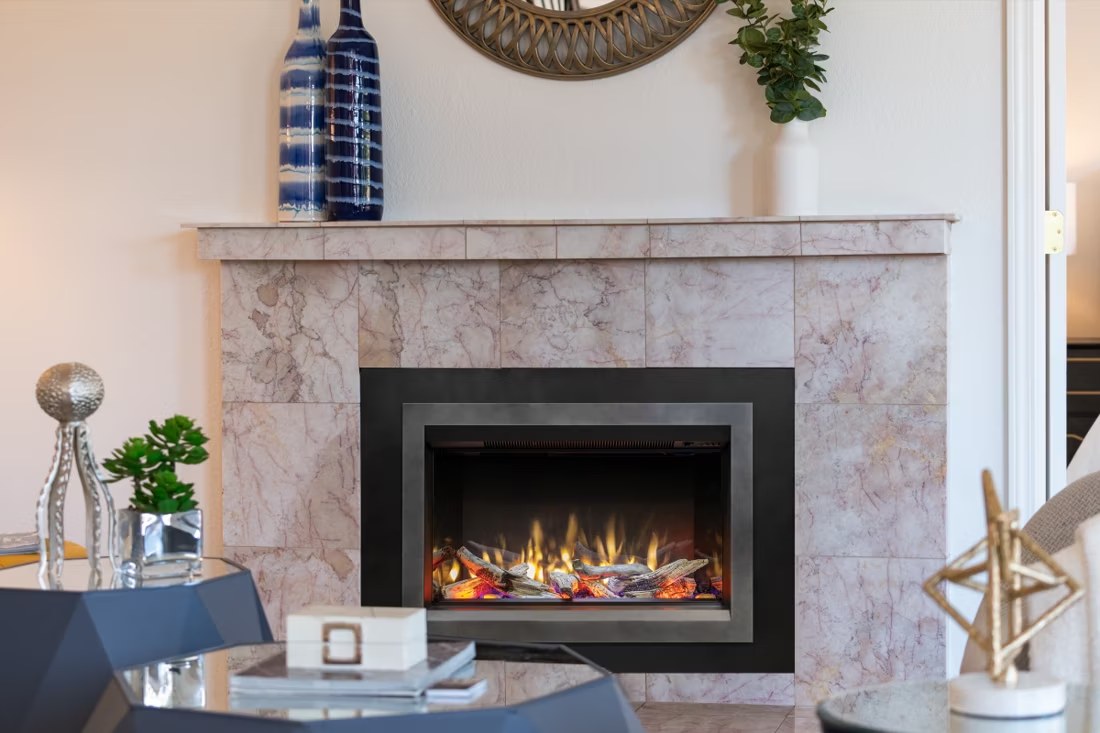
An electric fireplace is typically a built-in or wall-mounted unit designed to look like a framed fireplace—popular in new construction and remodels around Duncan and Comanche. An electric insert is sized to slide into an existing masonry or gas fireplace opening, letting you convert an old, rarely-used wood fireplace into simple, no-mess heat and flame effect. An electric stove is a freestanding cabinet-style unit that sits on the floor like a traditional wood stove but plugs into a standard outlet—a good fit for a room with no existing fireplace opening at all. For Stephens County homes with an old, unused masonry fireplace, an insert is often the simplest upgrade.
How much does an electric fireplace cost to run compared to central heat?
Most electric fireplaces draw around 1,500 watts on the heat setting, which costs roughly 15-20 cents an hour to run depending on your rate with OG&E or Cimarron Electric Cooperative—noticeably cheaper per hour than running central heat to warm an entire house just to keep one room comfortable. That's the practical case for zone heating in Stephens County: on a mild-cold night where the whole home doesn't need the furnace cranked, an electric fireplace in the room you're actually sitting in can be the more efficient choice. Flame-only mode with the heater off uses only a few dollars a month in electricity.
Will an electric fireplace still work during a power outage?
No—this is worth being upfront about. Electric fireplaces require power to run both the heater and the flame effect, so during an ice storm or line outage (which does happen in Stephens County during winter weather events) an electric unit goes dark along with everything else on the circuit. If backup heat during outages is a priority for your household, a wood stove or a battery-backed gas unit is a better fit for that specific need. Electric fireplaces are best understood as a convenience and ambiance upgrade for grid-connected daily use, not as an emergency heat source.
Electric vs. gas fireplace—which is right for my Stephens County home?
Gas fireplaces put out more real heat, can run during power outages with the right battery-backed ignition, and are a good fit if you already have natural gas or propane service near Duncan or Marlow. Electric fireplaces cost far less to install since there's no gas line or venting to run, offer more flexibility in where you place them (interior walls, upstairs bedrooms, rental units), and are simpler to maintain long-term. In Stephens County's mild climate, where the heating season is short and many homeowners want ambiance and light supplemental warmth rather than a serious heat source, electric is often the lower-cost, lower-hassle choice—especially for a secondary room or a rental property.
Electric vs. wood-burning—which makes more sense for Stephens County?
Wood heat has a long history in Stephens County, where oak, hickory, and mesquite are all locally available for cutting or purchase, and a wood stove offers real BTU output plus off-grid backup heat during outages. But with average winter lows around 28°F and a mild, short heating season, most Stephens County homes don't need wood as primary heat—it's more often a supplemental or ambiance choice. Electric skips the wood handling, ash cleanup, and chimney maintenance entirely, and installs in an afternoon rather than a full day of chimney and hearth work. For a family that wants convenience and doesn't want to manage firewood, electric is the easier day-to-day fit; for those who value self-sufficiency and don't mind stacking wood, that history still runs deep locally.
Are electric fireplaces safe for kids and pets?
Generally yes, and it's one of the strongest selling points. Most electric fireplaces use an LED flame effect with no real combustion, so the glass front and surrounding cabinet stay cool to the touch even when the heater is running—a real advantage over a wood stove's hot exterior or a gas unit's heated glass. There's no open flame, no soot, and no risk of embers, which makes electric a common choice for Stephens County families with young kids or for finishing a room like a nursery or playroom where a traditional fireplace wouldn't be practical.
Does an electric fireplace need a vent or chimney?
No—that's its superpower. An electric fireplace needs a wall and an outlet, period. No vent pipe, no gas line, no clearances to design around, which is why it works in bedrooms, offices, apartments, and walls where venting a gas or wood unit would be impractical or impossible. Installation is typically the simplest and least expensive of any fireplace type.
Do electric fireplaces actually produce heat?
Yes—most put out around 4,800–5,000 BTUs from a standard outlet, which comfortably warms a bedroom, office, or den as a comfort-zone heater. What they won't do is carry a whole house the way wood, gas, or pellet can. Think of electric as ambiance-first with honest supplemental heat: flames on with no heat in July, flames plus warmth in January.
Can a fireplace actually lower my heating bill?
Yes—by creating a comfort zone. A furnace heats every square foot of the house just to warm the one room you're in; a gas fireplace on low burns roughly a sixth of the gas a typical furnace does. Set the furnace around 55–60 degrees as a baseline, then heat the rooms your family actually uses. Families who heat this way commonly save $20–$60 a month.
Can I install a fireplace myself?
If you're putting a fire in your house on purpose, it's best to work with an expert. Unless you're genuinely experienced in framing, gas line, vent pipe, and the national code on clearances to combustibles, have a professional do it—and ideally the same company that sells you the fireplace, so warranty, service, and liability all live under one roof.
Get your Stephens County electric fireplace plan.
Tell us about your room and your goals, and we'll put together a free Project Guide & Parts List—the right unit, the exact parts, and a trusted local Stephens County dealer to install it.
Find Your Fireplace →