
Clean, Convenient Heat for Pushmataha County's Mild Winters.
A hopper-fed alternative to hauling oak and hickory for the Kiamichi River valley—from Antlers to Clayton, Rattan, and Moyers. Find the right pellet stove or insert, and connect with a trusted local dealer.
Every Project Starts From One of These Five Situations
A hopper-fed alternative to hauling firewood.
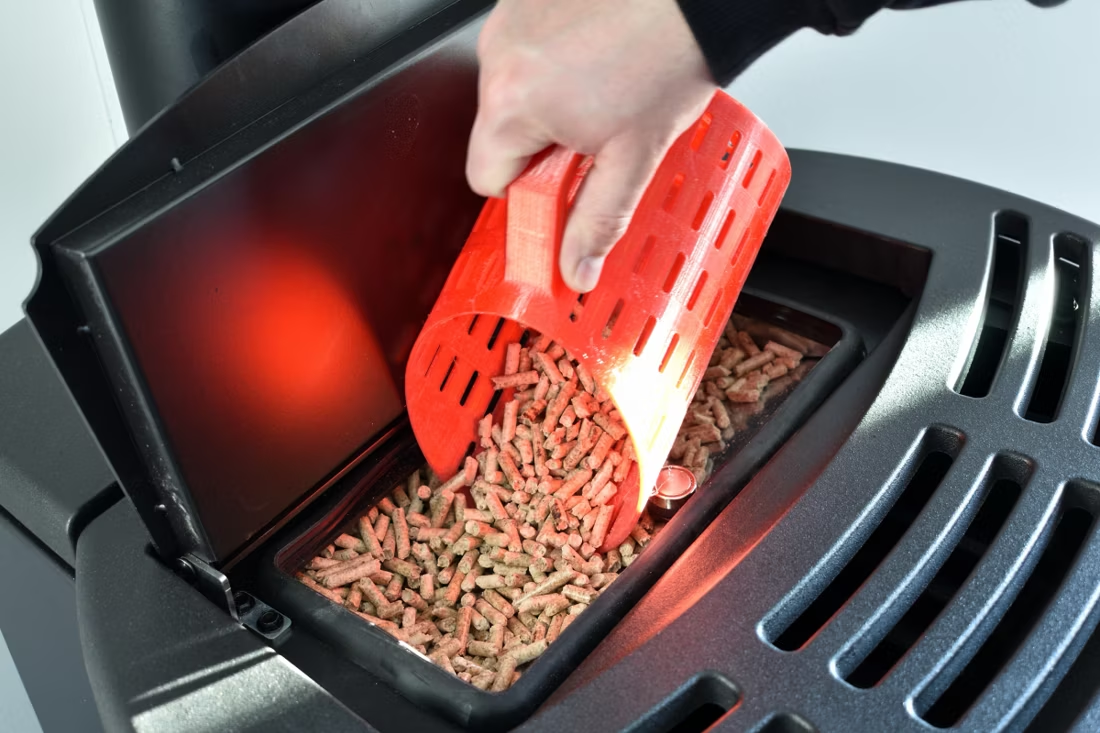
Pushmataha County sits in the Kiamichi River valley of southeastern Oklahoma, home to just over 3,600 residents spread across Antlers, Clayton, Moyers, Rattan, and a lot of unincorporated timberland. Climate zone 3A here means real but modest winters—average lows around 28°F and roughly 3,182 heating degree days, a fraction of what a place like Fargo, ND or Duluth, MN sees in a single season. Oak, hickory, and mesquite have long fueled wood stoves in this part of the county, but for homeowners who don't want to cut, split, and stack cordwood every fall, a pellet stove offers the same radiant warmth with a thermostat and a bag of fuel instead of a chainsaw.
With no air quality non-attainment issues or wintertime burn restrictions in Pushmataha County, there's nothing stopping anyone from running a pellet appliance daily without worrying about curtailment days. Pellets sold by Lignetics and regional suppliers tied to Indeck Energy Services reach this part of southeastern Oklahoma through farm co-ops and hearth dealers rather than big-box stores on every corner—a real consideration in a rural county where the nearest large retailer may be 30 or more miles away. A pellet stove sized right for this climate delivers clean, consistent heat, less ash than a wood stove, and none of the woodshed maintenance that comes with burning cordwood in the Kiamichi valley.
Three steps. No salesperson until you're ready.
Tell us about your project
Your zip code, your situation, and the fuel you're leaning toward—or let the answers point you to one.
See what's actually available
The brands dealers within 100 miles genuinely carry—real options, never a catalog mirage.
Get your dealer & Project Guide
A trusted local dealer, plus the free Project Guide & Parts List that names every component of the job.
Frequently Asked Questions
How much does a pellet stove installation cost in Pushmataha County?
A freestanding pellet stove installation in Pushmataha County typically runs $3,000 to $6,500, depending on the unit, whether a new exterior vent penetration is needed, and whether a dedicated electrical outlet has to be run. Because Pushmataha's winters are milder than much of the country—averaging 28°F lows rather than the sub-zero nights common in places like Bismarck, ND—many local homes get by with a mid-sized unit rather than the largest model on the showroom floor, which keeps costs toward the lower end of that range. Installing a pellet insert into an existing masonry fireplace runs similarly, since it reuses the existing chimney chase for venting rather than requiring new wall penetrations.
What size pellet stove do I need for my home in Pushmataha County?
With roughly 3,182 heating degree days a year and average winter lows in the upper 20s, most homes in Pushmataha County don't need the largest pellet stove on the market the way a home in a harsher climate zone would. A small-to-medium unit with a 40 to 60 pound hopper is usually enough for a main living area or a well-insulated single-story home in Antlers or Clayton. Larger, older farmhouses in the more rural stretches of the county—especially those without much insulation—may need a bigger hopper and higher BTU output to keep up on the occasional harder freeze. A local dealer can size the unit correctly with an in-home visit rather than a square-footage guess.
What's the difference between a pellet stove and a pellet insert?
A pellet stove is a freestanding unit that sits on a hearth pad and vents through a wall or existing chimney chase—it can go almost anywhere in the home with the right clearances. A pellet insert is built to slide into an existing masonry fireplace opening, which is common in older homes around Antlers and Tuskahoma that were originally built around a wood-burning hearth. For a home with an existing fireplace, an insert usually makes more sense since it reuses the chimney already in place. For a home without one—or a detached shop or cabin—a freestanding stove is the more practical option.
Do I need a permit to install a pellet stove in Pushmataha County?
It depends on where in the county you're located. Within city limits—Antlers, Clayton, or Moyers—a building permit is typically required through the local town office before installing a new hearth appliance. In the unincorporated areas that make up most of Pushmataha County, there is often no formal residential building code enforcement, so a permit may not be required. Even where it isn't legally mandated, following NFPA 211 clearance and venting requirements still matters for insurance purposes and manufacturer warranty coverage—a local dealer can confirm what applies to your specific address.
What's the best pellet stove for Pushmataha County's climate?
Because winters here are moderate compared to much of the pellet-stove market—nowhere near the extremes of a Minneapolis, MN winter—homeowners in Pushmataha County have flexibility to prioritize efficiency and ease of use over sheer BTU output. Mid-sized units from brands commonly carried by dealers stocking Lignetics-supplied fuel tend to fit well here: enough heat for a main living area on a cold snap, without oversizing for a climate that spends most of the winter in the 30s and 40s. A local dealer familiar with the housing stock in Clayton, Moyers, and Rattan can match hopper size and BTU output to your specific home rather than a one-size-fits-all recommendation.
Where can I buy pellet fuel in Pushmataha County?
Pellet fuel isn't sold on every corner in a county of under 4,000 people, so most homeowners plan ahead rather than picking up a bag on the way home. Lignetics is a regional brand commonly found through farm co-ops and hearth dealers serving southeastern Oklahoma, and supply tied to Indeck Energy Services also moves through the area. Expect to buy by the ton (roughly fifty 40-pound bags) rather than by the bag if you're stocking up for the season, and to plan a trip to a dealer in a larger nearby town if Antlers itself doesn't stock what you need. Your installing dealer can usually point you toward the closest reliable supplier when you buy the stove.
How often does a pellet stove need to be cleaned and serviced?
Pellet stoves need more frequent attention than people expect, even though they burn cleaner than cordwood. The ash pan should be emptied every few days during regular use, the burn pot scraped weekly, and the glass wiped down as needed. A full professional service—checking the auger, exhaust blower, and venting—is recommended once a year, ideally before the first cold snap in late fall. For a home in Pushmataha County running the stove through a mild winter, that's typically one heavier maintenance session per season rather than the multiple sweeps a wood-burning chimney might need.
Will my pellet stove work if the power goes out?
No—pellet stoves rely on an electric auger to feed fuel and a blower to distribute heat and exhaust, so they shut down without power. This is worth planning around in rural Pushmataha County, where ice storms in the Ouachita foothills can knock out rural electric service for a day or more at a time. Homeowners who want backup heat during outages either pair a pellet stove with a small generator sized to run the auger and blower, or keep a wood-burning option on hand as well. If reliable off-grid heat during storms is the priority, that's worth discussing with a local dealer before choosing between pellet and wood.
Pellet stove vs. wood stove—which is right for my home?
Wood is deeply practical in Pushmataha County—oak and hickory are abundant locally, cordwood is often free or cheap for anyone with access to land, and a wood stove keeps working with no electricity at all during an outage. A pellet stove trades that self-sufficiency for convenience: no splitting or stacking, a thermostat instead of a damper, and a cleaner burn with far less ash. For a household in Antlers or Clayton without easy access to a woodlot, or for anyone who wants scheduled, hands-off heat, pellet is usually the easier day-to-day choice. For a rural property with standing hardwood timber and a tolerance for hauling wood, a traditional wood stove often remains the more economical long-term option.
Are pellet stoves loud?
They make some noise—there are two fans running plus an auger motor that turns as it feeds pellets. But there's a real range: premium models are engineered quiet, and the best offer a whisper-quiet mode you can comfortably watch TV next to. If noise matters in your room, ask to hear a stove running before you buy—it's a five-minute test that saves years of annoyance.
What does it take to replace an existing fireplace?
Fireplaces are like icebergs—bigger behind the wall than in front of it. Replacement means removing the surrounding tile or stone (the finish material laps onto the fireplace face), pulling the old unit, setting the new one in the same enclosure, and re-finishing the wall. A hearth professional can determine what's behind your wall without demolition during an in-home preview.
Can a fireplace actually lower my heating bill?
Yes—by creating a comfort zone. A furnace heats every square foot of the house just to warm the one room you're in; a gas fireplace on low burns roughly a sixth of the gas a typical furnace does. Set the furnace around 55–60 degrees as a baseline, then heat the rooms your family actually uses. Families who heat this way commonly save $20–$60 a month.
Does a fireplace add value to my home?
On average, a fireplace adds back to the home about the same amount you spent installing it. Add the monthly savings from heating the rooms you actually use instead of the whole house—often hundreds of dollars a year—and the value case is strong before you even count what a fire does for how your family uses the room.
Pellet Brands Stocked Around Pushmataha County
Manufacturers will point you to the nearest stocking dealer.
Find your pellet stove in Pushmataha County.
Tell us a bit about your home and we'll put together a free Project Guide & Parts List—the right pellet stove or insert, the vent kit and parts it needs, and a trusted local dealer near you in Pushmataha County.
Find Your Fireplace →