
Clean-burning pellet heat for Noble County homes.
From Perry to Billings, Morrison, and the farms in between—pellet heat gives Noble County households a clean, low-hassle way to warm a room without cutting or stacking wood. We'll match you with a trusted local dealer who can size and install it right.
Every Project Starts From One of These Five Situations
Steady warmth without the woodpile.
Noble County sits in the rolling prairie of north-central Oklahoma, with the Cimarron River cutting through farmland around Perry, Billings, and Morrison. Winters here are genuinely mild by national standards—a modest winter heating load and an average winter low around 25°F put Noble County closer to the Southeast's heating profile than to the northern Plains. But mild doesn't mean nonexistent: Oklahoma's periodic ice storms and arctic cold snaps still push temperatures well below freezing for days at a stretch, and a lot of Noble County homes—especially older farmhouses around Perry and Billings—are drafty enough that a modest supplemental heat source makes a real difference in the utility bill.
Pellet stoves fit that role well. They burn cleaner than cordwood, require no cutting or splitting, and don't produce the creosote buildup that comes with wood-burning in a county with no air quality restrictions or burn bans to worry about. Regional brands like Lignetics and Indeck Energy Services supply hardwood pellets processed from the same oak and hickory that grow throughout this part of Oklahoma, so fuel is reasonably easy to source even in a county of just over 6,300 people. The one honest tradeoff: pellet stoves run on electricity to feed the auger and blower, which matters if you're weighing backup heat for winter ice storms that can knock out rural power lines for a day or two.
Three steps. No salesperson until you're ready.
Tell us about your project
Your zip code, your situation, and the fuel you're leaning toward—or let the answers point you to one.
See what's actually available
The brands dealers within 100 miles genuinely carry—real options, never a catalog mirage.
Get your dealer & Project Guide
A trusted local dealer, plus the free Project Guide & Parts List that names every component of the job.
Frequently Asked Questions
How much does a pellet stove installation cost in Noble County?
Most pellet stove installations run in the range of $3,000 to $6,000 in a county like Noble, covering the unit, venting hardware, a hearth pad if needed, and labor. Costs land on the lower end for a straightforward install into an existing hearth alcove near Perry, and climb toward the higher end for a new venting run in a rural farmhouse outside Billings or Morrison where the dealer has more travel and setup involved. Because a pellet stove's vent kit is smaller and simpler than a masonry wood chimney, installation is usually faster and less expensive than a comparable wood stove project—but a local dealer should still confirm the number after seeing your home.
What size pellet stove do I need for my home?
Given Noble County's relatively mild heating load—well below what you'd see in Kansas or further north—most homes here don't need a maximum-output unit. Small pellet stoves (rated for up to roughly 1,000 square feet) are enough for a single living area or a supplemental setup in a home with central propane or electric heat already doing the bulk of the work. Larger stoves make more sense for older, less-insulated farmhouses around Marshall or Red Rock that lose heat quickly through single-pane windows and uninsulated walls. A local dealer will size based on your actual square footage and insulation, not just a chart.
Where can I find a certified pellet stove installer near me?
Noble County's population is small enough—just over 6,300 people—that it doesn't support its own dedicated hearth showroom in every town. Most homeowners in Perry, Billings, or Morrison end up working with an NFI-certified dealer based in a nearby larger market like Stillwater, Ponca City, Enid, or Guthrie, several of which routinely service rural Noble County addresses. Look for NFI (National Fireplace Institute) certification specifically—it confirms the installer understands pellet stove venting and clearance requirements, not just general contracting. Find My Fireplace matches you with a trusted dealer who already covers your part of the county rather than leaving you to guess who travels out this way.
What's the difference between a pellet stove and a pellet insert?
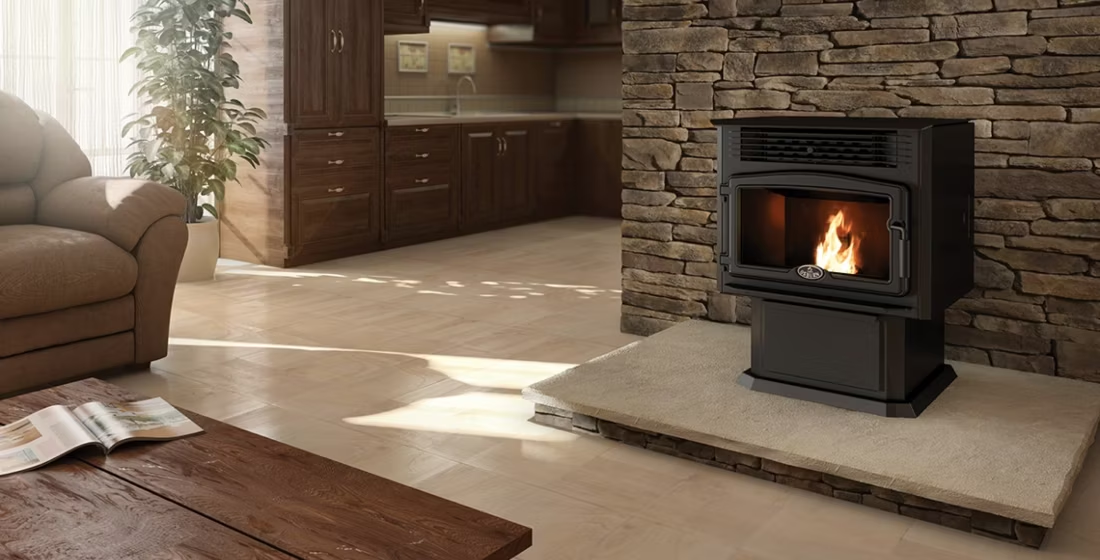
A pellet stove is a freestanding unit that sits on its own hearth pad and vents through a wall or existing chase—it can go almost anywhere with the right clearances. A pellet insert is built to slide into an existing masonry fireplace opening, which is common in older homes around Perry and the county's farm communities that already have a wood-burning fireplace they rarely use. If you've got an existing fireplace you want to put to better use without the mess of cordwood, an insert is usually the better fit. If you're starting from scratch in a room with no fireplace, a freestanding stove is more flexible to place.
Do I need a permit to install a pellet stove in Noble County?
Yes—a building permit is generally required for a new pellet stove installation, typically handled through the Noble County building department based out of the courthouse in Perry, or through your town's office if you're inside city limits. Because pellet stoves have a dedicated electrical hopper motor and blower, some installations also call for an electrical permit if a new outlet or circuit is needed. Most established dealers handle the paperwork as part of the installation, so this generally isn't something you need to navigate solo—but it's worth confirming with your dealer before work starts.
What's the best pellet stove for Noble County's climate?
Because Noble County's winter lows average around 25°F rather than the deep negatives you'd see in Minnesota or the Dakotas, most homes here don't need the largest, highest-BTU pellet stoves on the market—a mid-size unit is usually plenty, even as primary supplemental heat. The bigger consideration locally is backup power: pellet stoves need electricity to run, and Oklahoma's occasional ice storms can take down rural power lines for extended stretches. If reliable heat during outages matters to you, ask your dealer about models compatible with a small battery backup or generator setup, or consider pairing a pellet stove with a wood-burning option elsewhere in the house for true off-grid backup.
How often does a pellet stove need cleaning and maintenance?
Pellet stoves need less upkeep than wood stoves, but they're not maintenance-free. Plan on emptying the ash pan every few days to weekly during regular winter use, cleaning the burn pot and glass every week or two, and a full professional service—including the exhaust fan, hopper, and venting—once a year, ideally before the heating season starts. Because Noble County has no air quality restrictions or mandated inspection programs, there's no regulatory deadline pushing this, which makes it easy to let slide. Regular cleaning is what keeps ignition reliable and burn efficiency high, especially in an older farmhouse where you're counting on the stove to actually carry part of the heating load.
Where can I buy pellets locally in Noble County?
Regional brands like Lignetics and Indeck Energy Services, both of which produce hardwood pellets from Southern Plains oak and hickory mill residue, are the most common bags you'll find at farm and ranch supply stores serving Perry, Billings, and the surrounding area. Because Noble County is rural and small, stock at any single store can run thin during a cold stretch, so most local pellet-stove owners buy a season's supply—usually a ton or more—early in the fall rather than restocking bag by bag through winter. Your installing dealer can usually point you toward the most reliable local supplier when they set up your stove.
Pellet stove vs. wood stove—which is right for my Noble County home?
Wood is deeply practical here: oak, hickory, and mesquite are common locally, self-cut or purchased cordwood is inexpensive, and a wood stove keeps working with zero electricity—a real advantage during the ice storms that occasionally take out rural power lines. Pellet stoves trade that off-grid resilience for convenience: no splitting or stacking, a cleaner burn, and simple thermostat-style operation that's easier for an older homeowner or a busy farm household to manage day to day. For most Noble County homes, the decision comes down to whether you value hands-off convenience or true power-outage independence more—and plenty of local households end up with a pellet stove for daily use and a wood-burning option as backup.
How often does a pellet stove need cleaning?
A clean pellet stove is a happy pellet stove. Plan on cleaning the burn pot about once a week when you're burning regularly—ash and clinkers gum up the air holes just like a pellet barbecue. Most pellet stove problems trace back to skipped cleaning that nobody explained up front. Some designs make it easy with a trapdoor burn pot: pull a lever and the gunk drops into the ash pan.
Why is my open fireplace making my house colder?
Open fireplaces suck—literally. As the fire burns, it consumes air your furnace already paid to heat and pulls it out through the chimney, so the house is actually colder after the fire goes out than before you lit it. An insert fixes this: it seals the chimney, puts fixed glass across the front, and turns that hole in your house into a real heat source.
Can a fireplace actually lower my heating bill?
Yes—by creating a comfort zone. A furnace heats every square foot of the house just to warm the one room you're in; a gas fireplace on low burns roughly a sixth of the gas a typical furnace does. Set the furnace around 55–60 degrees as a baseline, then heat the rooms your family actually uses. Families who heat this way commonly save $20–$60 a month.
How much should I budget for a fireplace?
For an average home—covering the fireplace, the vent pipe, and basic installation—a budget between $3,900 and $5,500 gives you a lot of options across wood, gas, and pellet. By the time you add finish work, gas line, and electrical, the average complete installation lands between $5,000 and $12,000 all-in. In a remodel or new build, a good rule is to put about 2.5% of the total project cost toward the fireplace.
Pellet Brands Stocked Around Noble County
Manufacturers will point you to the nearest stocking dealer.
Find your pellet stove in Noble County.
Tell us a bit about your home and we'll match you with a trusted local dealer serving Noble County, plus a free Project Guide & Parts List—the exact parts, vent kit, and installation plan for your pellet stove or insert project.
Find Your Fireplace →