
Real fireplace warmth in Noble County, without the chimney or the gas line.
From Perry to Morrison to the farms along the Cimarron River, Noble County's winters are short and mild—perfect territory for an electric fireplace that adds heat and ambiance to one room without a venting project. Find the right unit and connect with a trusted local dealer.
Every Project Starts From One of These Five Situations
Zone heat that fits Noble County's mild winters.
Noble County sits in north-central Oklahoma's Climate Zone 3A, with an average winter low around 25 degrees and a winter heating load comparable to about 3,753 degree-days a year—a real but short heating season, nowhere near the demands of a place like Fargo, ND or Duluth, MN. Perry, the county seat, along with Morrison, Red Rock, and Billings, are surrounded by wheat and cattle country where a lot of the housing stock is older farmhouses and manufactured homes without an existing chimney or, in some cases, without natural gas service run to the property. For a lot of those households, the coldest stretch of the year is a handful of weeks, not months, and a whole-home heating overhaul isn't what's needed.
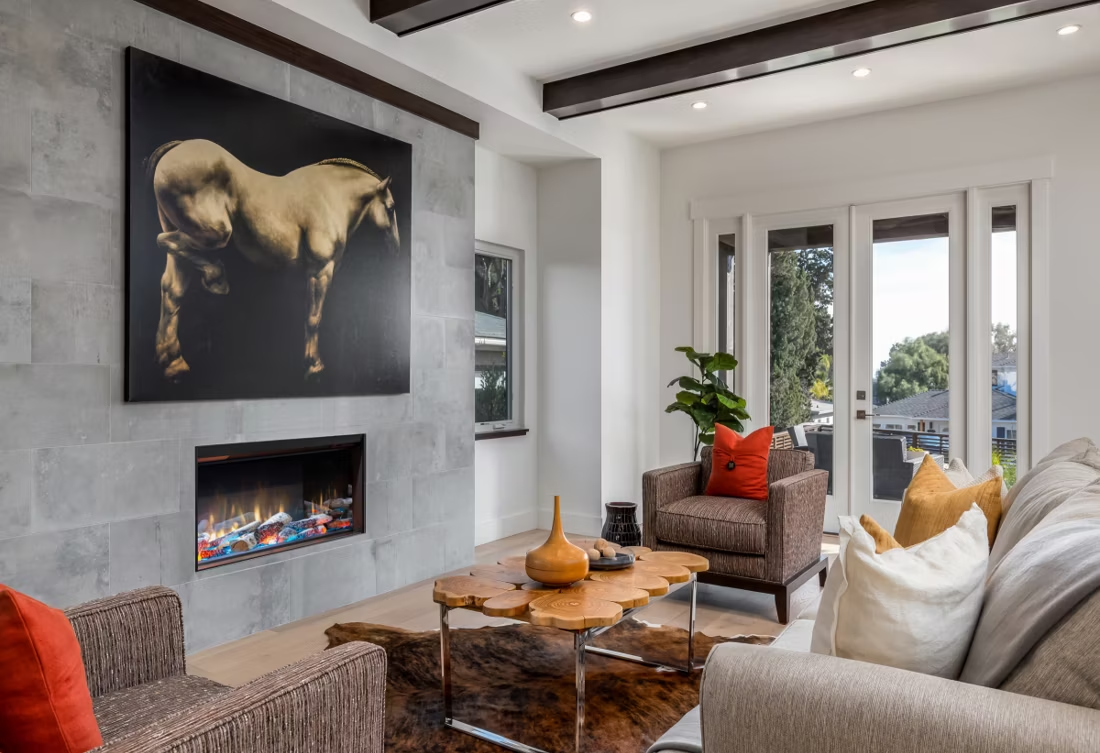
That's exactly the gap an electric fireplace or insert fills. No masonry chimney, no gas line, no combustion byproducts to vent—just a 120V or 240V circuit and a spot on the wall or in an existing fireplace opening. With no air quality restrictions on the books in Noble County, there's nothing stopping a homeowner from running one whenever they want, and with oak, hickory, and mesquite firewood plentiful locally, plenty of Noble County homes pair electric heat in the main living space with wood as backup for outages or ambiance elsewhere in the house.
Three steps. No salesperson until you're ready.
Tell us about your project
Your zip code, your situation, and the fuel you're leaning toward—or let the answers point you to one.
See what's actually available
The brands dealers within 100 miles genuinely carry—real options, never a catalog mirage.
Get your dealer & Project Guide
A trusted local dealer, plus the free Project Guide & Parts List that names every component of the job.
Frequently Asked Questions
How much does an electric fireplace installation cost in Noble County?
A plug-in electric insert or freestanding unit that drops into an existing fireplace opening or sits against a wall typically runs $300 to $1,200 installed, since it just needs a standard outlet and no venting work. A hardwired built-in unit set into new framing—common in a remodel or an addition—runs higher, often $1,500 to $3,500, once an electrician runs a dedicated circuit and the surrounding cabinetry or mantel is built out. Because there's no chimney, gas line, or Class A pipe involved, electric is consistently the least expensive fireplace fuel to install in Noble County, and most jobs are done in a single day.
Will an electric fireplace actually heat a room in a Noble County winter?
Most electric fireplaces put out around 4,600 to 5,000 BTUs (roughly 1,500 watts), which is enough to comfortably heat a single room—a living room, den, or bedroom—during a typical Noble County cold snap where lows sit in the mid-20s. It's not designed to replace central heat for the whole house, but as supplemental zone heat for the room you spend the most time in, or for outbuildings and additions without ductwork, it does the job well. On the rare nights when an Arctic front pushes temperatures well below normal, plan on running it alongside your furnace rather than instead of it.
Do I need a permit to install an electric fireplace in Noble County?
A plug-in unit that uses an existing standard outlet generally doesn't require a permit. A hardwired built-in fireplace that needs a new dedicated circuit does require an electrical permit, since that work has to be inspected and signed off by a licensed electrician regardless of fuel type. Most local dealers either employ a licensed electrician or coordinate directly with one, so the permitting gets handled as part of the install rather than becoming something you have to chase down yourself.
What's the best electric fireplace option for an older Noble County farmhouse?
If the house already has a masonry fireplace opening that's gone unused, an electric insert is usually the simplest and most cost-effective choice—it slides into the existing opening, plugs into a nearby outlet or a new dedicated circuit, and instantly makes that fireplace functional again without touching the chimney. For homes with no existing fireplace at all—common in the manufactured and mid-century housing stock spread across Noble County—a freestanding electric stove or a wall-mounted unit is usually the better fit, since either can go almost anywhere there's an outlet.
Will my electric fireplace work if the power goes out?
No—electric fireplaces need power to run, so during an ice storm or wind event that knocks out electricity, an electric unit goes dark along with everything else in the house. Oklahoma winters occasionally bring exactly that kind of weather, which is why a fair number of Noble County households keep a wood stove or fireplace as backup heat, using local oak or hickory, alongside an electric fireplace for everyday convenience. If backup heat during outages matters to you, that's a conversation worth having with a local dealer before you commit to electric as your only fireplace.
Electric vs. wood—which is right for my Noble County home?
Wood—burning local oak, hickory, or mesquite—provides real heat output, works without electricity during an ice storm, and gives you the traditional fire experience, but it means chimney maintenance, ash cleanup, and sourcing or splitting your own firewood. Electric skips all of that: no smoke, no ash, instant on-off, and a lower install cost, but it depends entirely on grid power and won't help if the lines go down. Given Noble County's mild 3,753-degree-day heating season, a lot of homeowners find electric covers everyday use just fine, while a wood stove elsewhere in the house handles the occasional outage or serious cold snap.
Electric vs. gas—which should I choose?
Gas fireplaces deliver more heat output and can be configured to run on battery backup during outages, but they require either an existing natural gas line or a propane tank, plus venting work in most cases—meaning a bigger project and a higher install cost. Electric skips the fuel line and venting entirely, which makes it the faster, cheaper route, especially in older Noble County homes where running new gas piping to a room isn't practical. If you already have gas service to the house and want stronger heat output, gas is worth pricing out; if you want the simplest possible install, electric wins.
How much does it cost to run an electric fireplace day to day?
A typical electric fireplace draws around 1,500 watts on the heat setting, which costs roughly 15 to 20 cents per hour to run at typical Oklahoma electricity rates—a few dollars for an evening of use. On flame-only mode with the heater off, the draw is minimal, closer to what a couple of light bulbs use. For a Noble County household running one a few hours a night through the winter, that adds up to a modest amount on the electric bill, especially compared to running central heat harder to warm the same room.
What should I look for in a local electric fireplace dealer in Noble County?
Look for a dealer who will actually come look at the room, the outlet or panel situation, and the existing fireplace opening (if there is one) before recommending a unit—sizing and mounting matter even without venting to plan around. A good local dealer will also be straightforward about when electric isn't the right call, like a whole-home heating need or a household that wants backup heat during power outages, and will point you toward wood or gas instead when that's the better fit. That kind of honest, no-pressure guidance is worth more than a lower price from an online retailer who's never seen your house.
Does an electric fireplace need a vent or chimney?
No—that's its superpower. An electric fireplace needs a wall and an outlet, period. No vent pipe, no gas line, no clearances to design around, which is why it works in bedrooms, offices, apartments, and walls where venting a gas or wood unit would be impractical or impossible. Installation is typically the simplest and least expensive of any fireplace type.
Can I put a TV above my fireplace?
Yes—with an asterisk. Fireplaces are hot and TVs don't like heat. Either put a mantel between them to deflect rising warmth, or choose a fireplace with heat-management technology that creates a cool zone on the wall above—the wall stays around 125 degrees, barely warm, while the room still gets full heat. If you like clean lines and don't want a mantel, heat management is the answer.
What is an in-home preview and do I need one?
It's a visit where a hearth professional measures your space, confirms the model you picked actually works in your home, and walks the specs—framing, gas line, venting, finish work—before anything is ordered. Some details you just can't know until you see the house. Never make a down payment without one; it's the single most-skipped step that burns buyers.
How much should I budget for a fireplace?
For an average home—covering the fireplace, the vent pipe, and basic installation—a budget between $3,900 and $5,500 gives you a lot of options across wood, gas, and pellet. By the time you add finish work, gas line, and electrical, the average complete installation lands between $5,000 and $12,000 all-in. In a remodel or new build, a good rule is to put about 2.5% of the total project cost toward the fireplace.
Find your electric fireplace in Noble County.
Tell us a bit about your home and we'll put together a free Project Guide & Parts List—the right unit, the exact parts, and your recommended local Noble County dealer to get it installed.
Find Your Fireplace →