
Find the right pellet stove for Muskogee County's mild winters.
Consistent, low-maintenance heat for a climate that rarely dips far below freezing—from Muskogee to Fort Gibson to Warner. I'll match you with a local dealer who can size it right and install it correctly.
Every Project Starts From One of These Five Situations
Efficient, hands-off heat that fits a moderate climate.
Muskogee County sits in climate zone 3A with about 3,598 heating degree days a year and an average winter low around 26°F—nowhere near the punishing cold of a place like Bismarck ND or Duluth MN, but still enough cold-weather stretches each winter to make supplemental heat worth having. Homes here range from older places in downtown Muskogee to newer construction near Fort Gibson Lake, and a lot of them already burn oak, hickory, or mesquite in a wood-burning setup passed down through the family. Pellet stoves offer a different tradeoff: less romance than a crackling log fire, but a thermostat-driven consistency that a wood stove can't match.
There's no non-attainment designation or winter inversion issue in Muskogee County, so air quality restrictions aren't a factor in choosing pellet over wood the way they are in parts of the Pacific Northwest—this is purely a convenience-and-efficiency decision. Regional pellet supply comes through brands like Lignetics and Indeck Energy Services, both of which distribute through the broader Oklahoma and Arkansas market, so fuel availability isn't a concern even though Muskogee County isn't a heavy pellet-heating region. A properly sized pellet insert or freestanding stove gives you set-it-and-forget-it heat for the county's shorter, milder heating season, without the ash and creosote upkeep of a wood stove.
Three steps. No salesperson until you're ready.
Tell us about your project
Your zip code, your situation, and the fuel you're leaning toward—or let the answers point you to one.
See what's actually available
The brands dealers within 100 miles genuinely carry—real options, never a catalog mirage.
Get your dealer & Project Guide
A trusted local dealer, plus the free Project Guide & Parts List that names every component of the job.
Frequently Asked Questions
How much does a pellet stove installation cost in Muskogee County?
A typical pellet stove or insert installation in Muskogee County runs in the $4,500-$7,500 range once you factor in the unit, venting kit, and labor—pellet venting is simpler than a masonry chimney, which keeps costs more predictable than wood installs. A pellet insert going into an existing fireplace opening is usually on the lower end since it can use the existing masonry as a chase for the vent pipe. A freestanding stove in a room with no existing fireplace runs a bit higher once you add wall-through venting. A local dealer will give you a firm number after seeing your space, but given Muskogee County's mild heating season, most homeowners are shopping for supplemental heat rather than a whole-home primary system, which keeps unit sizing—and cost—on the smaller side.
What size pellet stove do I need for my Muskogee County home?
With average winter lows around 26°F and just under 3,600 heating degree days a year, most Muskogee County homes don't need the largest pellet stoves on the market. A small to mid-size unit rated for 1,000-1,800 square feet handles a living room, den, or open-concept main floor as supplemental heat without overwhelming the space. Larger homes going for pellet as a primary heat source—less common here than in colder climates—should size up accordingly. This is a case where local sizing advice matters: an oversized stove in a mild climate like this one will short-cycle constantly, which wastes pellets and adds wear to the igniter and auger motor. A local dealer can walk your home and recommend the right BTU output for your actual square footage and insulation.
Where can I buy pellet fuel in Muskogee County?
Pellet fuel isn't produced locally in Muskogee County, but supply comes through regional distribution from brands like Lignetics and Indeck Energy Services, both of which serve the broader Oklahoma market through farm supply stores, hardware retailers, and hearth dealers. Because Muskogee County has a milder heating season than pellet-heavy regions of the Pacific Northwest or Upper Midwest, don't expect the same big-box pellet aisle you'd find in a place like Duluth MN—stocking up early in the fall before cold snaps hit is the safer approach here, since some retailers order pellets seasonally rather than keeping year-round inventory.
Do I need a permit to install a pellet stove in Muskogee County?
Most pellet stove and insert installations require a building permit through the relevant local jurisdiction—within Muskogee city limits that means the City of Muskogee, and outside city limits it runs through Muskogee County. The permit process covers the venting installation and confirms clearances meet code. Most established local dealers handle the permitting as part of the install, so you generally don't need to pull it yourself. Because there's no non-attainment air quality designation in Muskogee County, you won't run into the burn-curtailment rules that pellet and wood stove owners deal with in parts of Oregon or California—pellet stoves here are a straightforward permit-and-install process without added air-quality red tape.
What's the difference between a pellet stove and a pellet insert?
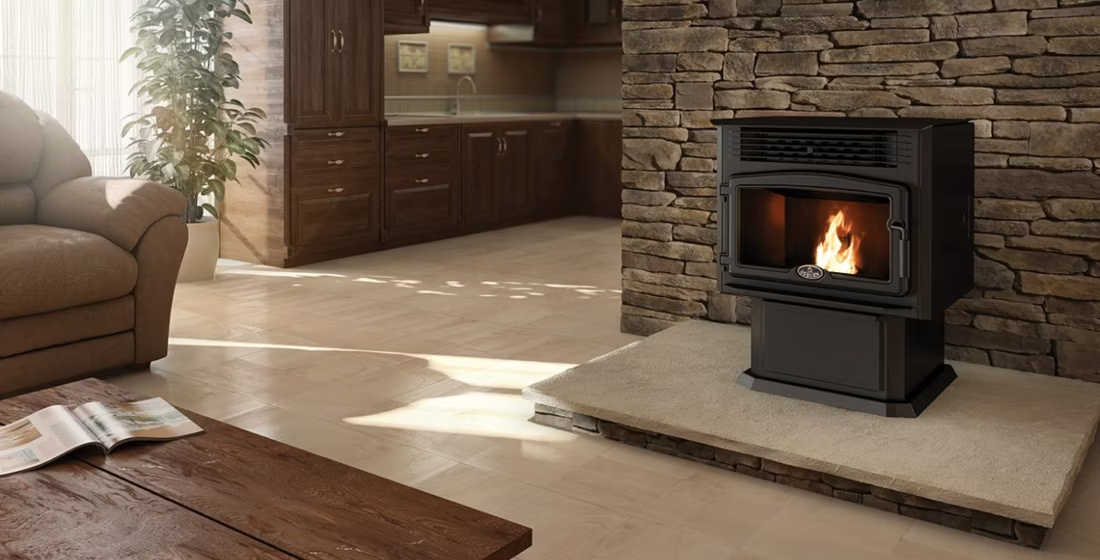
A pellet stove is a freestanding unit that sits on its own hearth pad and vents through an exterior wall or existing chimney—it can go almost anywhere with the right clearances. A pellet insert is built to slide into an existing masonry fireplace opening, using that opening and chimney chase to house the vent pipe while sealing off the old open hearth. For Muskogee County homes with an existing wood-burning fireplace that doesn't get much use, an insert is often the simpler retrofit since it reuses the opening you already have. Homes without an existing fireplace, or new construction, typically go with a freestanding stove instead.
Is a pellet stove a good fit for Muskogee County's climate?
Yes, with the right expectations. Muskogee County's climate zone 3A profile—average winter lows near 26°F and roughly 3,598 heating degree days—is considerably milder than the cold-climate regions where pellet stoves are typically marketed as primary heat. Here, a pellet stove is usually better suited as a supplemental or zone-heating solution for a den, living room, or open living area during the coldest stretches of December through February, rather than a whole-home furnace replacement. The consistent, thermostat-controlled heat output and low daily maintenance (no chimney sweeping, minimal ash) make it a practical choice for homeowners who want backup or supplemental warmth without the upkeep of a wood-burning setup.
How much maintenance does a pellet stove need?
Pellet stoves need more frequent light maintenance than wood stoves but far less heavy upkeep. Plan on emptying the ash pan every few days during regular use, cleaning the burn pot and glass weekly, and running a full deep clean—including the exhaust fan, hopper, and venting—once a season, ideally before the first cold snap in late fall. An annual professional service visit is worth scheduling too, since it covers the auger motor, igniter, and venting components that are harder to inspect yourself. Given Muskogee County's shorter heating season compared to colder climates, most homeowners here are looking at lighter overall wear and a longer interval between major component replacements.
Pellet vs. wood—which is right for my Muskogee County home?
Wood stoves burning local oak, hickory, or mesquite offer the authentic fire experience, work without electricity during storm-related outages, and often cost less to fuel if you have access to cut or delivered firewood. Pellet stoves offer thermostat-controlled convenience, easier daily operation, and cleaner burning with far less ash and no chimney creosote buildup to manage—but they require electricity to run the auger and blower, so they won't provide heat during a power outage unless paired with a battery backup. For Muskogee County's relatively mild, short heating season, either fuel works well as supplemental heat; the decision usually comes down to whether you value the lower-maintenance convenience of pellet or the off-grid reliability and lower fuel cost of wood.
Pellet vs. gas—which makes more sense given Muskogee County's mild winters?
Gas fireplaces and inserts offer instant on-off heat with essentially no daily maintenance, which suits a climate like Muskogee County's where you might only need heat on and off through a handful of cold weeks. Pellet stoves require more hands-on operation—filling the hopper, emptying ash, periodic cleaning—but don't require a gas line or propane tank, and appeal to homeowners who like the visual of an actual flame with real combustion. Given the county's roughly 3,598 heating degree days, neither fuel is being asked to do heavy lifting as a primary heat source in most homes, so the choice often comes down to which maintenance routine and aesthetic you prefer rather than which one performs better in the cold.
Why is my open fireplace making my house colder?
Open fireplaces suck—literally. As the fire burns, it consumes air your furnace already paid to heat and pulls it out through the chimney, so the house is actually colder after the fire goes out than before you lit it. An insert fixes this: it seals the chimney, puts fixed glass across the front, and turns that hole in your house into a real heat source.
Why is a fireplace insert so efficient?
An insert does two things: it seals the chimney completely, so you stop losing air you already paid to heat, and it radiates warmth into the room through the firebox and glass. Most add a heat-exchange fan that pulls cool room air underneath, wraps it around the hot firebox, and pushes it back out warm. Your home is more efficient before you've even lit the first fire.
How much should I budget for a fireplace?
For an average home—covering the fireplace, the vent pipe, and basic installation—a budget between $3,900 and $5,500 gives you a lot of options across wood, gas, and pellet. By the time you add finish work, gas line, and electrical, the average complete installation lands between $5,000 and $12,000 all-in. In a remodel or new build, a good rule is to put about 2.5% of the total project cost toward the fireplace.
Does a fireplace add value to my home?
On average, a fireplace adds back to the home about the same amount you spent installing it. Add the monthly savings from heating the rooms you actually use instead of the whole house—often hundreds of dollars a year—and the value case is strong before you even count what a fire does for how your family uses the room.
Stove and Fireplace Dealers in Muskogee County
Pellet Brands Stocked Around Muskogee County
Manufacturers will point you to the nearest stocking dealer.
Get your free Project Guide & Parts List for pellet heat in Muskogee County.
Tell me about your home and I'll match you with a trusted local dealer and send over a free Project Guide & Parts List—the exact stove or insert, vent kit, and installation plan sized for your space.
Find Your Fireplace →