
Find the right electric fireplace for your Muskogee County home.
Mild winters, no venting, no chimney—electric fireplaces fit easily into homes from downtown Muskogee to Fort Gibson and Checotah. I'll match you with a local dealer who can size and install it right.
Every Project Starts From One of These Five Situations
Zone heat and ambiance without the venting hassle.
Muskogee County sits in climate zone 3A, with an average winter low around 26°F and roughly 3,598 heating degree days a year—a fraction of what a place like Bozeman or Fargo racks up. Winters here are short and mild by comparison, which means most homes don't need a heavy-duty primary heat source. That's exactly the environment where electric fireplaces shine: they add real warmth to a den or living room on the handful of cold nights each winter without demanding a chimney, gas line, or combustion venting.
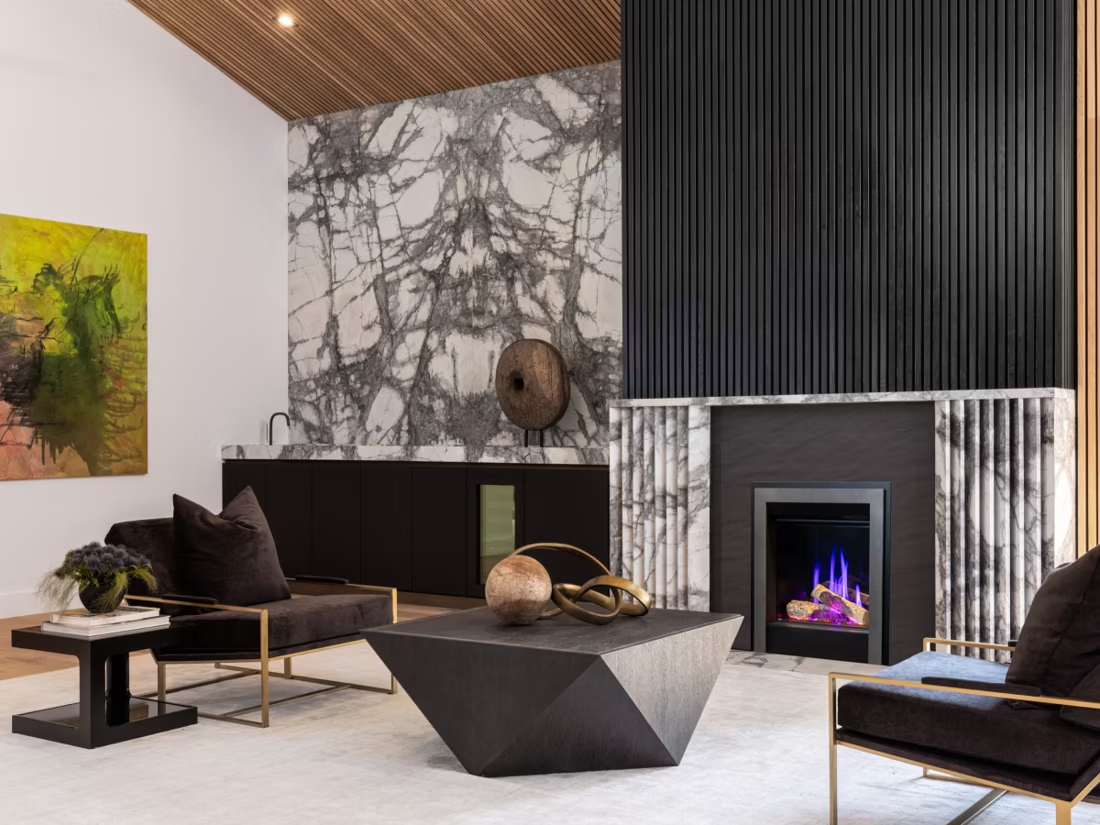
Because there's no flue and no makeup-air requirement, electric units install almost anywhere with a standard outlet—inside an existing masonry fireplace as an insert, built into a wall, or as a freestanding cabinet unit. That makes them a popular fit for Muskogee County's mix of older homes near downtown Muskogee with existing fireplace openings and newer construction out toward Fort Gibson and Warner where there's no chimney at all. It's also a smart backup option in a county where wood is genuinely traditional (oak and hickory are common local burning species) but not everyone wants to manage a woodpile for occasional supplemental heat.
Three steps. No salesperson until you're ready.
Tell us about your project
Your zip code, your situation, and the fuel you're leaning toward—or let the answers point you to one.
See what's actually available
The brands dealers within 100 miles genuinely carry—real options, never a catalog mirage.
Get your dealer & Project Guide
A trusted local dealer, plus the free Project Guide & Parts List that names every component of the job.
Frequently Asked Questions
How much does an electric fireplace installation cost in Muskogee County?
Most electric fireplace installations in Muskogee County run between $400 and $1,200, which is dramatically less than wood, gas, or pellet options because there's no venting, chimney work, or gas line to run. An insert that drops into an existing masonry fireplace opening tends to run toward the lower end, especially if it's a plug-in model. A built-in wall unit with a dedicated circuit, or a mantel-and-surround package, runs toward the higher end once an electrician is involved. Local dealers can quote a firm number once they know your fireplace opening size and whether your home's wiring needs an upgrade.
Do I need an electrician to install an electric fireplace?
It depends on the model. Many electric inserts and freestanding units plug into a standard 120-volt outlet and need no electrician at all—you can plug it in and go. Larger built-in units, especially ones rated for whole-room heating, often require a dedicated 20-amp circuit, which does call for a licensed electrician. In older Muskogee homes near downtown with original knob-and-tube or aging panel wiring, it's worth having an electrician confirm the circuit can handle the draw before you buy. A local hearth dealer will tell you upfront which category your chosen unit falls into.
Will an electric fireplace actually heat a room, or is it just for looks?
Modern electric fireplaces genuinely heat a room—most units put out around 4,600 to 5,000 BTUs, enough to comfortably warm 400 to 1,000 square feet depending on insulation and ceiling height. Given Muskogee County's relatively mild winter lows (averaging around 26°F), a good electric unit can realistically serve as the primary heat source for a den, bonus room, or converted garage, and as effective supplemental heat elsewhere. The flame effect is separate from the heat function on most models, so you can run the ambiance year-round and switch the heater on only when it's actually cold.
Do I need a permit to install an electric fireplace in Muskogee County?
In most cases, no building permit is required for a plug-in electric insert or freestanding unit, since there's no venting, gas line, or structural chimney work involved. If your project involves adding a new dedicated electrical circuit or altering wall framing for a built-in unit, that electrical work may need to be permitted and inspected depending on the scope—your electrician or local dealer can confirm what applies to your specific installation. It's a far lighter permitting lift than wood or gas installations in the county, which is part of the appeal.
What's the difference between an electric insert and a built-in electric fireplace?
An electric insert is sized to slide into an existing fireplace opening—a common choice for older Muskogee County homes that already have a masonry fireplace they want to convert away from wood or an unused gas log set. A built-in electric fireplace is designed to be framed into a wall from scratch, which works well for newer construction in areas like Fort Gibson or Boynton where there's no existing fireplace opening at all. Freestanding electric stoves and mantel packages are a third option, requiring no construction—just floor space and an outlet.
How does an electric fireplace compare to wood heat in Muskogee County?
Wood is a deep local tradition here—oak, hickory, and mesquite are all common regional species, and a wood stove or fireplace still makes sense for anyone who wants real radiant heat that works without power during an ice storm outage. Electric loses that advantage since it needs electricity to run, but it wins on convenience: no wood stacking, no ash cleanup, no creosote buildup, and no chimney to maintain. For a county with mild winters and only 3,598 heating degree days a year, electric is often plenty for supplemental warmth in a den or bedroom, while a wood stove remains the better call for anyone wanting off-grid reliability or a primary heat source.
Are electric fireplaces cheaper to run than gas in Muskogee County?
It depends on usage patterns and local utility rates, but generally electric fireplaces cost more per BTU of heat produced than natural gas, and roughly comparable to or slightly more than propane depending on current pricing. Where electric wins is upfront and installation cost—a $400 to $1,200 electric install versus $4,500 or more for a vented gas fireplace installation. For occasional, zone-specific heating in a room that's used a few hours a day during Muskogee County's shorter, milder winters, the lower installation cost often outweighs the marginally higher per-hour running cost.
Can I put an electric fireplace anywhere in my house?
Almost—electric fireplaces are the most placement-flexible option available since they don't need venting, combustion air, or a chimney. They can go on any interior wall, in a converted garage, in a basement, or inside an existing fireplace opening. The main constraints are electrical: make sure the outlet or circuit can handle the unit's draw, and follow the manufacturer's clearance guidelines around combustible materials like curtains or furniture, even though the flame itself produces no real fire or smoke.
What's the difference between electric and pellet stoves for my Muskogee County home?
Pellet stoves burn compressed wood pellets (regional brands like Lignetics are available in this part of Oklahoma) and produce genuine combustion heat with a real flame, but they require venting, a hopper you refill regularly, and periodic ash removal. Electric fireplaces have no combustion at all—just a heating element and a light-effect flame—so there's no venting, no fuel to buy or store, and far less maintenance. For most Muskogee County homes prioritizing low installation cost and simplicity, electric is the easier path. For those wanting a working backup heat source during a winter power outage, pellet (or wood) remains the better choice since electric units go dark when the grid does.
Can I put a TV above my fireplace?
Yes—with an asterisk. Fireplaces are hot and TVs don't like heat. Either put a mantel between them to deflect rising warmth, or choose a fireplace with heat-management technology that creates a cool zone on the wall above—the wall stays around 125 degrees, barely warm, while the room still gets full heat. If you like clean lines and don't want a mantel, heat management is the answer.
Does an electric fireplace need a vent or chimney?
No—that's its superpower. An electric fireplace needs a wall and an outlet, period. No vent pipe, no gas line, no clearances to design around, which is why it works in bedrooms, offices, apartments, and walls where venting a gas or wood unit would be impractical or impossible. Installation is typically the simplest and least expensive of any fireplace type.
Does a fireplace add value to my home?
On average, a fireplace adds back to the home about the same amount you spent installing it. Add the monthly savings from heating the rooms you actually use instead of the whole house—often hundreds of dollars a year—and the value case is strong before you even count what a fire does for how your family uses the room.
How much should I budget for a fireplace?
For an average home—covering the fireplace, the vent pipe, and basic installation—a budget between $3,900 and $5,500 gives you a lot of options across wood, gas, and pellet. By the time you add finish work, gas line, and electrical, the average complete installation lands between $5,000 and $12,000 all-in. In a remodel or new build, a good rule is to put about 2.5% of the total project cost toward the fireplace.
Stove and Fireplace Dealers in Muskogee County
Get your free electric fireplace Project Guide for Muskogee County.
Tell me about your home and I'll match you with a trusted local dealer and send over your free Project Guide & Parts List—the right unit, the wiring needs, and what it'll take to get it installed.
Find Your Fireplace →