
Steady, thermostat-controlled heat for Hughes County homes.
Thermostat-controlled heat for Holdenville, Wetumka, Calvin, Dustin, and the rest of Hughes County—built for mild Oklahoma winters and the ice storms that come with them. Get matched with a trusted local dealer.
Every Project Starts From One of These Five Situations
Consistent heat, without the daily wood-splitting chore.
Hughes County sits in the gently rolling hill country of east-central Oklahoma, home to about 9,200 residents spread across Holdenville (the county seat), Wetumka, Calvin, Dustin, and the farm roads in between. Climate zone 3A here means a genuinely mild winter by national standards—lows average around 26°F and the county logs roughly 3,436 heating degree days a year, a fraction of what a place like Fargo, North Dakota racks up. Snow is rare here; ice storms are not. The bigger heating threat most winters isn't sustained cold—it's the ice that regularly knocks out power across rural co-op lines for days at a stretch.
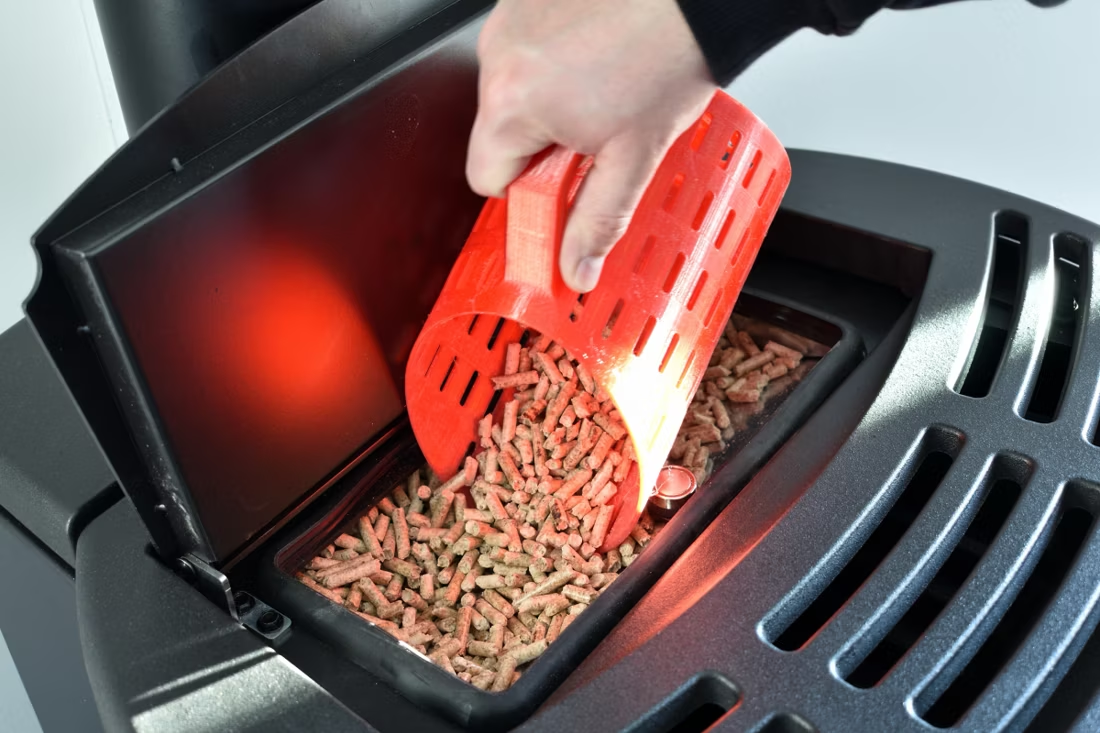
That combination—mild temperatures but real outage risk—is worth thinking through before you buy. A hopper-fed pellet stove or insert delivers even, thermostat-set heat with none of the splitting, stacking, or ash-hauling that comes with burning the oak, hickory, and mesquite that grow throughout the county. Pellets themselves are trucked in rather than cut locally—regional brands like Lignetics and Indeck Energy Services are what most Hughes County dealers can actually get their hands on—so fuel sourcing looks different than it does for wood. One thing worth knowing going in: pellet stoves need household electricity to run the auger and combustion blower, so during a multi-day ice storm outage, a pellet stove goes quiet unless you've got a generator or battery backup lined up. Hughes County has no local air quality restrictions or burn curtailment periods on the books, so unlike some non-attainment counties elsewhere, smoke-related burn bans aren't a factor here.
Three steps. No salesperson until you're ready.
Tell us about your project
Your zip code, your situation, and the fuel you're leaning toward—or let the answers point you to one.
See what's actually available
The brands dealers within 100 miles genuinely carry—real options, never a catalog mirage.
Get your dealer & Project Guide
A trusted local dealer, plus the free Project Guide & Parts List that names every component of the job.
Frequently Asked Questions
How much does a pellet stove installation cost in Hughes County?
Most pellet stove and insert installations in Hughes County run in the $3,000 to $6,500 range, depending on whether you're installing a freestanding stove with new pellet-vent pipe through an exterior wall or dropping an insert into an existing masonry fireplace using a stainless liner. Inserts into an existing chimney tend to land on the lower end since less new venting is required; freestanding stoves in a room with no existing flue run higher once wall penetration and vent kit costs are added. Every pellet stove also needs a dedicated 120V electrical outlet nearby for the auger and blower motor, which is sometimes an added line item if your install site doesn't already have one. A local dealer will walk your space and give you a firm number rather than a phone estimate.
What size pellet stove do I need for a Hughes County home?
Because Hughes County's winters are mild—3,436 heating degree days and average lows around 26°F—most homes here don't need the largest pellet stoves on the market the way a home in a harsher climate zone would. A small to mid-size unit rated for 1,000 to 1,800 square feet handles most Hughes County houses as primary heat for the living area, with central HVAC or a second heat source covering the rest of the home on the occasional hard freeze. Older, less-insulated farmhouses around Calvin and Dustin may want to size up slightly. A local dealer can run the numbers based on your square footage and insulation rather than relying on a generic chart.
Where can I find a certified pellet stove dealer near Hughes County?
Hughes County itself is small—about 9,200 residents spread across Holdenville, Wetumka, Calvin, and Dustin—so most dedicated hearth retailers are based in the larger Oklahoma City or Tulsa metro areas and serve the county on a delivery-and-install basis. Look for a dealer who is a certified NFI (National Fireplace Institute) pellet specialist and who will actually come inspect your install site rather than just drop off a box. Because pellet stoves involve electrical work and specific vent-kit sizing, a proper in-home consultation matters more here than it does for something like a simple electric fireplace swap.
What's the difference between a pellet stove and a pellet insert?
A pellet stove is a freestanding, hopper-fed unit that sits on its own hearth pad and vents through a wall or existing chimney chase—it works in a room with no fireplace at all. A pellet insert is built to slide into an existing masonry fireplace opening, using your current chimney, typically with a liner, as the vent path. For the handful of older homes in Hughes County with a working masonry fireplace, an insert is usually the cleaner upgrade since it reuses what's already there. Homes without an existing fireplace, which describes most newer construction in the county, are better matched to a freestanding stove.
Do I need a permit to install a pellet stove in Hughes County?
It depends on where you are in the county. If your home is inside Holdenville, Wetumka, Calvin, or Dustin city limits, check with that city's building office—several enforce a permit requirement for new solid-fuel appliances. In the unincorporated parts of Hughes County, there's typically no county-wide building permit process for a pellet stove install, though the unit still needs to be UL-listed and installed to manufacturer clearances for insurance and safety reasons. Either way, most local installers can tell you in one phone call whether your address falls under a permitting jurisdiction.
What's the best pellet stove for Hughes County's climate?
Given the mild winter profile here, you don't need a stove built for sustained sub-zero burns the way a Rocky Mountain or upper-Midwest home would. Budget-friendly, mid-BTU units from US Stove Company, a Tennessee-based brand common throughout the South, cover most Hughes County homes well, while higher-efficiency options from Harman offer tighter emissions control and longer hopper capacity if you want to run the stove as a near-primary heat source through the winter. Since pellets sold locally trace back to regional producers like Lignetics and Indeck Energy Services, it's worth confirming with your dealer that your chosen stove burns the pellet grade actually available nearby before you commit to a brand.
How often does a pellet stove need to be serviced?
Plan on an annual cleaning and inspection before burning season, plus regular ash-pan emptying and glass cleaning through the winter—pellet stoves produce far less creosote than wood stoves but still need the burn pot, auger, and vent pipe checked yearly. Because Hughes County doesn't have the humidity-driven creosote buildup issues of some climates, most homeowners here can go a full season between professional service visits as long as they're keeping up with basic weekly maintenance themselves.
Where can I buy pellets in Hughes County?
Pellet fuel isn't cut locally the way firewood is—the oak, hickory, and mesquite common throughout the county are popular for wood-burning, but pellets sold in this part of Oklahoma typically come from regional manufacturers like Lignetics and Indeck Energy Services, moved through farm and feed stores, hardware retailers, and hearth dealers in the Holdenville and Wetumka area or trucked out from the Oklahoma City market. Because rural delivery adds cost, it's worth asking your dealer about buying a season's supply, typically one to three tons for a single stove, at once rather than restocking bag by bag.
Pellet stove vs. wood stove—which is right for a Hughes County home?
Wood stoves run on the oak, hickory, and mesquite that are genuinely abundant around Hughes County, and they keep working with zero electricity—a real advantage here, since ice storms are a bigger practical risk than deep cold and can knock out rural co-op power for days. Pellet stoves trade that grid independence for convenience: load the hopper, set the thermostat, and the stove maintains an even burn with far less ash and no splitting or stacking. If backup heat during an ice-storm outage is your top priority, wood has the edge. If day-to-day convenience and consistent, low-maintenance heat matter more, and you're comfortable pairing it with a generator or battery backup for outage days, pellet is the better fit for most Hughes County homes.
Why is a fireplace insert so efficient?
An insert does two things: it seals the chimney completely, so you stop losing air you already paid to heat, and it radiates warmth into the room through the firebox and glass. Most add a heat-exchange fan that pulls cool room air underneath, wraps it around the hot firebox, and pushes it back out warm. Your home is more efficient before you've even lit the first fire.
What's the difference between an insert and a zero-clearance fireplace?
An insert is a fireplace that slides into a pre-existing wood-burning fireplace—if you don't have one, there's nothing to insert it into. A zero-clearance fireplace is built into a framed wall, which makes it the answer for remodels and new construction. Simple test: existing masonry fireplace means insert; blank or framed wall means zero-clearance.
Can a fireplace actually lower my heating bill?
Yes—by creating a comfort zone. A furnace heats every square foot of the house just to warm the one room you're in; a gas fireplace on low burns roughly a sixth of the gas a typical furnace does. Set the furnace around 55–60 degrees as a baseline, then heat the rooms your family actually uses. Families who heat this way commonly save $20–$60 a month.
How much should I budget for a fireplace?
For an average home—covering the fireplace, the vent pipe, and basic installation—a budget between $3,900 and $5,500 gives you a lot of options across wood, gas, and pellet. By the time you add finish work, gas line, and electrical, the average complete installation lands between $5,000 and $12,000 all-in. In a remodel or new build, a good rule is to put about 2.5% of the total project cost toward the fireplace.
Pellet Brands Stocked Around Hughes County
Manufacturers will point you to the nearest stocking dealer.
Find your pellet stove in Hughes County.
Tell us about your home and heating goals, and we'll match you with a trusted local dealer serving Hughes County—plus a free Project Guide & Parts List with the exact pellet stove or insert setup, vent kit, and installation plan for your address.
Find Your Fireplace →