
Add electric warmth to your Hughes County home—no chimney required.
Hughes County's winters are mild by national standards—lows averaging 26°F and just 3,436 heating degree days—which makes electric fireplaces and inserts an easy, no-venting way to add heat and ambiance in Holdenville, Wetumka, Calvin, Stuart, and the rest of the county. Find the right unit and connect with a trusted local dealer.
Every Project Starts From One of These Five Situations
Simple heat for a moderate climate.
Hughes County sits in south-central Oklahoma's mixed-humid Zone 3A, where winter lows average around 26°F and the county logs roughly 3,436 heating degree days a year—less than half the heating load of a place like Duluth, Minnesota. That moderate climate means homes in Holdenville, Wetumka, Calvin, Stuart, and Dustin rarely need a high-output primary heat source just to get through January. It's exactly the kind of climate where an electric fireplace or insert earns its keep: enough supplemental warmth for a living room or bedroom on a cold morning, without the chimney, gas line, or wood supply a bigger heating project would require.
Most of Hughes County is served by rural electric cooperatives—East Central Oklahoma Electric Cooperative territory covers a good share of the county, with OG&E serving parts near the edges—and either can run a standard electric fireplace without any special upgrades in most homes. The bigger consideration locally isn't heat output, it's outage resilience: south-central Oklahoma has a real history of winter ice storms that can knock out power for days at a time. An electric fireplace is only as reliable as the grid it's plugged into, so a lot of Hughes County homeowners pair one with a small generator, or keep a wood stove or insert as backup, given how much oak and hickory is available locally for burning.
Three steps. No salesperson until you're ready.
Tell us about your project
Your zip code, your situation, and the fuel you're leaning toward—or let the answers point you to one.
See what's actually available
The brands dealers within 100 miles genuinely carry—real options, never a catalog mirage.
Get your dealer & Project Guide
A trusted local dealer, plus the free Project Guide & Parts List that names every component of the job.
Frequently Asked Questions
How much does an electric fireplace installation cost in Hughes County?
Because electric fireplaces don't need a chimney, gas line, or exterior venting, they're the least expensive hearth option available in Hughes County. A plug-in insert or wall-mounted unit that runs on a standard 120-volt outlet typically costs $150 to $600 installed, including basic mounting. Built-in electric fireplaces or larger inserts that need a dedicated 120- or 240-volt circuit run by an electrician usually land between $800 and $2,500, depending on the unit and how far the new circuit has to run. There's no chimney sweep, no gas line permit, and no masonry work to budget for—which is part of why electric is a popular first hearth upgrade in the county.
Can an electric fireplace actually heat a room in Hughes County?
Yes, for the climate here. Most electric fireplaces put out around 4,000 to 5,000 BTU (roughly 1,500 watts), which is enough to noticeably warm a single room—a living room, bedroom, or den—especially given Hughes County's relatively mild 3,436 heating degree days and winter lows that average in the mid-20s rather than the single digits you'd see farther north. In a well-insulated smaller home, an electric fireplace can function as the primary heat source for that specific room; in most cases locally it works best as zone heat that lets you turn down the central furnace and warm just the room you're using.
Do I need a permit to install an electric fireplace in Hughes County?
Simple plug-in electric fireplaces generally don't require a permit anywhere in Hughes County, since they use an existing outlet. If you're installing a built-in unit that requires a new dedicated circuit, that electrical work typically does require a permit—and inside city limits (Holdenville, Wetumka, Calvin) that means checking with the local building department before an electrician pulls the circuit. In unincorporated parts of the county, requirements are lighter, but it's still worth confirming with a licensed electrician that any new wiring meets code, particularly in older farmhouses with dated panels.
Will my electric fireplace still work during a power outage?
No—and this is the one real limitation to plan around in Hughes County. Unlike a gas or wood-burning unit, an electric fireplace stops working the moment the power does, and this part of Oklahoma has seen multi-day outages from winter ice storms. If backup heat during an outage matters to you, the practical options are a portable generator sized to run the fireplace, or a secondary wood-burning stove or insert—oak and hickory are both common, easy-to-source local firewood species. A lot of Hughes County homeowners run electric for daily convenience and keep one of those as a true weather-emergency backup.
What's the difference between an electric fireplace, insert, and stove?
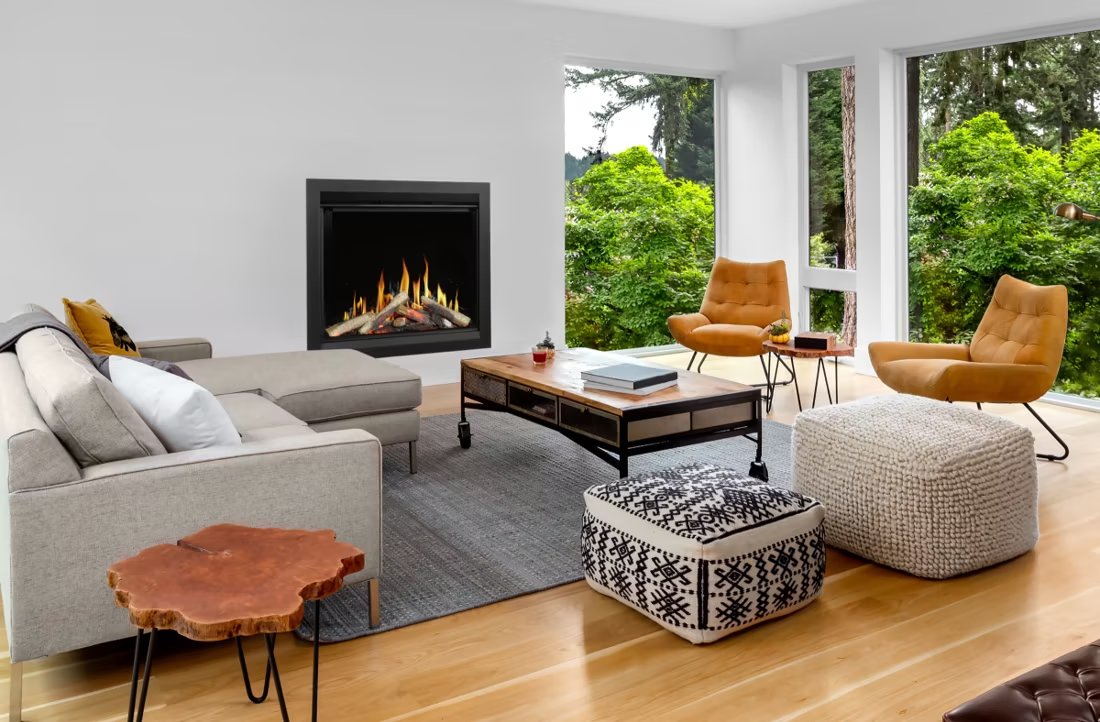
An electric fireplace is typically a built-in or wall-mounted unit designed to look like a traditional fireplace, often with a realistic flame effect. An electric insert is sized to slide into an existing masonry or wood-burning fireplace opening, letting you convert an old, drafty hearth into a clean, contained heat source without touching the chimney. An electric stove is a freestanding unit styled like a wood or pellet stove, useful when you want a stove look without any real venting requirements. For Hughes County homes with an existing but unused fireplace, an insert is often the simplest upgrade; for new construction or rooms without a hearth, a built-in fireplace or freestanding stove works just as well.
What's the best electric fireplace for Hughes County's climate?
Given the moderate heating load here, most homeowners don't need a high-end unit built for extreme cold—a mid-range model from a brand like Dimplex or ClassicFlame with a 1,500-watt heater covers the zone-heating job well in most rooms. What matters more locally is picking a unit sized to the room rather than the whole house, since Hughes County's 3,436 heating degree days mean you're rarely fighting deep cold for long stretches. If you want a unit that can also serve as a modest primary heat source in a smaller, well-insulated room, look for a model with a built-in thermostat rather than a simple high/low switch, so it isn't running at full output all night.
How much maintenance does an electric fireplace need?
Very little compared to gas or wood. There's no chimney to sweep, no venting to inspect, and no annual safety service required. Maintenance is mostly dusting the unit, occasionally replacing an LED light strip on older models, and checking that the cord and outlet (or dedicated circuit) show no signs of wear. That low-maintenance profile is part of the appeal in Hughes County, where the nearest chimney sweep or gas technician may be a drive from Holdenville—with electric, there's simply less to service.
What will an electric fireplace add to my utility bill?
Most homes in Hughes County are served by East Central Oklahoma Electric Cooperative or OG&E, depending on location, and a typical 1,500-watt electric fireplace running on high costs somewhere in the range of 15 to 20 cents an hour at average residential rates—meaning a few hours of evening use adds only a modest amount to a monthly bill. Since these units are used for zone heating rather than whole-home heat, most homeowners find the cost is more than offset by turning the central furnace down while the fireplace is running in the room they're actually using.
Electric vs. wood or gas—which is right for my Hughes County home?
Wood offers real backup heat during the ice storms that occasionally knock out power here, plus the appeal of a genuine fire—and oak and hickory are both plentiful locally. Gas offers instant, higher-output heat but requires a gas line or propane tank and a proper venting plan. Electric offers the simplest, least expensive installation with zero venting and no permit hassle for basic units, but it depends entirely on grid power and works best as supplemental zone heat rather than a true emergency backup. For a lot of Hughes County homes, electric is the easy first upgrade for daily comfort, with wood or gas considered separately if year-round backup heat is a priority.
Does an electric fireplace need a vent or chimney?
No—that's its superpower. An electric fireplace needs a wall and an outlet, period. No vent pipe, no gas line, no clearances to design around, which is why it works in bedrooms, offices, apartments, and walls where venting a gas or wood unit would be impractical or impossible. Installation is typically the simplest and least expensive of any fireplace type.
Do electric fireplaces actually produce heat?
Yes—most put out around 4,800–5,000 BTUs from a standard outlet, which comfortably warms a bedroom, office, or den as a comfort-zone heater. What they won't do is carry a whole house the way wood, gas, or pellet can. Think of electric as ambiance-first with honest supplemental heat: flames on with no heat in July, flames plus warmth in January.
Can a fireplace actually lower my heating bill?
Yes—by creating a comfort zone. A furnace heats every square foot of the house just to warm the one room you're in; a gas fireplace on low burns roughly a sixth of the gas a typical furnace does. Set the furnace around 55–60 degrees as a baseline, then heat the rooms your family actually uses. Families who heat this way commonly save $20–$60 a month.
Can I install a fireplace myself?
If you're putting a fire in your house on purpose, it's best to work with an expert. Unless you're genuinely experienced in framing, gas line, vent pipe, and the national code on clearances to combustibles, have a professional do it—and ideally the same company that sells you the fireplace, so warranty, service, and liability all live under one roof.
Find your electric fireplace in Hughes County.
Tell us a bit about your home and we'll match you with the right electric fireplace, insert, or stove—plus a free Project Guide & Parts List with your recommended local dealer in Hughes County.
Find Your Fireplace →