
Clean-Burning Heat for Haskell County, Oklahoma.
From Stigler to Keota to the shores of Lake Eufaula, pellet stoves give Haskell County homes a low-maintenance alternative to cutting oak and hickory. We'll match you with a trusted local dealer who can size and install the right unit.
Every Project Starts From One of These Five Situations
A clean alternative in oak-and-hickory country.
Haskell County sits in the Cookson Hills country of eastern Oklahoma, where oak, hickory, and mesquite grow thick along the ridges above Lake Eufaula. Winters here are mild by national standards—climate zone 3A, an average winter low around 32°F, and roughly 2,900 heating degree days a year—so most homes don't need a wood-burning workhorse the way a place like Duluth or Fargo would. What Haskell County homeowners are usually after is a heat source that's consistent, easy to load, and doesn't leave a mess of ash and creosote every week.
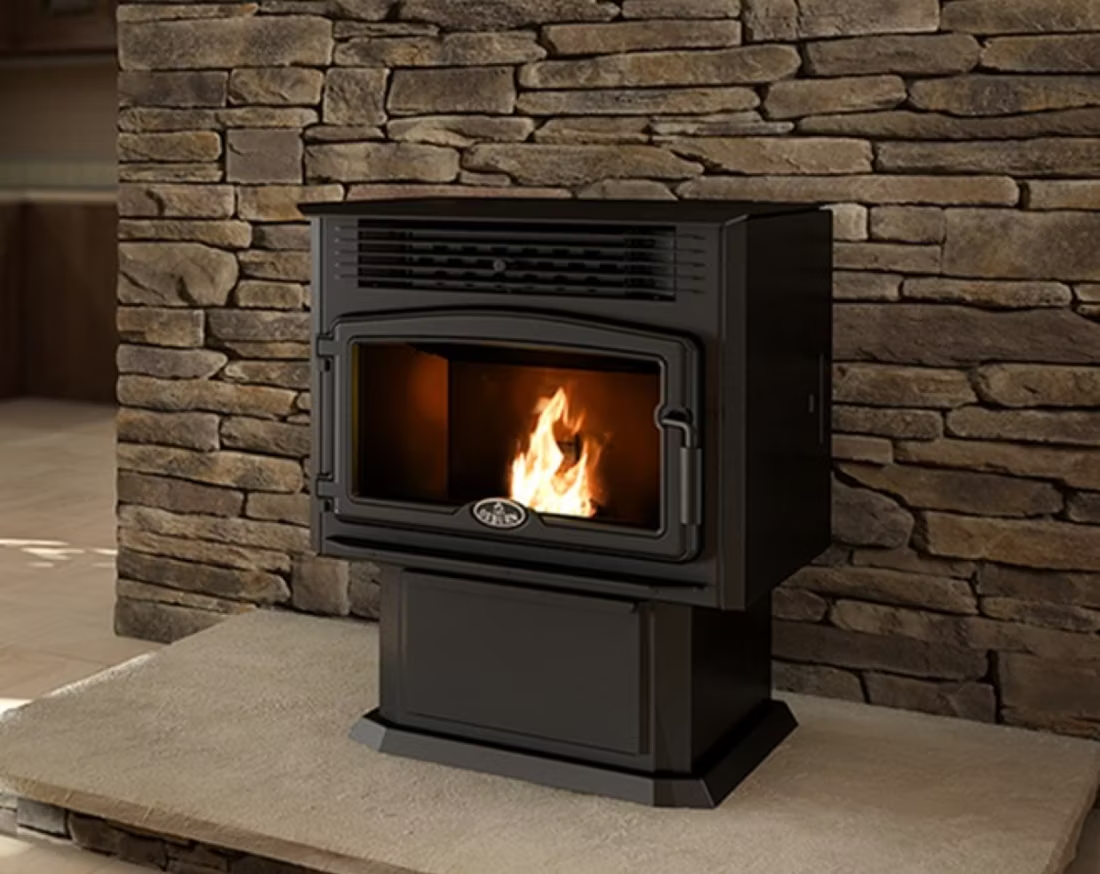
That's where pellet stoves fit. There's no local air quality regulation forcing the issue—Haskell County has no non-attainment or curtailment restrictions—so the appeal is practical, not regulatory: a hopper that holds a day or more of fuel, a thermostat instead of a damper, and bagged pellets from regional suppliers like Lignetics and Indeck Energy Services that you can pick up at a farm store instead of splitting a cord yourself. The one tradeoff worth knowing up front: pellet stoves run on electricity for the auger and blower, which matters in a county that, like much of eastern Oklahoma, sees the occasional winter ice storm knock out power for days at a time.
Three steps. No salesperson until you're ready.
Tell us about your project
Your zip code, your situation, and the fuel you're leaning toward—or let the answers point you to one.
See what's actually available
The brands dealers within 100 miles genuinely carry—real options, never a catalog mirage.
Get your dealer & Project Guide
A trusted local dealer, plus the free Project Guide & Parts List that names every component of the job.
Frequently Asked Questions
How much does a pellet stove installation cost in Haskell County?
Across rural eastern Oklahoma, a typical pellet stove or insert installation runs roughly $3,000 to $6,500, depending on the unit, whether you're venting through an existing masonry fireplace or need new wall penetration, and how much electrical work is involved for the hopper and blower circuit. Homes converting an old wood fireplace into a pellet insert tend to land on the lower end since the chimney chase already exists. Because Haskell County is served by a small number of dealers rather than a dense retail market, expect your installer to give you a firm number after an in-home look rather than a phone quote.
What size pellet stove do I need for my home?
Given Haskell County's mild winters—an average low around 32°F and about 2,900 heating degree days—most homes don't need a maxed-out unit. A small to mid-size pellet stove (rated for 1,000 to 1,800 square feet) comfortably heats a main living area or a modest ranch-style home common in Stigler and Keota. Larger or older farmhouses with less insulation, or homes near the lake that catch more wind, may want a mid-size to large unit. A local dealer will factor in your square footage, ceiling height, and insulation before recommending a model—sizing is one of the few things worth getting a real consultation for rather than guessing from a box label.
Where can I find a pellet stove dealer near Haskell County?
Haskell County's population is under 5,000, spread across Stigler, Keota, and Whitefield, so the county itself supports few if any dedicated hearth retailers. Most homeowners here end up working with a dealer based in a larger nearby market—Fort Smith, Arkansas is about 30 to 40 miles east, and Muskogee is a comparable drive northwest—and having the unit shipped in with a local installer handling the setup. This is exactly the gap Find My Fireplace is built to close: we match you with a trusted dealer who actually services Haskell County rather than leaving you to cold-call installers an hour away.
What's the difference between a pellet stove and a pellet insert?
A pellet stove is a freestanding appliance that sits on its own base and vents out through a wall or existing chimney chase—it can go almost anywhere with a clear path to the outside. A pellet insert is built to slide into an existing masonry fireplace opening, which is common in older Haskell County homes that were originally built around a wood-burning hearth. If you already have a fireplace you don't use much, an insert is usually the more cost-effective route since it reuses the existing masonry and chimney. If you're heating a room with no fireplace at all, a freestanding stove is the better fit.
Do I need a permit to install a pellet stove in Haskell County?
Haskell County doesn't have the kind of dense zoning or air-quality permitting that some Oklahoma metro counties do, but a building permit is still typically required for a new hearth appliance and any associated venting or electrical work, especially inside city limits like Stigler or Keota. Most established hearth dealers handle this coordination as part of the installation rather than leaving it to the homeowner. Because pellet stoves need a dedicated electrical circuit for the auger and blower, it's worth confirming your installer is pulling both the appliance permit and any required electrical permit—skipping that step can complicate insurance claims later.
What's the best pellet stove for Haskell County's climate?
Because winters in Haskell County are mild—climate zone 3A, average lows around freezing—you don't need an oversized, cold-climate-rated unit built for sub-zero nights. A mid-efficiency pellet stove in the 1,500 to 2,500 square-foot range covers most homes here as either primary supplemental heat or a comfortable zone-heating solution for the main living area. Look for a model compatible with the pellet brands actually stocked regionally—Lignetics and Indeck Energy Services are the two most commonly available in eastern Oklahoma—since fuel consistency affects burn quality and auger wear over time.
Where can I buy pellet fuel in Haskell County?
Bagged pellets from Lignetics and Indeck Energy Services are the two regional brands most commonly stocked at farm supply and hardware stores serving eastern Oklahoma. Because Haskell County itself is small and rural, availability can be thinner than in a larger market—it's common for homeowners here to buy a season's worth (roughly a ton or more for a heating stove used regularly) in a few trips rather than picking up a bag at a time. Ask your installing dealer where they source pellets locally; many hearth retailers either stock bags themselves or can point you to the nearest reliable supplier.
Will my pellet stove work during a power outage?
Not without backup power. Pellet stoves rely on an electric auger to feed fuel and a blower to distribute heat, so a standard unit shuts down the moment the power drops—which matters in eastern Oklahoma, where winter ice storms have historically knocked out power in this region for days at a stretch. Homeowners who want pellet heat as genuine backup, not just supplemental comfort, typically pair the stove with a small battery backup system or a generator sized to run the auger and blower. If uninterrupted heat during outages is your top priority, it's worth discussing a wood-burning option alongside pellet with your local dealer—Haskell County's oak and hickory supply makes that a realistic pairing for some households.
Pellet stove vs. wood stove—which is right for my home?
Wood is abundant in Haskell County—oak, hickory, and mesquite are common on local land, and plenty of residents already cut or buy firewood—and a wood stove keeps working through a power outage, which matters given the region's occasional ice storms. A pellet stove trades that off for real convenience: load a hopper instead of splitting rounds, dial in a thermostat instead of managing a damper, and deal with far less ash and creosote buildup. For a primary residence where daily ease matters more than storm-proof heat, pellet is often the better fit. For a hunting cabin, shop, or home where self-sufficiency during outages is the priority, wood usually wins. A local dealer can walk through both options against your specific home.
How often does a pellet stove need cleaning?
A clean pellet stove is a happy pellet stove. Plan on cleaning the burn pot about once a week when you're burning regularly—ash and clinkers gum up the air holes just like a pellet barbecue. Most pellet stove problems trace back to skipped cleaning that nobody explained up front. Some designs make it easy with a trapdoor burn pot: pull a lever and the gunk drops into the ash pan.
What's the difference between an insert and a zero-clearance fireplace?
An insert is a fireplace that slides into a pre-existing wood-burning fireplace—if you don't have one, there's nothing to insert it into. A zero-clearance fireplace is built into a framed wall, which makes it the answer for remodels and new construction. Simple test: existing masonry fireplace means insert; blank or framed wall means zero-clearance.
How much should I budget for a fireplace?
For an average home—covering the fireplace, the vent pipe, and basic installation—a budget between $3,900 and $5,500 gives you a lot of options across wood, gas, and pellet. By the time you add finish work, gas line, and electrical, the average complete installation lands between $5,000 and $12,000 all-in. In a remodel or new build, a good rule is to put about 2.5% of the total project cost toward the fireplace.
Does a fireplace add value to my home?
On average, a fireplace adds back to the home about the same amount you spent installing it. Add the monthly savings from heating the rooms you actually use instead of the whole house—often hundreds of dollars a year—and the value case is strong before you even count what a fire does for how your family uses the room.
Pellet Brands Stocked Around Haskell County
Manufacturers will point you to the nearest stocking dealer.
Find your pellet stove in Haskell County.
Tell us a bit about your home and we'll put together a free Project Guide & Parts List—the right pellet stove or insert, the vent kit it needs, and a trusted local dealer to install it.
Find Your Fireplace →