
Fireplace dealers and installers across Haskell County, Oklahoma.
Wood, gas, pellet, and electric fireplace resources for every town in Haskell County—Stigler, Kinta, Whitefield, McCurtain, and Keota included. Find the right unit for your home and get matched with a trusted local hearth retailer.
Every Project Starts From One of These Five Situations
Mild winters and hardwood heritage in Haskell County, Oklahoma.
Haskell County sits in the timbered hill country of eastern Oklahoma along the Arkansas River, home to fewer than 5,000 residents spread across Stigler and a handful of smaller communities. Climate zone 3A keeps winters relatively mild—the average winter low sits around 32°F and the county logs roughly 2,900 heating degree days a year, a fraction of what places like Duluth, Minnesota or Bozeman, Montana see. That doesn't mean the woodstove goes unused: eastern Oklahoma's ice storms can knock out power for days, and a lot of Haskell County households keep a wood or pellet appliance running as backup heat as much as for ambiance. Oak, hickory, and hickory-adjacent mesquite are all locally available and split well for firewood.
This hub rounds up the hearth retailers, service technicians, and fuel suppliers who cover Haskell County—most based in nearby regional hubs like Muskogee or Sallisaw, since the county itself is small and rural. Pick a fuel below to see local dealer options, typical installed costs, and what actually fits a home in this climate. Whether you're heating a farmhouse outside Kinta or a place along the river near Whitefield, this is the starting point.
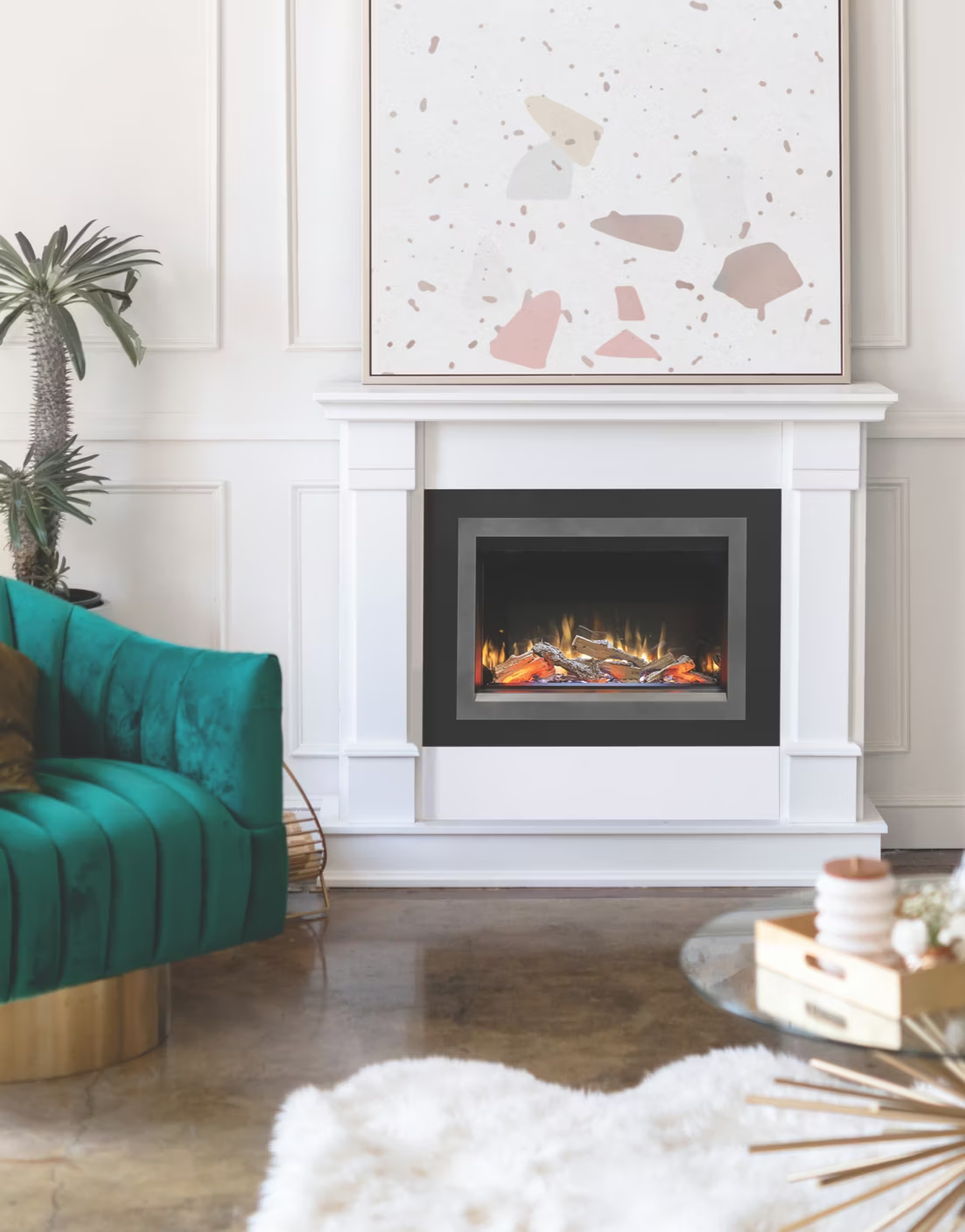
Four fuels. One honest answer for Haskell County.
Three steps. No salesperson until you're ready.
Tell us about your project
Your zip code, your situation, and the fuel you're leaning toward—or let the answers point you to one.
See what's actually available
The brands dealers within 100 miles genuinely carry—real options, never a catalog mirage.
Get your dealer & Project Guide
A trusted local dealer, plus the free Project Guide & Parts List that names every component of the job.
Frequently Asked Questions
Which fuel works best in Haskell County?
With only about 2,900 heating degree days a year and winter lows averaging in the low 30s, Haskell County doesn't demand the same firepower as a true cold-climate county—but ice storms are the wildcard. Wood remains popular precisely because it works when the power doesn't: oak and hickory are both locally available and split well, and a lot of households keep a wood stove as backup heat even if it isn't their primary source. Gas is the low-maintenance choice for homes with propane service, which covers most of rural Haskell County since piped natural gas isn't widespread here. Pellet stoves are a solid middle option—Lignetics and Indeck Energy Services pellets are both distributed regionally, so supply isn't an issue, though pellet stoves do need electricity to run the auger and blower, which matters during an ice-storm outage. Electric fireplaces work well as supplemental heat given the mild climate, especially in bedrooms or additions, but they're not a primary heat source most people rely on here.
Do I need a permit to install a fireplace in Haskell County?
Haskell County doesn't run a large centralized building department the way a metro county does, so permitting for wood stoves, inserts, gas appliances, or pellet stoves typically runs through your local municipality—Stigler city hall, for example—or the county clerk's office if you're outside city limits. Gas installations still require licensed gas-line work regardless of local permit structure. Electric fireplaces that plug into an existing outlet generally don't need a permit; built-in units that require new wiring do. Most hearth retailers who service this area are used to navigating the local requirements and will pull whatever's needed as part of the installation, so it's worth asking upfront rather than assuming.
Are there air quality restrictions on wood burning in Haskell County?
No. Haskell County has no non-attainment designation and no local burn-ban ordinance tied to wood smoke, unlike counties in inversion-prone basins out West. That said, this doesn't mean wood burning is unregulated everywhere in the county—always confirm with your municipality if you're inside city limits, since some towns set their own open-burning rules for yard debris that are separate from indoor wood-stove use. For everyday wood heat, there's no seasonal advisory system to check before lighting a fire, which is one less thing to manage compared to counties out West.
Can one local hearth retailer handle all four fuel types in Haskell County?
Because Haskell County is small—under 5,000 residents—it doesn't support its own dedicated multi-fuel showroom the way a larger county would. Most of the retailers who cover Stigler, Kinta, Whitefield, McCurtain, and Keota are based in Muskogee or Sallisaw and carry a mix of wood, gas, pellet, and sometimes electric, but coverage varies dealer to dealer. If you want to compare fuels side by side, it's worth confirming with a dealer whether they stock working displays of each type or mainly specialize in one or two. This is exactly the kind of local nuance a matching service is useful for—rather than guessing from a big-box catalog, you get pointed to the dealer who actually covers your fuel and your town.
How does service work in rural parts of Haskell County?
Most technicians who service Haskell County are based outside it—commonly in Muskogee or Sallisaw—and drive in for scheduled appointments, so expect a modest travel fee for stops in Kinta, Whitefield, McCurtain, or Keota. Because this part of eastern Oklahoma gets periodic ice storms, fall is the smart window to book annual chimney sweeps or pellet stove service—appointments made in August through October are far easier to land than emergency calls once a storm has already knocked out power. If wood or pellet heat is your outage backup, get it serviced before the season starts rather than after the first cold snap.
What's the typical cost range for fireplace installation across fuel types in Haskell County?
Costs here run a bit lower than in harsher climates since venting and structural work tend to be simpler. Wood stove or insert installation: roughly $3,500–$7,500 for a typical job, more if new masonry or a full chimney liner is needed. Gas fireplace, insert, or stove: roughly $4,000–$9,000, with propane conversions often on the lower end if a tank and line are already in place. Pellet stove or insert: roughly $3,500–$6,500 installed. Electric fireplace: $200–$2,500 for the unit itself, plus $300–$1,000 in labor for anything beyond a simple plug-in, such as a built-in wall unit. Exact pricing depends on the dealer and the specifics of your home—a local installer can give you a firm number once they've seen the space.
How much should I budget for a fireplace?
For an average home—covering the fireplace, the vent pipe, and basic installation—a budget between $3,900 and $5,500 gives you a lot of options across wood, gas, and pellet. By the time you add finish work, gas line, and electrical, the average complete installation lands between $5,000 and $12,000 all-in. In a remodel or new build, a good rule is to put about 2.5% of the total project cost toward the fireplace.
Can I install a fireplace myself?
If you're putting a fire in your house on purpose, it's best to work with an expert. Unless you're genuinely experienced in framing, gas line, vent pipe, and the national code on clearances to combustibles, have a professional do it—and ideally the same company that sells you the fireplace, so warranty, service, and liability all live under one roof.
Should the dealer who sells my fireplace also install it?
Ideally, yes. A fireplace project involves vent pipe, gas line, electrical, and often tile or stone. Hire three or four separate trades and you own the liability and the game of telephone between them. One company selling and installing means one accountable party, start to finish—ask about factory training, on-time completion records, and what happens if an inspection fails.
What are the biggest mistakes people make buying a fireplace?
Five come up constantly: budgeting for the unit but not the full job (vent, gas line, electrical, finish work); drowning in options instead of starting from style and fuel; buying without an in-home preview; handing installation to a handyman instead of a pro; and giving up out of sheer indecision. Every one is avoidable with a clear plan—step one, step two, step three.
Stove and Fireplace Dealers in Haskell County
Listings include WhyFire partner dealers, dealers we have verified as authorized for the brands we recommend, and established local businesses that carry hearth products. Every listing shows which one it is. The ones marked Preferred run on WhyFire's software, so they can show you real pricing and book your appointment right here. No manufacturer pays for placement. How we verify dealers →
Acme Brick Company
Godfrey & Black
Find your fireplace in Haskell County.
Tell us your fuel and your town, and we'll match you with a trusted local dealer who covers Haskell County—plus a free Project Guide & Parts List with the exact parts, including the vent kit, for your project.
Find Your Fireplace →