
Steady heat for Grant County, without the woodpile.
Thermostat-set, automatic-feed heat for wheat and cattle country—from Medford to Pond Creek, Nash, and Wakita. Find out what fits your home and get matched with a trusted local dealer.
Every Project Starts From One of These Five Situations
Convenience heat for a farm-and-ranch county.
Grant County sits in north-central Oklahoma, wheat and cattle country with a population under 3,000 spread across Medford, Pond Creek, Nash, Wakita, and the farmland between them. The climate here is zone 3A—mixed-humid, generally mild, with winter days often in the 30s and 40s. But mild doesn't mean easy: Oklahoma sits in the path of Arctic outbreaks that can drop temperatures well below zero for several days at a stretch, the kind of event the state saw during Winter Storm Uri in February 2021. A home heating system in Grant County needs to handle both the ordinary mild winter and the occasional hard freeze without much notice.
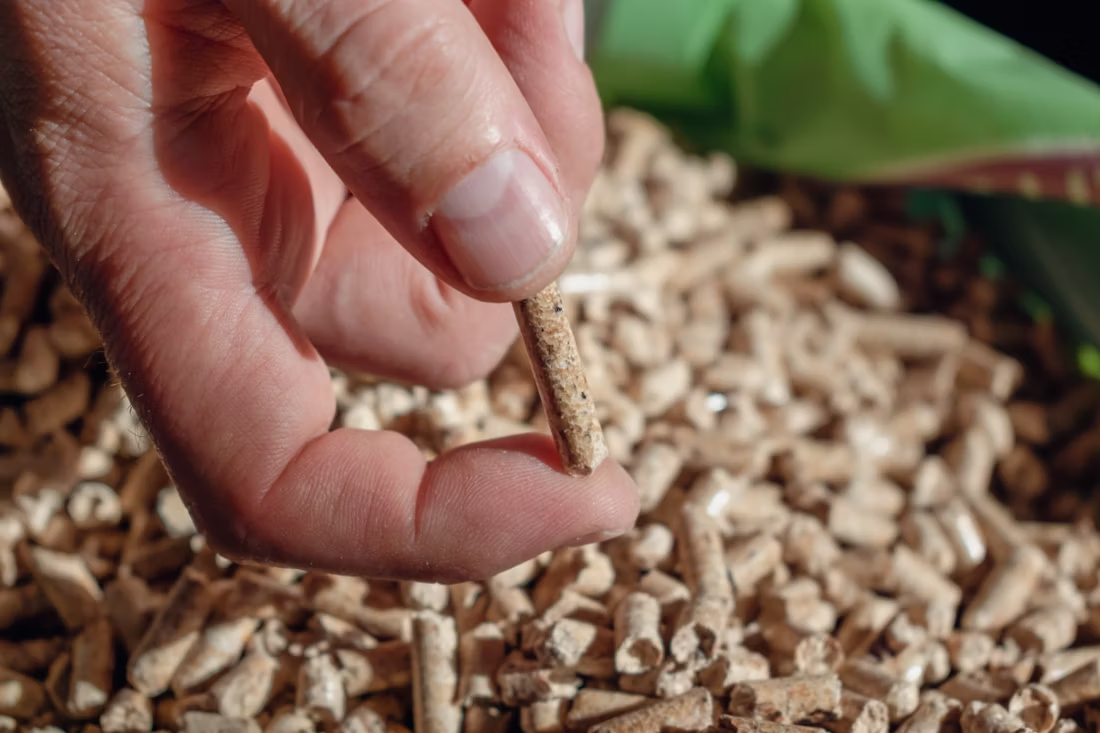
Oak, hickory, and mesquite grow throughout the county and plenty of homeowners still burn cordwood, but between running a farm or ranch operation and keeping up with a woodpile, a lot of Grant County families would rather load a hopper once every day or two and let a thermostat do the rest. Propane is the standard fuel for homes outside town gas lines here, and a pellet stove or insert gives those households a supplemental or primary heat source that doesn't depend on a tank delivery schedule. Regional pellet supply through brands like Lignetics and industrial-scale biomass producers such as Indeck Energy Services keeps fuel reasonably available without a long drive for a truckload of bags.
Three steps. No salesperson until you're ready.
Tell us about your project
Your zip code, your situation, and the fuel you're leaning toward—or let the answers point you to one.
See what's actually available
The brands dealers within 100 miles genuinely carry—real options, never a catalog mirage.
Get your dealer & Project Guide
A trusted local dealer, plus the free Project Guide & Parts List that names every component of the job.
Frequently Asked Questions
How much does a pellet stove installation cost in Grant County?
Pellet stove and insert installations typically run in the $3,000 to $6,000 range nationally, and Grant County falls in line with that—the exact number depends on the unit, whether you're installing into an existing fireplace opening or as a new freestanding stove, and how much venting and electrical work is needed. Because pellet stoves need a standard 120V outlet nearby for the auger and blower motor, homes without an outlet near the intended stove location may see a modest added cost for that wiring. A local dealer can give you a firm number after seeing your home.
Does a pellet stove make sense in a mild climate like Grant County's?
Yes—pellet stoves aren't just for brutal-winter climates. In zone 3A, where most winter days sit in the 30s and 40s, a pellet stove works well as either a primary heat source for a smaller home or a zone-heating supplement that lets you turn down the central furnace or propane usage on all but the coldest days. The thermostat control also matters here: rather than tending a fire through a mild evening, you set a temperature and the stove modulates automatically, which fits how most Grant County households actually want to use supplemental heat day to day.
Where can I buy pellets locally in Grant County?
Pellet availability in a county this size (under 3,000 people) usually means stocking up through a local farm supply or hardware retailer, or ordering by the pallet through your dealer, rather than picking up bags at a big-box store on every trip into town. Lignetics is a widely distributed brand carried through many regional suppliers, and industrial biomass producers like Indeck Energy Services support pellet supply chains in this part of the state. Ask your local dealer about seasonal stocking—buying a pallet or two in late summer before demand picks up is a common strategy for rural Oklahoma pellet users.
What happens to my pellet stove during a power outage?
This is worth planning for in Grant County, where ice storms and severe weather can knock out power for hours or, in bad cases, days. Pellet stoves rely on electricity to run the auger that feeds fuel and the blower that pushes heat into the room—without power, the stove won't operate, unlike a wood stove that burns with no electrical input at all. Some homeowners pair a pellet stove with a small battery backup or generator specifically to keep it running through outages; others keep a wood stove or fireplace as backup. If reliable heat during outages is your top priority, talk to your dealer about backup power options before you buy.
Do I need a permit to install a pellet stove in Grant County?
Most jurisdictions require a building permit for a new solid-fuel appliance installation, including pellet stoves, and Grant County is no exception—check with the county building department before work begins, or let your installer handle the paperwork, which most local dealers do as a standard part of the install. Because pellet appliances vent through a smaller-diameter pipe than wood stoves and burn cleaner, the inspection process is usually straightforward compared to a full masonry chimney install.
What size pellet stove do I need for my home?
Sizing depends on square footage, ceiling height, and how well-insulated the home is—older farmhouses in Grant County with less insulation and higher ceilings typically need a larger stove than a newer, tightly built home of the same size. As a rough guide, smaller pellet stoves (under 40,000 BTU) suit a single room or a compact house, while larger units (50,000 BTU and up) can serve as primary heat for a full home in the 1,500 to 2,000 square foot range. A local dealer will size your home properly during an in-home visit—oversizing wastes fuel and undersizing leaves you cold on the hardest Arctic-outbreak days.
How is a pellet stove vented compared to a wood stove?
Pellet stoves use a smaller, simpler venting system than wood stoves—typically 3- or 4-inch pipe that can run horizontally through an exterior wall rather than requiring a full vertical masonry chimney. This makes pellet stoves easier and often cheaper to install in homes without an existing chimney, which describes a lot of newer construction and outbuildings across Grant County. Because the exhaust is mechanically pushed out by a blower rather than relying on natural draft, pellet venting also tolerates more flexible routing than wood-burning flues.
How much maintenance does a pellet stove need?
Pellet stoves need more routine attention than a gas appliance but less than a wood stove: daily or every-other-day ash removal from the burn pot, a weekly-ish cleaning of the hopper and auger area, and an annual professional cleaning of the venting and internal components. Because pellets burn cleaner than cordwood, there's no creosote buildup to worry about, but the mechanical parts (auger motor, igniter, blower) are things a technician should check yearly to keep the stove running reliably through Grant County's cold snaps.
Pellet stove vs. propane heat—which makes sense for my Grant County home?
Propane is the default heating fuel for most homes outside natural gas service areas in Grant County, and it's a reliable, well-established choice—but tank deliveries and rising propane costs during winter demand spikes are real considerations. A pellet stove burns a locally supplied, often lower-cost fuel and gives you supplemental or zone heat that can reduce how much propane you burn overall, especially in the mild stretches that make up most of a zone 3A winter. For homes that want to cut propane usage without giving up automatic, thermostat-controlled heat, a pellet stove paired with an existing propane furnace is a common and practical setup in this part of Oklahoma.
Why is my open fireplace making my house colder?
Open fireplaces suck—literally. As the fire burns, it consumes air your furnace already paid to heat and pulls it out through the chimney, so the house is actually colder after the fire goes out than before you lit it. An insert fixes this: it seals the chimney, puts fixed glass across the front, and turns that hole in your house into a real heat source.
What's the difference between an insert and a zero-clearance fireplace?
An insert is a fireplace that slides into a pre-existing wood-burning fireplace—if you don't have one, there's nothing to insert it into. A zero-clearance fireplace is built into a framed wall, which makes it the answer for remodels and new construction. Simple test: existing masonry fireplace means insert; blank or framed wall means zero-clearance.
Can I install a fireplace myself?
If you're putting a fire in your house on purpose, it's best to work with an expert. Unless you're genuinely experienced in framing, gas line, vent pipe, and the national code on clearances to combustibles, have a professional do it—and ideally the same company that sells you the fireplace, so warranty, service, and liability all live under one roof.
What is an in-home preview and do I need one?
It's a visit where a hearth professional measures your space, confirms the model you picked actually works in your home, and walks the specs—framing, gas line, venting, finish work—before anything is ordered. Some details you just can't know until you see the house. Never make a down payment without one; it's the single most-skipped step that burns buyers.
Pellet Brands Stocked Around Grant County
Manufacturers will point you to the nearest stocking dealer.
Find your pellet stove in Grant County.
Tell us about your home and heating goals, and we'll match you with a trusted local dealer plus a free Project Guide & Parts List—the right pellet stove or insert, sized correctly, with the vent kit and parts spelled out.
Find Your Fireplace →