
Steady, low-maintenance heat for Grady County winters.
From Chickasha to Rush Springs, Minco to Tuttle, pellet stoves bring thermostat-like heat to south-central Oklahoma homes without the wood-splitting. Find the right unit and connect with a trusted local dealer.
Every Project Starts From One of These Five Situations
Mild winters, real savings.
Grady County sits in climate zone 3A, with average winter lows around 27°F and roughly 3,192 heating degree days a year—a mixed-humid climate that's noticeably milder than the northern states where wood and pellet heat are a survival necessity. Across the county's roughly 30,000 residents, spread from Chickasha out through Rush Springs, Minco, Tuttle, Amber, and Verden, oak, hickory, and mesquite have long been the go-to firewood species. Pellet stoves have found a solid place alongside that tradition—not because winters demand it, but because they deliver consistent, low-maintenance heat without splitting, stacking, or sweeping a chimney.
There are no air quality non-attainment designations or seasonal burning curtailments in Grady County, so unlike parts of the West, there's no winter inversion advisory to work around before you light up. Regional pellet producers Lignetics and Indeck Energy Services both distribute hardwood pellets into south-central Oklahoma, keeping local supply steady through the burning season. For homes that already run on propane or electric heat, a pellet stove in the main living area is a practical way to cut monthly heating costs during Grady County's coldest stretches and occasional winter ice events, without replacing the central system entirely.
Three steps. No salesperson until you're ready.
Tell us about your project
Your zip code, your situation, and the fuel you're leaning toward—or let the answers point you to one.
See what's actually available
The brands dealers within 100 miles genuinely carry—real options, never a catalog mirage.
Get your dealer & Project Guide
A trusted local dealer, plus the free Project Guide & Parts List that names every component of the job.
Frequently Asked Questions
How much does a pellet stove installation cost in Grady County?
A pellet stove installation typically runs in the $3,000 to $6,000 range once you account for the stove itself, the exterior vent kit, and a code-compliant hearth pad—generally less than a comparable wood stove or gas fireplace project, since pellet venting is simpler than a full masonry chimney. Homes in Chickasha or Rush Springs with an existing fireplace opening can often route the vent pipe through it, keeping costs toward the lower end. Rural properties around Verden, Amber, or Tuttle without an existing flue may need additional work to run venting through an exterior wall, which pushes the estimate higher. A local dealer will give you a firm number after an in-home look.
What size pellet stove do I need for my Grady County home?
Grady County's mild winters—average lows near 27°F and about 3,192 heating degree days—mean most homes don't need the largest pellet stove on the shelf. A small to mid-size unit rated for roughly 1,000 to 1,800 square feet handles supplemental heat in most Chickasha or Minco homes, or serves as primary heat in a smaller, well-insulated house. Larger rural properties around Amber or Verden, or older farmhouses with less insulation, may want to size up a step. A local dealer will factor in square footage, ceiling height, and insulation level before recommending a specific model.
Where can I find certified pellet stove installers near me?
Look for NFI (National Fireplace Institute)-certified installers, who are trained specifically in the venting and clearance requirements pellet appliances need. Dealers serving Grady County typically cover Chickasha, Rush Springs, and Minco, with service extending out to Tuttle, Amber, and Verden. Pellet stoves vent through a smaller-diameter pipe than wood stoves, so installs tend to move quickly, but proper clearance from windows, doors, and combustible siding at the vent termination still matters—that's not a step to hand to a general handyman.
Pellet stove vs. wood stove—which fits Grady County better?
Oak, hickory, and mesquite are the traditional firewood species burned across Grady County, and plenty of rural households still heat with cordwood. A pellet stove trades that tradition for convenience—no splitting, stacking, or chimney sweeping, and a hopper that can feed itself for 12 to 24 hours before needing a refill. The tradeoff is that pellet stoves need electricity to run the auger and blower, so they won't provide heat during a power outage the way a wood stove will—worth weighing given the ice storms that occasionally roll through this part of Oklahoma. For households that want set-it-and-forget-it heat and don't need outage backup, pellet is usually the easier day-to-day choice.
Do I need a permit to install a pellet stove in Grady County?
Most jurisdictions in Grady County require a building permit for a new pellet stove installation, whether the home is inside Chickasha city limits or out in unincorporated county land—check with your local building department before work starts. Grady County has no air quality non-attainment designation and no seasonal wood-burning curtailment periods, so unlike some western states, there's no burn-ban calendar to plan installation or use around. Most local dealers handle the permit paperwork as part of the installation.
What's the best pellet stove for Grady County's climate?
Because winters here run mild by national standards—about 3,192 heating degree days versus 8,000-plus in a place like Fargo, ND—you don't need an oversized, extreme-cold-rated unit. Mid-size stoves from mainstream manufacturers handle Grady County winters comfortably, and hopper capacity matters more here than raw BTU output for most households. If you're thinking about the occasional ice storm that knocks out power in this part of Oklahoma, ask your dealer about models compatible with a battery backup or small generator, since a pellet stove won't run without electricity. Fuel supply is solid locally, with Lignetics and Indeck Energy Services both distributing hardwood pellets into the region.
How often does a pellet stove need cleaning and maintenance?
Pellet stoves need more frequent light maintenance than wood stoves but far less heavy cleaning overall. Plan on emptying and vacuuming the ash pot every few days during regular use, and a full burn-pot and venting cleanout every month or two through the season. An annual professional service checking the auger motor, gaskets, and exhaust fan is recommended before each heating season begins. Because Grady County winters are shorter than in colder-climate states, most households here get by with one thorough end-of-season cleaning plus routine ash removal during use.
Where can I buy pellet fuel in Grady County?
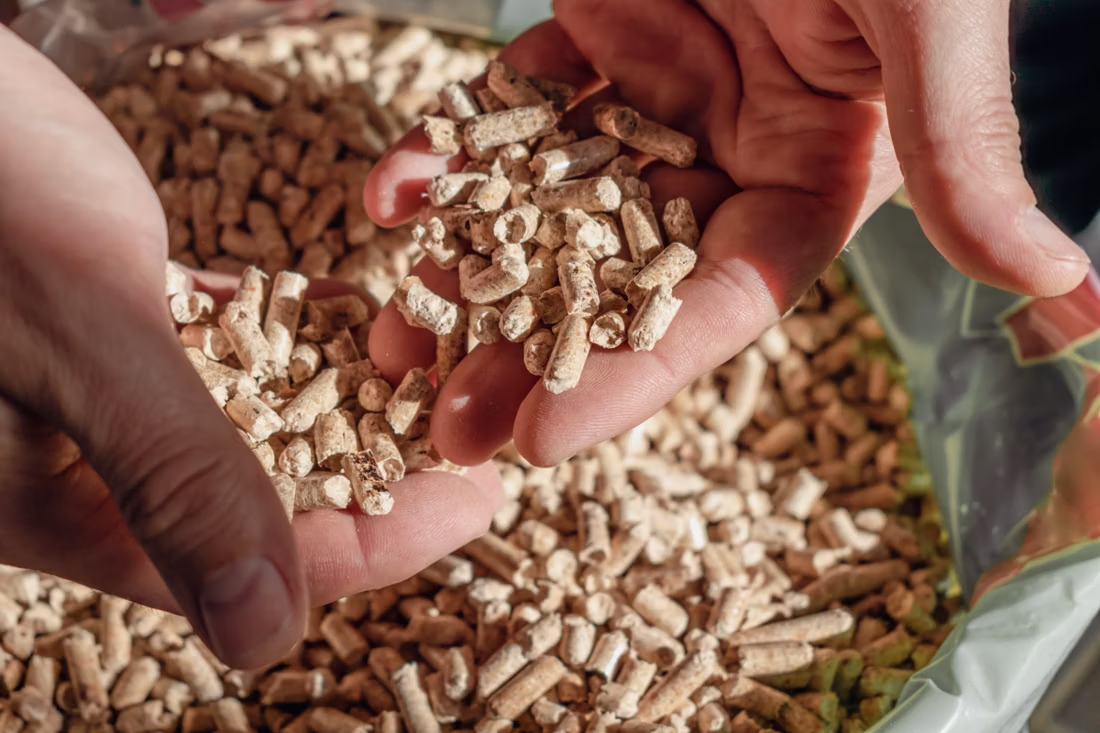
Regional producers Lignetics and Indeck Energy Services both distribute hardwood pellets into the south-central Oklahoma market, and bagged pellets are typically available through local hardware stores, farm and ranch supply outlets, and the hearth dealers who sell the stoves themselves. Buying a season's supply early—before the first real cold snap—is the usual strategy, since demand can tighten once winter weather arrives. Ask your local dealer which brand they stock and whether they offer seasonal pallet delivery, which saves a lot of trunk-loading for households burning through several bags a week.
Pellet vs. propane or electric heat—which makes more sense here?
Many Grady County homes already run on propane or an electric heat pump for whole-house heating, and a pellet stove works well alongside either as zone heat for the main living area—cutting propane or electric use during the coldest stretches without replacing the central system. Compared to electric resistance heat, pellets are usually cheaper per BTU; compared to propane, pellet fuel pricing tends to be more stable year to year. The stove still needs electricity to run its auger and blower, so it's not an outage backup on its own, but as a way to lower monthly heating costs in a home with existing central heat, it's a straightforward addition.
Why is my open fireplace making my house colder?
Open fireplaces suck—literally. As the fire burns, it consumes air your furnace already paid to heat and pulls it out through the chimney, so the house is actually colder after the fire goes out than before you lit it. An insert fixes this: it seals the chimney, puts fixed glass across the front, and turns that hole in your house into a real heat source.
How often does a pellet stove need cleaning?
A clean pellet stove is a happy pellet stove. Plan on cleaning the burn pot about once a week when you're burning regularly—ash and clinkers gum up the air holes just like a pellet barbecue. Most pellet stove problems trace back to skipped cleaning that nobody explained up front. Some designs make it easy with a trapdoor burn pot: pull a lever and the gunk drops into the ash pan.
Does a fireplace add value to my home?
On average, a fireplace adds back to the home about the same amount you spent installing it. Add the monthly savings from heating the rooms you actually use instead of the whole house—often hundreds of dollars a year—and the value case is strong before you even count what a fire does for how your family uses the room.
Can a fireplace actually lower my heating bill?
Yes—by creating a comfort zone. A furnace heats every square foot of the house just to warm the one room you're in; a gas fireplace on low burns roughly a sixth of the gas a typical furnace does. Set the furnace around 55–60 degrees as a baseline, then heat the rooms your family actually uses. Families who heat this way commonly save $20–$60 a month.
Pellet Brands Stocked Around Grady County
Manufacturers will point you to the nearest stocking dealer.
Find your pellet stove in Grady County.
Tell us a bit about your home and we'll match you with the right pellet stove or insert, plus a free Project Guide & Parts List—the exact parts, vent kit, and your recommended local Grady County dealer.
Find Your Fireplace →