
Heat your Grady County home, your way.
Wood, gas, pellet, and electric fireplace resources for every city and rural community in Grady County—from Chickasha to Rush Springs. Find the right unit and connect with a trusted local hearth retailer.
Every Project Starts From One of These Five Situations
Mild-winter heating across Grady County, Oklahoma.
Grady County sits in central Oklahoma just southwest of the OKC metro, in climate zone 3A. Winters here are short and mild by national standards—average lows hover around 27°F and the county has a much lighter winter heating load than a place like Fargo, ND or Bismarck, ND typically see. That said, cold snaps and ice storms still roll through, and plenty of Grady County homes lean on wood heat as a backup during winter storm power outages. Oak, hickory, and mesquite are the firewood staples here, split from local farm ground and post-oak timber stands as much as bought by the cord.
What you'll find on this hub: hearth retailers, service technicians, and fuel suppliers serving every community in the county—from the county seat of Chickasha out to Tuttle, Minco, Rush Springs, Verden, and Amber. Pick your fuel below to drill into specifics—local dealers, installation costs, recommended units, and the resources that match your project. Whether you're heating a Chickasha bungalow or a farmhouse outside Alex, this is the starting point.
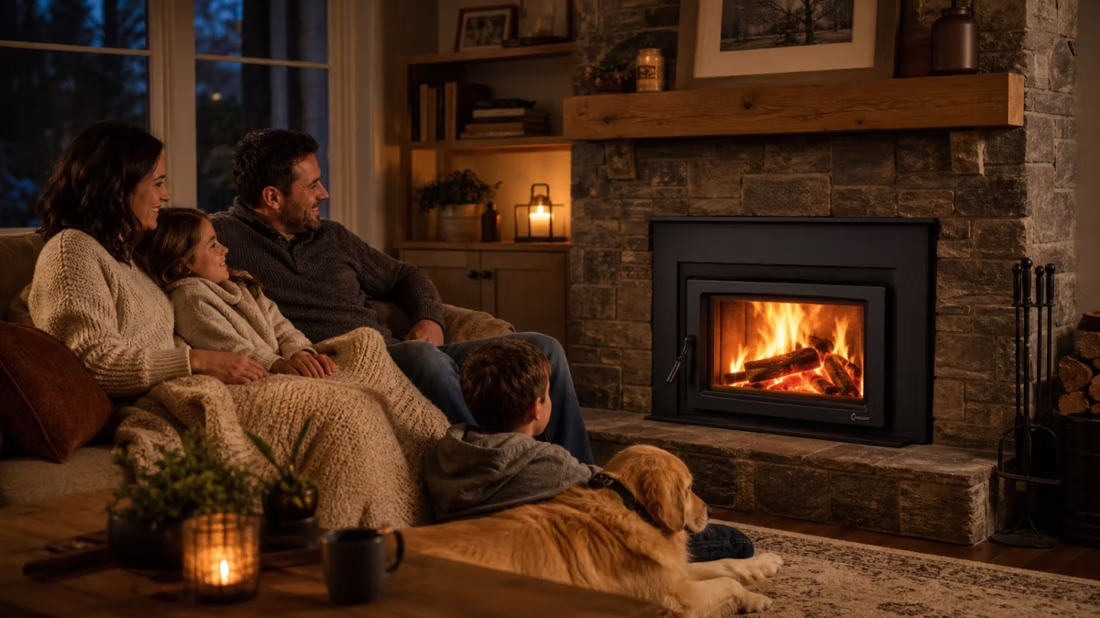
Four fuels. One honest answer for Grady County.
Three steps. No salesperson until you're ready.
Tell us about your project
Your zip code, your situation, and the fuel you're leaning toward—or let the answers point you to one.
See what's actually available
The brands dealers within 100 miles genuinely carry—real options, never a catalog mirage.
Get your dealer & Project Guide
A trusted local dealer, plus the free Project Guide & Parts List that names every component of the job.
Frequently Asked Questions
Which fuel works best in Grady County?
It depends on your home and priorities, but the mild winters here (average low 27°F, a much lighter winter heating load than colder states see) mean you have real flexibility. Wood is a longstanding backup and primary choice in rural parts of the county—oak, hickory, and mesquite are all locally split, and a wood stove keeps a farmhouse warm through the ice storms that occasionally knock out power. Gas is the convenience pick for Chickasha and Tuttle homes on natural gas service through Oklahoma Natural Gas—instant heat, no wood to stack. Pellet stoves work well too, with Lignetics widely stocked at regional suppliers, and they burn cleaner than a lot of older wood-burning setups. Electric fireplaces do fine as supplemental heat here—Grady County's mild lows mean electric units can genuinely carry a room on most winter nights, not just take the edge off like they would in a colder climate. Many homes end up with two fuels: wood or pellet for storm backup, gas or electric for everyday convenience.
Do I need a permit to install a fireplace in Grady County?
In most cases, yes. New wood stoves, wood inserts, gas fireplaces, gas inserts, gas stoves, and pellet stoves typically require a building permit, and gas installations need a separate gas line permit pulled by a licensed gas-fitter. Wood-burning appliances sold and installed today are required to meet EPA 2020 NSPS emissions standards regardless of county-level air quality status. Electric fireplaces usually skip the permit process unless it's a built-in unit that requires new wiring or a dedicated circuit. Within Chickasha, permits run through the city; in unincorporated parts of Grady County, they go through the county building department. Most local hearth retailers handle this paperwork as part of the installation, so you typically don't have to file it yourself.
Are there air quality restrictions on wood burning in Grady County?
No—Grady County isn't a designated non-attainment area, and there are no seasonal burn curtailment days like you'd see in a place with regular winter inversions. That gives homeowners here more day-to-day flexibility with wood stoves and fireplace inserts than in some Western states. The one thing worth watching is Oklahoma's occasional county-issued burn bans during drought conditions, which apply mainly to outdoor and open burning rather than EPA-certified indoor wood stoves. New wood-burning appliances still need to meet EPA 2020 NSPS emissions standards at installation, which is a national requirement rather than a local one.
Can one local hearth retailer handle all four fuel types?
Grady County's population is around 30,000, so the retailer footprint here is smaller than in a major metro—most local dealers carry two or three fuel types rather than all four with full showroom displays of each. Wood and gas coverage is common at Chickasha-area shops given how many rural customers heat with wood as backup and want gas for everyday convenience. Pellet stove selection tends to be lighter locally, and a number of Grady County homeowners cross-shop OKC-metro dealers for pellet units or for the widest electric fireplace selection. If you're comparing fuels side by side, ask a dealer directly what they stock versus what they can special-order—coverage varies more by individual shop here than in bigger markets.
How does service work in rural areas of Grady County?
Most chimney sweeps and gas/pellet technicians serving Grady County are based around Chickasha and travel out to the smaller towns—Rush Springs, Minco, Verden, Amber, Alex, and the farm roads between them. Expect a modest travel fee for calls outside the Chickasha-Tuttle corridor, and expect scheduling to tighten up right before winter storms, when everyone wants their wood stove or chimney checked at once. Booking your annual sweep or gas inspection in September or October, ahead of the first cold front, is easier than trying to get someone out mid-ice-storm. If you're relying on wood as backup heat during power outages, keep a stocked woodpile and have your flue swept before the season starts rather than waiting for a cold snap to remind you.
What's the typical cost range for fireplace installation across all fuel types in Grady County?
Ranges vary by fuel and by how much venting or gas line work is involved. Wood stove or insert installation: roughly $3,500–$7,500 for a typical install, more if a new chimney chase is required. Gas fireplace, insert, or stove: roughly $3,500–$9,000 depending on whether an existing gas line is in place or new line work is needed from Oklahoma Natural Gas service. Pellet stove or insert: roughly $3,500–$6,500 for a typical install. Electric fireplace: $200–$3,000 for the unit itself, plus $300–$1,000 in labor for anything beyond a plug-and-play wall unit. Labor costs in Grady County generally run a bit lower than OKC-metro rates, but rural travel fees can offset some of that savings. See the county + fuel pages above for cost detail tied to specific local retailers.
What is an in-home preview and do I need one?
It's a visit where a hearth professional measures your space, confirms the model you picked actually works in your home, and walks the specs—framing, gas line, venting, finish work—before anything is ordered. Some details you just can't know until you see the house. Never make a down payment without one; it's the single most-skipped step that burns buyers.
Can I install a fireplace myself?
If you're putting a fire in your house on purpose, it's best to work with an expert. Unless you're genuinely experienced in framing, gas line, vent pipe, and the national code on clearances to combustibles, have a professional do it—and ideally the same company that sells you the fireplace, so warranty, service, and liability all live under one roof.
I know I want a fireplace—where do I actually start?
Do two things today: snap a photo of the wall or fireplace you want to transform, and take a tape measure to the space—width, height, depth. Those two artifacts answer most of a hearth professional's first questions. Then settle fuel (wood, gas, pellet, or electric) and set a realistic budget: $3,900–$5,500 covers fireplace, vent, and basic install for most homes.
What are the biggest mistakes people make buying a fireplace?
Five come up constantly: budgeting for the unit but not the full job (vent, gas line, electrical, finish work); drowning in options instead of starting from style and fuel; buying without an in-home preview; handing installation to a handyman instead of a pro; and giving up out of sheer indecision. Every one is avoidable with a clear plan—step one, step two, step three.
Stove and Fireplace Dealers in Grady County
Listings include WhyFire partner dealers, dealers we have verified as authorized for the brands we recommend, and established local businesses that carry hearth products. Every listing shows which one it is. The ones marked Preferred run on WhyFire's software, so they can show you real pricing and book your appointment right here. No manufacturer pays for placement. How we verify dealers →
Forrest Fireplaces
The Hearth Shop
Find your fireplace in Grady County.
Tell us your fuel and your town, and we'll match you with a trusted local dealer and send over a free Project Guide & Parts List—the exact parts, including the vent kit, for your project.
Find Your Fireplace →