
Find the right pellet stove for Delaware County.
Steady, thermostat-controlled heat for the moderate winters around Grand Lake—from Jay to Grove to Kansas. We match you with a trusted local dealer who can size, permit, and install it right.
Every Project Starts From One of These Five Situations
Consistent warmth without the woodpile.
Delaware County sits in northeastern Oklahoma's climate zone 3A, with around 4,060 heating degree days a year and winter lows averaging 23°F—nowhere near the brutal stretches you'd see in Bismarck or Duluth, but enough cold snaps around Grand Lake and the surrounding hills that homeowners want dependable heat on demand. Oak, hickory, and mesquite are the wood species that dominate this part of the state, and plenty of Delaware County households still burn cordwood—but a growing number are turning to pellet stoves for the convenience of thermostat-set, auger-fed heat that doesn't require splitting or stacking.
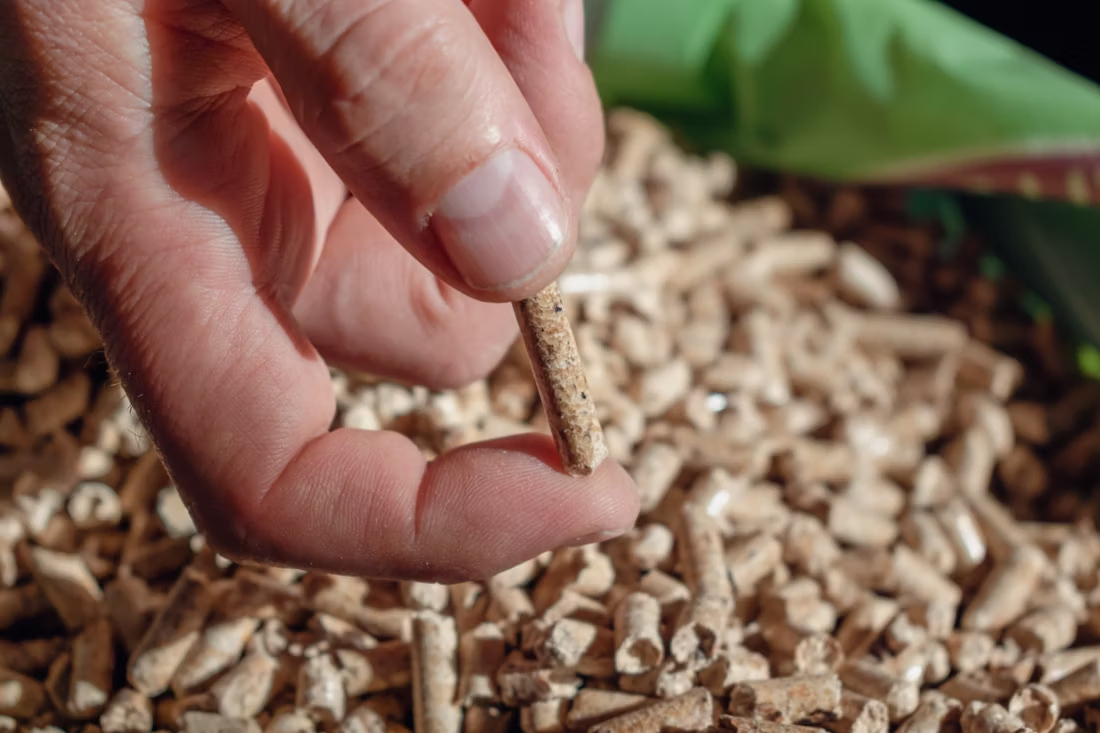
Regional pellet supply comes primarily through Lignetics and Indeck Energy Services, both of which distribute into this part of Oklahoma, so homeowners in Jay, Grove, Colcord, and Kansas aren't stuck driving hours for fuel. A pellet stove or insert gives you clean, consistent radiant heat, a hopper that can run 24 to 48 hours on a fill, and none of the smoke or ash volume that comes with a wood-burning setup—a real advantage for lake homes and part-time residences around Grand Lake that sit empty for stretches during the week.
Three steps. No salesperson until you're ready.
Tell us about your project
Your zip code, your situation, and the fuel you're leaning toward—or let the answers point you to one.
See what's actually available
The brands dealers within 100 miles genuinely carry—real options, never a catalog mirage.
Get your dealer & Project Guide
A trusted local dealer, plus the free Project Guide & Parts List that names every component of the job.
Frequently Asked Questions
How much does a pellet stove installation cost in Delaware County?
Pellet stove and insert installations in Delaware County typically run in line with national averages, generally landing between $3,000 and $6,500 depending on the unit, whether you need a new vent run through an exterior wall, and whether it's a freestanding stove versus an insert going into an existing fireplace. Because pellet stoves vent through a simple wall-through pipe rather than a full masonry chimney, installs in Delaware County tend to be faster and less invasive than a wood stove project—often a single day once the unit is on site. A local dealer can give you a firm number after seeing your fireplace opening or the wall where a freestanding unit would go.
Do I need electricity for a pellet stove to run?
Yes—this is the one tradeoff worth understanding before you commit. Pellet stoves rely on an electric auger to feed fuel and a blower to distribute heat, so they won't run during a power outage unless you add a battery backup. For Delaware County homes near Grand Lake that occasionally lose power during spring storms, that's worth planning for. Some homeowners pair a pellet stove with a small backup battery or generator; others keep a wood-burning option as backup heat. It's a fair question to raise with your local dealer when you're comparing pellet against wood or gas.
What size pellet stove do I need for my home?
Given Delaware County's relatively moderate 4,060 heating degree days, most homes here don't need the largest units on the market. Small to mid-size pellet stoves (rated for 1,000 to 1,800 square feet) handle the majority of homes around Jay, Grove, and Kansas, especially when the stove is supplementing central heat rather than replacing it entirely. Larger lake houses or homes used as primary residences through winter may want a unit sized closer to 2,000 square feet of coverage. A local dealer will look at your square footage, ceiling height, and insulation before recommending a specific model—oversizing a pellet stove wastes fuel and can cause it to cycle inefficiently.
Where can I buy pellet fuel near me in Delaware County?
Pellet fuel in this part of Oklahoma comes largely through regional distributors like Lignetics and Indeck Energy Services, with bags typically sold through hardware stores, farm supply retailers, and hearth dealers in and around Grove and Jay. Buying a season's supply early—before the first cold snap hits in late fall—is the standard local strategy, since demand spikes and some retailers sell out of premium hardwood pellet brands. Your local dealer can usually point you toward the closest reliable supplier when you have your unit installed.
What's the difference between a pellet stove and a pellet insert?
A pellet stove is a freestanding unit that sits on its own base and can be placed almost anywhere with access to an exterior wall for venting—a common choice for Delaware County homes without an existing fireplace. A pellet insert is built to slide into an existing masonry or prefab fireplace opening, using a shorter vent run and giving you a similar look to a traditional fireplace with pellet convenience. For homes around Grove and Kansas with an existing wood-burning fireplace that doesn't get much use, an insert is often the more cost-effective upgrade path since it reuses the existing opening.
Do I need a permit to install a pellet stove in Delaware County?
Requirements vary by jurisdiction within Delaware County—homes inside city limits in Jay or Grove may fall under municipal building code, while rural and unincorporated areas around the lake typically follow county requirements. Most local hearth dealers handle the permitting as part of the installation, so you generally won't need to navigate it yourself. It's worth confirming with your installer up front, especially if you're in a newer lake-area development that may have its own HOA or fire code rules on venting placement.
How often does a pellet stove need cleaning and maintenance?
Pellet stoves need more frequent light maintenance than wood stoves but far less deep cleaning. Plan on emptying the ash pan every few days to weekly depending on use, and a full cleaning of the burn pot, exhaust vent, and hopper roughly once a season—typically before the burning season starts in fall. Because Delaware County pellet stoves are often run daily through the winter for consistent heat, sticking to a regular ash-pan schedule keeps the auger feeding smoothly and prevents the unit from underperforming. Most local dealers offer an annual service visit if you'd rather not do it yourself.
Are pellet stoves eligible for any tax credits or rebates?
High-efficiency pellet stoves (75% efficiency or higher, per manufacturer specification) have qualified for the federal biomass stove tax credit in recent years, which can offset a meaningful portion of both equipment and installation cost. Availability and percentage change based on current federal tax law, so check with your installer or a tax professional at the time of purchase for what applies to your specific unit. Local dealers serving Delaware County generally know which models in their lineup are currently certified.
Pellet vs. wood—which is right for my home in Delaware County?
Wood stoves burn cordwood—often oak or hickory cut locally—work without electricity, and appeal to homeowners who want the traditional fire experience and true backup heat during outages. Pellet stoves trade that self-sufficiency for convenience: load the hopper, set the thermostat, and let the auger do the rest, with less ash and more consistent output. For Delaware County's moderate winters, either fuel comfortably handles the coldest stretches—the decision usually comes down to whether you want the hands-on ritual of tending a wood fire or the set-and-forget convenience of pellets, and whether backup heat during a power outage matters for your situation, especially for lake-area homes that see occasional storm-related outages.
Why is a fireplace insert so efficient?
An insert does two things: it seals the chimney completely, so you stop losing air you already paid to heat, and it radiates warmth into the room through the firebox and glass. Most add a heat-exchange fan that pulls cool room air underneath, wraps it around the hot firebox, and pushes it back out warm. Your home is more efficient before you've even lit the first fire.
How often does a pellet stove need cleaning?
A clean pellet stove is a happy pellet stove. Plan on cleaning the burn pot about once a week when you're burning regularly—ash and clinkers gum up the air holes just like a pellet barbecue. Most pellet stove problems trace back to skipped cleaning that nobody explained up front. Some designs make it easy with a trapdoor burn pot: pull a lever and the gunk drops into the ash pan.
Can I install a fireplace myself?
If you're putting a fire in your house on purpose, it's best to work with an expert. Unless you're genuinely experienced in framing, gas line, vent pipe, and the national code on clearances to combustibles, have a professional do it—and ideally the same company that sells you the fireplace, so warranty, service, and liability all live under one roof.
How much should I budget for a fireplace?
For an average home—covering the fireplace, the vent pipe, and basic installation—a budget between $3,900 and $5,500 gives you a lot of options across wood, gas, and pellet. By the time you add finish work, gas line, and electrical, the average complete installation lands between $5,000 and $12,000 all-in. In a remodel or new build, a good rule is to put about 2.5% of the total project cost toward the fireplace.
Pellet Brands Stocked Around Delaware County
Manufacturers will point you to the nearest stocking dealer.
Get your free Delaware County pellet stove Project Guide & Parts List.
Tell us about your home and we'll match you with a trusted local dealer and send a free plan for your pellet project—exact parts, the right vent kit, and a dealer who can install it correctly.
Find Your Fireplace →