
Instant warmth for your Grand Lake home—no chimney required.
From lakeside cabins on Grand Lake o' the Cherokees to homes in Jay and Grove, electric fireplaces give Delaware County homeowners real ambiance and supplemental warmth without venting, gas lines, or masonry work. Find the right unit and get matched with a trusted local dealer.
Every Project Starts From One of These Five Situations
Simple, safe heat for lake homes and mild winters.
Delaware County sits in northeastern Oklahoma's Cherokee Nation, wrapped around Grand Lake o' the Cherokees, with Jay as the county seat and Grove as the largest town. At climate zone 3A with a modest winter heating season and an average winter low around 23°F, the heating load here is modest—a fraction of what a place like Bismarck, ND racks up in a single winter. Winters are short, cold snaps are real but brief, and most homes need supplemental warmth more often than a full-time furnace substitute. That combination is exactly where electric fireplaces earn their keep.
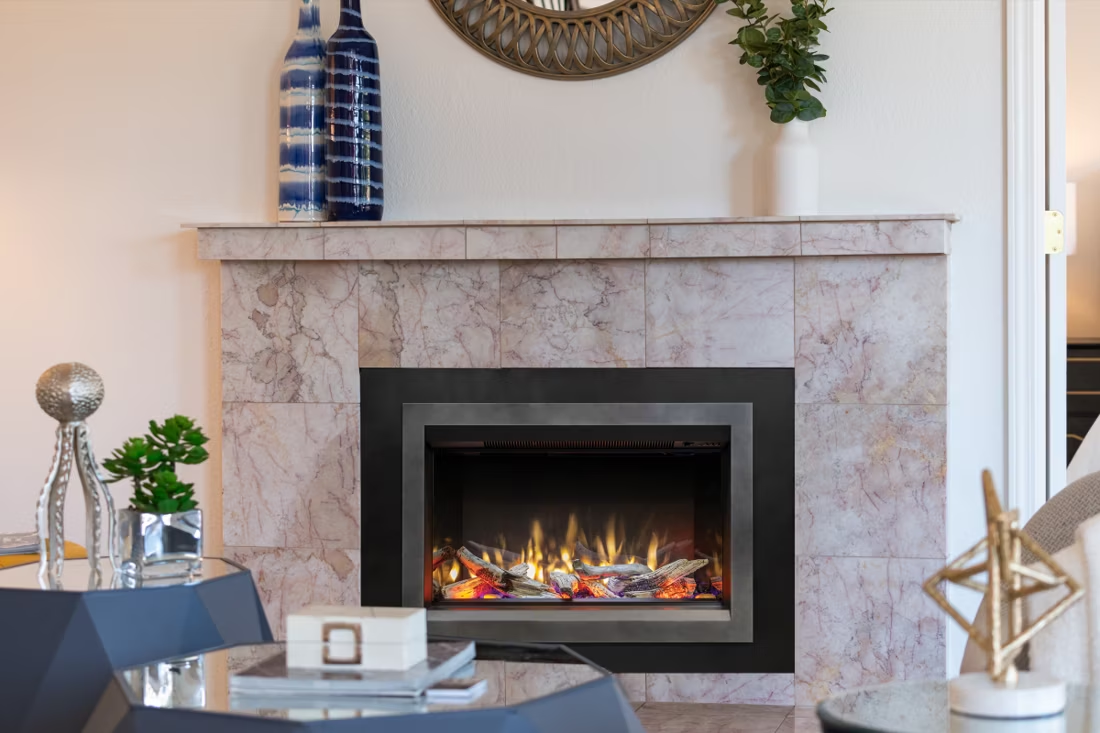
A large share of the housing stock around the lake is second homes, vacation rentals, and cabins where running a gas line or building a chimney doesn't make sense—and where landlords and property managers want a heat source that's plug-in simple for guests. Electric inserts drop into an existing masonry firebox in older Jay and Grove homes, while freestanding and wall-mounted units work in manufactured homes and additions that were never built with a flue at all. No venting, no combustion byproducts, no annual chimney sweep—just a switch and a thermostat.
Three steps. No salesperson until you're ready.
Tell us about your project
Your zip code, your situation, and the fuel you're leaning toward—or let the answers point you to one.
See what's actually available
The brands dealers within 100 miles genuinely carry—real options, never a catalog mirage.
Get your dealer & Project Guide
A trusted local dealer, plus the free Project Guide & Parts List that names every component of the job.
Frequently Asked Questions
How much does an electric fireplace installation cost in Delaware County?
Plug-in electric fireplaces and inserts are the least expensive hearth option available—many units simply need a standard 120V outlet and no professional installation at all. Built-in or wall-recessed electric fireplaces that require framing, a dedicated circuit, or trim-out work typically run a few hundred dollars up to around $2,000 installed, depending on the unit size and whether an electrician needs to add a new circuit. Compare that to the cost of adding a gas line or building a masonry chimney in a lake home that has neither, and it's clear why electric is a popular retrofit around Grand Lake.
What's the difference between an electric insert and a built-in electric fireplace?
An electric insert is sized to slide into an existing masonry firebox—common in older homes around Jay and Grove that have a fireplace opening but no interest in burning wood anymore. A built-in electric fireplace is a linear or traditional unit designed to be framed into a wall during a remodel or new build, with no existing firebox required. For lake cabins and rentals without any masonry fireplace at all, a freestanding electric stove or a simple wall-mount unit is often the fastest and cheapest path to adding heat and ambiance.
Will an electric fireplace actually heat my home, or is it just for looks?
Most electric fireplaces include a 1,500-watt heater capable of warming a single room—typically 400 to 1,000 square feet depending on insulation and ceiling height. Given Delaware County's relatively mild heating load (a modest winter heating season, with winter lows averaging in the low 20s), an electric unit is a realistic supplemental heat source for a living room, sunroom, or lake house den, and some homeowners run them as their primary heat for a shoulder-season cabin. They're not designed to replace a central furnace in a full-size home during a hard freeze, but for the kind of intermittent, mild-winter heating this area sees, they carry real weight, not just ambiance.
Do I need a permit or an electrician to install an electric fireplace?
Plug-in units that use a standard outlet generally don't require a permit. Built-in electric fireplaces that need a new dedicated circuit—which is common for larger units pulling a full 1,500 watts continuously—should be wired by a licensed electrician, and any framing or wall modification in Delaware County may fall under local building permit requirements. A local dealer familiar with the county's rural and lake-property mix can tell you upfront whether your specific unit and installation location trigger a permit.
Electric vs. wood—which makes more sense for my Delaware County home?
Wood remains a strong option here—oak, hickory, and mesquite are all common regional species, and a wood stove or insert works even when the power is out, which matters during the ice storms that occasionally hit northeastern Oklahoma and knock out electric service for days. Electric fireplaces, by contrast, need power to run and go dark in an outage. For a primary lake house that's occupied through winter storms, wood or a hybrid setup is worth considering. For a second home, rental, or a room where the goal is ambiance and easy supplemental warmth rather than off-grid resilience, electric is simpler to own and requires zero fuel handling.
Electric vs. pellet—which is right for my home?
Pellet stoves burn compressed wood pellets—regional brands like Lignetics and Indeck Energy Services supply this area—and deliver more real heat output than an electric unit, but they need periodic hopper loading, ash cleanout, and a power source for the auger and blower, so they're not a backup option in an outage either. Electric fireplaces skip the fuel entirely: no bags to store, no ash, no venting. For Delaware County homeowners who want convenience over raw heat output—especially in a lake home used seasonally—electric is the lower-maintenance choice. For anyone wanting a meaningful heat source with a lower operating cost than electric resistance heat, pellet is worth a look.
Will my electric fireplace work during a power outage?
No—electric fireplaces require electricity to run the heater, lights, and controls, so they shut off during an outage just like any other plugged-in appliance. This matters in Delaware County, where winter ice storms can take down power lines in rural areas around the lake for extended stretches. If backup heat during outages is a priority for your household, pair an electric fireplace (for everyday convenience and ambiance) with a wood-burning unit or a generator, rather than relying on electric alone as your only heat source.
What's the best electric fireplace for a lake house or rental property?
For cabins and rental properties around Grand Lake, look for units with a simple remote or wall-switch control, adjustable heat settings so guests can run flame-only in warmer months, and a flush or recessed profile that won't get bumped or damaged with turnover between renters. Freestanding electric stoves are popular for their portability if a property changes layout, while wall-mounted linear units suit modern lake house remodels. A local dealer can match wattage and size to your specific room and let you know which models hold up best to seasonal, lower-maintenance rental use.
Electric vs. gas fireplace—which should I choose?
Gas fireplaces deliver more heat output and a more traditional flame appearance, but they require either a natural gas line or a propane tank, plus venting for most models—real cost and complexity to add to a home that doesn't already have gas service, which describes a good number of rural properties and lake cabins in Delaware County. Electric fireplaces skip all of that: no fuel line, no venting, and a lower installed cost, in exchange for a lower ceiling on heat output and a flame effect that's convincing but not identical to real combustion. For a quick ambiance upgrade or supplemental warmth in a home without gas infrastructure, electric is usually the more practical choice.
Can I put a TV above my fireplace?
Yes—with an asterisk. Fireplaces are hot and TVs don't like heat. Either put a mantel between them to deflect rising warmth, or choose a fireplace with heat-management technology that creates a cool zone on the wall above—the wall stays around 125 degrees, barely warm, while the room still gets full heat. If you like clean lines and don't want a mantel, heat management is the answer.
Do electric fireplaces actually produce heat?
Yes—most put out around 4,800–5,000 BTUs from a standard outlet, which comfortably warms a bedroom, office, or den as a comfort-zone heater. What they won't do is carry a whole house the way wood, gas, or pellet can. Think of electric as ambiance-first with honest supplemental heat: flames on with no heat in July, flames plus warmth in January.
Can a fireplace actually lower my heating bill?
Yes—by creating a comfort zone. A furnace heats every square foot of the house just to warm the one room you're in; a gas fireplace on low burns roughly a sixth of the gas a typical furnace does. Set the furnace around 55–60 degrees as a baseline, then heat the rooms your family actually uses. Families who heat this way commonly save $20–$60 a month.
What is an in-home preview and do I need one?
It's a visit where a hearth professional measures your space, confirms the model you picked actually works in your home, and walks the specs—framing, gas line, venting, finish work—before anything is ordered. Some details you just can't know until you see the house. Never make a down payment without one; it's the single most-skipped step that burns buyers.
Find your electric fireplace in Delaware County.
Tell us a bit about your home—lake cabin, rental, or full-time residence—and we'll put together a free Project Guide & Parts List with the right electric fireplace or insert for your space, plus a match to a trusted local dealer who can install it.
Find Your Fireplace →