
Find the right pellet stove for Craig County winters.
Consistent, low-maintenance heat for Craig County's mild but real winters—from Vinita to Big Cabin to Welch. I'll match you with a trusted local dealer who can size the unit and get it installed correctly.
Every Project Starts From One of These Five Situations
Steady heat without the woodpile.
Craig County sits in northeastern Oklahoma's Climate Zone 3A, with an average winter low around 26°F and roughly 3,685 heating degree days a year—far milder than the northern cold-climate counties where wood is a survival necessity, but still cold enough for regular winter heating from November through February. Compare that to a place like Fargo, ND, which sees more than 9,000 HDD a year, and it's clear Craig County homeowners are heating for comfort and cost control, not for keeping pipes from freezing during weeks of subzero cold.
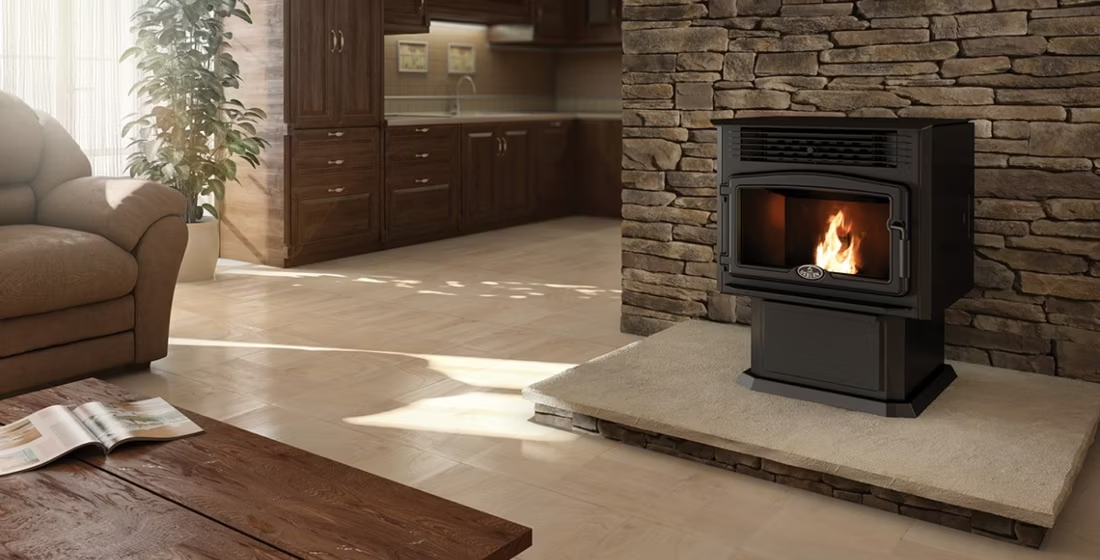
That's exactly the profile where pellet stoves shine. A pellet stove gives you thermostat-like control, a steady burn without constantly feeding a firebox, and none of the splitting, stacking, or seasoning required for cordwood from local oak, hickory, or mesquite. There's no local air quality non-attainment designation in Craig County, so burning isn't restricted the way it can be in western basin counties—but pellet's real appeal here is convenience and predictable heating costs for homes in Vinita, Big Cabin, Welch, and the surrounding rural county.
Three steps. No salesperson until you're ready.
Tell us about your project
Your zip code, your situation, and the fuel you're leaning toward—or let the answers point you to one.
See what's actually available
The brands dealers within 100 miles genuinely carry—real options, never a catalog mirage.
Get your dealer & Project Guide
A trusted local dealer, plus the free Project Guide & Parts List that names every component of the job.
Frequently Asked Questions
How much does a pellet stove installation cost in Craig County?
A typical pellet stove or insert installation in Craig County runs on the lower end of the national range, generally $2,500 to $6,000, since Craig County's mild 3A climate and modest heating load rarely require the largest hopper units or complex venting runs that drive up costs in colder regions. Pellet venting is simpler than wood-burning masonry work—most installs use a small-diameter PL vent pipe through an exterior wall rather than a full chimney system, which keeps labor and materials down. Homes converting an existing masonry fireplace to a pellet insert usually land toward the middle of that range once a liner and surround kit are factored in. A local dealer can give you a firm number after seeing your home.
What size pellet stove do I need for my Craig County home?
Given Craig County's relatively mild heating demand—an average winter low around 26°F and about 3,685 heating degree days—most homes here don't need the largest hopper-capacity units built for northern cold-climate zones. A small to mid-size pellet stove (rated for 1,000 to 1,800 square feet) covers most Vinita and Big Cabin homes as a primary or supplemental heat source. Larger, older farmhouses in the rural parts of the county with less insulation may want to size up slightly. A local dealer will walk your home and factor in square footage, ceiling height, and insulation before recommending a specific model.
Where can I find pellet fuel in Craig County?
Regional pellet brands like Lignetics and Indeck Energy Services supply much of northeastern Oklahoma, and local hearth retailers and farm supply stores typically stock bags seasonally, with heavier availability from fall through late winter. Because Craig County's burn season is shorter than in colder states, it's worth buying your season's supply early in fall before local stock runs low—a common pattern in mild-winter counties where retailers order conservatively. A trusted local dealer can also point you toward the most consistent supply source near Vinita or Welch.
What's the difference between a pellet stove and a pellet insert?
A pellet stove is a freestanding unit that sits on its own hearth pad and vents through a wall or existing chimney chase—it can go almost anywhere in a room with the right clearances. A pellet insert is built to slide into an existing masonry fireplace opening, converting an old open hearth into a controlled, efficient heat source while reusing the existing chimney as a chase for the smaller vent pipe. For Craig County homes with an existing wood fireplace that's rarely used, an insert is often the simpler upgrade. Homes without an existing fireplace opening are better suited to a freestanding stove.
Do I need a permit to install a pellet stove in Craig County?
Most jurisdictions in Craig County require a building permit for a new pellet stove installation, particularly for the venting penetration through an exterior wall or roof. Requirements can vary between incorporated Vinita and unincorporated parts of the county, so it's worth confirming with your local building office before work starts. In practice, the local dealer handling your installation typically manages the permitting as part of the job, so you're not left coordinating it yourself. Because Craig County has no air quality non-attainment designation or burn curtailment program, there are no seasonal burning restrictions to navigate the way there are in some western states.
What's the best pellet stove for Craig County's climate?
With winters that dip into the mid-20s rather than deep subzero territory, Craig County homeowners generally don't need the extreme-cold-rated units built for northern climates like Bismarck, ND. Mid-size units from established pellet brands offer plenty of output for supplemental or even primary heat in most homes here, with the advantage of running quieter and burning less fuel per season than an oversized unit would. If you want backup heat during winter storm power outages, ask your dealer about battery-backup options for the auger and blower motor, since standard pellet stoves require electricity to run.
How often does a pellet stove need cleaning and maintenance?
Pellet stoves need routine ash removal from the burn pot every few days during regular use, plus a more thorough cleaning of the hopper, auger, and venting once a season—typically before burn season starts in fall. Because Craig County's burn season runs shorter than in colder states, most homes here need less overall maintenance than a comparable stove running daily from October through April in a colder zone. An annual professional inspection is still worth scheduling, especially to check the exhaust fan and venting for pellet ash buildup.
Will my pellet stove work if the power goes out?
Not without a backup power source. Pellet stoves rely on an electric auger to feed fuel and a blower to distribute heat and exhaust combustion gases, so a standard unit shuts down in a power outage. For Craig County homeowners concerned about outages during winter ice storms, some pellet stove models offer optional battery-backup systems, or you can run the unit off a generator. If uninterrupted backup heat during outages is the priority, a wood stove or a gas unit with battery-backup ignition may be worth comparing—a local dealer can talk through the tradeoffs.
Pellet vs. wood—which is right for my Craig County home?
Wood offers real fire ambiance, lower fuel cost if you're cutting your own oak or hickory, and heat that keeps working during a power outage. Pellet offers thermostat-like consistency, easier day-to-day operation, less ash and mess, and no splitting or stacking cordwood. Given Craig County's mild 3685 HDD climate, either fuel handles the heating load without strain—this is really a lifestyle choice more than a climate necessity. Homeowners who want low-maintenance, consistent heat for a shorter burn season tend to lean pellet; those who value self-sufficiency and already have wood access tend to stick with cordwood. A local dealer can walk you through both options for your specific home.
How often does a pellet stove need cleaning?
A clean pellet stove is a happy pellet stove. Plan on cleaning the burn pot about once a week when you're burning regularly—ash and clinkers gum up the air holes just like a pellet barbecue. Most pellet stove problems trace back to skipped cleaning that nobody explained up front. Some designs make it easy with a trapdoor burn pot: pull a lever and the gunk drops into the ash pan.
Why is a fireplace insert so efficient?
An insert does two things: it seals the chimney completely, so you stop losing air you already paid to heat, and it radiates warmth into the room through the firebox and glass. Most add a heat-exchange fan that pulls cool room air underneath, wraps it around the hot firebox, and pushes it back out warm. Your home is more efficient before you've even lit the first fire.
Does a fireplace add value to my home?
On average, a fireplace adds back to the home about the same amount you spent installing it. Add the monthly savings from heating the rooms you actually use instead of the whole house—often hundreds of dollars a year—and the value case is strong before you even count what a fire does for how your family uses the room.
Can a fireplace actually lower my heating bill?
Yes—by creating a comfort zone. A furnace heats every square foot of the house just to warm the one room you're in; a gas fireplace on low burns roughly a sixth of the gas a typical furnace does. Set the furnace around 55–60 degrees as a baseline, then heat the rooms your family actually uses. Families who heat this way commonly save $20–$60 a month.
Pellet Brands Stocked Around Craig County
Manufacturers will point you to the nearest stocking dealer.
Find your pellet stove in Craig County.
Tell me a bit about your home and I'll match you with a trusted local dealer and send over your free Project Guide & Parts List—the plan, parts, and vent kit for your pellet project in Craig County.
Find Your Fireplace →