
Electric warmth for Craig County, without the chimney work.
No venting, no gas line, no chimney sweep—just a plug or a dedicated circuit. See what fits your home in Vinita, Big Cabin, Welch, or anywhere else in Craig County, and get matched with a trusted local dealer.
Every Project Starts From One of These Five Situations
Simple heat for a mild, humid winter.
Craig County sits in climate zone 3A—mixed-humid, with an average winter low around 26°F and a fairly light overall heating season. That's a fraction of what a place like Fargo, ND racks up in a single winter, and it means most Craig County homes need real heat for maybe four or five months, not year-round. For a lot of homeowners here—whether in a brick ranch in Vinita or a manufactured home outside Big Cabin—that math points toward electric: a unit that heats one room well without the cost or complexity of running gas lines or building a masonry chimney.
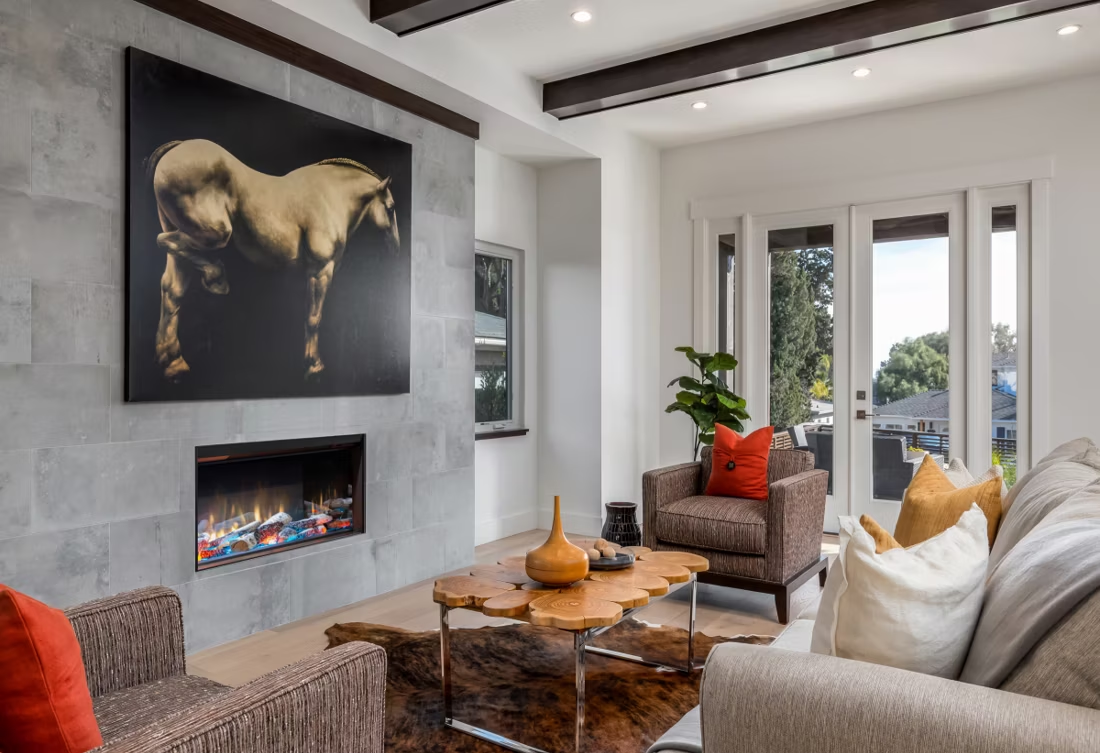
Electric also solves a housing-stock problem specific to rural counties like this one: a meaningful share of homes in Craig County are manufactured or modular, and retrofitting one with a wood-burning chimney or a gas line is often impractical. An electric insert or wall-mount unit installs into an existing opening, a stud wall, or a simple built-in surround with nothing more than standard household wiring—sometimes a dedicated 20-amp circuit for larger units. Power in the county comes through a mix of Northeast Oklahoma Electric Cooperative and AEP/PSO service territory depending on exactly where you are, and either way, a licensed electrician can usually complete the hookup in an afternoon.
Three steps. No salesperson until you're ready.
Tell us about your project
Your zip code, your situation, and the fuel you're leaning toward—or let the answers point you to one.
See what's actually available
The brands dealers within 100 miles genuinely carry—real options, never a catalog mirage.
Get your dealer & Project Guide
A trusted local dealer, plus the free Project Guide & Parts List that names every component of the job.
Frequently Asked Questions
How much does it cost to install an electric fireplace in Craig County?
Plug-in electric fireplaces and freestanding stoves are the cheapest option—often $300 to $800 for the unit itself, with no installation labor if you're just plugging into an existing outlet. Built-in electric fireplaces and inserts that require a licensed electrician to run a dedicated 120V or 240V circuit typically run $1,200 to $3,000 installed, including a surround or mantel package. That's well under the cost of a masonry wood fireplace or a gas line installation, which is part of why electric is such a common upgrade in older Craig County homes and manufactured housing around Vinita and Welch.
Will an electric fireplace actually heat a room in Craig County's winters?
For most of the county, yes. With an average winter low around 26°F and a fairly light overall heating season, Craig County's climate is considerably milder than the northern Plains—most electric fireplaces rated for 400 to 1,500 square feet will comfortably heat a living room or den during a typical cold snap. Where electric struggles is whole-home heating during the occasional Arctic blast that pushes temperatures well below freezing for days; on those nights, electric works best as a supplement to a central furnace or heat pump, not a sole heat source.
Do I need a permit to install an electric fireplace in Craig County?
Usually not for the unit itself—electric fireplaces don't involve combustion, venting, or gas lines, so most jurisdictions in Craig County don't require a mechanical or building permit the way they would for a wood stove or gas insert. If your installer needs to add a new dedicated circuit or breaker to your electrical panel, that portion of the work may need an electrical permit, which a licensed electrician pulls as a matter of course. It's worth confirming with whichever electrician or dealer handles your install, since requirements can vary slightly between the city of Vinita and unincorporated parts of the county.
What type of electric fireplace works best for a manufactured or mobile home in Craig County?
Wall-mounted and recessed electric units are the most common fit for the manufactured and modular homes common throughout rural Craig County, since they don't require load-bearing framing changes and can often be installed directly into an interior stud wall. Freestanding electric stoves are another good option if you'd rather not cut into a wall at all—they sit on the floor like a wood stove and plug into a standard outlet. Built-in electric fireplaces with full surrounds are more common in site-built homes around Vinita, where there's more flexibility to frame a custom opening.
How much does it cost to run an electric fireplace in Craig County?
Most electric fireplaces draw around 1,500 watts on the heat setting, which works out to roughly 10 to 15 cents per hour of use at typical Oklahoma electric rates through Northeast Oklahoma Electric Cooperative or AEP/PSO, depending on which serves your address. Run one for four hours a night through a cold spell and you're looking at somewhere around $12 to $18 a month in added electric cost—far less than most homeowners expect, and considerably cheaper than heating an entire house with a central system just to warm one room.
Will my electric fireplace work if the power goes out?
No—and this is worth knowing before you buy, especially in a county that sees its share of winter ice storms. Northeast Oklahoma has a real history with ice-related outages, and an electric fireplace, unlike a wood stove or a battery-backed gas unit, goes dark the moment the grid does. Plenty of Craig County households handle this by keeping a wood-burning stove or fireplace as backup heat for outages while using an electric unit for everyday convenience and ambiance in the main living space—the two fuels complement each other rather than compete.
Electric vs. wood-burning—which is right for my home?
Wood heat has deep roots in this part of Oklahoma, where oak, hickory, and mesquite are all locally available and burn well, and a wood stove keeps working when the power doesn't. But wood means chimney maintenance, ash cleanup, and sourcing or cutting fuel every year. Electric fireplaces skip all of that—no venting, no creosote, no smoke—but they depend entirely on the grid and don't add meaningful whole-home heat during a hard freeze. If you want everyday convenience and a fireplace look in a living room or bedroom, electric is usually the easier call. If you want heat that survives an ice storm, wood is still worth having somewhere in the house.
How long do electric fireplaces last, and what maintenance do they need?
A quality electric fireplace or insert typically lasts 10 to 15 years with minimal upkeep—there's no chimney to sweep and no burner to service. The main components that wear out are the heater fan and the LED ember or flame effect, both generally replaceable rather than requiring a whole new unit. Basic maintenance is limited to dusting the unit, occasionally vacuuming the vent grille to keep airflow clear, and replacing the flame-effect bulb every few years if your model uses one. That low-maintenance profile is a big part of why electric fireplaces get installed in rental properties and second homes throughout the county.
Where can I get an electric fireplace installed near me in Craig County?
A handful of hearth and home retailers serve the Vinita and Grand Lake area and will handle sizing, wall or surround installation, and any electrical work your unit needs. Because electric fireplaces are also popular for spaces central heat doesn't reach well—sunrooms, finished garages, bonus rooms above a carport—it's worth asking a local installer to walk the specific room with you rather than guessing off a box label. Working with a dealer who actually installs in Craig County means the unit gets sized to your room and wired correctly the first time, instead of returned because it didn't put out enough heat.
Can I put a TV above my fireplace?
Yes—with an asterisk. Fireplaces are hot and TVs don't like heat. Either put a mantel between them to deflect rising warmth, or choose a fireplace with heat-management technology that creates a cool zone on the wall above—the wall stays around 125 degrees, barely warm, while the room still gets full heat. If you like clean lines and don't want a mantel, heat management is the answer.
Do electric fireplaces actually produce heat?
Yes—most put out around 4,800–5,000 BTUs from a standard outlet, which comfortably warms a bedroom, office, or den as a comfort-zone heater. What they won't do is carry a whole house the way wood, gas, or pellet can. Think of electric as ambiance-first with honest supplemental heat: flames on with no heat in July, flames plus warmth in January.
Can I install a fireplace myself?
If you're putting a fire in your house on purpose, it's best to work with an expert. Unless you're genuinely experienced in framing, gas line, vent pipe, and the national code on clearances to combustibles, have a professional do it—and ideally the same company that sells you the fireplace, so warranty, service, and liability all live under one roof.
Can a fireplace actually lower my heating bill?
Yes—by creating a comfort zone. A furnace heats every square foot of the house just to warm the one room you're in; a gas fireplace on low burns roughly a sixth of the gas a typical furnace does. Set the furnace around 55–60 degrees as a baseline, then heat the rooms your family actually uses. Families who heat this way commonly save $20–$60 a month.
Find your electric fireplace in Craig County.
Tell us about your room and your home, and we'll match you with a trusted local dealer and send over a free Project Guide & Parts List—sized to your space, with the exact parts and electrical work your electric fireplace project needs in Craig County.
Find Your Fireplace →