
Pellet Heat for Cleveland County's Occasional Cold Snaps and Ice Storm Outages.
Cleveland County's winters are short and mild, so pellet stoves aren't the norm here the way they are up north—but for the right home, the right reasons, a pellet appliance can still make sense. Find out if it fits, and get matched with a local dealer.
Every Project Starts From One of These Five Situations
A mild climate means pellet stoves are the exception here.
Cleveland County—Norman, Moore, Noble, Lexington, Slaughterville, and the unincorporated stretches between them—sits in climate zone 3A with roughly 3,479 heating degree days and an average winter low around 28°F. That's a fraction of the heating demand you'd see in a place like Fargo ND or Duluth MN, where pellet stoves are a genuine primary-heat workhorse. Around here, gas furnaces and heat pumps carry almost the entire heating load, and both wood and pellet appliances are flagged as not-applicable fuels for the county—not because they don't work, but because the climate simply doesn't generate the sustained demand that makes them a common install.
That said, a small number of Cleveland County homeowners still install pellet stoves—usually for ambiance in a den or sunroom, supplemental heat in a detached workshop or garage apartment, or as a hedge against the ice storms that periodically knock out power across central Oklahoma. Pellet fuel itself isn't hard to source; Lignetics and Indeck Energy Services both distribute pellets into the region, so supply isn't the limiting factor. The limiting factor is that far fewer local hearth dealers stock and install pellet units compared to gas fireplace dealers, so finding one who does it right—proper clearances, correct venting, code-compliant electrical for the auger and blower—matters more here than in a market where every dealer sells them.
Three steps. No salesperson until you're ready.
Tell us about your project
Your zip code, your situation, and the fuel you're leaning toward—or let the answers point you to one.
See what's actually available
The brands dealers within 100 miles genuinely carry—real options, never a catalog mirage.
Get your dealer & Project Guide
A trusted local dealer, plus the free Project Guide & Parts List that names every component of the job.
Frequently Asked Questions
How much does a pellet stove installation cost in Cleveland County?
Because pellet stoves aren't a mainstream install in Cleveland County's mild climate, there isn't the kind of well-established local price range you'd find in a place with heavier pellet demand. Nationally, a freestanding pellet stove installation typically runs $3,000 to $6,000 depending on the unit, whether an existing chimney or wall can be used for venting, and whether new electrical needs to be run for the auger and blower motor. In a county with relatively few dealers carrying pellet equipment, it's worth getting an actual in-home quote rather than assuming a number—pricing can vary more dealer to dealer here than it would in a colder market with more competition.
Does a pellet stove make sense in Cleveland County's climate?
For most homes, no—not as a primary heat source. With around 3,479 heating degree days and winter lows averaging 28°F, Cleveland County's heating season is short and mild compared to northern climates where pellet stoves run daily for months. Where a pellet stove does make sense locally is as supplemental heat for a specific room, a workshop or converted garage that isn't on the main HVAC system, or a rural property where the owner wants a backup heat option. If you're heating a whole house, a gas furnace or heat pump remains the standard choice in this county—pellet is a niche add-on here, not a replacement.
Will a pellet stove keep my house warm during an ice storm power outage?
Not on its own, and this is the most common misconception. Pellet stoves rely on electricity to run the auger that feeds fuel and the blower that pushes heat into the room—no power means no fire, unlike a wood stove that burns without any electrical input. Central Oklahoma does see periodic ice storms that take down power for days at a time, so if backup heat during an outage is your main goal, a battery backup system or a generator sized to run the stove's electronics is a necessary add-on, not an afterthought. Some homeowners pair a pellet stove with a small UPS or inverter setup specifically for this reason—ask a local dealer about compatible options if outage resilience is part of why you're considering pellet.
What's the difference between a pellet stove and a wood stove?
A wood stove burns cordwood—split logs of species like the oak, hickory, and mesquite common to this part of Oklahoma—and needs no electricity to operate, just a match and a chimney draft. A pellet stove burns compressed wood pellets fed automatically from a hopper, which means more consistent heat and less mess, but it depends on electricity for the auger and blower. In Cleveland County, both fuels are considered niche given the mild climate, but pellet tends to appeal more to homeowners who want hands-off convenience for occasional use, while wood appeals to those who want a fuel source that works with the power off. Given that Cleveland County has no wood-smoke air quality restrictions, either option is workable from a regulatory standpoint—the choice comes down to how you plan to use it.
Where can I buy pellet fuel in Cleveland County?
Lignetics and Indeck Energy Services both distribute pellet fuel into the central Oklahoma region, and their bags are the ones most likely to show up at farm supply stores and home improvement retailers serving Norman, Moore, and the surrounding area. Because pellet stoves are a smaller market here, availability can be seasonal—some retailers stock heavily in fall and sell through by midwinter. If you're planning a pellet install, it's worth confirming with your dealer which brand pellets are locally stocked year-round versus special-order, since burn quality and ash content vary by pellet brand and stove model.
Do I need a permit to install a pellet stove in Cleveland County?
Yes, in most cases. Whether you're in Norman, Moore, Noble, or unincorporated Cleveland County, a new pellet stove installation typically requires a building permit covering the venting and any electrical work for the unit, since permitting is handled at the city or county level rather than through a single countywide office. Most hearth dealers who install pellet equipment will pull the permit as part of the job. If you're outside city limits, check with the Cleveland County building authority directly—permit requirements and inspection timelines can differ from what's required inside Norman or Moore.
Pellet stove vs. gas fireplace—which fits my Cleveland County home better?
Gas is the standard choice for most Cleveland County homes, and for good reason: natural gas and propane service are widely available, installation is well-supported by local dealers, and a gas fireplace or insert delivers instant, thermostat-controlled heat without any fuel storage or handling. Pellet stoves require you to buy and store bags of fuel, load a hopper regularly, and depend on electricity to run—a bigger ongoing commitment for a climate that doesn't demand much heating to begin with. Pellet still wins for homeowners who specifically want the visual and ambiance of a real flame with pellets' lower mess than cordwood, or who are heating an outbuilding without gas service. For most primary living spaces in this county, gas is the more practical fit.
Which pellet stove brands should I look at for Cleveland County?
Because pellet appliances are a smaller segment of the local hearth market, fewer dealers in Cleveland County carry a deep pellet stove lineup compared to gas fireplace brands. Fuel-wise, Lignetics and Indeck Energy Services are the pellet brands most reliably distributed into the region, so it's worth confirming that whatever stove you choose burns cleanly with locally available pellets rather than requiring a specialty brand you'd have to special-order. For the stove unit itself, ask a local dealer which models they actually stock and service—a stove with strong reviews but no local parts or service support is a bigger risk here than in a market with more pellet dealers to choose from.
Who actually installs pellet stoves in Cleveland County?
The homeowners who go this route tend to fall into a few groups: rural property owners in areas like Lexington or Slaughterville who want a backup heat option paired with a small generator, owners of detached workshops or garage apartments that aren't tied into central HVAC, and homeowners who simply like the look and low-maintenance convenience of a pellet flame in a den or sunroom. It's a much smaller group than in colder states, which is exactly why matching with a dealer who has actually installed pellet units before—rather than one who mostly sells gas fireplaces—makes a real difference in how the project turns out.
How often does a pellet stove need cleaning?
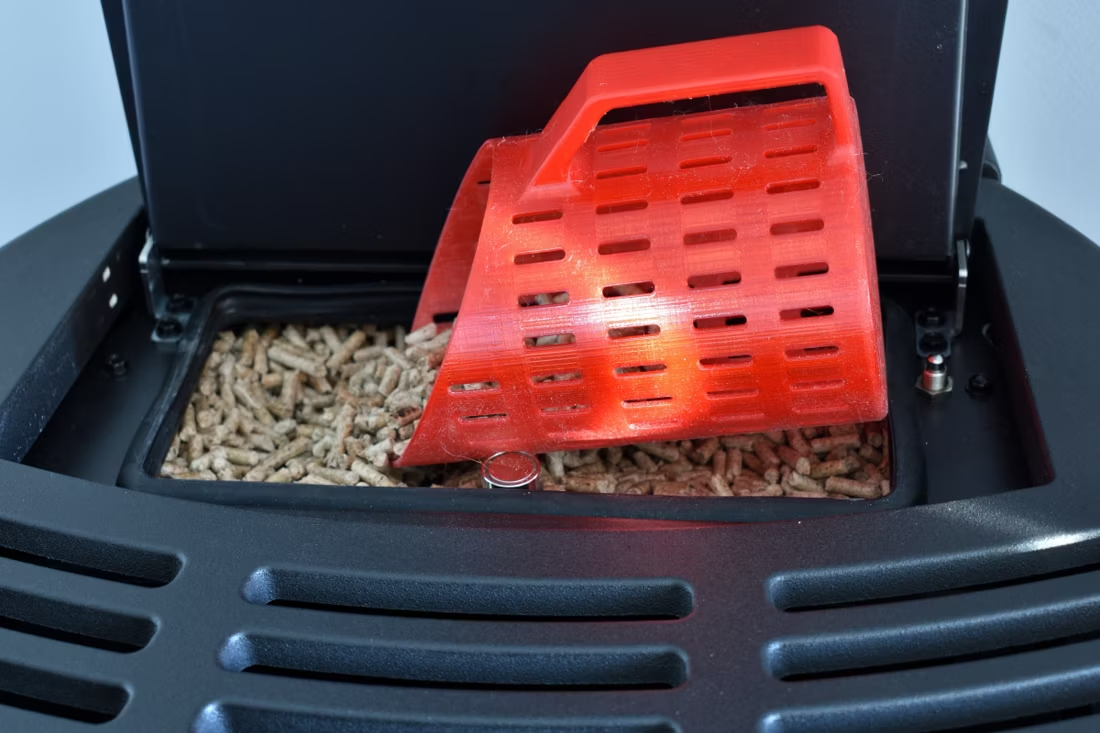
A clean pellet stove is a happy pellet stove. Plan on cleaning the burn pot about once a week when you're burning regularly—ash and clinkers gum up the air holes just like a pellet barbecue. Most pellet stove problems trace back to skipped cleaning that nobody explained up front. Some designs make it easy with a trapdoor burn pot: pull a lever and the gunk drops into the ash pan.
Are pellet stoves loud?
They make some noise—there are two fans running plus an auger motor that turns as it feeds pellets. But there's a real range: premium models are engineered quiet, and the best offer a whisper-quiet mode you can comfortably watch TV next to. If noise matters in your room, ask to hear a stove running before you buy—it's a five-minute test that saves years of annoyance.
How much should I budget for a fireplace?
For an average home—covering the fireplace, the vent pipe, and basic installation—a budget between $3,900 and $5,500 gives you a lot of options across wood, gas, and pellet. By the time you add finish work, gas line, and electrical, the average complete installation lands between $5,000 and $12,000 all-in. In a remodel or new build, a good rule is to put about 2.5% of the total project cost toward the fireplace.
Can a fireplace actually lower my heating bill?
Yes—by creating a comfort zone. A furnace heats every square foot of the house just to warm the one room you're in; a gas fireplace on low burns roughly a sixth of the gas a typical furnace does. Set the furnace around 55–60 degrees as a baseline, then heat the rooms your family actually uses. Families who heat this way commonly save $20–$60 a month.
Stove and Fireplace Dealers in Cleveland County
Pellet Brands Stocked Around Cleveland County
Manufacturers will point you to the nearest stocking dealer.
Find your pellet stove in Cleveland County.
Tell us about your home and how you plan to use a pellet stove, and we'll match you with a trusted local dealer who actually installs them—plus a free Project Guide & Parts List with the exact venting and parts your Cleveland County project needs.
Find Your Fireplace →