
Gas heat that keeps Cleveland County comfortable, not complicated.
Instant, reliable heat for Norman, Moore, Noble, and the rest of Cleveland County—natural gas through Oklahoma Natural Gas Company where the mains reach, propane where they don't. Find the right fireplace, insert, or stove, and connect with a trusted local dealer.
Every Project Starts From One of These Five Situations
Built for mild winters and the occasional ice storm.
Cleveland County anchors the southern edge of the Oklahoma City metro, home to Norman, Moore, and Noble, with roughly 204,000 residents across the county. Sitting in climate zone 3A, winters here are humid and mild—the average low hovers around 28°F, and the county logs about 3,479 heating degree days a year, a fraction of what a place like Fargo, ND or Minneapolis, MN racks up each winter. Most homes here don't need a wood-burning workhorse to make it through January; they need a fireplace that switches on instantly during a cold front and switches off just as easily the rest of the year.
That's where gas wins in Cleveland County. Oklahoma Natural Gas Company (ONG) serves the core of the county—Norman, Moore, and Noble—so most homes already have a gas meter and can add a fireplace without running new utility service. Out toward Lexington, Slaughterville, and the rural stretches along the Canadian River, propane fills the gap where ONG mains don't reach. Cleveland County has no winter air-quality restrictions or burn-ban seasons to navigate, so permitting a gas fireplace or insert is usually a straightforward process through your city building department. Plenty of older Norman and Moore homes still have the original oak- or hickory-burning masonry fireplace from the 1960s and 70s—a gas insert converts that fireplace into real, on-demand heat without giving up the mantel and brick surround you grew up with.
Three steps. No salesperson until you're ready.
Tell us about your project
Your zip code, your situation, and the fuel you're leaning toward—or let the answers point you to one.
See what's actually available
The brands dealers within 100 miles genuinely carry—real options, never a catalog mirage.
Get your dealer & Project Guide
A trusted local dealer, plus the free Project Guide & Parts List that names every component of the job.
Frequently Asked Questions
How much does a gas fireplace installation cost in Cleveland County?
A gas fireplace or insert installation in Cleveland County typically runs $3,000 to $9,000, depending on whether you're installing a direct-vent insert into an existing masonry fireplace (lower end, especially if a gas line already reaches the chimney) or a new built-in unit that requires framing, venting, and a fresh gas line run (higher end). Homes already on Oklahoma Natural Gas Company service usually land lower than a rural install near Lexington or Slaughterville that needs a new propane tank set. A local dealer will give you a firm number after an in-home walkthrough.
Can I convert my existing wood fireplace to gas?
Yes, and it's one of the more common upgrades in older Norman and Moore neighborhoods, where many mid-century homes were built around a wood-burning, oak- or hickory-fed masonry fireplace. A direct-vent gas insert slides into that existing firebox and vents through a stainless liner run up the same chimney, so you keep the original brick surround and mantel. Expect $3,500 to $8,000 depending on the insert and whether the home is already on ONG natural gas or needs propane.
Do I need natural gas, or can I use propane?
Most of Cleveland County's population centers—Norman, Moore, and Noble—sit inside the Oklahoma Natural Gas Company service territory, so if your home already has gas heat, a gas water heater, or a gas range, adding a fireplace usually just means a line branch to the new appliance. Out in Lexington, Slaughterville, and other unincorporated parts of the county where ONG mains don't run, propane from a regional supplier is the standard fallback, either from an existing tank or a new one set alongside the house. Nearly every gas fireplace on the market can be configured for either fuel.
Will my gas fireplace work during a power outage?
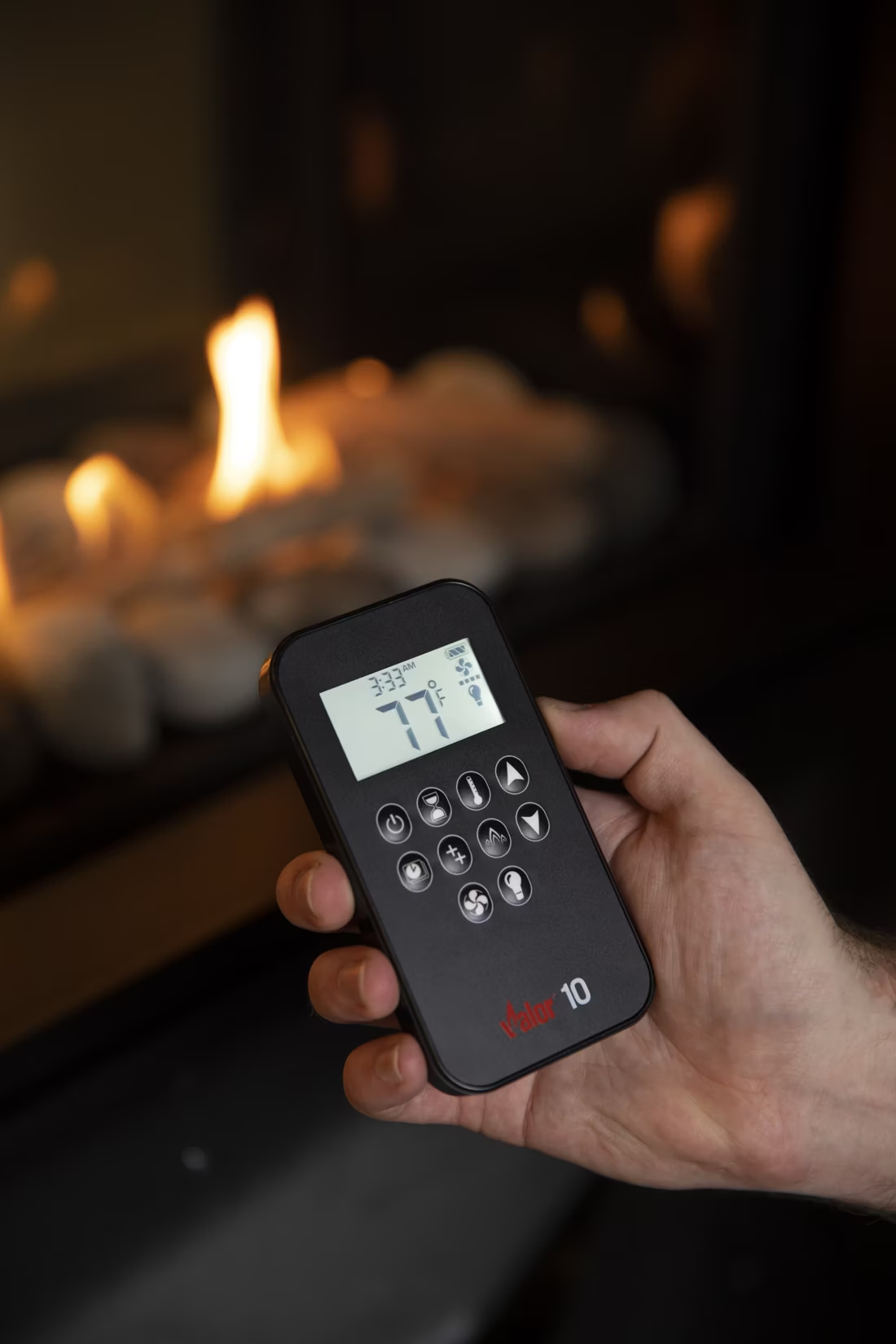
Yes, most direct-vent gas fireplaces are built to run without house power. Units with IPI (intermittent pilot ignition) carry a small battery backup that keeps the fireplace lighting on demand when the power drops—which matters in Cleveland County, where winter ice storms, more than sustained cold, are the usual cause of multi-day outages. Valor fireplaces take it a step further: their pilot assembly generates its own electricity through the thermocouple, so there's no battery to remember. Ask your local dealer about the ignition system on any model you're considering if outage backup matters to you.
What's the difference between a gas fireplace, gas insert, and gas stove?
A gas fireplace is a fully built-in unit framed into a wall—the right call for new construction or a remodel in a Norman or Moore subdivision without an existing hearth. A gas insert drops into an existing masonry firebox, which fits the older oak- or hickory-burning fireplaces common in Cleveland County's established neighborhoods. A gas stove is a freestanding, cast-iron-look unit that sits on the floor and vents through a wall or chimney, a good fit for a room with no fireplace at all. Most Cleveland County homeowners upgrading an existing fireplace end up choosing an insert.
Do I need a permit to install a gas fireplace in Cleveland County?
Yes. Gas fireplace installations in Cleveland County need a building permit and a gas line permit, typically pulled through your city's building department—Norman, Moore, and Noble each handle their own—or through the county for homes in unincorporated areas like Slaughterville or Lexington. The gas line portion has to be run by a licensed gas-fitter, which is one reason to hire a hearth dealer who coordinates the venting, framing, and gas work together instead of juggling separate trades yourself.
What's the difference between vented and vent-free gas fireplaces?
Vented (direct-vent or B-vent) fireplaces draw combustion air from outside and exhaust it back outside through a sealed pipe—the cleanest and most universally code-compliant option. Vent-free fireplaces burn directly into the room without outside venting; they're legal in Oklahoma, and since Cleveland County has no winter air-quality non-attainment issues to navigate, vent-free units face fewer local restrictions than they would in places dealing with winter inversion problems. That said, vent-free units still require correct room sizing and an oxygen depletion sensor, and most local dealers steer primary living-space installs toward direct-vent for the cleaner air and stronger heat output. Ask about both when you talk to a dealer.
How often should my gas fireplace be serviced?
An annual inspection is the standard recommendation for any gas fireplace or insert—checking the burner, pilot assembly, venting, and gas connections, and cleaning the glass. It's a lighter lift than sweeping a wood chimney, but skipping it for several years is how small pilot or venting issues turn into bigger repairs. Local gas appliance technicians serving Cleveland County typically charge in the $150-$250 range for the visit.
Gas vs. wood—which is right for my home?
Wood heat is genuinely rare in Cleveland County. With an average winter low around 28°F and roughly 3,479 heating degree days a year—a fraction of what a place like Duluth, MN logs in a single season—few homes need a wood stove to get through winter, and pellet stoves see even less use locally. Some older homes still have the original oak or hickory masonry fireplace, and homeowners occasionally burn wood there for ambiance or backup heat during an ice storm outage, since oak and hickory are both readily available regionally. But for day-to-day heat, gas is the practical choice here: instant on, no ash or creosote, and it matches the mild, short winters Cleveland County actually gets.
Can I put a TV above my fireplace?
Yes—with an asterisk. Fireplaces are hot and TVs don't like heat. Either put a mantel between them to deflect rising warmth, or choose a fireplace with heat-management technology that creates a cool zone on the wall above—the wall stays around 125 degrees, barely warm, while the room still gets full heat. If you like clean lines and don't want a mantel, heat management is the answer.
Why is my open fireplace making my house colder?
Open fireplaces suck—literally. As the fire burns, it consumes air your furnace already paid to heat and pulls it out through the chimney, so the house is actually colder after the fire goes out than before you lit it. An insert fixes this: it seals the chimney, puts fixed glass across the front, and turns that hole in your house into a real heat source.
Can a fireplace actually lower my heating bill?
Yes—by creating a comfort zone. A furnace heats every square foot of the house just to warm the one room you're in; a gas fireplace on low burns roughly a sixth of the gas a typical furnace does. Set the furnace around 55–60 degrees as a baseline, then heat the rooms your family actually uses. Families who heat this way commonly save $20–$60 a month.
Can I install a fireplace myself?
If you're putting a fire in your house on purpose, it's best to work with an expert. Unless you're genuinely experienced in framing, gas line, vent pipe, and the national code on clearances to combustibles, have a professional do it—and ideally the same company that sells you the fireplace, so warranty, service, and liability all live under one roof.
Stove and Fireplace Dealers in Cleveland County
Get your Cleveland County gas fireplace project moving.
Tell us about your Norman, Moore, or Noble home and we'll match you with a trusted local dealer and send over a free Project Guide & Parts List—the exact parts, vent kit, and recommended dealer for your gas fireplace or insert.
Find Your Fireplace →