
Steady heat for Cimarron County's high plains winters.
From Boise City to the ranch roads near the Colorado and New Mexico lines, Cimarron County's open, treeless plains make wind-driven cold a bigger factor than the thermometer alone. Find the right pellet stove or insert, and connect with a trusted dealer who can actually service this corner of the panhandle.
Every Project Starts From One of These Five Situations
Reliable heat without a woodlot.
Cimarron County is the westernmost county in the Oklahoma Panhandle and the only county in the country bordering four other states—Colorado, Kansas, New Mexico, and Texas. It's also one of the least populated, with roughly 1,404 residents spread across nearly 1,800 square miles of shortgrass high plains at around 4,500 feet elevation. Climate zone 4B here means cold, dry winters with hard freezes and wind chill that can make an open ranch house feel far colder than the actual air temperature—exposure closer to what you'd expect on the plains around Bismarck, North Dakota, than to the oak-hickory country of eastern Oklahoma.
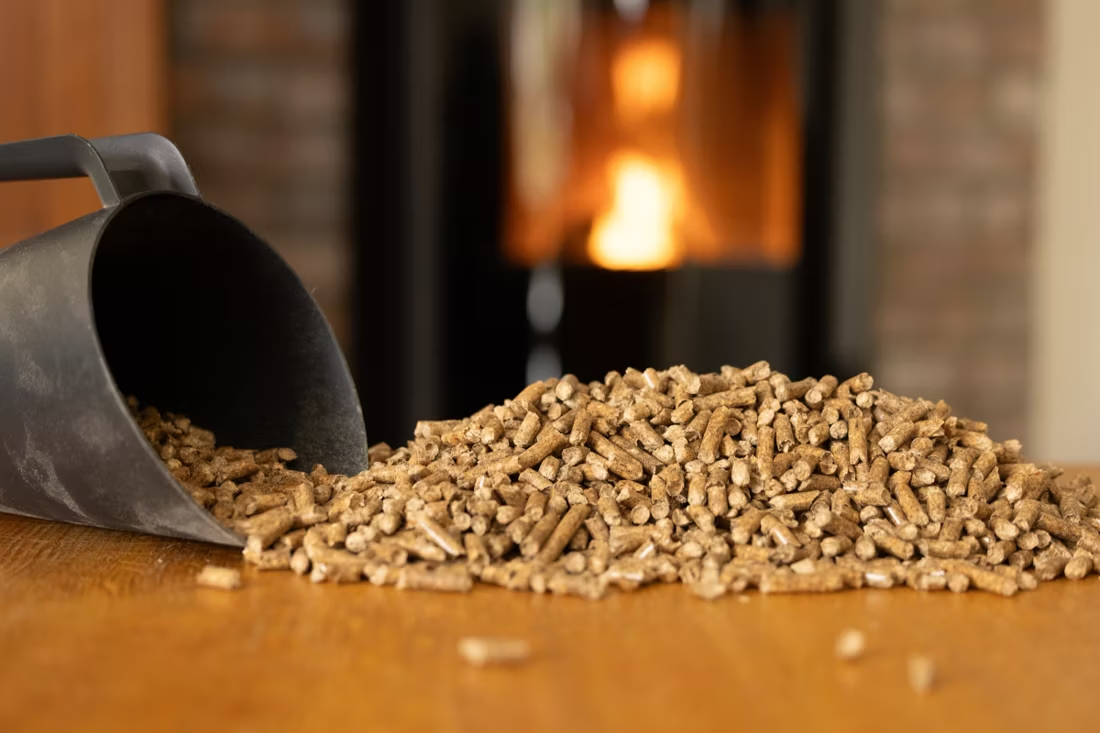
That last point matters for fuel choice. Unlike the oak, hickory, and mesquite country to the east and south, Cimarron County itself has almost no standing timber to cut—this is Dust Bowl-era shortgrass prairie, not forest. Bagged pellets from producers like Lignetics and Indeck Energy Services solve that problem: they can be trucked in and stacked in a mudroom or shed, no woodlot, chainsaw, or cutting permit required. A pellet stove's thermostat-controlled hopper also holds a steady burn through the wind events that regularly rattle panhandle homes, which is a real advantage over tending an open fire by hand.
Three steps. No salesperson until you're ready.
Tell us about your project
Your zip code, your situation, and the fuel you're leaning toward—or let the answers point you to one.
See what's actually available
The brands dealers within 100 miles genuinely carry—real options, never a catalog mirage.
Get your dealer & Project Guide
A trusted local dealer, plus the free Project Guide & Parts List that names every component of the job.
Frequently Asked Questions
How much does a pellet stove installation cost in Cimarron County?
There's no dedicated hearth dealer inside Cimarron County itself—with a county population of just 1,404, most installers cover the tri-state panhandle area from towns like Guymon or Liberal, Kansas. Once travel is factored in, a typical pellet stove or insert installation in this part of the panhandle runs roughly $3,000 to $6,000, depending on the unit, whether a hearth pad or vent-through-wall kit is needed, and how far the installer has to drive. Getting a firm number means having a dealer walk your specific home rather than guessing off a national average.
What size pellet stove do I need for a Cimarron County home?
Sizing depends on square footage and how exposed the house is to wind—and exposure matters more here than in most places. An older ranch house on open ground west of Boise City with little windbreak will lose heat faster than the same square footage tucked into a sheltered spot along the Cimarron River bottoms. As a rough guide, a small hopper unit handles up to about 1,000 square feet, a mid-size unit covers 1,000 to 2,000 square feet, and a large unit is meant for bigger or leakier homes. A local dealer sizing your home in person, accounting for insulation and wind exposure, will get you closer than any chart.
Where can I find a pellet stove dealer near Cimarron County?
Because the county is so sparsely populated, the nearest full-service hearth dealers are typically based outside county lines—in Guymon to the east, across the state line in Liberal, Kansas, or occasionally out of the Colorado or Texas panhandle. Find My Fireplace matches you with whichever trusted dealer actually covers your zip code and can get parts and pellets to your property, rather than pointing you to a big-box store that won't send anyone out for the install.
What's the difference between a pellet stove and a pellet insert?
A pellet stove is a freestanding hopper-fed unit that sits on its own hearth pad and vents through a wall or roof—it can go almost anywhere with the right clearances. A pellet insert is built to slide into an existing masonry fireplace opening, which matters if your Cimarron County home already has a wood-burning fireplace you'd rather not use for hauling cordwood in treeless country. Most rural panhandle homes without an existing fireplace go with a freestanding stove; homes with an older masonry hearth often convert to an insert instead.
Do I need a permit to install a pellet stove in Cimarron County?
Requirements are lighter here than in more populated Oklahoma counties. Cimarron County has limited building code enforcement outside Boise City's city limits, so many rural installations move forward with just a check-in with the county clerk's office rather than a formal permit process. If you're inside Boise City limits, it's worth confirming directly with the city before work starts. Either way, a reputable installer will make sure the unit meets manufacturer clearance specs and current venting standards regardless of what paperwork is or isn't required locally.
What pellets are available in Cimarron County, and does it matter which brand I use?
Lignetics and Indeck Energy Services are the two regional pellet brands most commonly stocked or delivered to this part of the panhandle. Brand matters less than consistency—a pellet stove's auger and burn pot are tuned to a fairly narrow moisture and ash content range, and switching between low-quality and premium bags can cause clinkers or feed jams. Given how far pellets have to travel to reach a county this remote, it's worth buying enough bagged fuel for the season in one or two deliveries rather than making repeat trips.
How often does a pellet stove need to be cleaned and serviced?
Plan on emptying and vacuuming the ash pan and burn pot every few days of regular use, and a full hopper, auger, and venting cleaning at least once a season—more often if you're running the stove daily through a full Cimarron County winter. An annual professional inspection is worth the drive from Guymon or wherever your installer is based, since it catches auger wear and gasket issues before they turn into a mid-winter breakdown, which is a bigger problem in a county with this little nearby service infrastructure.
Will my pellet stove work if the power goes out?
No—pellet stoves rely on electricity to run the auger that feeds fuel and the blower that distributes heat, so a power outage shuts the unit down even with a full hopper. That's a real consideration on the high plains, where ice storms and high wind events occasionally knock out rural electric lines for hours or longer. Homeowners in Cimarron County who want backup heat during outages often pair a pellet stove with a wood-burning option or a battery backup sized for the stove's electrical draw, rather than treating pellet as their only heat source.
Pellet stove vs. wood stove—which makes more sense out here?
Wood is available locally in the form of oak, hickory, and mesquite, but it generally has to be hauled in from ranch country or timbered areas well outside Cimarron County itself, since the county is open shortgrass prairie with little standing timber to cut. That logistics gap is exactly why pellet stoves have found a foothold here—bagged fuel from Lignetics or Indeck Energy Services is easier to source, store, and transport than cordwood in a county this treeless. Wood still has the edge if you want heat that keeps working through a power outage. For most homeowners without their own woodlot, pellet's convenience wins out.
What's the difference between an insert and a zero-clearance fireplace?
An insert is a fireplace that slides into a pre-existing wood-burning fireplace—if you don't have one, there's nothing to insert it into. A zero-clearance fireplace is built into a framed wall, which makes it the answer for remodels and new construction. Simple test: existing masonry fireplace means insert; blank or framed wall means zero-clearance.
How often does a pellet stove need cleaning?
A clean pellet stove is a happy pellet stove. Plan on cleaning the burn pot about once a week when you're burning regularly—ash and clinkers gum up the air holes just like a pellet barbecue. Most pellet stove problems trace back to skipped cleaning that nobody explained up front. Some designs make it easy with a trapdoor burn pot: pull a lever and the gunk drops into the ash pan.
Does a fireplace add value to my home?
On average, a fireplace adds back to the home about the same amount you spent installing it. Add the monthly savings from heating the rooms you actually use instead of the whole house—often hundreds of dollars a year—and the value case is strong before you even count what a fire does for how your family uses the room.
Can I install a fireplace myself?
If you're putting a fire in your house on purpose, it's best to work with an expert. Unless you're genuinely experienced in framing, gas line, vent pipe, and the national code on clearances to combustibles, have a professional do it—and ideally the same company that sells you the fireplace, so warranty, service, and liability all live under one roof.
Pellet Brands Stocked Around Cimarron County
Manufacturers will point you to the nearest stocking dealer.
Find your pellet stove in Cimarron County.
Tell us about your home and we'll match you with a trusted local dealer who covers this part of the panhandle, plus a free Project Guide & Parts List with the exact parts—including the vent kit—for your pellet project.
Find Your Fireplace →