
Electric heat that just works, even out past Black Mesa.
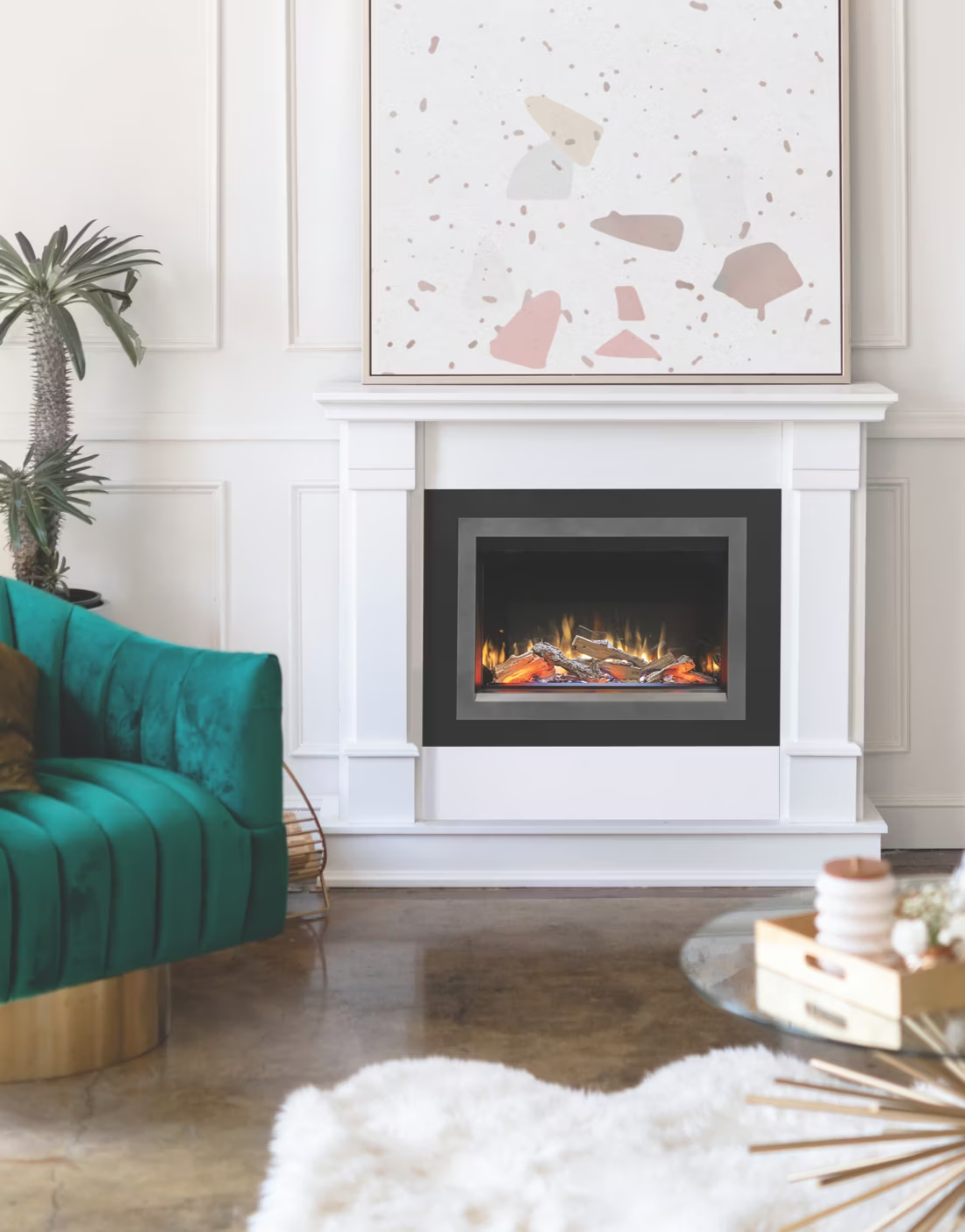
No gas line, no chimney, no cutting or hauling wood—just plug it in or wire it to the panel. Find the right electric fireplace or insert for your Cimarron County home and connect with a dealer who actually installs in this corner of the Panhandle.
Every Project Starts From One of These Five Situations
The simplest heat source in Oklahoma's most remote county.
Cimarron County sits at the far western tip of the Oklahoma Panhandle, where the state borders both New Mexico and Colorado at a single point. It's home to Black Mesa, Oklahoma's highest point at just under 5,000 feet, and to a population of only about 1,400 people spread across roughly 1,800 square miles—one of the emptiest counties in the state. Boise City is the county seat and the only incorporated town, which means a lot of homes here are ranch houses, manufactured homes, and older farmhouses well outside any city limit. Winters in this zone 4B high-plains climate are cold and dry with sharp, wind-driven cold fronts, but without the deep snow load or humidity that drives heavier wood-burning culture farther east in Oklahoma.
For a county this sparse, electric heat has real practical appeal. There's no gas line to run, no chimney to build or inspect, and no wood to split and stack—an electric fireplace or insert runs off the same wiring already feeding the house, supplied locally by Cimarron Electric Cooperative. That makes electric a strong fit for supplemental zone heating in a drafty ranch house, a manufactured home, or a room addition where running a flue or gas line isn't practical. It won't replace a wood stove or propane furnace as primary heat during a hard Panhandle cold snap, but for taking the edge off a bedroom or living room without touching the home's structure, it's the least disruptive option available in the county.
Three steps. No salesperson until you're ready.
Tell us about your project
Your zip code, your situation, and the fuel you're leaning toward—or let the answers point you to one.
See what's actually available
The brands dealers within 100 miles genuinely carry—real options, never a catalog mirage.
Get your dealer & Project Guide
A trusted local dealer, plus the free Project Guide & Parts List that names every component of the job.
Frequently Asked Questions
How much does an electric fireplace installation cost in Cimarron County?
Plug-in electric fireplace inserts and freestanding stoves are the cheapest end of the range, often $300 to $900 installed, since they just need a standard 120-volt outlet and no structural or venting work. Built-in electric fireplaces or larger wall units that require a dedicated circuit or minor electrical work typically run $800 to $2,000, depending on whether an electrician needs to run new wiring from the panel. Given how spread out Cimarron County is, expect any installer or electrician coming from Boise City, Guymon, or across the Texas Panhandle to factor in a trip charge for rural properties out toward Kenton or Felt.
Is an electric fireplace enough heat for a Panhandle winter?
For most Cimarron County homes, an electric fireplace is best treated as supplemental heat rather than a whole-house solution. The county's zone 4B climate brings cold, wind-driven fronts that can push temperatures well below freezing for days, and a typical electric unit is sized to heat a single room—usually 400 to 1,500 square feet depending on the model. It's a good fit for taking the chill off a living room, bedroom, or converted porch, or as backup warmth in a room where the central propane furnace struggles to keep up. For primary heat in an older, poorly insulated farmhouse, most local homeowners still lean on propane or wood as the main source.
Do I need a permit to install an electric fireplace in Cimarron County?
Cimarron County doesn't run a large residential building code office, and a simple plug-in electric fireplace or insert generally doesn't require a permit since it isn't touching gas lines or venting. If you're having a built-in unit hardwired or adding a new dedicated circuit, that electrical work should still meet National Electrical Code standards, and it's worth a call to the county clerk's office in Boise City to confirm whether any inspection is expected for your specific property. Rural electric cooperative members should also let Cimarron Electric Cooperative know if you're adding meaningful new load to an older service panel.
What's the difference between an electric fireplace, insert, and stove?
An electric fireplace is typically a built-in unit set into a wall, mantel, or media console—common in newer construction or remodels. An electric insert is sized to slide into an existing masonry or wood-burning fireplace opening, letting you keep the look of an old hearth while swapping out the mess of a real fire. An electric stove is a freestanding cabinet-style unit that can sit anywhere near an outlet, which makes it the easiest option for manufactured homes and older farmhouses around Cimarron County that don't have an existing fireplace opening to work with.
Will my electric fireplace work if the power goes out?
No—electric fireplaces stop working the moment power drops, which matters in a county served by a single rural electric cooperative and long feeder lines across open plains. Cimarron Electric Cooperative generally keeps service reliable, but Panhandle ice storms and high-wind events do occasionally take lines down for hours or longer, especially in the more remote stretches toward Kenton and Felt. Many longtime residents keep a propane heater or wood stove as backup for exactly this reason. If outage risk is a real concern for your household, that's worth factoring into whether electric is your only heat source or one of two.
Where can I buy and install an electric fireplace near Cimarron County?
With a population of about 1,400 spread across the whole county, there's no hearth showroom or big-box store inside Cimarron County itself. Most residents source electric fireplaces through dealers in Guymon (Texas County) or drive into the Amarillo, Texas market, and arrange installation through a local electrician for anything beyond a simple plug-in unit. Working with a dealer who's used to serving rural Panhandle properties matters here—they'll know to factor in travel distance and confirm your electrical service can handle the unit before you buy anything.
Electric vs. wood—which makes more sense for my Cimarron County home?
Wood has deep roots in this part of the Panhandle—oak, hickory, and mesquite from the creek bottoms and canyon country around Black Mesa have heated ranch houses here for generations, and wood keeps working through a power outage, which matters given the distances line crews sometimes have to cover. Electric wins on convenience: no cutting, hauling, ash cleanup, or chimney to maintain, and it's the easier retrofit for a manufactured home or an addition without an existing flue. Many households end up with both—wood or propane as the primary or backup heat, and an electric unit for quick, no-mess warmth in a bedroom or den.
Electric vs. propane—which is more practical out here?
Natural gas mains don't reach most of rural Cimarron County's low-density stretches, so propane is the standard alternative fuel for whole-house heating across the county, delivered by tank rather than pipeline. Propane appliances put out more heat and can run during a power outage with a standing pilot, which is a real advantage given the distances a co-op crew may need to travel after a storm. Electric fireplaces, by contrast, are simpler and cheaper to install and run cool to the touch, but they're tied entirely to grid power and are better suited to supplemental or secondary heat than as your only source through a Panhandle winter.
Are electric fireplaces expensive to run on Cimarron Electric Cooperative rates?
Electric heat is essentially 100% efficient at the point of use—every watt you pay for becomes heat in the room, with none lost up a flue the way it is with a wood or gas appliance. Actual running cost depends on your cooperative's per-kilowatt-hour rate and how many hours a day you run the unit, but a typical 1,500-watt electric fireplace run for a few hours each evening adds a modest, predictable amount to a monthly bill rather than a large one. For occasional supplemental heat in one room, most Cimarron County households find the running cost far more manageable than heating an entire drafty farmhouse with electric resistance alone.
Can I put a TV above my fireplace?
Yes—with an asterisk. Fireplaces are hot and TVs don't like heat. Either put a mantel between them to deflect rising warmth, or choose a fireplace with heat-management technology that creates a cool zone on the wall above—the wall stays around 125 degrees, barely warm, while the room still gets full heat. If you like clean lines and don't want a mantel, heat management is the answer.
Does an electric fireplace need a vent or chimney?
No—that's its superpower. An electric fireplace needs a wall and an outlet, period. No vent pipe, no gas line, no clearances to design around, which is why it works in bedrooms, offices, apartments, and walls where venting a gas or wood unit would be impractical or impossible. Installation is typically the simplest and least expensive of any fireplace type.
What is an in-home preview and do I need one?
It's a visit where a hearth professional measures your space, confirms the model you picked actually works in your home, and walks the specs—framing, gas line, venting, finish work—before anything is ordered. Some details you just can't know until you see the house. Never make a down payment without one; it's the single most-skipped step that burns buyers.
Can a fireplace actually lower my heating bill?
Yes—by creating a comfort zone. A furnace heats every square foot of the house just to warm the one room you're in; a gas fireplace on low burns roughly a sixth of the gas a typical furnace does. Set the furnace around 55–60 degrees as a baseline, then heat the rooms your family actually uses. Families who heat this way commonly save $20–$60 a month.
Find your electric fireplace in Cimarron County.
Tell us a bit about your home and we'll put together a free Project Guide & Parts List—the right electric fireplace or insert for your space, the exact parts you'll need, and a trusted local dealer to handle the install.
Find Your Fireplace →