
A Rare Choice in Choctaw—Installed Right.
Pellet stoves aren't the default heat source in central Oklahoma, but for the homeowners who want one, we'll connect you with a local dealer who can size it and install it correctly.
Every Project Starts From One of These Five Situations
Pellet stoves are the exception here, not the rule.
Choctaw sits in climate zone 3A with a short, mild heating season and an average winter low near 29°F—mild by any national comparison. Contrast that with Fargo, ND or Duluth, MN, where winters run far longer and colder and a wood or pellet stove often does real, load-bearing heating work all winter. In Choctaw, most homes lean on central gas furnaces or electric heat pumps served by Oklahoma Gas & Electric or Central Rural Electric Cooperative, and a pellet appliance is almost always a supplemental or ambiance choice rather than a primary heat source.
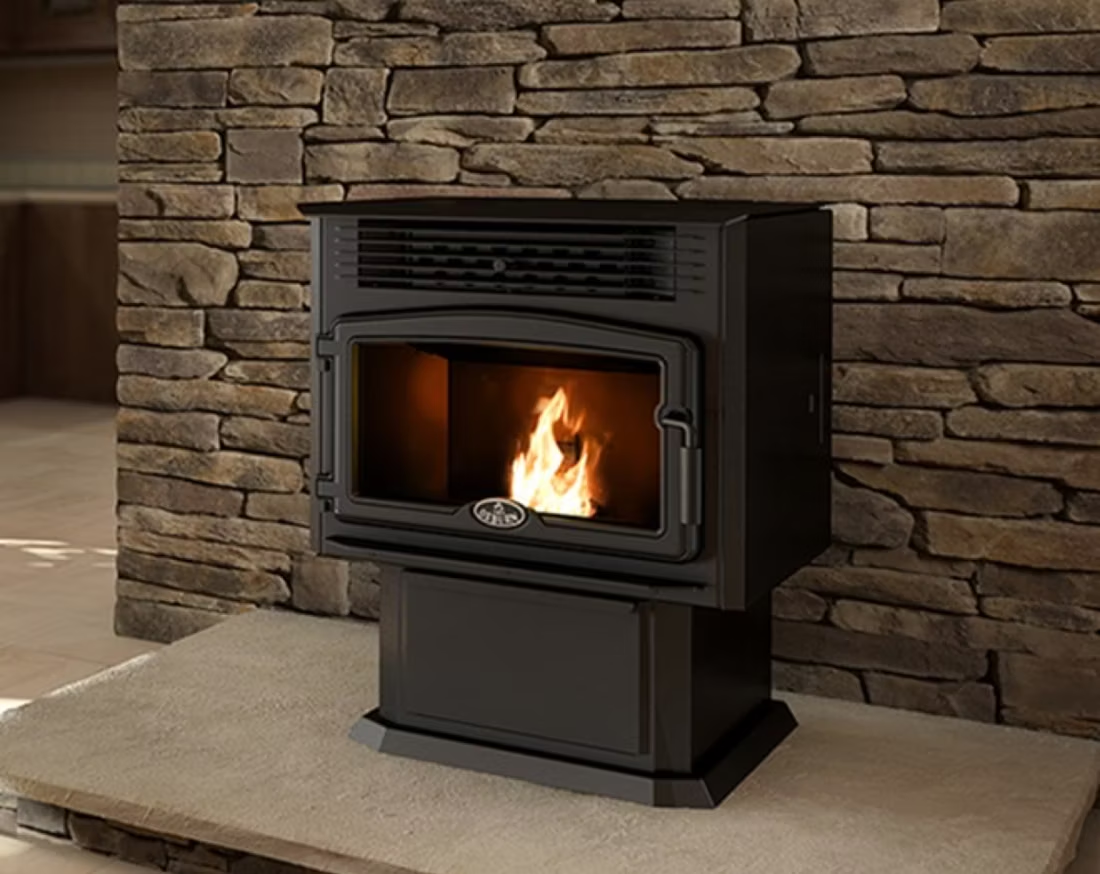
That said, pellet stoves aren't unavailable here—they're just uncommon. A small number of Choctaw homeowners install one for a warm room during the occasional hard freeze, for the look and low mess of a hearth without cordwood, or as backup for the ice storms that periodically knock out power across Oklahoma County. Regional pellet suppliers like Lignetics and Indeck Energy Services keep fuel accessible through hardware stores and farm supply outlets in the OKC metro, even though the local installer base is thinner than you'd find in a colder-climate market. If you're one of the households who wants one, working with a dealer who actually installs pellet units regularly—rather than someone who does it once a year—matters more here than almost anywhere else.
Three steps. No salesperson until you're ready.
Tell us about your project
Your zip code, your situation, and the fuel you're leaning toward—or let the answers point you to one.
See what's actually available
The brands dealers within 100 miles genuinely carry—real options, never a catalog mirage.
Get your dealer & Project Guide
A trusted local dealer, plus the free Project Guide & Parts List that names every component of the job.
Frequently Asked Questions
Are pellet stoves actually common in Choctaw?
Not especially, and it's worth saying plainly: with a short, mild heating season and winter lows averaging around 29°F, most Choctaw homes are built around central gas or electric heat, not supplemental wood-pellet appliances. Pellet stoves are far more common in colder markets—think Fargo, ND or Duluth, MN, where households burn multiple tons of pellets a season. In Choctaw, a pellet stove is usually a secondary comfort feature: a warm den, a converted garage, or a hedge against the ice storms that occasionally take out grid power in Oklahoma County.
What does a pellet stove installation typically cost?
Because pellet installs are infrequent in this part of Oklahoma, there isn't a deep local pricing history the way there is for gas or heat-pump work. Nationally, a pellet stove installation—unit, venting, hearth pad, and labor—typically runs $3,500 to $7,500, with the low end covering a straightforward freestanding stove and the high end covering longer venting runs or hearth modifications. A trusted local dealer will give you a firm number after seeing your space, since venting path and floor protection requirements swing the estimate more than the stove itself.
Will a pellet stove keep working if the power goes out during an ice storm?
Not on its own, and this trips people up in Oklahoma more than in most states. Pellet stoves rely on an electric auger to feed fuel and a blower to distribute heat, so a grid outage—the kind Central Rural Electric Cooperative and OG&E customers see during ice storms—shuts the stove down along with everything else, unless you've added a battery backup or small generator sized for it. If backup heat during outages is your main goal, a vented gas appliance or a wood-burning stove is a more dependable choice than pellet in this climate.
Where can I buy pellet fuel near Choctaw?
Pellet fuel is available through farm supply and hardware retailers across the OKC metro, often stocking brands like Lignetics or sourcing from producers such as Indeck Energy Services. Because demand is lower here than in colder regions, selection can be thinner in late fall when national supply tightens—buying a season's worth of bags early, rather than waiting for the first cold snap, avoids scrambling in December.
Do I need a permit to install a pellet stove in Choctaw?
Most jurisdictions in Oklahoma County require a building permit for a new venting penetration through a wall or roof, and Choctaw is no exception—check with the city building department before work starts. There are no local air quality restrictions on solid-fuel appliances here (unlike inversion-prone basins out west), so the process is mainly about verifying clearances and venting termination, not emissions compliance. A local dealer who installs these regularly will typically pull the permit as part of the job.
What size pellet stove do I actually need in a mild climate like this?
Given Choctaw's winter lows average around 29°F, most homeowners here are better served by a small to mid-size unit rated for supplemental heating of a single room or open living area, rather than a large whole-home stove sized for northern winters. Oversizing is a real risk in a mild climate—a stove rated for a 2,000-square-foot northern home will run low and inefficient most of the time here. A dealer sizing the unit for your actual square footage and insulation will keep the burn efficient rather than constantly smoldering on the lowest setting.
Should I get a pellet stove or just use my existing gas furnace or heat pump?
For most Choctaw households, the central system—gas furnace or an electric heat pump on OG&E or Central Rural Electric Cooperative service—is doing the bulk of the heating job already, and a pellet stove won't lower your bill enough to justify the investment on its own. Where a pellet stove earns its place is in a specific room you use often (a den, sunroom, or converted garage) where you want a self-contained heat source with a real flame, or as a supplemental unit for the handful of nights a year that dip into the 20s. It's a comfort and ambiance purchase here more than an economic one.
How much maintenance does a pellet stove actually need?
Pellet stoves need the ash pan emptied every few days of use, the burn pot scraped clean weekly, and the hopper and auger checked for jams periodically—plus an annual professional service to inspect the blower, gaskets, and venting. Because usage in a mild-winter market like Choctaw tends to be lighter than in northern climates, the ash and creosote buildup is slower, but skipping the annual service is still the most common cause of ignition and feed problems homeowners run into here.
Is there a tax credit for installing a pellet stove?
Yes—pellet stoves rated at 75% efficiency or higher qualify for the federal biomass stove tax credit (IRS Section 25(C)/25(D)), currently worth 30% of the cost of equipment and installation up to $2,000, through 2032. Oklahoma doesn't layer a state-level rebate on top of that the way some western states do, but the federal credit alone is worth confirming with your installer and tax preparer before you finalize a purchase—it applies whether the stove is a primary or supplemental heat source.
What's the difference between an insert and a zero-clearance fireplace?
An insert is a fireplace that slides into a pre-existing wood-burning fireplace—if you don't have one, there's nothing to insert it into. A zero-clearance fireplace is built into a framed wall, which makes it the answer for remodels and new construction. Simple test: existing masonry fireplace means insert; blank or framed wall means zero-clearance.
Why is a fireplace insert so efficient?
An insert does two things: it seals the chimney completely, so you stop losing air you already paid to heat, and it radiates warmth into the room through the firebox and glass. Most add a heat-exchange fan that pulls cool room air underneath, wraps it around the hot firebox, and pushes it back out warm. Your home is more efficient before you've even lit the first fire.
What is an in-home preview and do I need one?
It's a visit where a hearth professional measures your space, confirms the model you picked actually works in your home, and walks the specs—framing, gas line, venting, finish work—before anything is ordered. Some details you just can't know until you see the house. Never make a down payment without one; it's the single most-skipped step that burns buyers.
Can I install a fireplace myself?
If you're putting a fire in your house on purpose, it's best to work with an expert. Unless you're genuinely experienced in framing, gas line, vent pipe, and the national code on clearances to combustibles, have a professional do it—and ideally the same company that sells you the fireplace, so warranty, service, and liability all live under one roof.
Nearby Dealers
Hearth shops serving Choctaw and the surrounding area. Every listing shows whether it is a WhyFire partner, a dealer we have verified as authorized for the brands we recommend, or a local business carrying hearth products. No manufacturer pays for placement. How we verify dealers →
Fireplace Place
Gas & Electrical Equip
Rick's House Of Fire
The Hearth Shop
Forrest Fireplaces
Mill Creek Lumber & Supply Okc
Aynes Enterprises
Bachles Fireplace Furnishings
Pellet Brands Stocked Around Choctaw
Manufacturers will point you to the nearest stocking dealer.
Find your pellet stove in Choctaw.
Tell us about your space and we'll match you with a local dealer experienced in pellet installations, plus a free Project Guide & Parts List with the exact venting and hearth components your project needs.
Find Your Fireplace →