
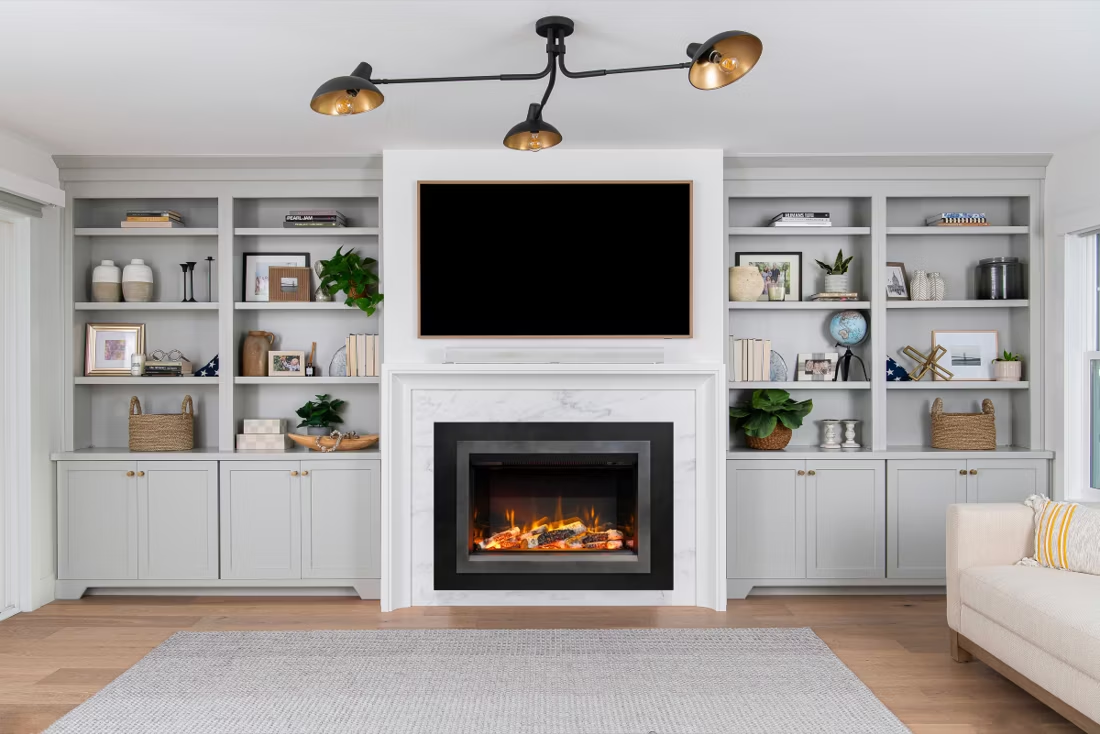
Electric fireplace heat that fits Choctaw's mild winters.
No chimney, no gas line, no venting to plan around—just a fireplace that plugs in or wires into a wall and gets used. Find the right unit and connect with a trusted local dealer.
Every Project Starts From One of These Five Situations
Zone heat without the chimney, gas line, or mess.
Choctaw sits just east of Oklahoma City in Oklahoma County, at about 1,150 feet elevation in climate zone 3A. Winters here are genuinely mild by national standards—average lows sit around 29°F and the area has a short, mild heating season, a fraction of the winter heating load a place like Fargo, ND or Duluth, MN sees. That matters for fireplace choice: most Choctaw homes don't need a heavy-duty primary heat source running all winter, they need something that takes the chill off a living room or bonus room on the coldest nights and looks good the rest of the year. That's exactly the niche electric fireplaces fill.
Electric service in Choctaw comes through either Oklahoma Gas & Electric (OG&E) or Central Rural Electric Cooperative depending on which side of town you're on, with residential rates running roughly $0.116 to $0.118 per kWh—below the national average, which keeps run costs modest even for daily use. Because electric units don't need a flue, gas line, or masonry chimney, they're often the fastest and least disruptive fireplace project available: a plug-in insert can go into an existing opening in an afternoon, and a built-in wall unit just needs a dedicated circuit run by a licensed electrician. No wood to split, no gas meter to size, no venting to route through the roof.
Three steps. No salesperson until you're ready.
Tell us about your project
Your zip code, your situation, and the fuel you're leaning toward—or let the answers point you to one.
See what's actually available
The brands dealers within 100 miles genuinely carry—real options, never a catalog mirage.
Get your dealer & Project Guide
A trusted local dealer, plus the free Project Guide & Parts List that names every component of the job.
Frequently Asked Questions
How much does it cost to install an electric fireplace in Choctaw?
It depends heavily on the type of unit. A plug-in electric insert or freestanding stove that drops into an existing fireplace opening typically runs $150 to $600 for the unit itself, with no professional installation required—it just plugs into a standard outlet. A built-in wall-mount or linear electric fireplace that requires a dedicated 120V or 240V circuit usually lands between $1,000 and $3,000 installed, once you factor in the unit, any surround or mantel work, and an electrician to run the circuit. Because there's no venting or gas line involved, electric installs are almost always the least expensive fireplace project available in Choctaw.
Do I need a permit to install an electric fireplace in Choctaw?
In most cases, no. A plug-in unit that uses an existing outlet doesn't trigger a permit because there's no new wiring or structural change. If you're having a built-in unit wired on its own circuit, that electrical work typically does require a permit through the City of Choctaw or Oklahoma County, pulled by your licensed electrician as part of the job. Since electric fireplaces don't burn fuel, they also sidestep the fire-code and chimney inspection requirements that apply to wood or gas installs—one reason a lot of Choctaw homeowners land on electric for a straightforward, low-hassle upgrade.
Does it matter whether I'm served by OG&E or Central Rural Electric Cooperative?
Not for the fireplace itself—any electric fireplace works the same regardless of provider. The main thing to check is your panel capacity if you're installing a built-in unit that draws on a dedicated 240V circuit, since some larger linear fireplaces pull 1,500 watts or more continuously. Both OG&E and Central Rural Electric Cooperative serve Choctaw at similarly competitive residential rates (around 11.6 to 11.8 cents per kWh), so your monthly operating cost will be close either way. A local electrician can confirm your panel has room before your installer schedules the work.
Insert, wall-mount, or freestanding—which style makes sense for my house?
If you already have a masonry or zero-clearance fireplace opening sitting unused, an electric insert is the simplest option—it slides into the existing space and often plugs into an outlet already there. If you're building out a new living space or want a modern linear look, a wall-mount unit recessed into drywall or set on a mantel wall is the more common choice in newer Choctaw construction. Freestanding electric stoves work well in bonus rooms, sunrooms, or additions where you want portable, no-installation heat you can move if you rearrange furniture. Most local dealers stock all three and can walk you through which fits your room.
Will an electric fireplace actually heat a room, or is it just for looks?
Most electric fireplaces include a built-in heater rated around 4,600–5,000 BTU, enough to comfortably warm a single room of 300–400 square feet—plenty for Choctaw's climate, where winter lows average around 29°F rather than the sustained sub-zero stretches that demand a whole-home heat source. Given the area's relatively short, mild heating season, most homeowners here use electric fireplaces as supplemental zone heat for a den, bedroom, or living room rather than as their only heat source, which lines up well with what these units are actually built to do. If you're trying to heat a larger open floor plan, look for a model with a higher-wattage heater or plan to pair it with your existing central heat.
What will an electric fireplace cost to run each month?
At Choctaw's residential electric rates—roughly 11.6 to 11.8 cents per kWh through OG&E or Central Rural Electric Cooperative—a typical 1,500-watt electric fireplace heater costs about 17 to 18 cents per hour to run on the heat setting. Used for 4 hours an evening throughout a cold snap, that's roughly $20 to $25 a month in added electric cost—far less than most homeowners expect, and one reason electric fireplaces are popular as a low-commitment upgrade compared to gas or wood, both of which involve their own fuel costs on top of the appliance.
Electric vs. gas—which is the better fit for a Choctaw home?
Gas fireplaces, common in Choctaw thanks to solid natural gas access through OG&E's service territory, deliver more real heat output and a live flame, but require a gas line, venting in most cases, and a higher install cost. Electric fireplaces skip all of that—no gas line, no venting, no combustion byproducts—in exchange for lower heat output and a flame effect that's realistic but simulated rather than real fire. For a supplemental heat source in a bedroom, office, or basement, or for renters and homes where running new gas line isn't practical, electric is usually the simpler and cheaper path. For a primary living-room centerpiece where heat output and a real flame matter more, gas tends to win out.
What about a wood-burning fireplace instead—does that make sense in Choctaw?
Not really as a primary heat strategy. Central Oklahoma's mild winters—average lows near 29°F and a short, mild heating season overall—mean wood-burning fireplaces here function almost entirely as occasional-use, ambiance-driven features rather than the workhorse heat source they'd be in a colder climate. Local oak, hickory, and mesquite are all available and burn well if you do want an occasional wood fire, but most Choctaw homeowners looking for reliable, low-maintenance heat land on electric or gas instead, which is part of why electric fireplace demand has grown steadily in newer subdivisions around town.
Are electric fireplaces safe for kids, pets, and rental homes?
Yes—electric fireplaces are generally considered the safest hearth option for households with young kids or pets, since the glass front stays cool to the touch (unlike gas or wood units, where the glass can reach several hundred degrees) and there's no open flame, combustion gas, or ash to manage. That also makes them a favorite for renters in Choctaw: a plug-in insert or freestanding unit can go with you when you move, since there's no permanent venting or gas line tying it to the property. Built-in wall units are more permanent but still avoid the fire-code and clearance concerns that come with a real flame.
Do electric fireplaces actually produce heat?
Yes—most put out around 4,800–5,000 BTUs from a standard outlet, which comfortably warms a bedroom, office, or den as a comfort-zone heater. What they won't do is carry a whole house the way wood, gas, or pellet can. Think of electric as ambiance-first with honest supplemental heat: flames on with no heat in July, flames plus warmth in January.
Can I put a TV above my fireplace?
Yes—with an asterisk. Fireplaces are hot and TVs don't like heat. Either put a mantel between them to deflect rising warmth, or choose a fireplace with heat-management technology that creates a cool zone on the wall above—the wall stays around 125 degrees, barely warm, while the room still gets full heat. If you like clean lines and don't want a mantel, heat management is the answer.
How much should I budget for a fireplace?
For an average home—covering the fireplace, the vent pipe, and basic installation—a budget between $3,900 and $5,500 gives you a lot of options across wood, gas, and pellet. By the time you add finish work, gas line, and electrical, the average complete installation lands between $5,000 and $12,000 all-in. In a remodel or new build, a good rule is to put about 2.5% of the total project cost toward the fireplace.
Does a fireplace add value to my home?
On average, a fireplace adds back to the home about the same amount you spent installing it. Add the monthly savings from heating the rooms you actually use instead of the whole house—often hundreds of dollars a year—and the value case is strong before you even count what a fire does for how your family uses the room.
Nearby Dealers
Hearth shops serving Choctaw and the surrounding area. Every listing shows whether it is a WhyFire partner, a dealer we have verified as authorized for the brands we recommend, or a local business carrying hearth products. No manufacturer pays for placement. How we verify dealers →
Fireplace Place
Gas & Electrical Equip
Rick's House Of Fire
The Hearth Shop
Forrest Fireplaces
Mill Creek Lumber & Supply Okc
Aynes Enterprises
Bachles Fireplace Furnishings
Electric Service in Choctaw
An electric fireplace's heater draws about 1,500 watts—pennies per hour at local rates.
Oklahoma Gas & Electric Co
Central Rural Electric Cooperative, Inc
Find your electric fireplace in Choctaw.
Tell us about your room and how you want to use it, and we'll put together a free Project Guide & Parts List—the right unit, the exact parts, and a trusted local Choctaw-area dealer to install it.
Find Your Fireplace →