
Consistent Warmth Without the Wood Pile.
Choctaw County winters are mild by national standards, but the cold snaps that roll off the Red River bottoms still call for reliable, thermostat-controlled heat. Find the right pellet stove or insert and connect with a trusted local dealer serving Hugo and the surrounding county.
Every Project Starts From One of These Five Situations
Efficient heat for a mild, humid climate.
Choctaw County sits in southeastern Oklahoma along the Red River, with Hugo as the county seat and a population spread thin across small towns and farmland. Climate zone 3A means a mixed-humid winter—average lows hover around 32°F and the county has a mild, short heating season, just a fraction of what a place like Bismarck, ND sees in a single season. Most homes here don't need a heating system running around the clock; they need something that can knock the chill off a farmhouse or manufactured home during the handful of genuinely cold weeks each winter, plus the occasional ice storm that puts the grid at risk.
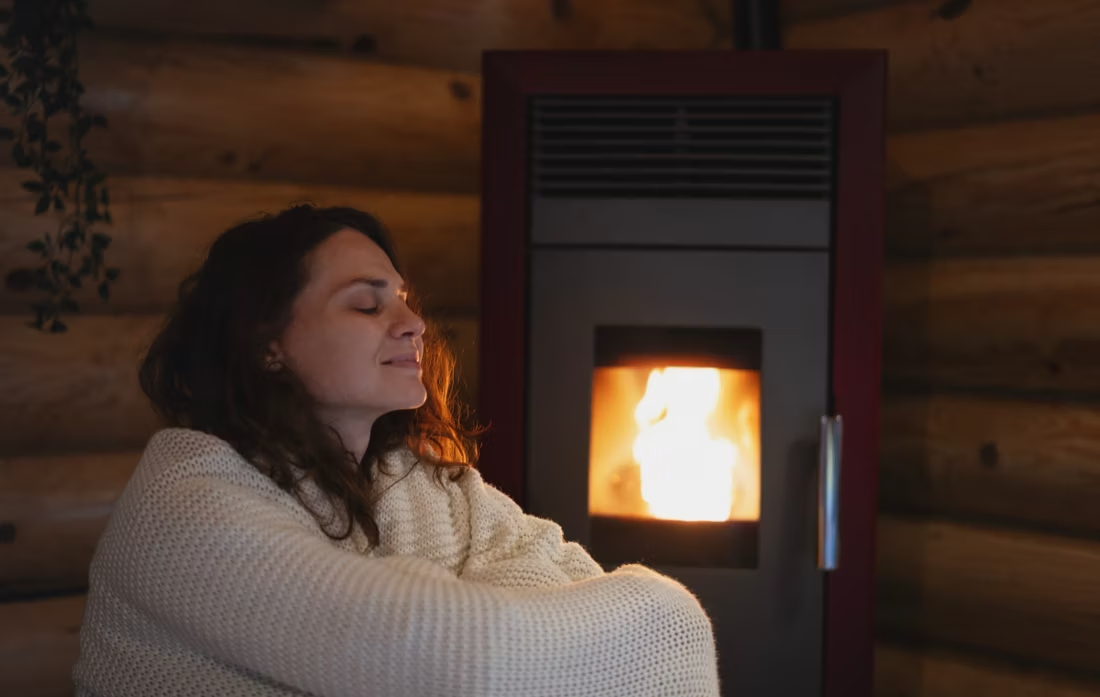
Wood heat has deep roots in this part of Oklahoma—oak, hickory, and mesquite are all common locally, and plenty of households already split their own firewood. A pellet stove offers a different trade: load a hopper instead of splitting rounds, dial in a thermostat instead of tending coals, and get a clean, direct-vent unit that doesn't require an existing masonry chimney. Regional suppliers like Lignetics and Indeck Energy Services keep pellets available in the area, though because Choctaw County's summers run hot and humid, dry, off-the-ground storage matters more here than it would in a drier climate—damp pellets lose BTU output and can jam an auger. A local dealer can size the right unit for your home and walk you through storage before your first bag runs low.
Three steps. No salesperson until you're ready.
Tell us about your project
Your zip code, your situation, and the fuel you're leaning toward—or let the answers point you to one.
See what's actually available
The brands dealers within 100 miles genuinely carry—real options, never a catalog mirage.
Get your dealer & Project Guide
A trusted local dealer, plus the free Project Guide & Parts List that names every component of the job.
Frequently Asked Questions
How much does a pellet stove installation cost in Choctaw County?
Most pellet stove and insert installations in this part of southeastern Oklahoma run in the $3,000 to $6,000 range, depending on whether you're installing a freestanding stove with new venting or an insert into an existing masonry fireplace using the chimney as a chase for the vent pipe. Homes without an existing hearth—common in the newer manufactured and modular housing found throughout the county—typically land on the higher end once wall penetration and venting are factored in. A local dealer will give you a firm number after seeing the install location.
What size pellet stove do I need for my Choctaw County home?
Because the county has a mild, short heating season, most homes here use a pellet stove as strong supplemental or zone heat rather than a whole-house primary system—a small to mid-size unit (rated for 1,000-1,800 sq ft) is plenty for most single-family homes and manufactured housing in Hugo, Boswell, or Fort Towson. If you're planning to heat an open living area, a detached shop, or a drafty older farmhouse through the coldest snaps, size up slightly rather than down. A local dealer can walk your specific floor plan before recommending a model.
Do I need a permit to install a pellet stove in Choctaw County?
Yes—a building permit is generally required for a new pellet stove installation, whether you're in Hugo city limits or unincorporated Choctaw County; check with the appropriate local building department before work begins. Unlike counties dealing with winter air-quality inversions, Choctaw County has no non-attainment status or wood-smoke curtailment periods, so there are no burn-ban restrictions to plan around—the permit process here is mainly about verifying clearances, venting, and a UL-listed unit installed to manufacturer spec.
Where can I buy pellets in Choctaw County?
Regional brands like Lignetics and Indeck Energy Services supply much of the pellet market in this part of Oklahoma, typically sold through farm and feed stores, hardware retailers, or a local hearth dealer who can set you up with a first-season supply. Expect pricing in the general range of $250-$300 per ton, though it's worth confirming current pricing locally since availability in a rural county like this can shift by season. Buying and storing a season's worth early—before summer humidity sets in—is the safest approach.
Pellet stove vs. wood stove—which makes more sense here?
With oak, hickory, and mesquite all common locally, plenty of Choctaw County households already have easy access to firewood and may lean toward a traditional wood stove for that reason. A pellet stove trades that self-sufficiency for convenience: no splitting or seasoning wood, a hopper that only needs filling every day or two, and a cleaner, more consistent burn with far less ash. The tradeoff is that pellet stoves need electricity to run the auger and blower, while a wood stove will still throw heat in a power outage. For a household that already has a generator or battery backup plan, pellet is often the easier day-to-day choice; for backup heat with zero dependency on the grid, wood still wins.
Will my pellet stove work during a power outage?
Not on its own—pellet stoves rely on an electric auger to feed fuel and a blower to circulate heat, so a standard unit will shut down when the power drops. This matters in Choctaw County, where ice storms and severe spring weather periodically knock out power in rural areas for extended stretches. If reliable outage backup is a priority, ask a local dealer about battery backup options or plan for a small generator sized to run the stove's electrical components—it's a common pairing in this part of the state.
How often does a pellet stove need to be cleaned and maintained?
Plan on emptying the ash pan every few days to weekly depending on use, a deeper cleaning of the burn pot and heat exchanger monthly during the season, and a full professional inspection and venting cleaning once a year, ideally before the first cold snap in late fall. Because Choctaw County's heating season is short and mild, many homeowners here find their stoves need less overall wear-and-tear maintenance than in colder climates—but the annual venting check still matters, especially after a humid Oklahoma summer.
Does southeastern Oklahoma's humidity affect pellet storage?
Yes—Choctaw County's mixed-humid climate means pellets are more vulnerable to moisture absorption than they would be in a drier region. Damp pellets swell, break apart, and burn inefficiently, and enough moisture can jam an auger feed entirely. Store bags off the concrete floor of a garage or shed, keep them in a dry, ventilated space, and avoid buying more than a season's supply at once unless you have a genuinely dry storage area. A local dealer can point you toward practical storage setups other customers in the area use.
Why choose pellet over propane in a rural county like this?
Much of rural Choctaw County isn't on a natural gas main, which means propane is the default alternative for gas-fired heat—requiring a tank, regular deliveries, and an ongoing fuel contract. A pellet stove sidesteps that entirely: no tank, no delivery truck, and fuel you can buy a bag or a ton at a time from a local supplier. For homeowners who want thermostat-style convenience without committing to a propane account, pellet is often the more self-contained option, particularly for a workshop, sunroom, or secondary living space that doesn't already have gas service run to it.
How often does a pellet stove need cleaning?
A clean pellet stove is a happy pellet stove. Plan on cleaning the burn pot about once a week when you're burning regularly—ash and clinkers gum up the air holes just like a pellet barbecue. Most pellet stove problems trace back to skipped cleaning that nobody explained up front. Some designs make it easy with a trapdoor burn pot: pull a lever and the gunk drops into the ash pan.
Why is my open fireplace making my house colder?
Open fireplaces suck—literally. As the fire burns, it consumes air your furnace already paid to heat and pulls it out through the chimney, so the house is actually colder after the fire goes out than before you lit it. An insert fixes this: it seals the chimney, puts fixed glass across the front, and turns that hole in your house into a real heat source.
What is an in-home preview and do I need one?
It's a visit where a hearth professional measures your space, confirms the model you picked actually works in your home, and walks the specs—framing, gas line, venting, finish work—before anything is ordered. Some details you just can't know until you see the house. Never make a down payment without one; it's the single most-skipped step that burns buyers.
Does a fireplace add value to my home?
On average, a fireplace adds back to the home about the same amount you spent installing it. Add the monthly savings from heating the rooms you actually use instead of the whole house—often hundreds of dollars a year—and the value case is strong before you even count what a fire does for how your family uses the room.
Pellet Brands Stocked Around Choctaw County
Manufacturers will point you to the nearest stocking dealer.
Find your pellet stove in Choctaw County.
Tell us a bit about your home and we'll match you with a trusted local dealer and send over a free Project Guide & Parts List—sized and specified for your pellet stove project in Choctaw County.
Find Your Fireplace →