
Warm, reliable heat for Choctaw County's mild but unpredictable winters.
From Hugo to Fort Towson to Boswell, gas heat gives Choctaw County homes instant warmth on cold nights and dependable backup when ice storms take the power out. Find the right unit and connect with a trusted local dealer.
Every Project Starts From One of These Five Situations
Comfort that doesn't depend on the power staying on.
Choctaw County sits in southeastern Oklahoma's Zone 3A climate, where winter lows average around 32°F and the heating season is short—a mild winter overall, with roughly a third of the winter heating load of a place like Bismarck, ND. Most homes here rely on a central furnace or heat pump for day-to-day heat, and a fireplace is more often the room you actually want to be in on the handful of genuinely cold nights each winter, or the backup you're grateful for when the grid goes down.
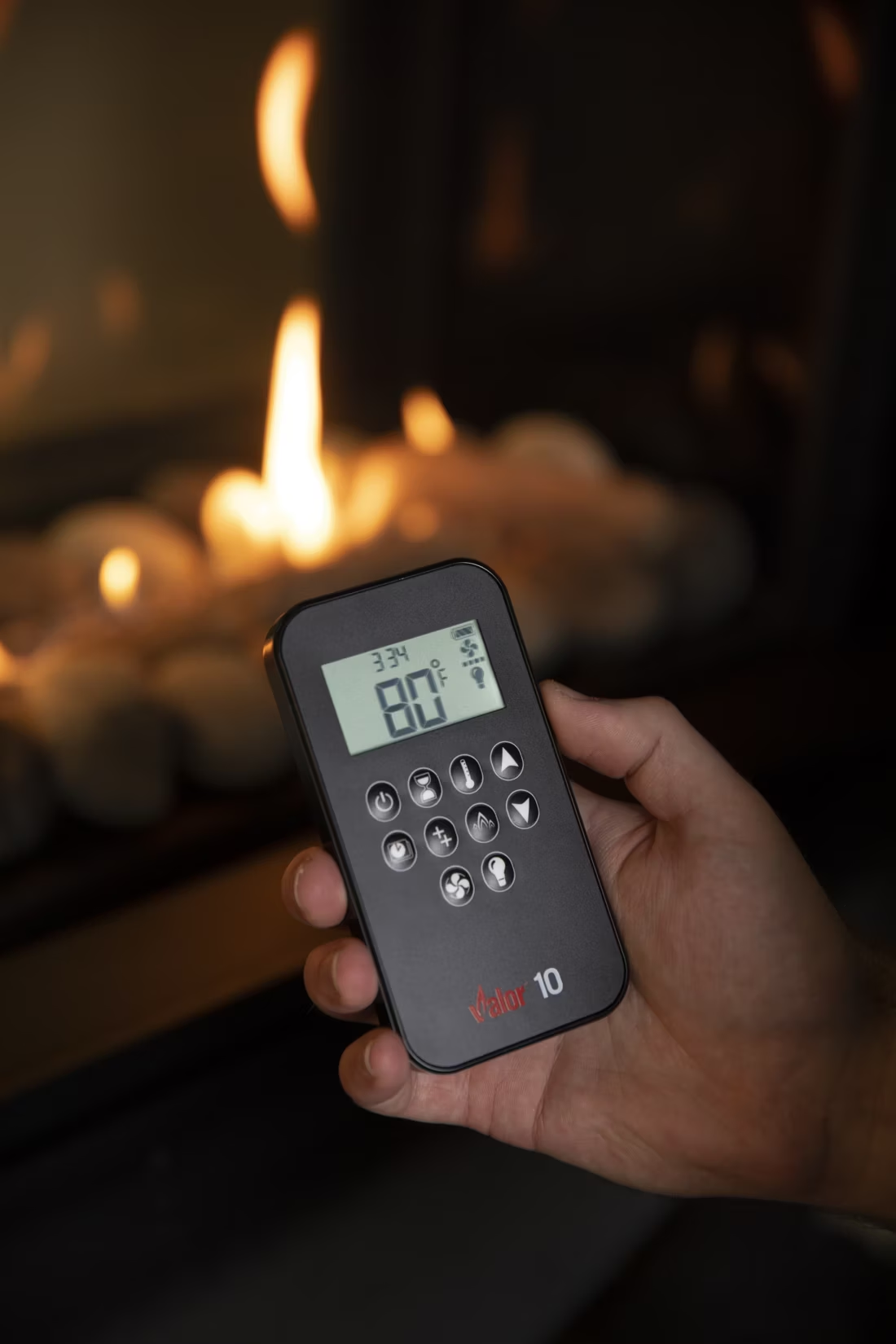
Natural gas service runs through Hugo and the towns along Highway 70, but a good share of rural Choctaw County—the farms and homesteads scattered through the oak-hickory-mesquite country toward the Red River—depends on propane delivered by local suppliers. Either fuel works fine in a modern direct-vent fireplace or insert. What matters more here is the ice: this part of Oklahoma has seen multi-day power outages from winter ice storms, and a gas fireplace with battery-backup ignition (or a self-powered pilot like Valor's) keeps a room warm and lit when the furnace's blower motor has nothing to run on.
Three steps. No salesperson until you're ready.
Tell us about your project
Your zip code, your situation, and the fuel you're leaning toward—or let the answers point you to one.
See what's actually available
The brands dealers within 100 miles genuinely carry—real options, never a catalog mirage.
Get your dealer & Project Guide
A trusted local dealer, plus the free Project Guide & Parts List that names every component of the job.
Frequently Asked Questions
How much does a gas fireplace installation cost in Choctaw County?
Most gas fireplace and insert installations in Choctaw County land between roughly $3,500 and $8,500, depending on the unit, the venting path, and whether new gas line work is needed. A direct-vent insert going into an existing masonry fireplace in an older Hugo or Fort Towson farmhouse—with gas already run to the house—sits toward the lower end. A new built-in unit in a remodel, or a home that needs a propane tank set and a fresh line run out to it, pushes toward the higher end. A local dealer will give you a firm number after seeing the space in person.
Can I convert my existing wood fireplace to gas?
Yes, and it's a common project in this part of the county, where a lot of older homes were built with a wood-burning masonry fireplace as the original heat source. A gas insert typically drops into that same opening, using a stainless liner run up the existing chimney as the vent path. If the house already has natural gas or a propane tank in place, the conversion is straightforward; if not, running a new gas line or setting a tank adds to the cost. The result keeps the look of the original fireplace but trades ash and creosote for a flip-of-a-switch flame.
Do I need natural gas, or can I use propane?
Either works, and which one you use mostly comes down to where you live in Choctaw County. Natural gas lines cover Hugo and the incorporated towns along the Highway 70 corridor—if your water heater or range already runs on natural gas, adding a fireplace is simple. Out in the rural stretches toward Fort Towson, Boswell, or Soper, propane is the standard choice, supplied by tank and delivered by local propane companies. Nearly every gas fireplace on the market can be set up for either fuel; your installer just swaps the orifice and regulator to match.
Will my gas fireplace work during a power outage?
Most modern gas fireplaces will, which matters in a county that's had its share of multi-day outages from winter ice storms. Units with intermittent pilot ignition (IPI) run on a battery backup—usually AA batteries tucked inside the unit—that kicks in automatically when the power drops, so the fireplace still lights and runs off the wall switch or remote. Valor fireplaces take it a step further: the pilot's thermocouple generates its own electricity, so there's no battery to remember or replace, ever. For a Choctaw County home where the furnace's blower motor goes dark in an ice storm, that self-powered backup is worth asking about specifically.
What's the difference between a gas fireplace, gas insert, and gas stove?
A gas fireplace is a fully built-in unit framed into a wall—the right call for new construction or a remodel with no existing hearth. A gas insert is built to slide into an existing masonry fireplace opening, using the current chimney as its vent path—the common choice for the older homes scattered through Hugo, Fort Towson, and the surrounding farmland. A gas stove is a freestanding, cast-iron-look unit that sits out on the floor like a wood stove but burns gas. For most Choctaw County homeowners with a fireplace already in place, an insert is usually the simplest upgrade.
Do I need a permit to install a gas fireplace in Choctaw County?
Generally yes, and the gas line portion of the work always requires a licensed gas-fitter regardless of where you're located in the county. Inside Hugo, Fort Towson, and the other incorporated towns, permits are handled through that town's building office; in unincorporated parts of Choctaw County, requirements are lighter but a licensed installer will still confirm what applies to your address before starting. Working with a certified hearth dealer means they coordinate the gas line, venting, and any required inspections instead of leaving that to you.
What's the difference between vented and vent-free gas fireplaces?
Vented (direct-vent) fireplaces pull combustion air from outside and exhaust the byproducts back outside through sealed venting—they're the cleanest option and code-legal everywhere, including all of Oklahoma. Vent-free units burn directly into the room without any outside venting; they're legal here too, but they come with strict room-size minimums, an oxygen depletion sensor, and release some water vapor and combustion byproducts into your living space. For most Choctaw County homes, direct-vent units are the more common and more broadly recommended choice—they put out real heat without any tradeoff on indoor air quality, which matters in a tightly sealed modern home. A local dealer can walk you through both if you want to compare.
How often should my gas fireplace be serviced?
Once a year is the standard recommendation, even in a mild climate like Choctaw County's where the unit might only run for a few weeks each winter. A certified technician checks the burner, pilot assembly, venting, and gas connections, and cleans the glass and firebox interior. It's a quick visit—usually under an hour—but it catches small issues like a weakening battery backup or a dirty pilot before the next cold snap or the next ice storm, whichever comes first.
Gas vs. wood—which is right for my home?
Wood has deep roots here—oak, hickory, and mesquite are all common in the county's woodlots and fencerows, and plenty of longtime residents still cut and split their own. Wood also keeps working with no electricity at all, which counts for something during an ice storm. But with such a mild, short winter overall, most Choctaw County homes don't need a wood stove running around the clock—they want a fireplace for the handful of genuinely cold nights and for backup heat. That points a lot of homeowners toward gas: no wood to split and stack, instant on-off operation, and (with the right ignition system) heat that keeps running when the lights don't. Some homes split the difference—gas in the main living area, a wood-burning option kept in reserve.
Can I put a TV above my fireplace?
Yes—with an asterisk. Fireplaces are hot and TVs don't like heat. Either put a mantel between them to deflect rising warmth, or choose a fireplace with heat-management technology that creates a cool zone on the wall above—the wall stays around 125 degrees, barely warm, while the room still gets full heat. If you like clean lines and don't want a mantel, heat management is the answer.
Does a gas fireplace work when the power is out?
Yes—modern gas fireplaces have a battery backup for the ignition system that lasts for weeks, so no power equals no problem. Your furnace can't say that: no electricity, no blower, no heat. It's one of the most common reasons families add a fireplace, and worth confirming on any model you're considering.
Does a fireplace add value to my home?
On average, a fireplace adds back to the home about the same amount you spent installing it. Add the monthly savings from heating the rooms you actually use instead of the whole house—often hundreds of dollars a year—and the value case is strong before you even count what a fire does for how your family uses the room.
Can I install a fireplace myself?
If you're putting a fire in your house on purpose, it's best to work with an expert. Unless you're genuinely experienced in framing, gas line, vent pipe, and the national code on clearances to combustibles, have a professional do it—and ideally the same company that sells you the fireplace, so warranty, service, and liability all live under one roof.
Find your gas fireplace in Choctaw County.
Tell us a bit about your home and we'll match you with a trusted local dealer and send over your free Project Guide & Parts List—the exact parts, including the vent kit, for a gas fireplace project done right in Choctaw County.
Find Your Fireplace →