
Consistent pellet heat for Wyandot County's cold snaps.
Thermostat-controlled warmth for the farmhouses and small towns of Wyandot County—from Upper Sandusky to Carey. Find the right pellet stove or insert and connect with a trusted local dealer.
Every Project Starts From One of These Five Situations
Convenience heat for Wyandot County's long winters.
Wyandot County sits in the flat farm country of north-central Ohio, halfway between Toledo and Columbus, with Upper Sandusky as the county seat and Carey, Nevada, and Sycamore rounding out its small-town character. At Climate Zone 5A with roughly 6,160 heating degree days a year and average winter lows around 17°F—a heating load similar to Buffalo, NY—most homes here need a real, sustained heat source from November through March, not just an occasional evening fire. Pellet stoves and inserts have become a common answer for county homeowners who want that steady, thermostat-controlled warmth without keeping a woodpile or sweeping a chimney every season.
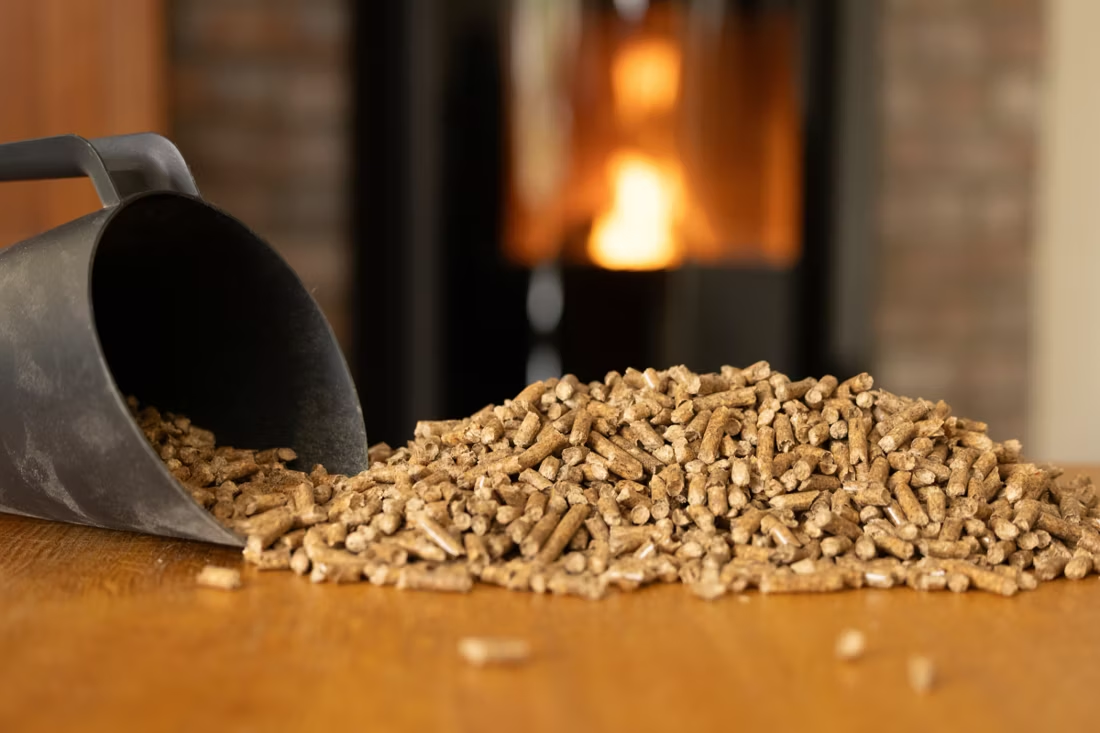
Pellet fuel is well-supported in this part of Ohio. Regional producers like Lignetics and Somerset Pellet Fuel, along with industrial supplier Indeck Energy Services, keep hardwood pellets moving through farm stores and hardware retailers across north-central Ohio, so residents aren't dependent on a single supplier or a long drive for fuel. With no local air quality restrictions on burning—unlike some Western counties dealing with winter inversion—pellet stoves here are chosen mainly for convenience and efficiency: load the hopper, set the thermostat, and let an auger-fed fire do the rest, even while local oak, hickory, maple, and cherry firewood remains available for the wood-burning fireplace down the hall.
Three steps. No salesperson until you're ready.
Tell us about your project
Your zip code, your situation, and the fuel you're leaning toward—or let the answers point you to one.
See what's actually available
The brands dealers within 100 miles genuinely carry—real options, never a catalog mirage.
Get your dealer & Project Guide
A trusted local dealer, plus the free Project Guide & Parts List that names every component of the job.
Frequently Asked Questions
How much does a pellet stove installation cost in Wyandot County?
A pellet stove or insert installation in Wyandot County typically runs $3,000 to $6,500, depending on whether you're installing a freestanding stove that vents through an exterior wall or a pellet insert going into an existing masonry fireplace. Because pellet units use a simple 3-inch or 4-inch PL vent pipe rather than a full masonry chimney, installation costs generally land lower than wood stove chimney work—the wall-vent kit and electrical hookup for the auger and blower are usually the bulk of the labor. Homes without an existing 120V outlet near the install location may see a modest bump in cost for electrical work.
How much pellet fuel will I need for a Wyandot County winter?
With roughly 6,160 heating degree days and winter lows in the high teens, a Wyandot County home using a pellet stove as a primary heat source typically burns 2 to 3 tons of pellets per month during the coldest stretch (December through February), and less in the shoulder months. A 40-lb bag lasts a day or so on a steady burn; most full-time pellet burners buy by the ton from regional suppliers like Lignetics or Somerset Pellet Fuel rather than by the bag, since it's meaningfully cheaper per BTU.
Where can I buy pellet fuel near Wyandot County?
Hardwood pellets from regional producers—Lignetics, Somerset Pellet Fuel, and industrial supplier Indeck Energy Services—are distributed through farm supply stores, hardware retailers, and co-ops across north-central Ohio, including outlets serving Upper Sandusky and Carey. Buying a full season's supply (a ton or more) in late summer or early fall, before the first cold snap drives demand up, is the most reliable way to lock in pricing and avoid the scramble that happens every January when everyone realizes they're low.
Do I need a permit to install a pellet stove in Wyandot County?
Yes—a new pellet stove installation in Wyandot County requires a building permit through the Wyandot County Building Department, and any new electrical circuit for the unit's auger and blower may need an electrical permit as well. Because pellet stoves vent through a smaller wall or roof penetration rather than a full chimney, the permitting and inspection process is generally simpler and faster than a wood stove or masonry fireplace project. Most local hearth dealers handle the permit paperwork as part of the installation.
Pellet stove vs. wood stove—which is right for my home?
Wood stoves burn local hardwood—oak, hickory, maple, and cherry are all common in Wyandot County woodlots—and keep working without electricity, which matters during winter storm outages. Pellet stoves need power to run the auger, hopper feed, and blower, so a standard unit goes dark in an outage unless it's paired with a battery backup or generator. In exchange, pellet stoves offer more consistent, thermostat-controlled heat, less daily tending, and far less ash and creosote to manage. For county homeowners without a reliable backup power plan, wood remains the more resilient choice for true emergency heat; for those prioritizing convenience and consistent output, pellet is usually the better fit.
What's the best pellet stove for Wyandot County's climate?
For Wyandot County's climate—5A, with lows regularly in the teens—look for a pellet stove or insert with at least a 40-lb hopper and a burn rate that can sustain 24+ hours per fill on a low setting. Larger farmhouse-style homes common in the county often do better with a higher-BTU unit (2,500+ sq ft coverage) than a compact model built for a single room. Because regional hardwood pellets from Lignetics and Somerset Pellet Fuel tend to burn cleaner with less ash than some softwood blends, most units on the market handle them without issue—but it's worth confirming with your dealer that whatever stove you choose is rated for the pellet quality you plan to burn.
How often does a pellet stove need cleaning and maintenance?
Pellet stoves need the burn pot and ash pan cleaned every few days during heavy winter use—ash buildup restricts airflow and reduces heat output. A full cleaning of the exhaust fan, hopper, and auger system, along with inspection of the vent pipe, is recommended once a season, typically before heating season starts in the fall. Unlike a wood-burning chimney, there's no annual chimney sweep required, but the mechanical components (auger motor, igniter, fans) do wear over time and benefit from a professional once-over every year or two.
Will my pellet stove work if the power goes out?
Standard pellet stoves require continuous electricity to run the auger motor, combustion blower, and control board—without power, the fire goes out within minutes. For Wyandot County homes concerned about winter storm outages, a battery backup system (often just a small UPS unit or deep-cycle battery with inverter) can keep a pellet stove running for several hours, and a generator extends that further. If uninterrupted heat during outages is a top priority, some homeowners in the county pair a pellet stove for daily convenience with a wood stove or fireplace elsewhere in the house as a true off-grid backup.
Pellet stove vs. gas fireplace—which is right for me?
Gas fireplaces and inserts offer instant on-off heat with no fuel storage or hopper-loading at all, and many models include battery-backup ignition that keeps working in a power outage—an advantage pellet stoves don't have. Pellet stoves, on the other hand, offer a real visible flame with tumbling pellets and glowing embers that's closer to a wood fire, run on a fuel you buy by the ton rather than through a utility meter, and often cost less to install where no gas line exists nearby. For Wyandot County homes already on natural gas or propane, gas is usually simpler; for homes without easy gas access or homeowners who want the fuel independence of buying pellets outright, pellet is a strong alternative.
How often does a pellet stove need cleaning?
A clean pellet stove is a happy pellet stove. Plan on cleaning the burn pot about once a week when you're burning regularly—ash and clinkers gum up the air holes just like a pellet barbecue. Most pellet stove problems trace back to skipped cleaning that nobody explained up front. Some designs make it easy with a trapdoor burn pot: pull a lever and the gunk drops into the ash pan.
What's the difference between an insert and a zero-clearance fireplace?
An insert is a fireplace that slides into a pre-existing wood-burning fireplace—if you don't have one, there's nothing to insert it into. A zero-clearance fireplace is built into a framed wall, which makes it the answer for remodels and new construction. Simple test: existing masonry fireplace means insert; blank or framed wall means zero-clearance.
What is an in-home preview and do I need one?
It's a visit where a hearth professional measures your space, confirms the model you picked actually works in your home, and walks the specs—framing, gas line, venting, finish work—before anything is ordered. Some details you just can't know until you see the house. Never make a down payment without one; it's the single most-skipped step that burns buyers.
How much should I budget for a fireplace?
For an average home—covering the fireplace, the vent pipe, and basic installation—a budget between $3,900 and $5,500 gives you a lot of options across wood, gas, and pellet. By the time you add finish work, gas line, and electrical, the average complete installation lands between $5,000 and $12,000 all-in. In a remodel or new build, a good rule is to put about 2.5% of the total project cost toward the fireplace.
Stove and Fireplace Dealers in Wyandot County
Pellet Brands Stocked Around Wyandot County
Manufacturers will point you to the nearest stocking dealer.
Find your pellet stove in Wyandot County.
Tell us about your home and we'll match you with a trusted local dealer and a free Project Guide & Parts List—sized venting, the right hopper capacity, and a plan built for Wyandot County winters.
Find Your Fireplace →