
Real warmth for your Wyandot County home—no chimney required.
From Upper Sandusky to Carey and Nevada, electric fireplaces bring instant heat to farmhouses, ranch homes, and apartments across Wyandot County without a flue, a gas line, or a building permit. Find the right unit and connect with a trusted local dealer.
Every Project Starts From One of These Five Situations
Instant heat, zero clearance, no venting at all.
Wyandot County is a rural, agricultural county of about 12,300 people in north-central Ohio, anchored by Upper Sandusky and stretched across small communities like Carey, Nevada, Sycamore, Harpster, and McCutchenville. Winters here sit in Climate Zone 5A, with average lows around 17°F and roughly 6,160 heating degree days a season—a cold-but-not-brutal winter closer in feel to Madison, WI than to the upper Great Lakes. Many homes in the county are older farmhouses without existing masonry chimneys, plus a fair number of mobile and manufactured homes across the townships, where running new gas line or building a wood chimney isn't practical or affordable.
That's where electric fireplaces do real work. A plug-in insert or wall-mount unit needs no venting, no gas line, and typically no building permit at all—just a standard outlet or, for larger built-ins, a dedicated circuit an electrician can add in an afternoon. Electricity in the county comes through AEP Ohio in and around Upper Sandusky and through Union Rural Electric Cooperative in much of the surrounding farmland, and a typical 1,500-watt electric fireplace draws well within normal household circuit capacity either way. For a bedroom, sunroom, or a rental unit where a real chimney isn't an option, electric is often the simplest path to supplemental heat and ambiance in Wyandot County.
Three steps. No salesperson until you're ready.
Tell us about your project
Your zip code, your situation, and the fuel you're leaning toward—or let the answers point you to one.
See what's actually available
The brands dealers within 100 miles genuinely carry—real options, never a catalog mirage.
Get your dealer & Project Guide
A trusted local dealer, plus the free Project Guide & Parts List that names every component of the job.
Frequently Asked Questions
How much does an electric fireplace installation cost in Wyandot County?
Plug-in electric fireplace inserts and freestanding stoves generally run $400 to $1,200 installed, since most just slide into an existing opening or sit on the floor and plug into a standard outlet. Built-in wall units or full mantel packages that require an electrician to add a dedicated 120V or 240V circuit typically run $1,500 to $4,000 depending on the unit, the wall construction, and how far the electrical panel is from the install location. Because there's no chimney, flue, or gas line involved, electric installs in Wyandot County are usually the fastest and least disruptive hearth project a local dealer handles.
What size electric fireplace do I need for my Wyandot County home?
Electric fireplaces are rated for supplemental heat, generally 400 to 1,500 square feet per unit depending on wattage and room layout, not whole-home heating. For a single living room or bedroom in a typical Upper Sandusky or Carey home, a standard 1,500-watt insert or wall unit is usually enough to noticeably warm the room on a 17°F night. For open-concept spaces or older farmhouses with less insulation, a local dealer may recommend a wider unit or a second zone elsewhere in the house rather than one oversized unit trying to cover the whole floor plan.
Where can I find someone to install an electric fireplace near me?
Most plug-in electric fireplaces don't require a licensed installer at all—any homeowner can set one into an existing opening or mount it on a wall and plug it in. Built-in units that need new wiring or a dedicated circuit should go through a licensed electrician, and the hearth dealers serving Wyandot County typically coordinate that electrical work directly so you're not managing two separate contractors. For rural addresses out past Sycamore or Harpster, expect a small travel charge on larger installs, similar to any trade call in a low-density county.
What's the difference between an electric fireplace, insert, and stove?
An electric insert is built to slip into an existing fireplace opening or a framed wall cavity, replacing an old wood-burning box or filling a niche in new construction. An electric stove is a freestanding cabinet-style unit that sits on the floor like a traditional wood stove but plugs into an outlet. A built-in wall unit or mantel package is designed as a focal-point fireplace for a living room, often with a linear flame display. For Wyandot County homes without an existing chimney—common in the county's farmhouses and manufactured homes—a freestanding stove or wall-mount unit is usually the simplest option since there's no masonry opening to work around.
Do I need a permit to install an electric fireplace in Wyandot County?
In most cases, no. Because electric fireplaces don't involve combustion, venting, or gas lines, plug-in units are generally exempt from the building permit process in Wyandot County. If you're adding a new dedicated electrical circuit for a larger built-in unit, that electrical work itself may require a permit through the Wyandot County Building Department—your electrician or hearth dealer can confirm and typically pulls it for you. This is one of the biggest practical advantages electric has over wood or gas installs in the county.
Will an electric fireplace keep working during a power outage?
No—electric fireplaces require power to run, so they go dark along with everything else during an outage. That's worth weighing carefully in rural Wyandot County, where Union Rural Electric Cooperative members can see longer restoration times after ice storms or high winds than customers closer to Upper Sandusky's AEP Ohio service area. If backup heat during outages matters to your household, many local dealers recommend pairing an electric fireplace for everyday convenience and ambiance with a wood stove or a generator-ready setup for true emergency heat.
Electric vs. wood—which is right for my Wyandot County home?
Wood stoves burn hot and provide heat without electricity—a real advantage during rural power outages—and Wyandot County has good access to local oak, hickory, maple, and cherry firewood. But wood requires a chimney, clearances, and ongoing fuel handling. Electric fireplaces need no venting or chimney and can go almost anywhere with an outlet, but they add nothing during an outage and function as supplemental warmth rather than a primary heat source. For a farmhouse without an existing chimney where the goal is ambiance and zone heating in a specific room, electric is usually the easier, lower-cost choice; for households prioritizing storm-proof backup heat, wood is worth the extra install complexity.
Electric vs. gas—which makes more sense for my home?
Gas fireplaces deliver more heat output and a more traditional flame look, but they require either natural gas service—limited in parts of Wyandot County outside Upper Sandusky—or a propane tank, plus venting and a gas line permit. Electric fireplaces skip all of that: no gas line, no venting, no propane delivery to schedule. For a rural property without natural gas access, or a renter in Carey or Nevada who can't run new gas line, electric is often the only realistic option. For a homeowner who already has propane or natural gas and wants stronger heat output for a primary living space, gas is worth the added installation cost.
How much does it cost to run an electric fireplace in Wyandot County?
A typical 1,500-watt electric fireplace costs roughly 15 to 20 cents an hour to run at current Ohio electricity rates, whether you're billed through AEP Ohio in Upper Sandusky or through Union Rural Electric Cooperative in the surrounding townships. Running it a few hours an evening through a cold stretch adds up to a modest amount on the monthly bill—far less than heating an entire room with central HVAC alone, which is why many Wyandot County homeowners use electric fireplaces for zone heating in whichever room they're actually spending time in.
Can I put a TV above my fireplace?
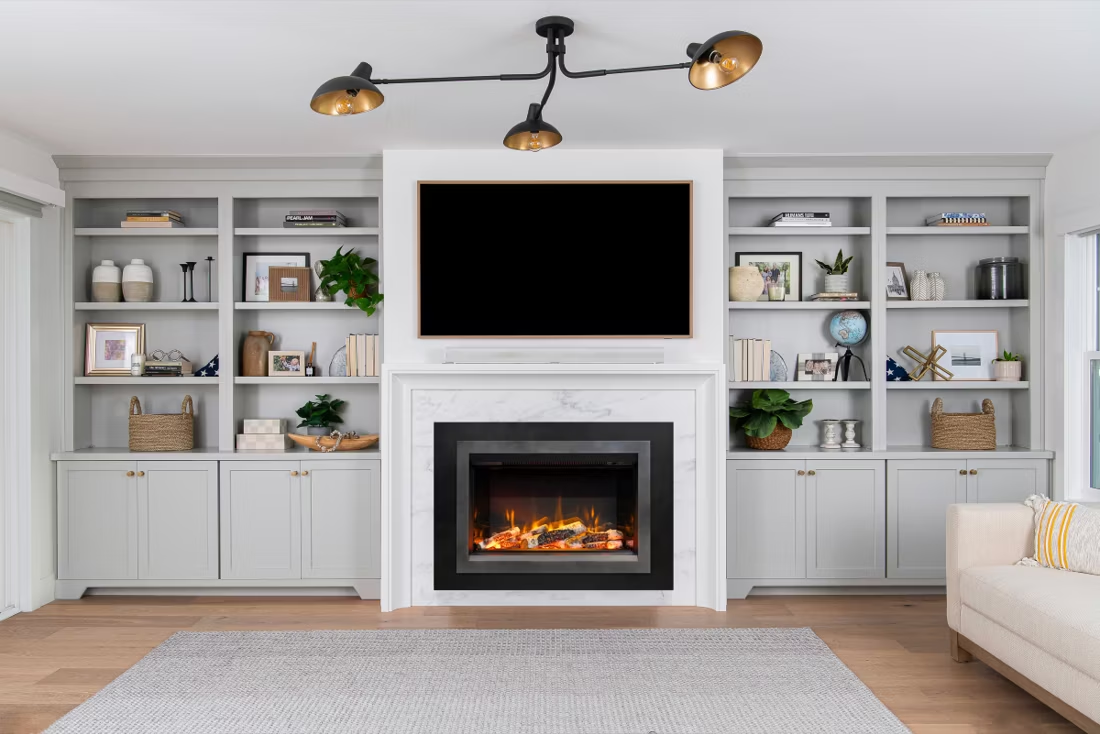
Yes—with an asterisk. Fireplaces are hot and TVs don't like heat. Either put a mantel between them to deflect rising warmth, or choose a fireplace with heat-management technology that creates a cool zone on the wall above—the wall stays around 125 degrees, barely warm, while the room still gets full heat. If you like clean lines and don't want a mantel, heat management is the answer.
Does an electric fireplace need a vent or chimney?
No—that's its superpower. An electric fireplace needs a wall and an outlet, period. No vent pipe, no gas line, no clearances to design around, which is why it works in bedrooms, offices, apartments, and walls where venting a gas or wood unit would be impractical or impossible. Installation is typically the simplest and least expensive of any fireplace type.
Can a fireplace actually lower my heating bill?
Yes—by creating a comfort zone. A furnace heats every square foot of the house just to warm the one room you're in; a gas fireplace on low burns roughly a sixth of the gas a typical furnace does. Set the furnace around 55–60 degrees as a baseline, then heat the rooms your family actually uses. Families who heat this way commonly save $20–$60 a month.
Does a fireplace add value to my home?
On average, a fireplace adds back to the home about the same amount you spent installing it. Add the monthly savings from heating the rooms you actually use instead of the whole house—often hundreds of dollars a year—and the value case is strong before you even count what a fire does for how your family uses the room.
Stove and Fireplace Dealers in Wyandot County
Find your electric fireplace in Wyandot County.
Tell us a bit about your home and we'll put together a free Project Guide & Parts List for your electric fireplace project—the right unit, the exact parts, and a trusted local dealer serving Wyandot County.
Find Your Fireplace →