
Set-and-forget heat for Williams County's cold winters.
From Bryan to Montpelier, Edgerton to West Unity, pellet stoves bring thermostat-level convenience to a six-month heating season. Find the right unit and connect with a trusted local dealer.
Every Project Starts From One of These Five Situations
Convenience heat for a county built on farm schedules.
Williams County sits in the far northwest corner of Ohio, tucked against the Michigan and Indiana state lines, with Bryan as the county seat and Montpelier, Edgerton, Stryker, and West Unity spread across mostly flat farmland. Climate Zone 5A here means real winter—average lows around 17°F and roughly 6,300 heating degree days a season, putting Williams County in the same cold-climate tier as Madison, Wisconsin. Farmhouses and older rural homes throughout the county often run drafty, and heating seasons stretch from October well into April.
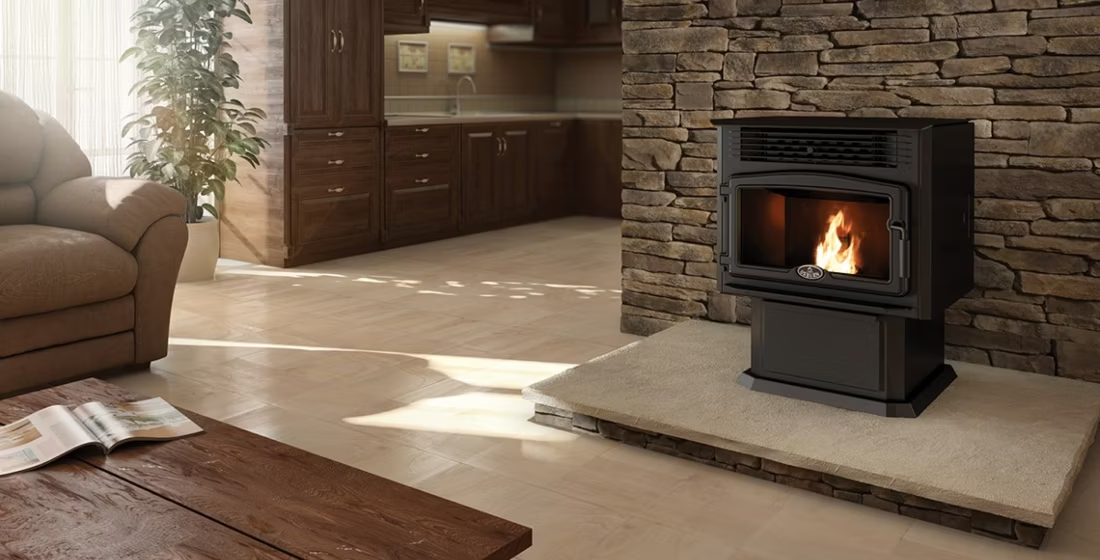
Pellet stoves have found a steady following here because they solve a specific problem: homeowners running a farm, a shop, or a household on a tight schedule don't want to babysit a fire twice a day. Load the hopper, set the thermostat, and walk away—the auger and igniter do the rest. Williams County has no air quality non-attainment issues or winter burn restrictions, so pellet appliances run without the curtailment concerns that some Ohio counties see with wood; that said, pellet stoves already burn cleaner than cordwood by design. Regional suppliers including Indeck Energy Services, Lignetics, and Somerset Pellet Fuel keep bagged and bulk pellets reasonably accessible throughout the county's heating season.
Three steps. No salesperson until you're ready.
Tell us about your project
Your zip code, your situation, and the fuel you're leaning toward—or let the answers point you to one.
See what's actually available
The brands dealers within 100 miles genuinely carry—real options, never a catalog mirage.
Get your dealer & Project Guide
A trusted local dealer, plus the free Project Guide & Parts List that names every component of the job.
Frequently Asked Questions
How much does a pellet stove installation cost in Williams County?
A freestanding pellet stove installation in Williams County typically runs $3,000 to $6,500, and a pellet insert going into an existing masonry fireplace usually lands between $4,000 and $7,500. Pellet units vent through a small-diameter PL pipe run out a side wall rather than requiring a full masonry chimney, which keeps installs simpler than wood in most Bryan-area and rural farmhouse settings. Costs move toward the higher end when electrical work is needed to power the auger and blower, or when a hearth pad has to be added for clearance. Local dealers will give you a firm number after seeing your home.
What size pellet stove do I need for my home?
With Williams County averaging around 6,300 heating degree days and lows in the high teens most winters, sizing matters more here than in milder parts of Ohio. Small pellet stoves (rated for up to roughly 1,200 sq ft) suit a single large room or a smaller ranch home; medium units (1,200-2,000 sq ft) cover most of the farmhouses and single-story homes common around Bryan, Montpelier, and Edgerton; larger units handle open floor plans or older homes with limited insulation. Hopper size also matters for households with a set morning-and-evening routine—a larger hopper means fewer refills during a cold stretch. A local dealer will size the unit to your actual square footage and insulation level, not just a generic chart.
Where can I find certified pellet stove installers near me?
Look for installers with NFI (National Fireplace Institute) pellet certification—it signals training specific to auger, igniter, and venting systems rather than general contracting experience. Dealers serving Williams County typically cover Bryan, Montpelier, Edgerton, Stryker, and West Unity without a major travel charge, since the county is compact and mostly rural. Permitting for the installation runs through the Williams County Building Department, and most dealers handle that paperwork as part of the job rather than leaving it to the homeowner.
What's the difference between a pellet stove and a pellet insert?
A pellet stove is a freestanding appliance that sits on a hearth pad and can go almost anywhere in a room with the right clearances and a side-wall vent run. A pellet insert is built to slide into an existing masonry fireplace opening, giving an old wood-burning fireplace a sealed, thermostat-controlled heat source without tearing anything out. For Williams County homes with an existing fireplace—common in the older housing stock around Bryan and West Unity—an insert is usually the more efficient upgrade. Homes without an existing fireplace typically go with a freestanding stove instead.
Do I need a permit to install a pellet stove in Williams County?
Yes—a building permit is required for new pellet stove and insert installations through the Williams County Building Department, and any electrical work to power the auger and blower may need a separate electrical permit. Most dealers fold this into the installation process. Unlike some Ohio counties, Williams County has no air quality non-attainment designation and no winter burn curtailment periods to worry about, so once the unit is installed and permitted, there's no seasonal restriction on running it.
What's the best pellet stove for Williams County's climate?
For a county with roughly 6,300 heating degree days and stretches of teens-and-single-digit overnight lows, look for a stove with a larger hopper capacity and a reliable auto-ignition system—you want a unit that can run unattended overnight without a manual relight. Models with a built-in thermostat or smart-home compatibility suit Williams County's farm and shop-work schedules, since the appliance needs to hold steady heat without constant attention. Pellet supply is not a concern here either, with Indeck Energy Services, Lignetics, and Somerset Pellet Fuel all serving the region—ask your dealer which pellet brand pairs best with the stove you're considering, since burn quality varies by pellet density and ash content.
How often does a pellet stove need to be cleaned and serviced?
Ash removal from the burn pot should happen every few days to weekly during regular use, and the glass and hopper need periodic wipe-downs. Beyond that, plan on one full professional service a year—typically before the heating season starts in early fall—to clean the exhaust venting, check the auger motor and igniter, and inspect the combustion blower. Unlike a wood stove, there's no chimney sweep involved, but skipping the annual venting cleaning is the most common cause of poor burn performance and nuisance shutdowns in cold-climate counties like Williams.
Where can I buy pellets in Williams County?
Regional producers including Indeck Energy Services, Lignetics, and Somerset Pellet Fuel supply the Ohio and Great Lakes market, and bagged pellets from these brands are typically available through local hardware and farm supply stores as well as hearth dealers. Prices vary by brand and season but generally track the regional market rate for premium hardwood pellets. Many Williams County households buy a season's supply—often a ton or more—in late summer or early fall before demand picks up, since supply can tighten during the coldest stretches of winter.
Pellet stove vs. wood stove—which is right for my home?
Wood stoves burn the oak, hickory, maple, and cherry that are common throughout Williams County's farmland and woodlots, offer higher radiant heat output, and keep working during a power outage—a real consideration in a rural county where ice storms occasionally take down lines. Pellet stoves need electricity to run the auger, igniter, and blower, so they go dark in an outage unless paired with a battery backup, but they offer far more hands-off convenience: no splitting, stacking, or hauling cordwood, and a thermostat that holds a steady temperature while you're at work or in the barn. For Williams County households prioritizing convenience for a busy schedule, pellet usually wins; for those who want backup heat independent of the grid and access to abundant local hardwood, wood often makes more sense. Some homes run both.
Why is my open fireplace making my house colder?
Open fireplaces suck—literally. As the fire burns, it consumes air your furnace already paid to heat and pulls it out through the chimney, so the house is actually colder after the fire goes out than before you lit it. An insert fixes this: it seals the chimney, puts fixed glass across the front, and turns that hole in your house into a real heat source.
Why is a fireplace insert so efficient?
An insert does two things: it seals the chimney completely, so you stop losing air you already paid to heat, and it radiates warmth into the room through the firebox and glass. Most add a heat-exchange fan that pulls cool room air underneath, wraps it around the hot firebox, and pushes it back out warm. Your home is more efficient before you've even lit the first fire.
Can a fireplace actually lower my heating bill?
Yes—by creating a comfort zone. A furnace heats every square foot of the house just to warm the one room you're in; a gas fireplace on low burns roughly a sixth of the gas a typical furnace does. Set the furnace around 55–60 degrees as a baseline, then heat the rooms your family actually uses. Families who heat this way commonly save $20–$60 a month.
How much should I budget for a fireplace?
For an average home—covering the fireplace, the vent pipe, and basic installation—a budget between $3,900 and $5,500 gives you a lot of options across wood, gas, and pellet. By the time you add finish work, gas line, and electrical, the average complete installation lands between $5,000 and $12,000 all-in. In a remodel or new build, a good rule is to put about 2.5% of the total project cost toward the fireplace.
Pellet Brands Stocked Around Williams County
Manufacturers will point you to the nearest stocking dealer.
Find your pellet stove in Williams County.
Tell us a bit about your home and we'll match you with the right pellet stove or insert, plus a free Project Guide & Parts List and a trusted local dealer who can install it right.
Find Your Fireplace →